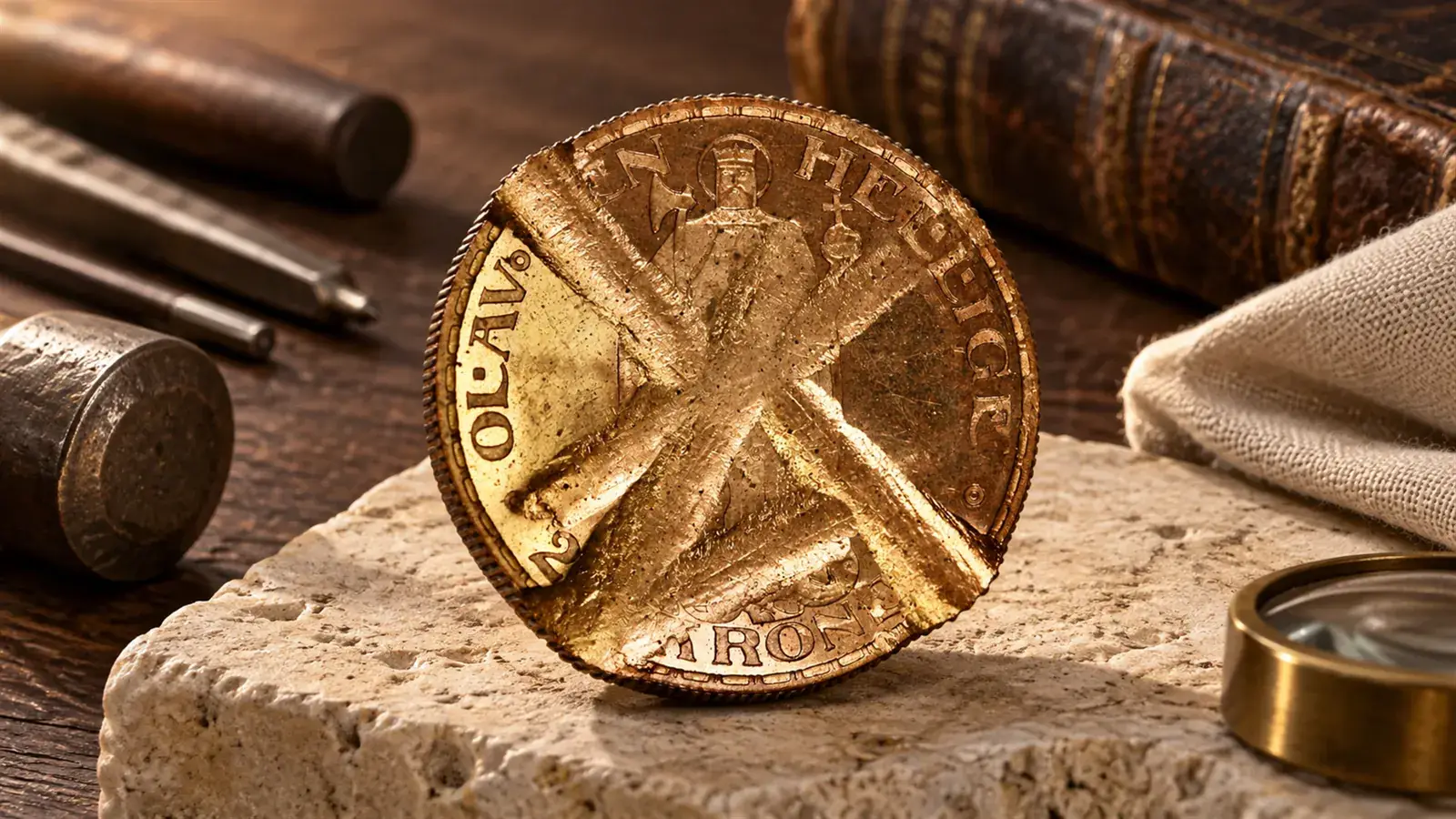
The 20 kroner test proof coins of 1909 were struck in tiny numbers while Norway prepared new gold coins bearing the portrait of King Haakon VII. Almost all of the gilt copper pieces were cancelled straight away, which is exactly why their details are still so sharp today.
Contents
The committee behind the 10 and 20 kroner gold coins
In 1907 the Norwegian Ministry of Finance set up a committee to prepare a design for 10 and 20 kroner gold coins to be issued in 1910. Its members were H.A. Grosch, director of the Museum of Decorative Arts and Design, Professor L.B. Stenersen of the University Coin Cabinet in Oslo, the artist Lars Utne, Professor Bredo Morgenstierne and the coin and medal engraver Ivar Throndsen.
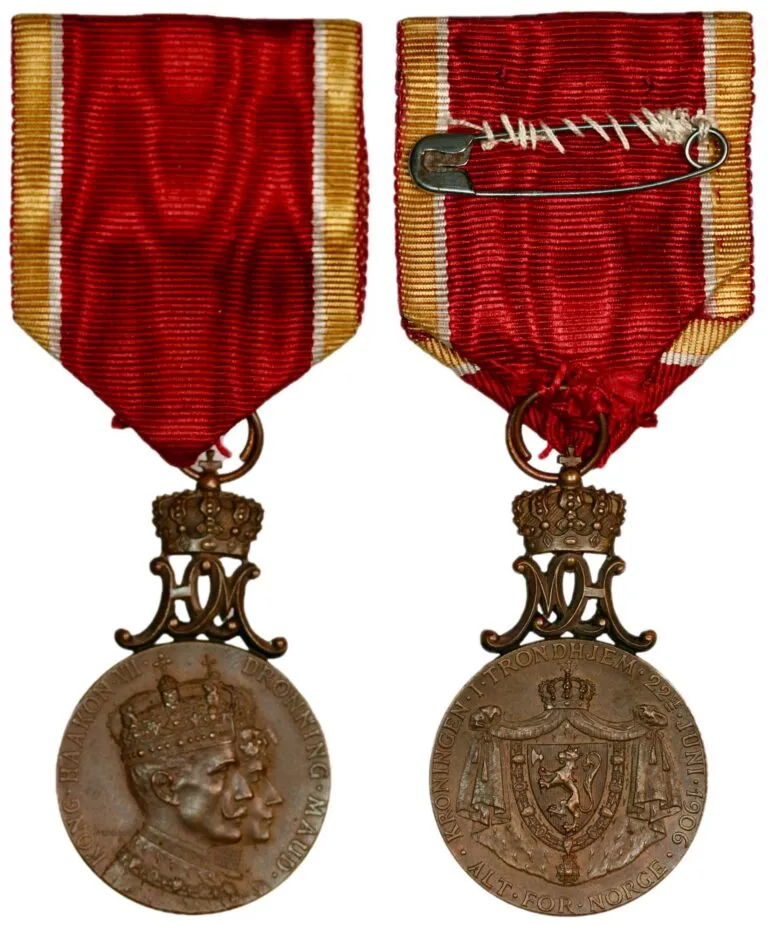
The coins were to be issued five years after Norway’s independence from Sweden, and it was important that the design expressed Norwegian values and strength. The obverse showed King Haakon VII, the first king of an independent Norway after more than 500 years in union with Denmark and then Sweden. His coronation in 1906 was also marked with a medal, the Norway, Haakon VII and Queen Maud Coronation Medal (1906).
Saint Olaf on the reverse
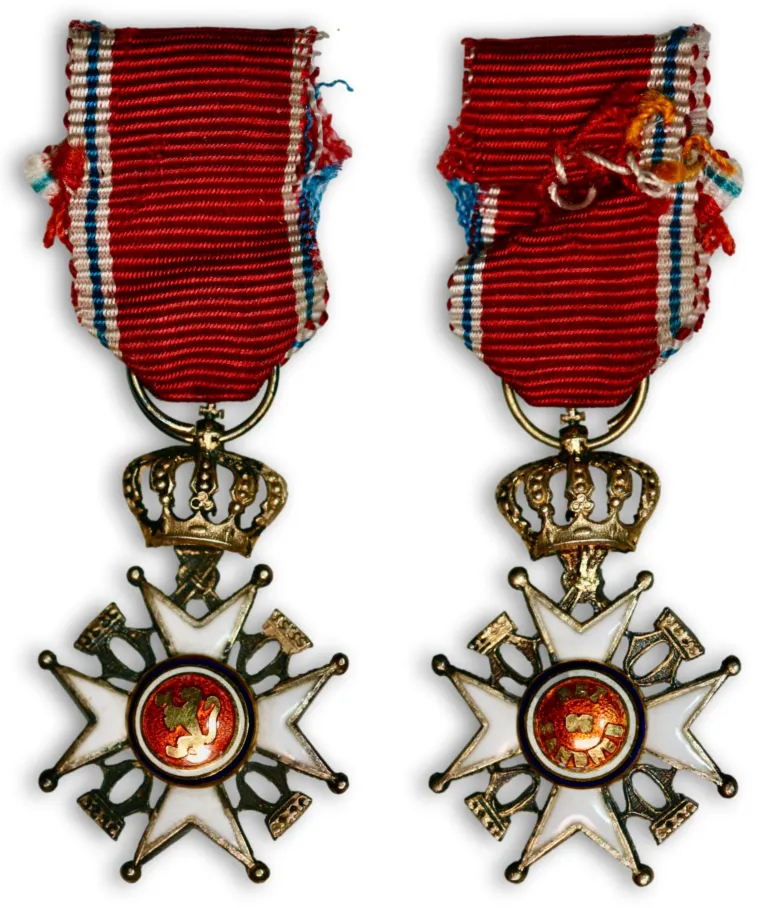
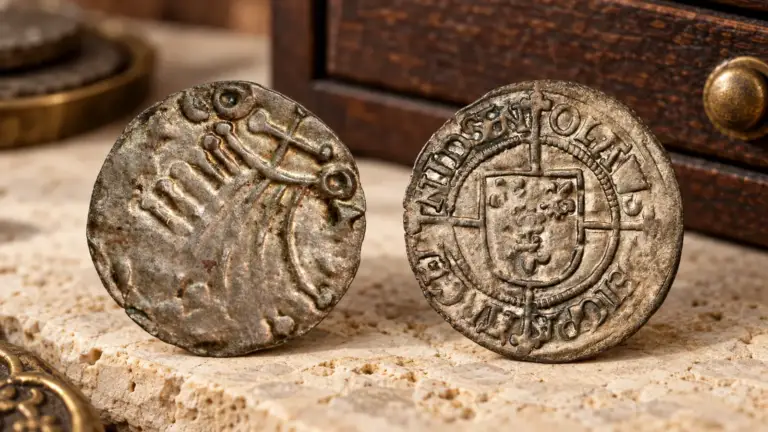
The reverse was copied from a coin dated 1510–1522, struck under Archbishop Erik Valkendorf in Nidaros (Trondheim). Valkendorf’s coin depicted King Olaf II Haraldsson (c. 995–1030), later known as Saint Olaf. The saint king remains a central national symbol, not least in the Norway, Order of St Olav (miniature).
20 kroner test proofs in gilt copper
Before striking the new coins in 1910, the mint had to test the design and have it approved. Striking began in 1909, and that year an extremely small number of test proof coins were made in copper. They have a beautiful shine because they were gilded to look like gold coins.
Shortly after they were made, the test proofs were destroyed by stamping a cancellation mark on both sides. Only a single uncancelled copper example is recorded. This made the coins unusable, but parts of the design are still visible. Because they were defaced at once and never circulated, the coins still show fresh, sharp details.
Why were the test proofs destroyed?
Perhaps the aim was to keep these copper-based coins out of circulation. What a scandal it would have been had the mint released “fake” gold coins onto the market! The theory is supported by the fact that the gold test proof dated 1909 was not destroyed. According to the catalogues, only one was struck in gold, and it was given to the King.
You will find more coins from this period under Norway after 1874, and older gold from around the world among our gold coins.