Norwegian Medals and Orders: St Olav, the War Cross and the King’s Medal of Merit
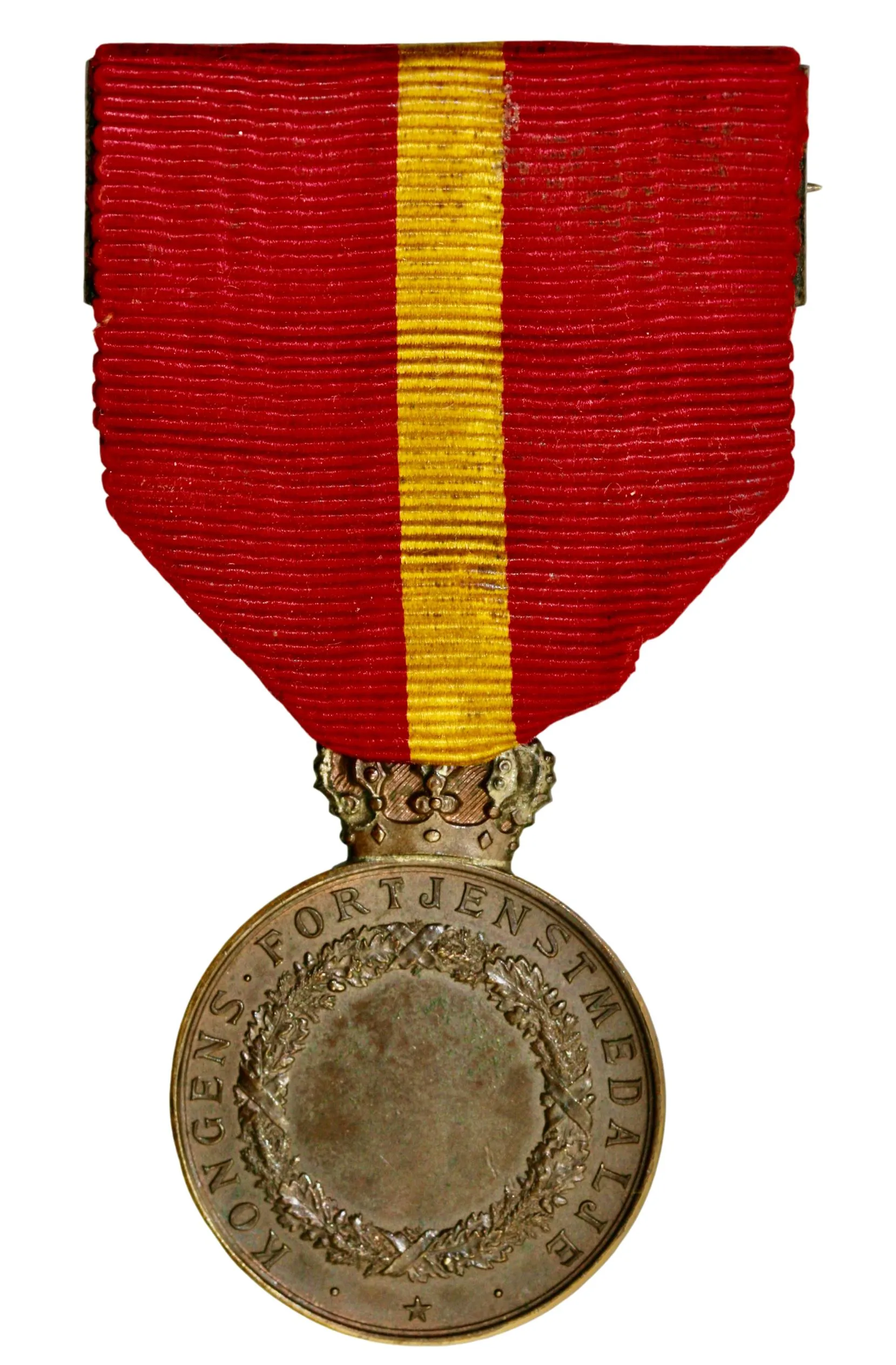
From the War Cross with Sword and the Order of St Olav to the King's Medal of Merit: who awards Norwegian medals…
Medals, orders, tokens and numismatic literature: Norwegian royal and merit medals, Scandinavian and European orders, historical medals from the 17th century onward, coin catalogues and reference books, and a single antique. All guaranteed genuine by Denarius.
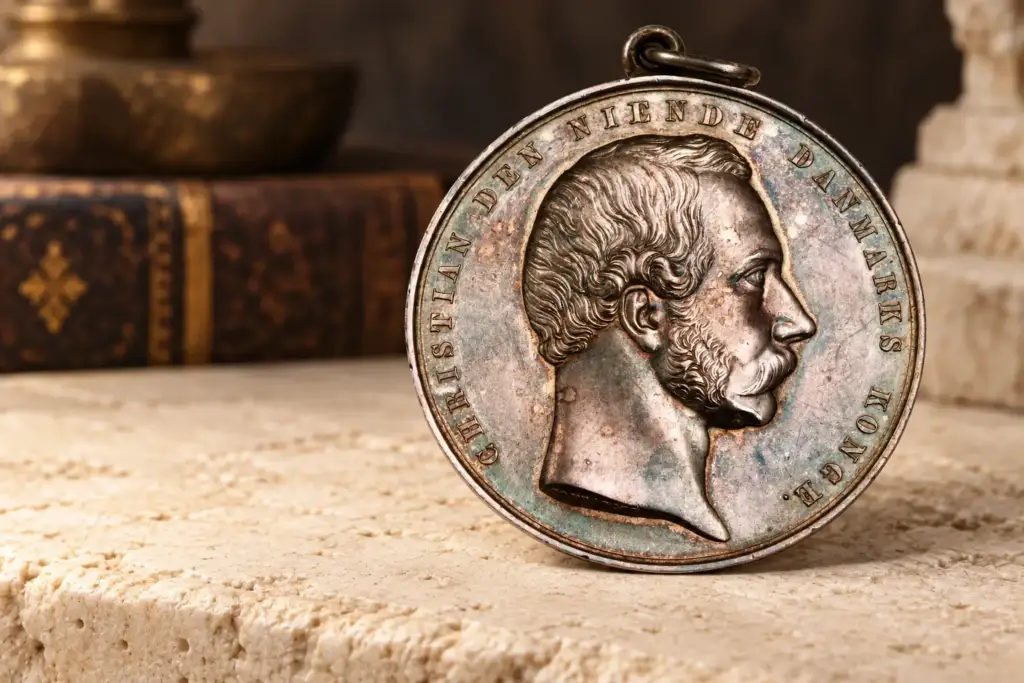
Numismatics is not only about money. Medals mark coronations, anniversaries and great events, orders and decorations reward service and bravery, and the literature of the field is what makes it possible to identify and understand coins at all. This category gathers these objects in three subcategories: Medals, Literature and Antiques.
The medal section is the largest part of the category. It has a strong Norwegian core: medals for the coronations of Oscar II and Sophie in 1873 and of Haakon VII and Maud in 1906, the Norwegian millenary in 1872, the unveiling of the statue of Carl XIV Johan in 1875 and the dissolution of the union with Sweden in 1905. Royal anniversary medals for Haakon VII and Olav V and the centenary of the royal house in 2005 bring the series up to modern times.
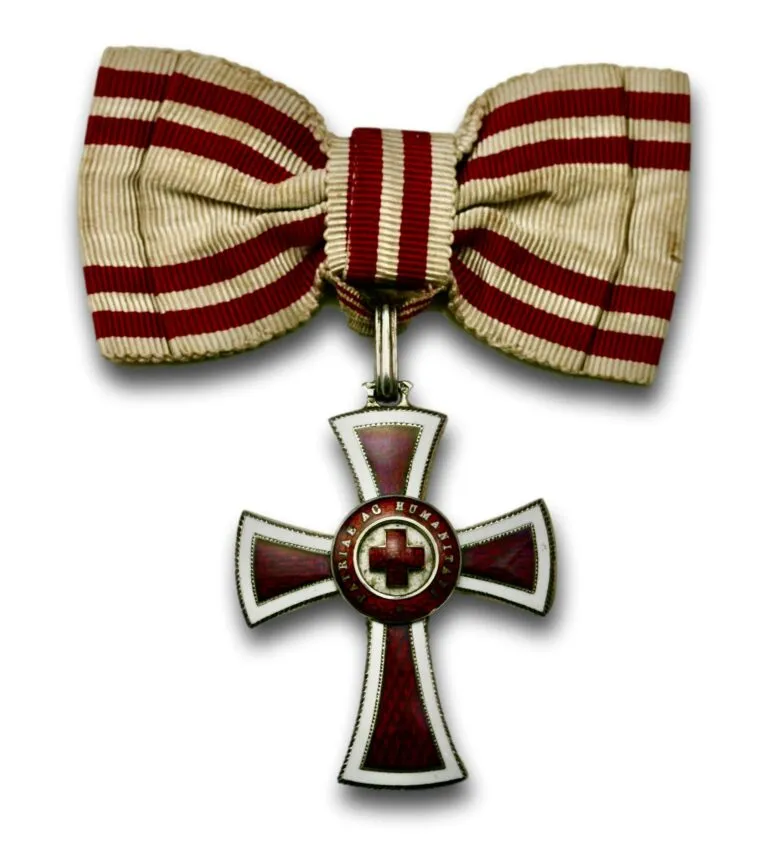
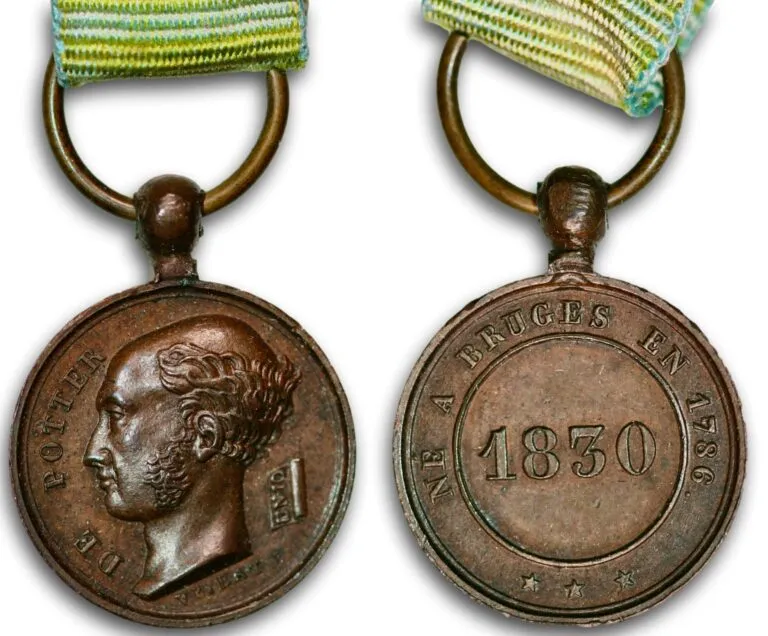
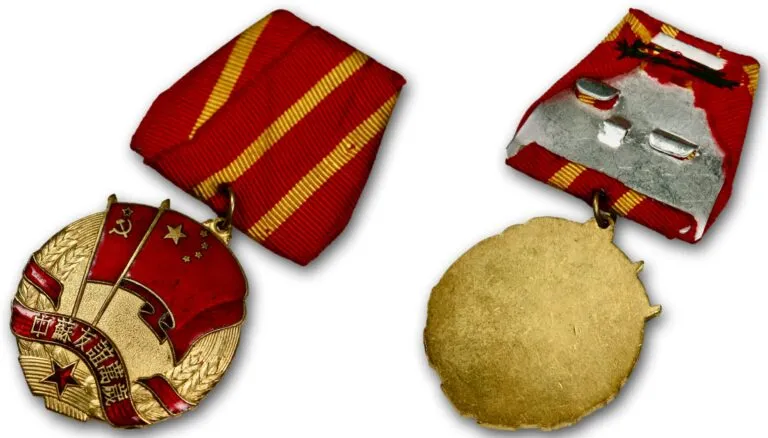
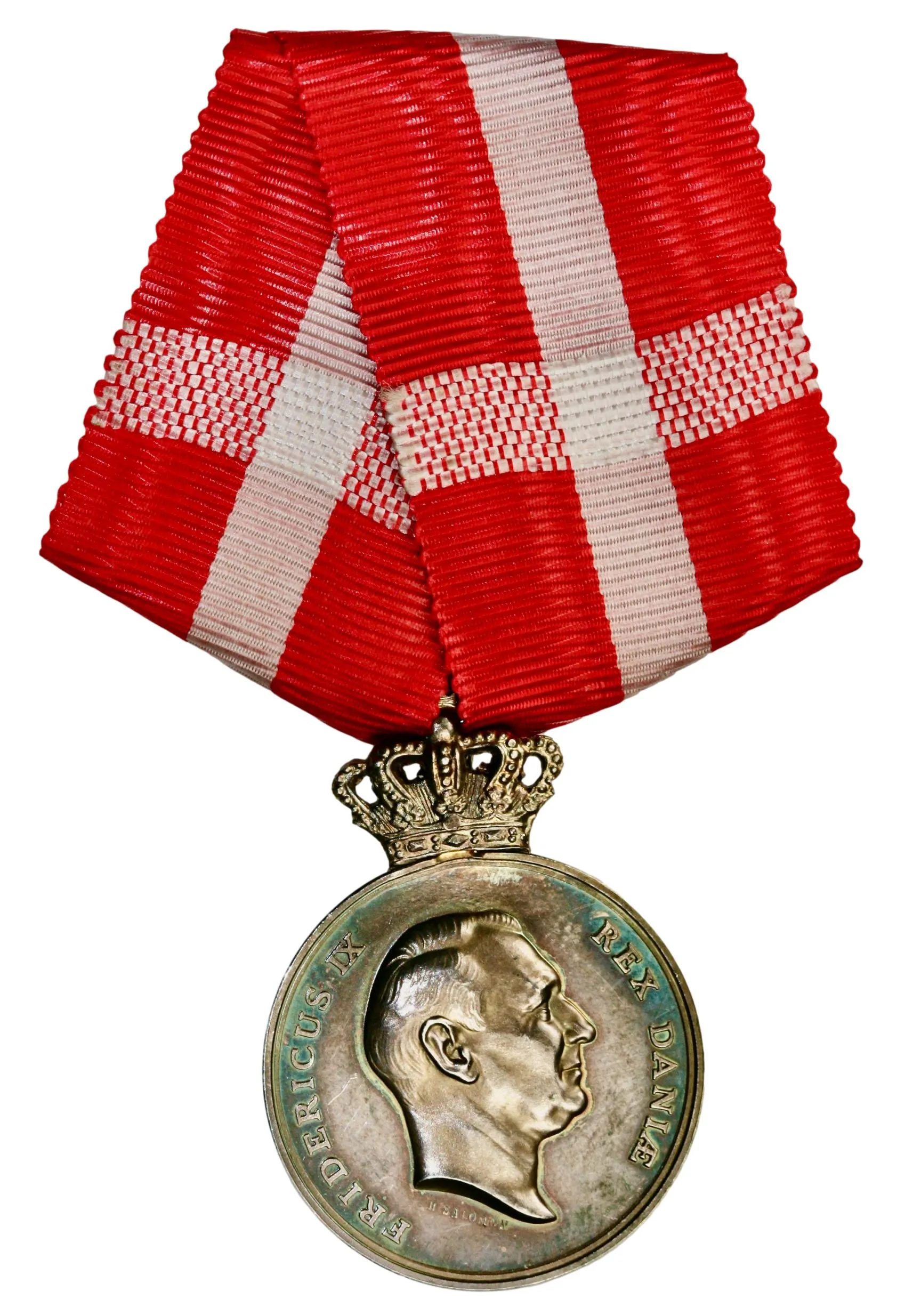
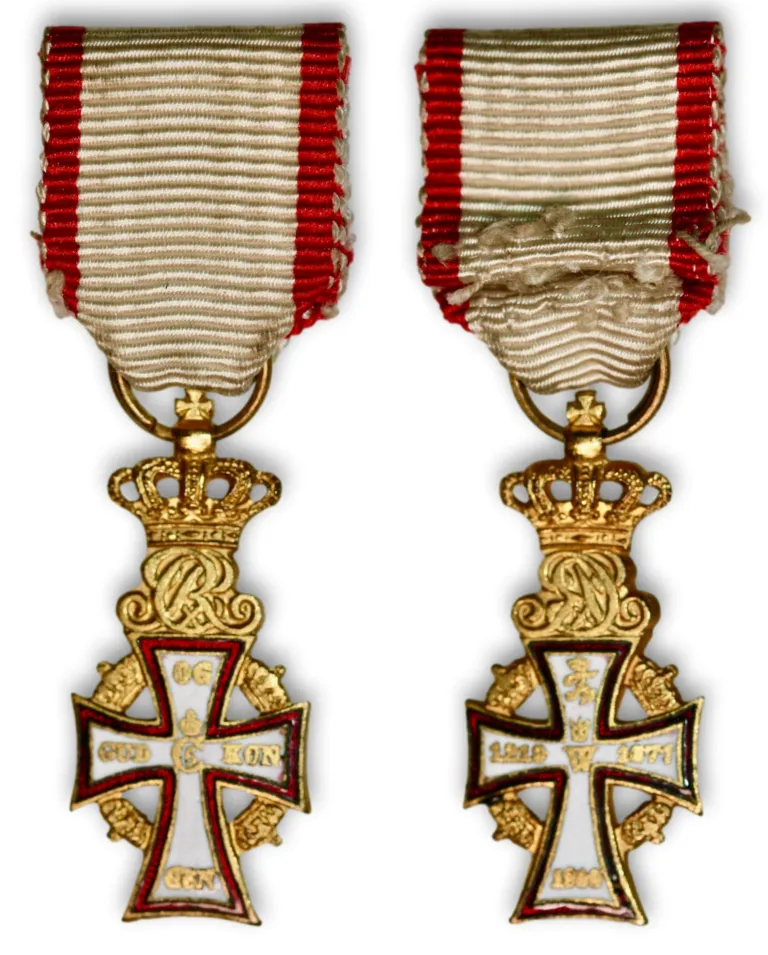
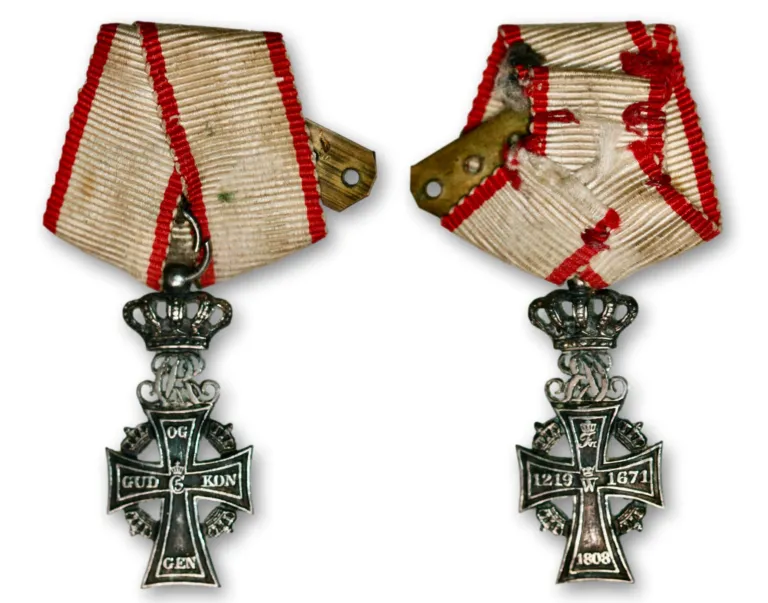
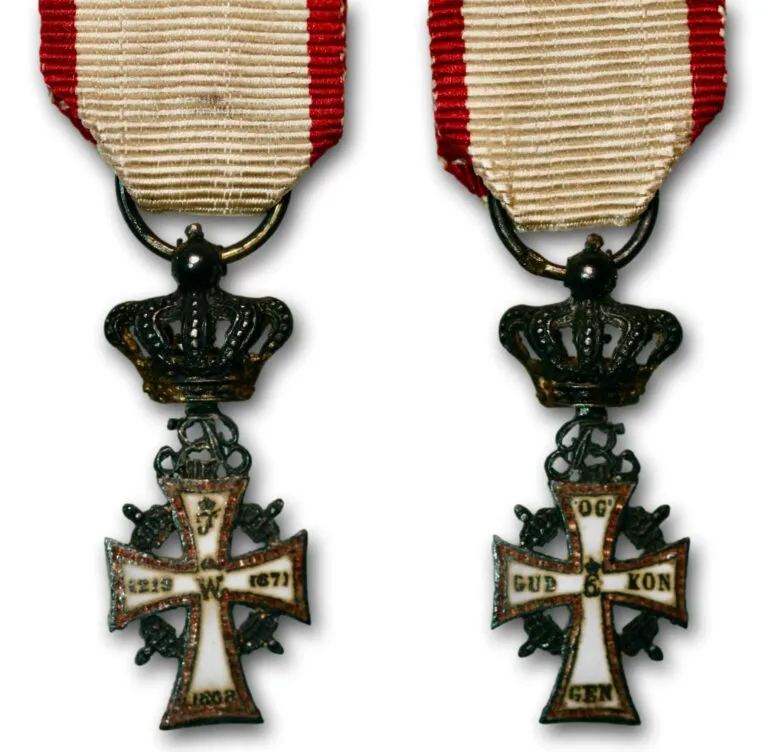
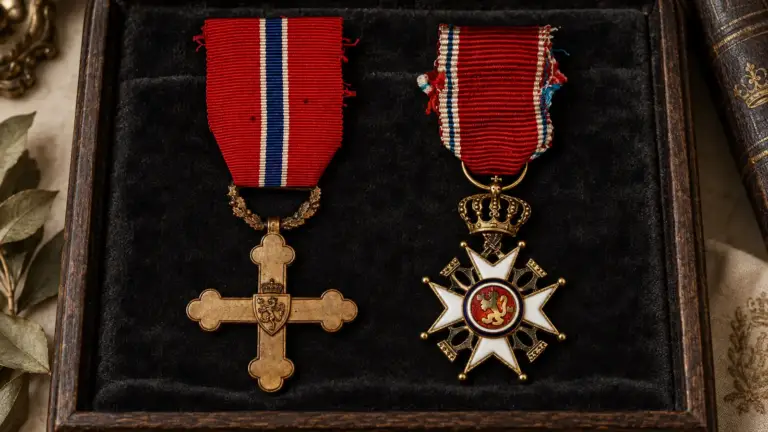
There are also many merit and award medals, such as the Medal for Civic Deeds (Medaljen for borgerdaad), the Medal for Noble Deeds (Medaljen for edel daad), King Oscar II’s medals for meritorious service and for art and industry, and prize medals from agricultural meetings and exhibitions. Orders and decorations include the Norwegian Order of St. Olav and War Cross, the Danish Order of the Dannebrog, the Swedish Orders of the North Star, the Sword and Vasa, Russian orders of St. Anne and St. Stanislaus, the French Legion of Honour and orders from Finland, Italy, Japan, Luxembourg and the Netherlands.
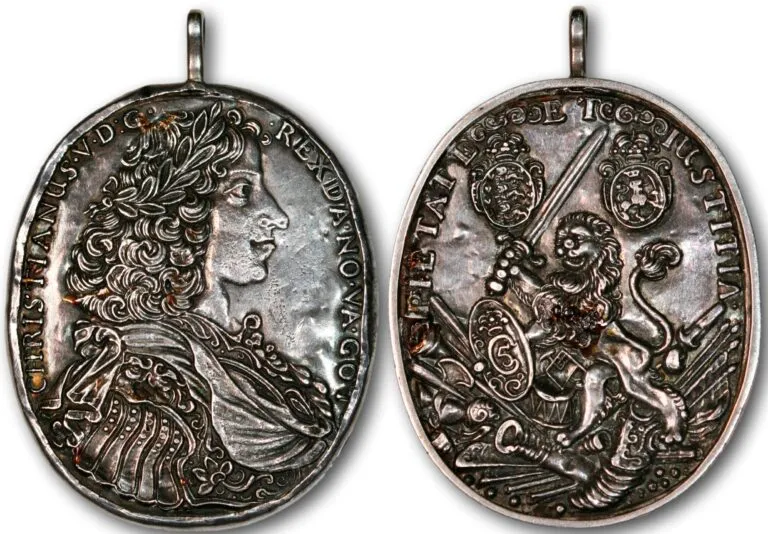
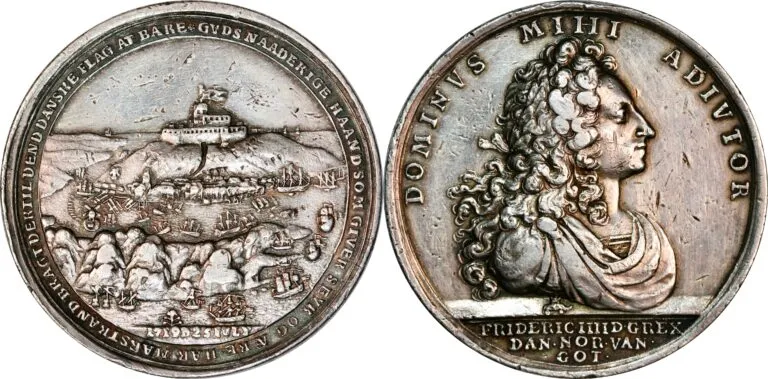
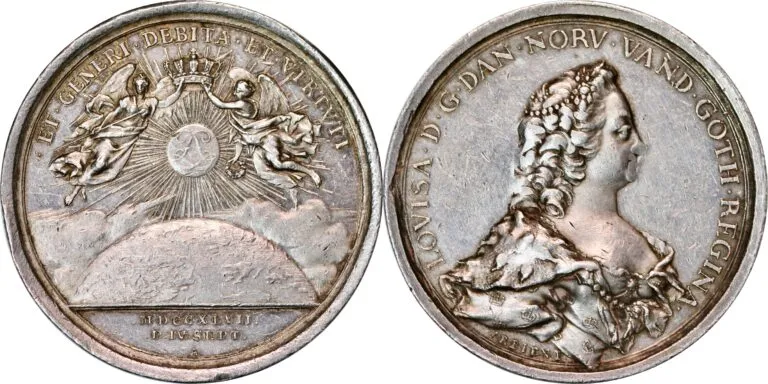
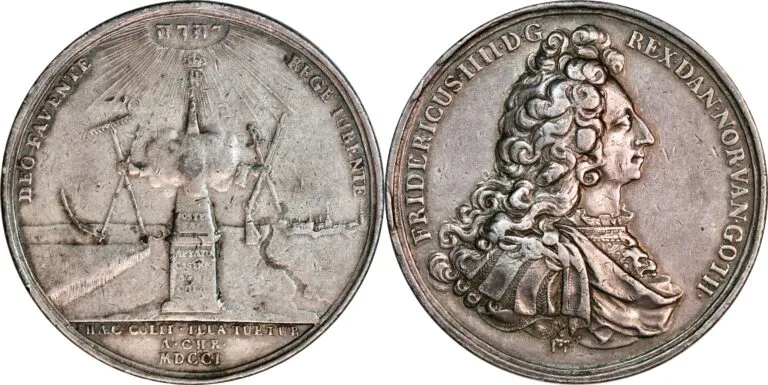
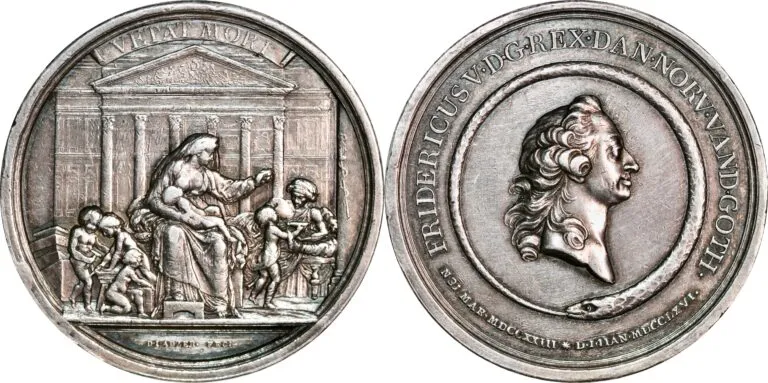
Historical medals go back to the late 17th century, with Danish medals from the reigns of Frederik IV and Frederik V and Swedish medals of Charles XI, Charles XII and Gustav III. Tokens are represented by brass tokens from Christiania Dampkjøkken and Swedish mining tokens from Sala (1682) and Stora Kopparberg (1765).
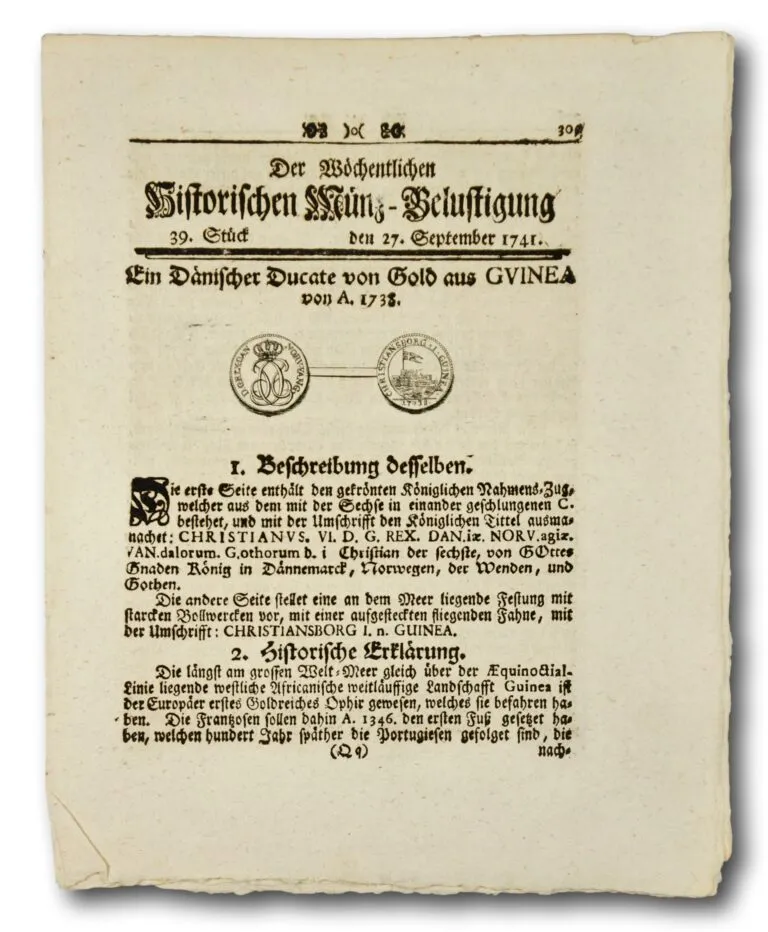
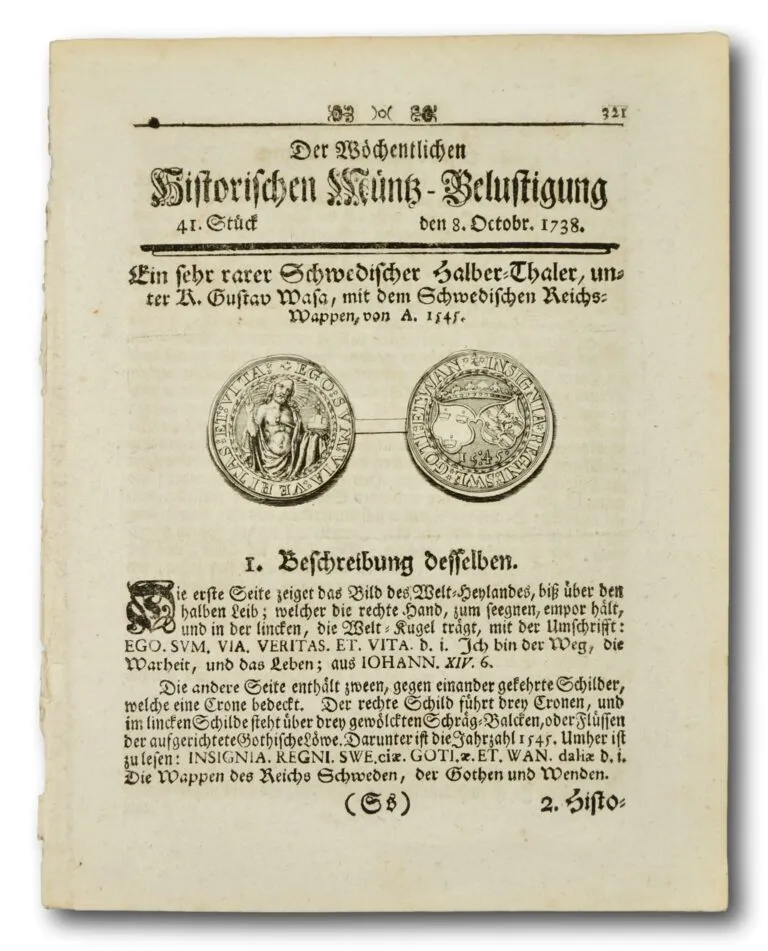
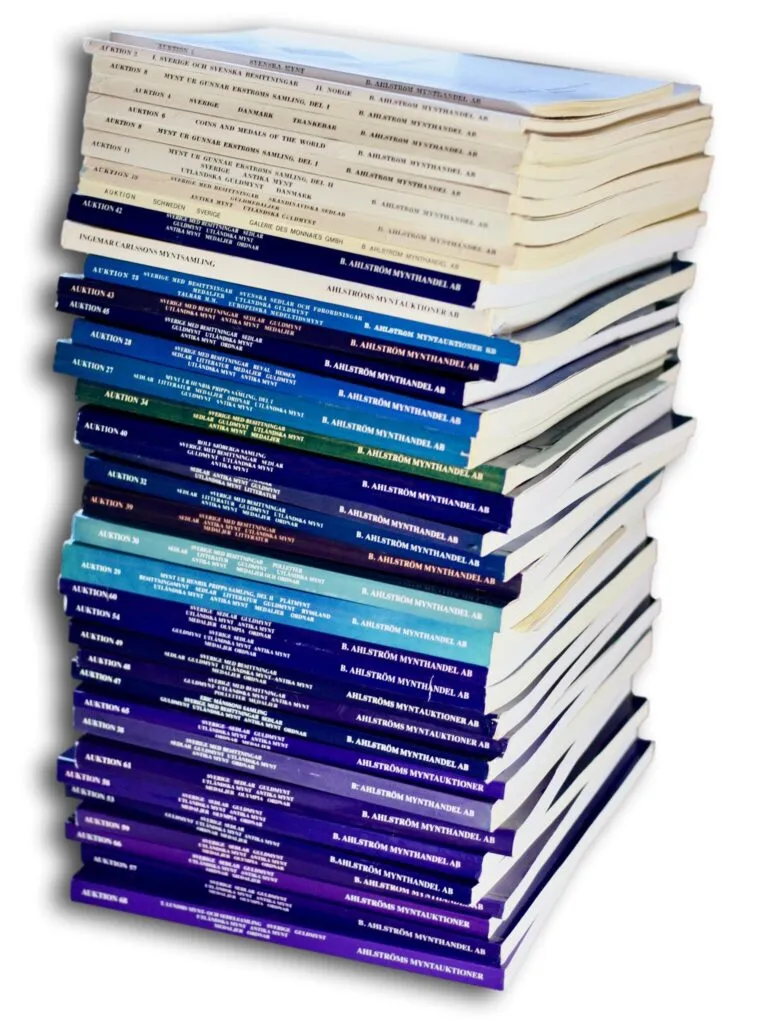
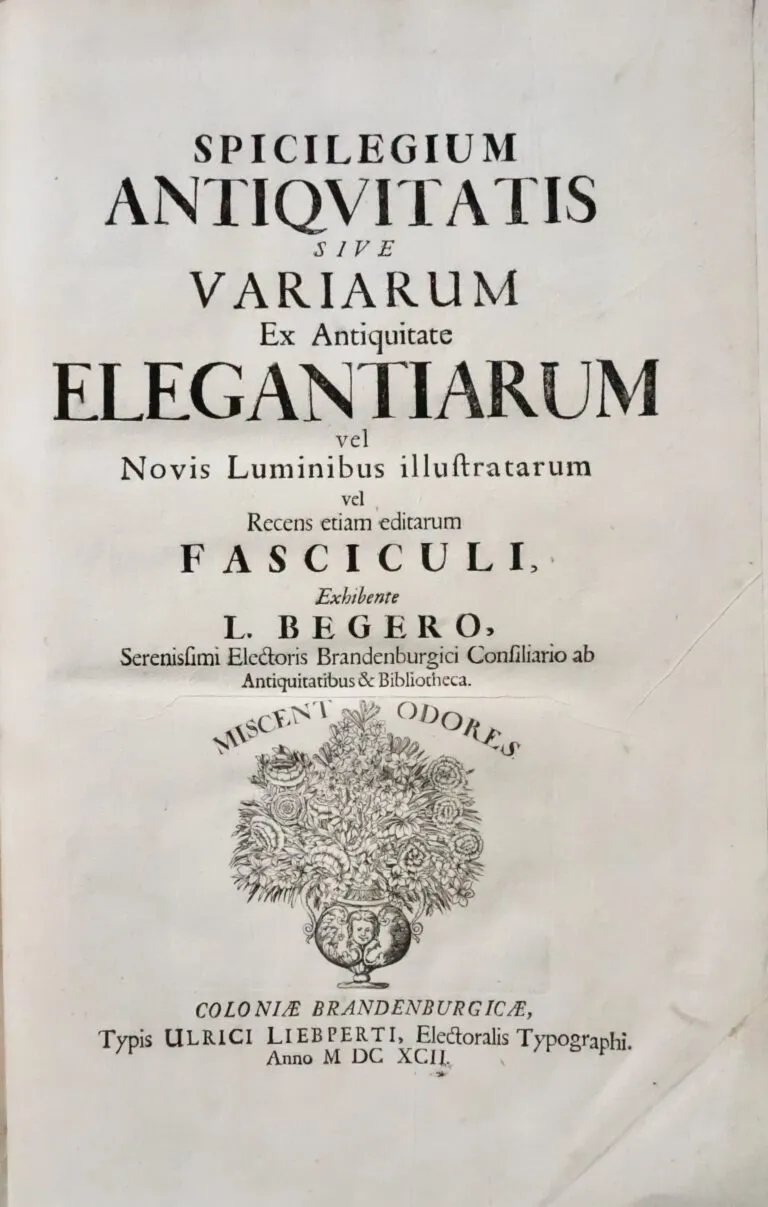
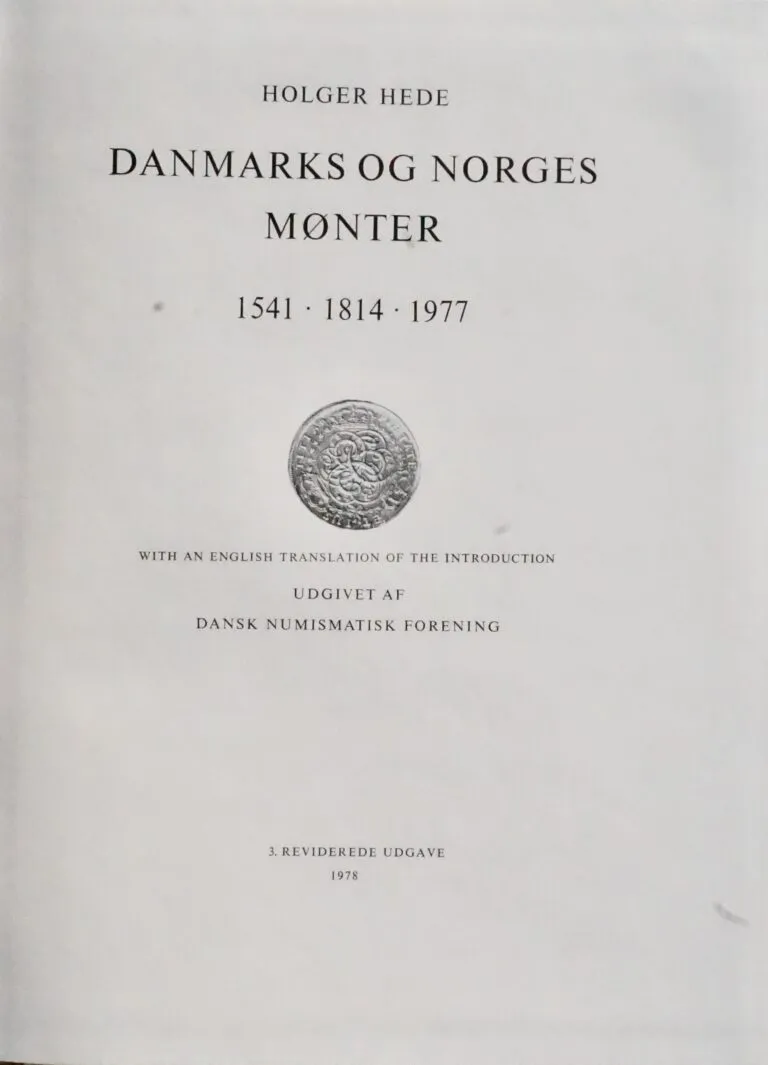
Good books are the collector’s most important tool. The literature section has standard works on Danish and Norwegian coins, books on the history of Norwegian coins and banknotes, several annual editions of the price catalogue Norges mynter, auction catalogues and Swedish books on plate money and the first banknotes of Stockholms Banco. Older works include an antiquarian volume by Lorenz Beger from 1692 and two 18th-century articles on individual coins.
The antiques section currently holds a single object: a gold and diamond monogram brooch in the late Imperial Russian style from around 1900. Like everything at Denarius, it is examined, described and given its own protocol number.
For medals, condition, original ribbons and cases, inscriptions and named recipients all add to interest and value. Orders are also judged on enamel damage and on whether a piece is a full-size insignia or a miniature. For books, completeness, binding and the edition matter. Every object is described with its condition, so you know exactly what you are buying.
Medals and orders often tell more about the people behind history than coins do: who was rewarded, for what, and which events their contemporaries wanted to remember. Many collectors therefore build themed collections around subjects such as the royal house, the union period or the Second World War, where coins, banknotes, medals and books complement each other. For Norwegian coins from the same periods as many of the medals, see Norway after 1874.
A medal is usually a single award or a commemorative piece struck for an event. An order is an institution with grades and insignia, such as the Order of St. Olav, and membership is conferred by the head of state.
A token is a coin-like piece issued by a private business or institution rather than the state, often to be exchanged for goods or services. This category includes tokens from Christiania Dampkjøkken and Swedish mining tokens.
Yes. The literature section includes standard works on Danish and Norwegian coins, books on Norwegian coin and banknote history and several annual editions of the catalogue Norges mynter.
Yes. Every item is researched and described as accurately as possible, and Denarius guarantees that everything sold is genuine and as described.
Every item gets its own number when it is catalogued. The number is shown on the product page, so you always know exactly which example it is.
Yes. We ship worldwide. Shipping method and price are shown at checkout before you pay.
Read more
From the War Cross with Sword and the Order of St Olav to the King's Medal of Merit: who awards Norwegian medals…
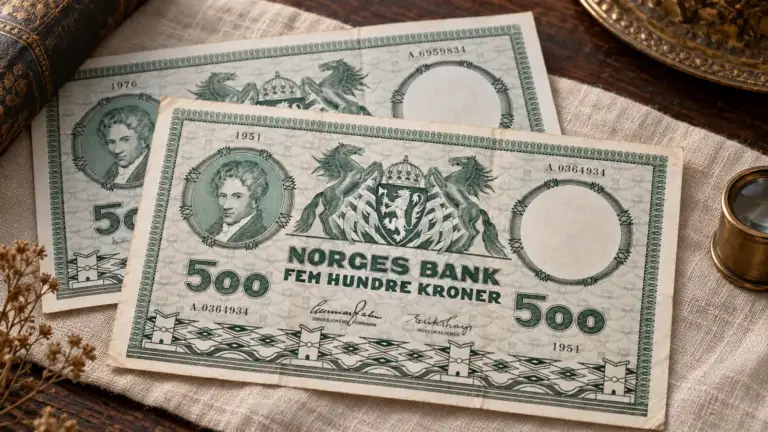
Which old Norwegian banknotes can still be exchanged at Norges Bank, and which only have collector value? The rules, the 500-krone note…
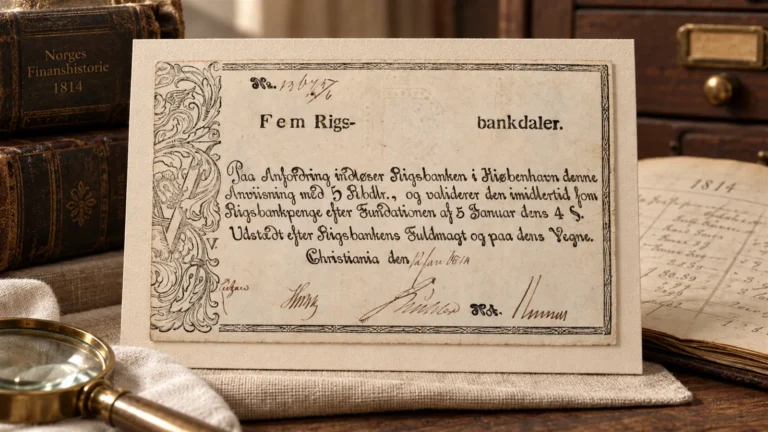
From thor Møhlen’s notes of 1695 to today’s sea-themed series: the history of Norwegian banknotes, the Norges Bank series, what collectors look…