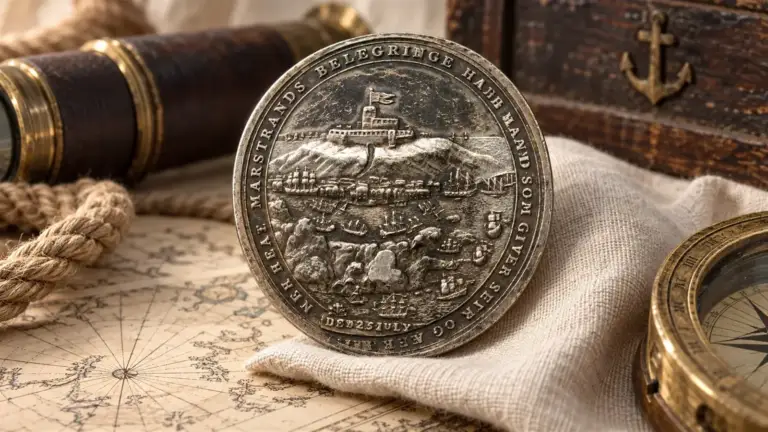
Tordenskiold’s Bluff at Marstrand 1719
Tordenskiold’s bluff at Marstrand in July 1719 is one of the best-known episodes in the military history of Denmark-Norway, and it was…
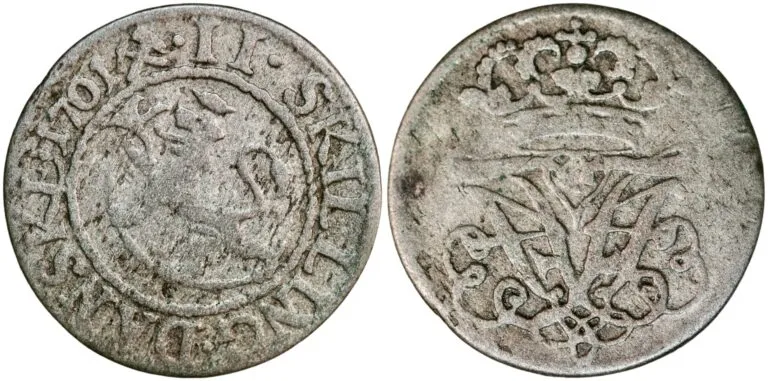
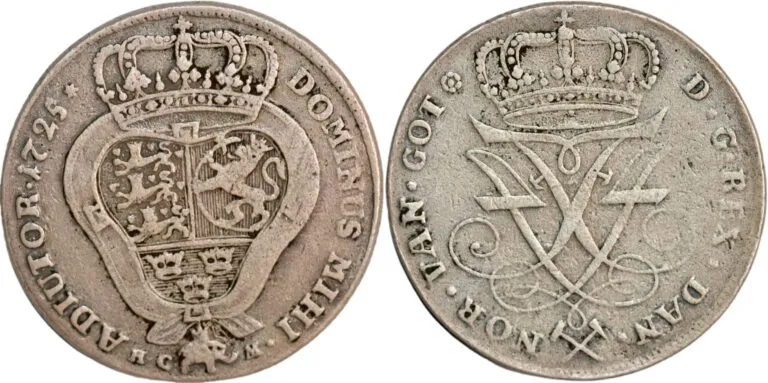
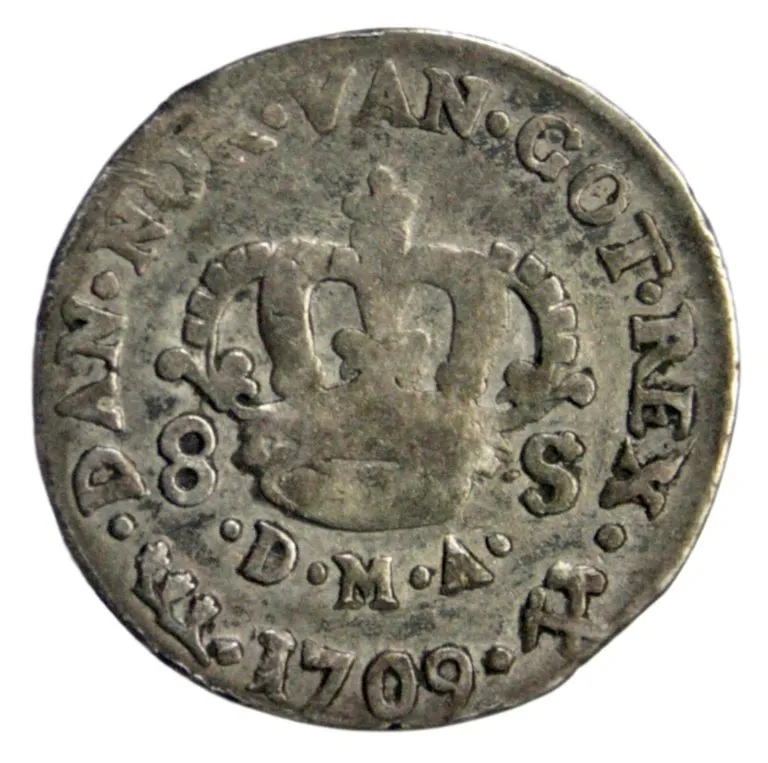
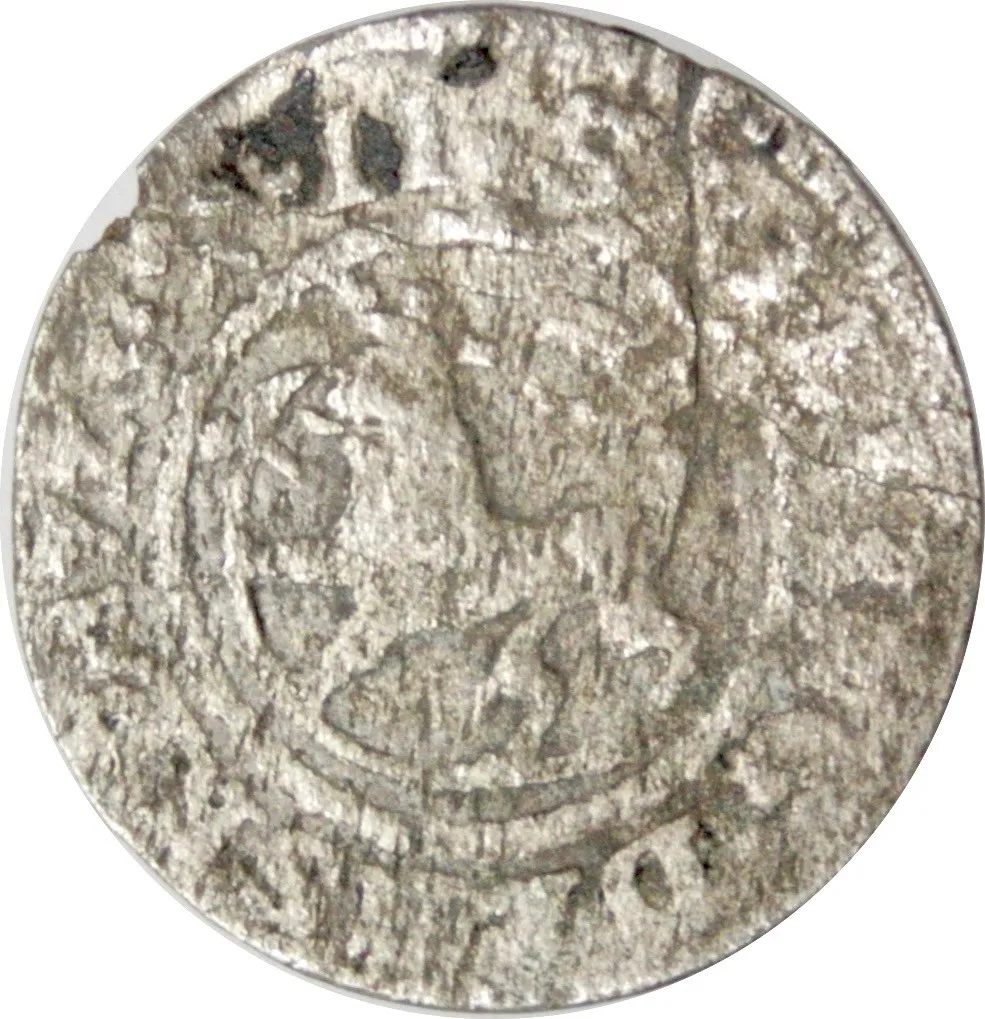
Norwegian coins of Frederik IV, king of Denmark-Norway 1699–1730: 2 skilling 1701, 8 skilling 1709, a 2 skilling with the date written 17Z5, and a 4 mark 1725. Each one examined, catalogued and guaranteed genuine.
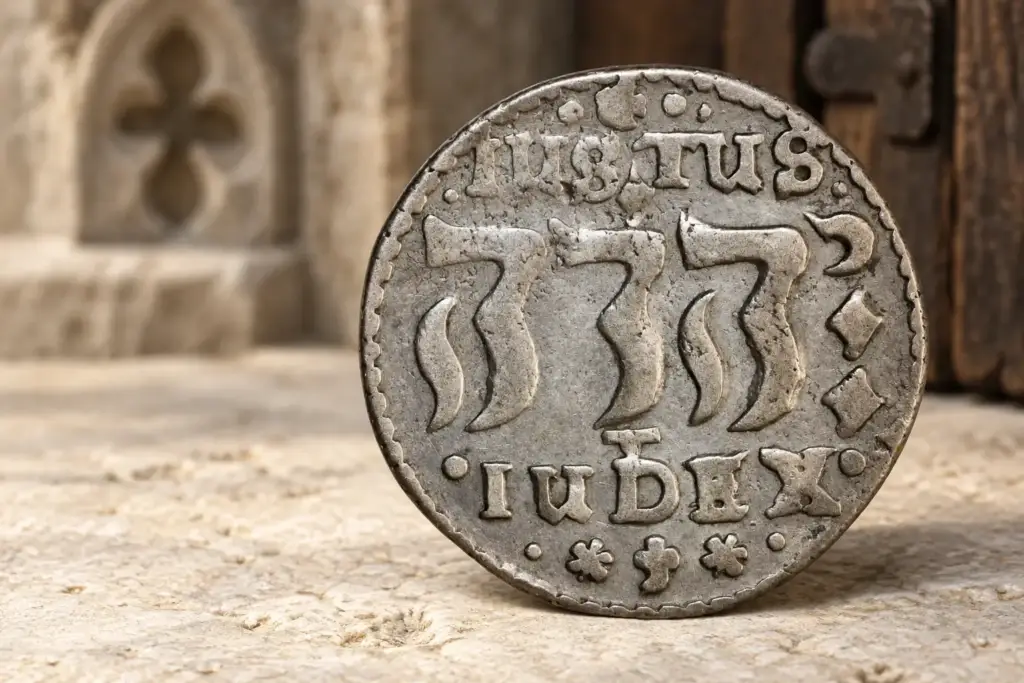
Frederik IV reigned from 1699 to 1730. Much of his reign was taken up by the Great Northern War against Sweden, which for Norway included the Swedish invasions of 1716 and 1718 and the naval exploits of Peter Wessel Tordenskiold. Peace with Sweden came in 1720. War is expensive, and the need for coin is reflected in Norwegian coinage of the period.
After the Christiania mint closed in 1695, Norwegian coins were struck at Kongsberg, close to the silver mines. The output consisted mainly of skilling coins for everyday use, along with krone coins of up to 4 mark. Norges Bank states that the 8 and 16 skilling held about 60 percent silver, while the 1 and 2 skilling held only about 20 percent.
The four coins here show the whole range: the 2 skilling weighs about one gram, the 8 skilling of 1709 about two grams, and the 4 mark of 1725 more than 22 grams.
One of the 2 skilling coins here carries the date 17Z5, where the second-last digit looks like a Z. Hand-cut dies often show irregular numerals and letters, and such variants are recorded in specialist catalogues such as Thesen (2015). They are popular with collectors who build year and variant sets.
The small skilling coins weigh about a gram and are often worn, so a clear date matters. On the 4 mark, look for even strike and limited wear on the high points of the design. Holes, mounting marks and harsh cleaning reduce value on all coins of the period.
See also Christian V and Christian VI.
At the Kongsberg mint, which was Norway's only mint after Christiania closed in 1695.
It is a date variant where the second-last digit is cut so that it looks like a Z. Such die variants are listed separately in specialist catalogues and are collected as varieties.
Yes. Every item is researched and described as accurately as possible, and Denarius guarantees that everything sold is genuine and as described.
Every item gets its own number when it is catalogued. The number is shown on the product page, so you always know exactly which example it is.
Yes. We ship worldwide. Shipping method and price are shown at checkout before you pay.
Read more
Tordenskiold’s bluff at Marstrand in July 1719 is one of the best-known episodes in the military history of Denmark-Norway, and it was…
Animals on coins are as old as coinage itself. Since the first coins were struck around 600 BC, an enormous number of…
Which Norwegian coins are the rarest, and why? From Olav Kyrre's pennies and the archbishop's skillings to the Schydtz coins of 1689…