Names of Roman Coins: From the As to the Solidus
As, sestertius, denarius, antoninianus, nummus, maiorina and solidus: the names of Roman coins, what they were worth and which emperors introduced them.
Roman coins for sale from the Republic and the Empire: denarii, sestertii, antoniniani and bronzes, each described with ruler, date and reference.
This category holds Roman coins for sale from the Republic to the fall of the Western Empire, sorted into four periods: the Roman Republic, the early Empire from 27 BC to AD 220, the crisis years and the tetrarchy AD 221–313, and the late Empire AD 314–476. You will find denarii, sestertii, asses, antoniniani and late bronzes, as well as provincial coins struck for the Greek-speaking east.
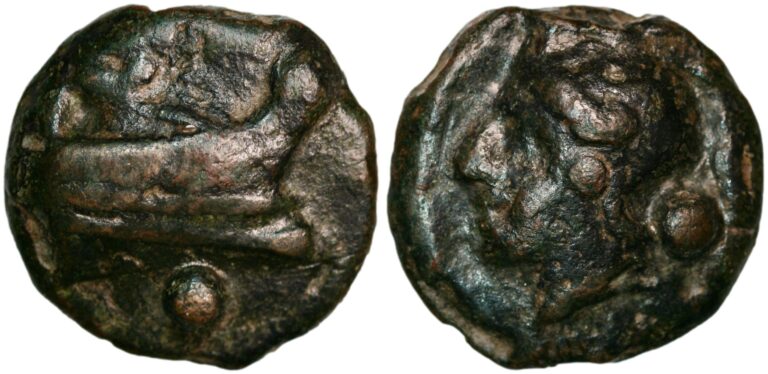
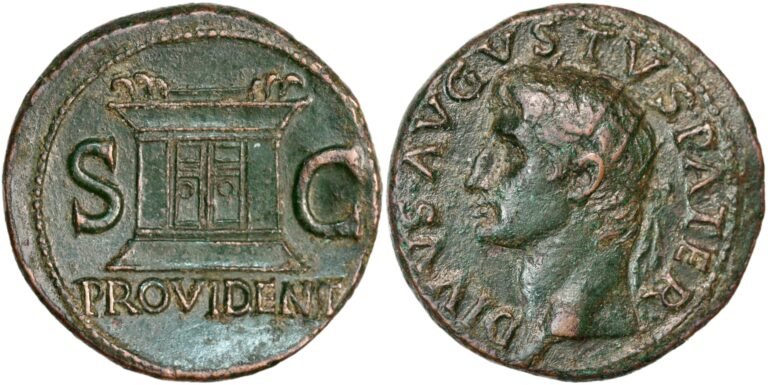
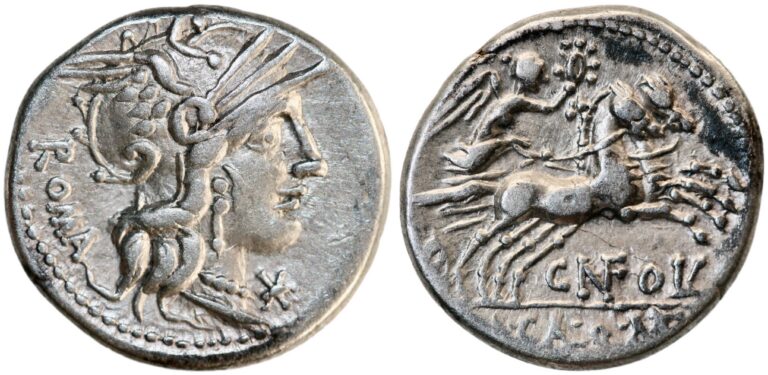
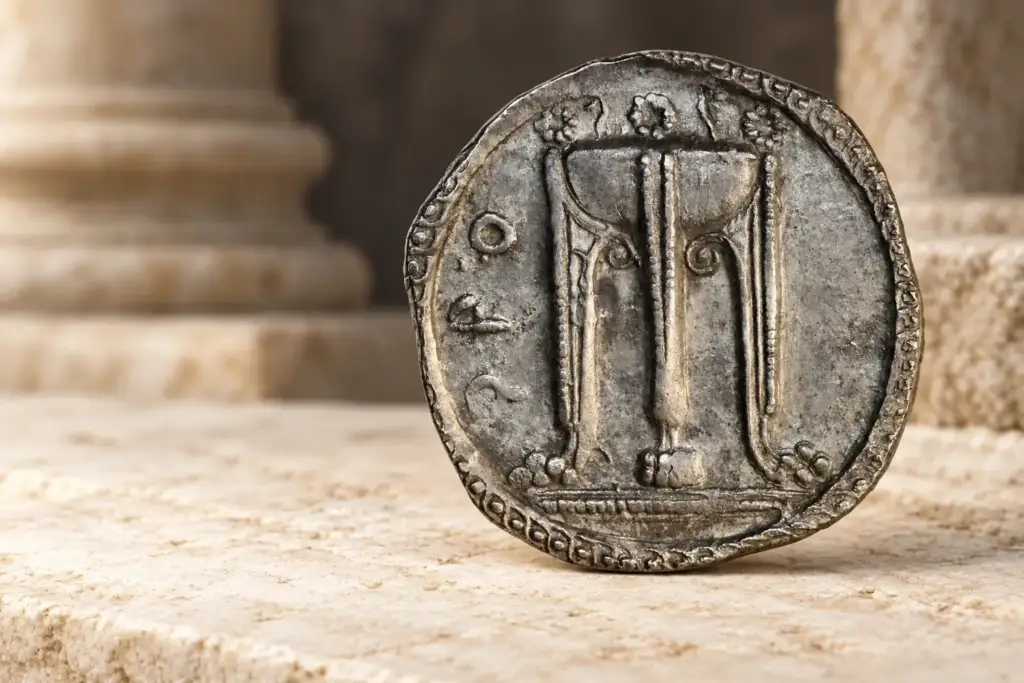
Before Rome struck silver, it cast heavy bronze money, aes grave, such as this uncia of about 225–217 BC. The denarius was introduced a few years before 211 BC as a nearly pure silver coin of about 4.5 grams. It remained Rome’s main silver coin for centuries and gave Denarius its name. In the Gospels it is the coin Jesus asks to see in the question of tribute to Caesar, and a denarius of Tiberius is traditionally called the tribute penny.
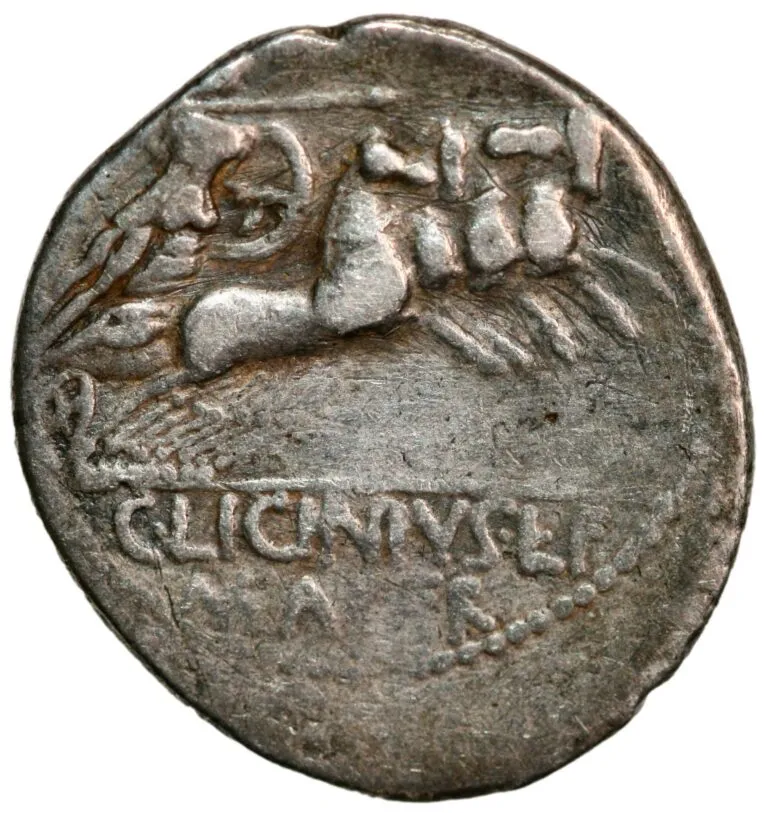
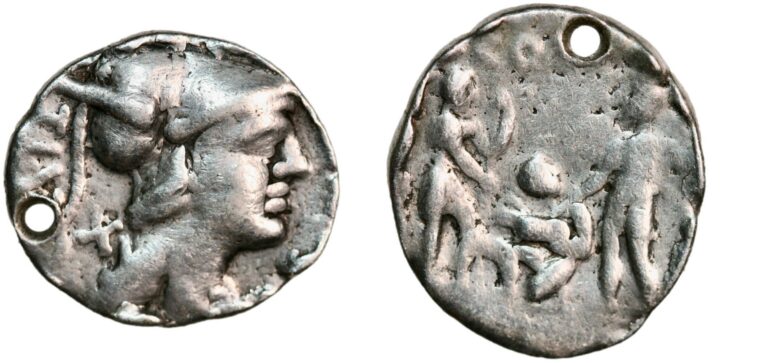
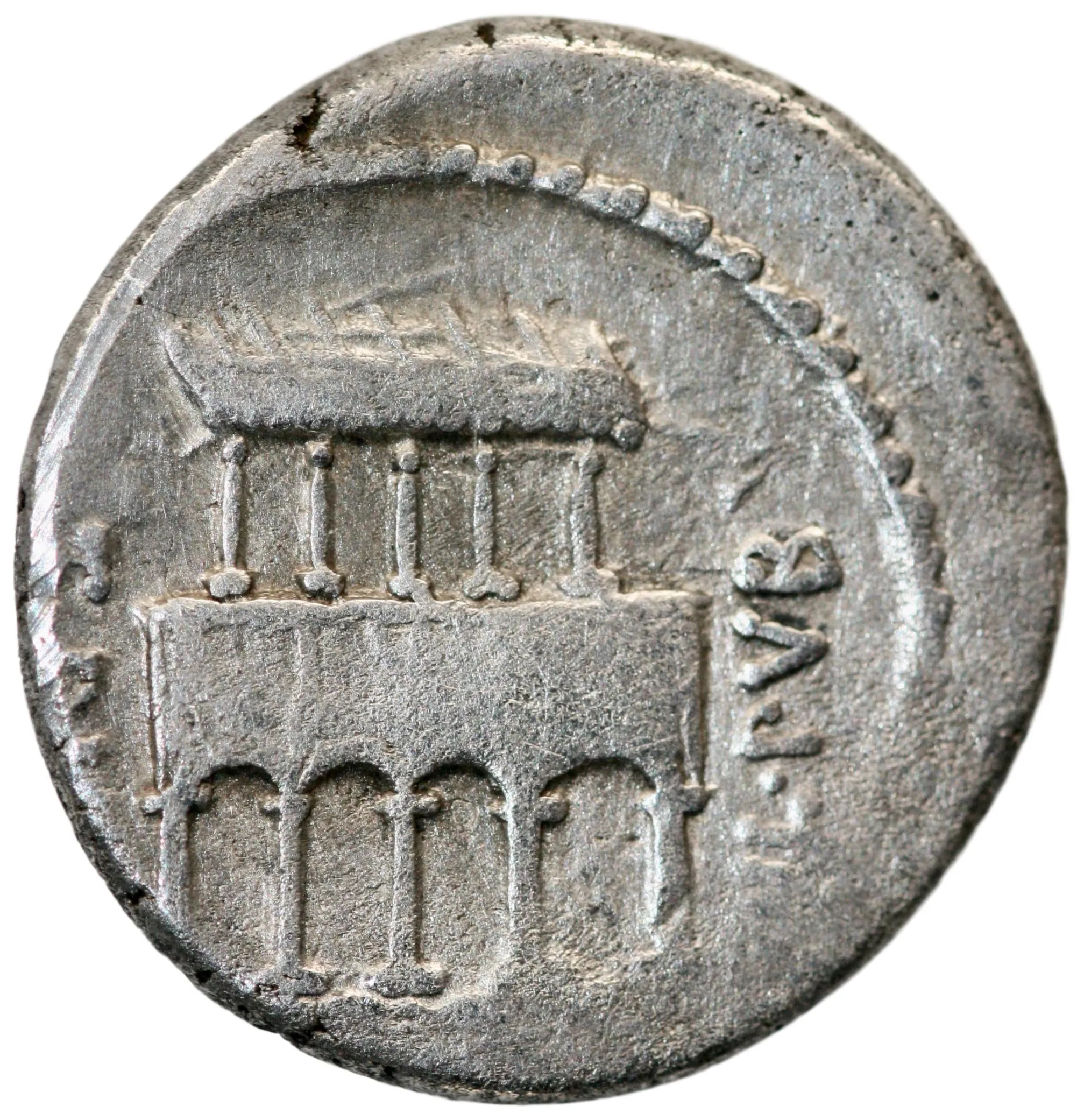
Republican coins were signed by the moneyers responsible for the mint, young officials at the start of a political career. Their designs often recalled the deeds of their own ancestors, which makes Republican denarii a small history book of Roman families.
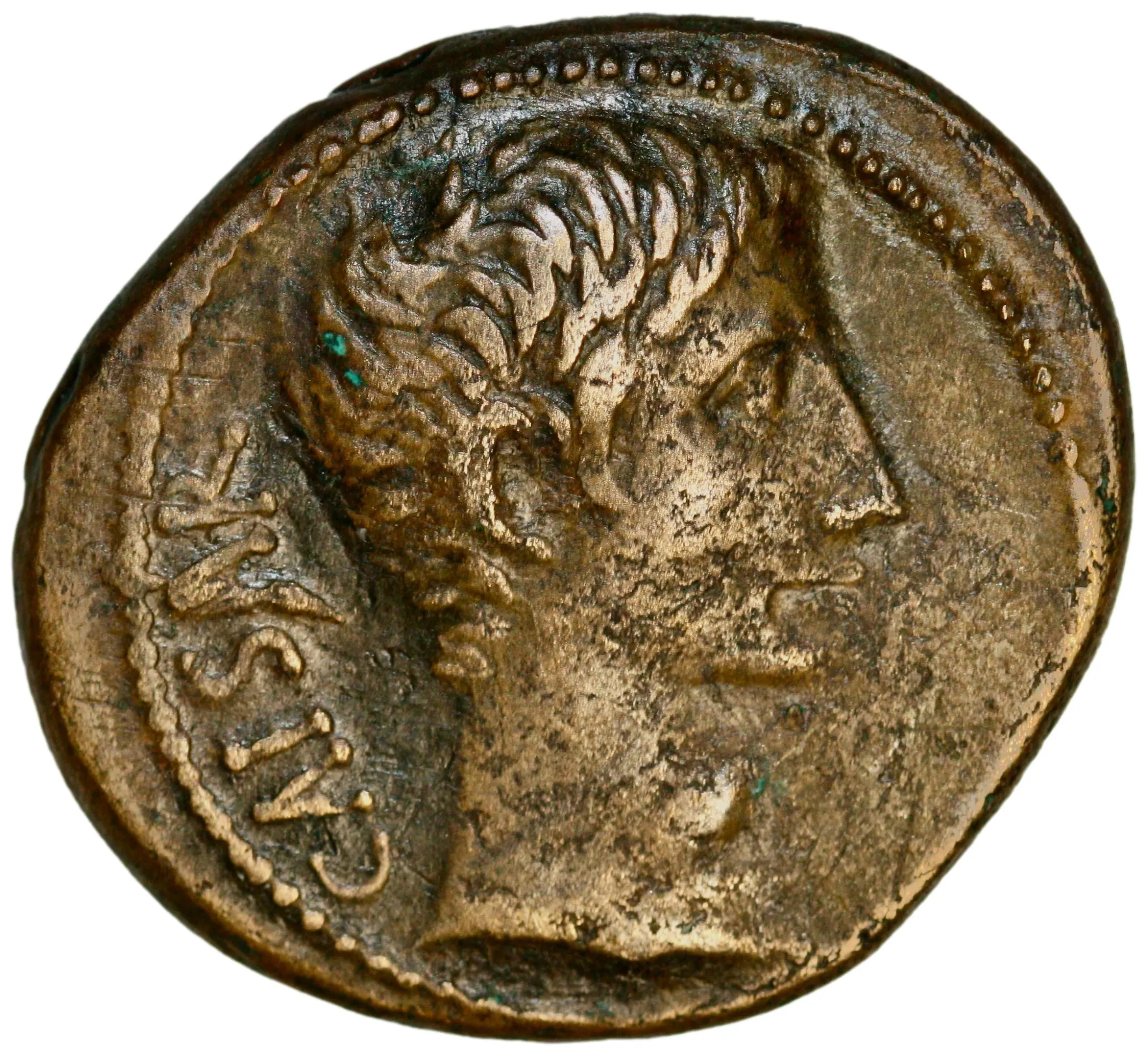
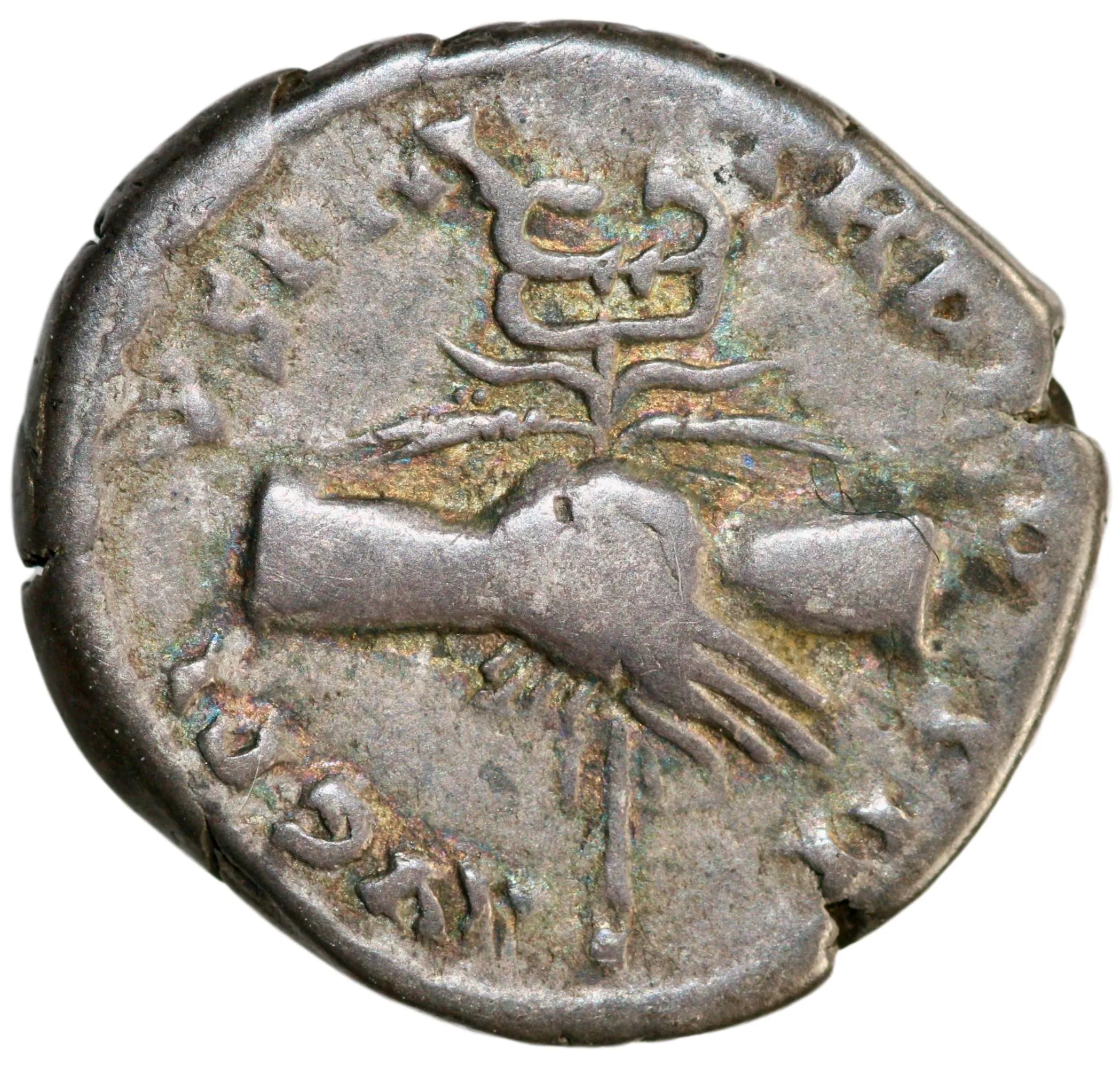
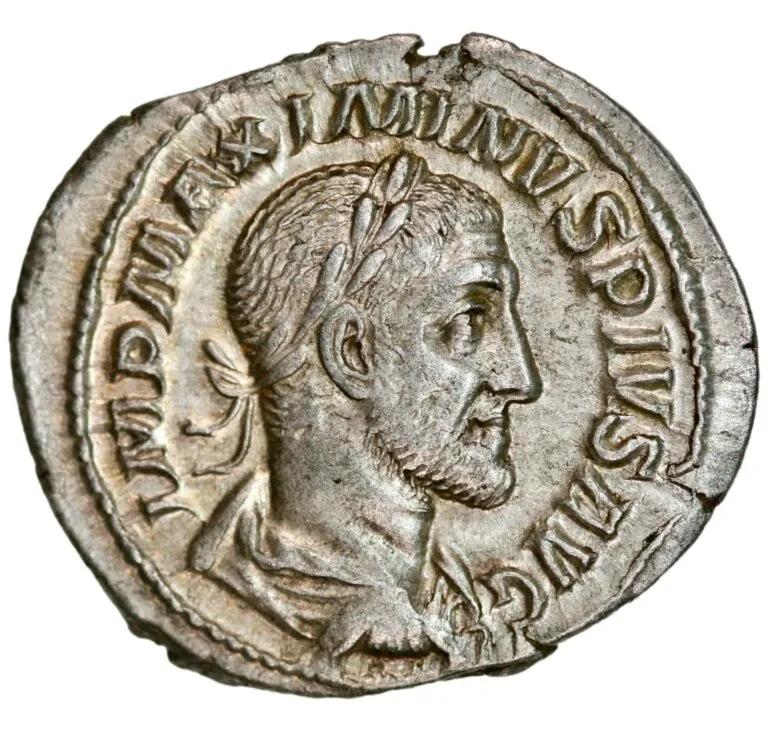
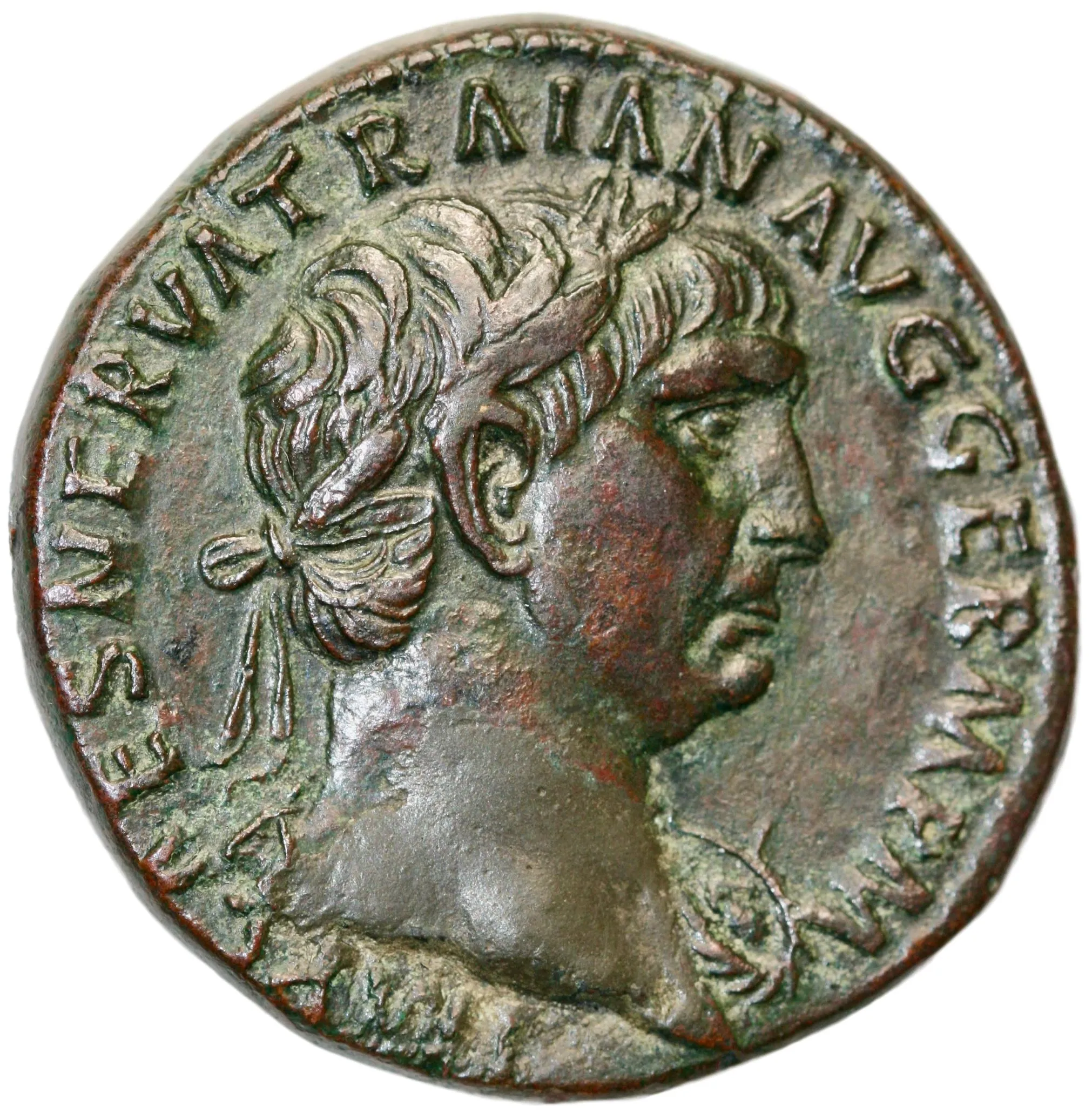
Under Augustus the coinage became a tool of imperial power. The obverse showed the emperor or a member of his family, the reverse gods, virtues, victories and buildings. The abbreviated legends give titles and often the number of years the emperor had held tribunician power, which helps date a coin to a single year. The large brass sestertius gave engravers room for detailed portraits, as on this sestertius of Trajan.
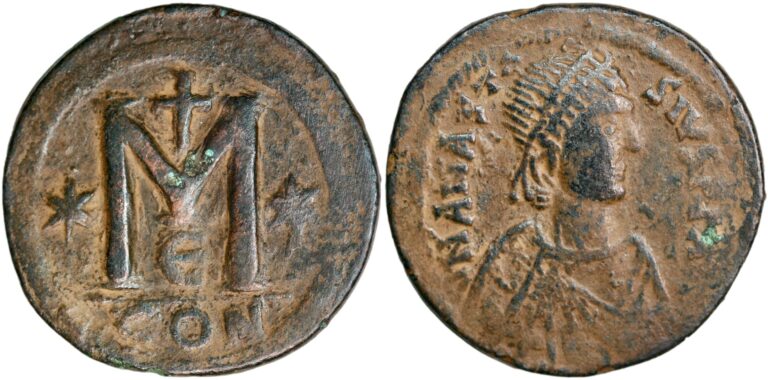
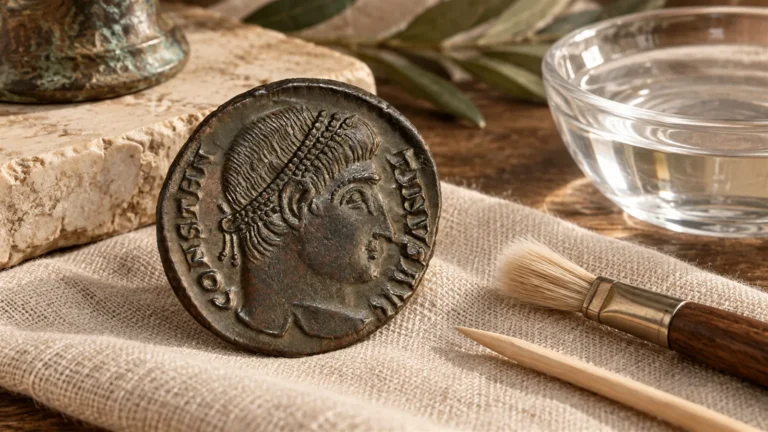
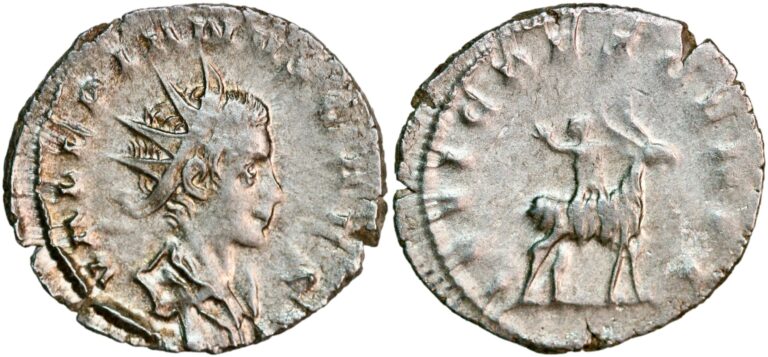
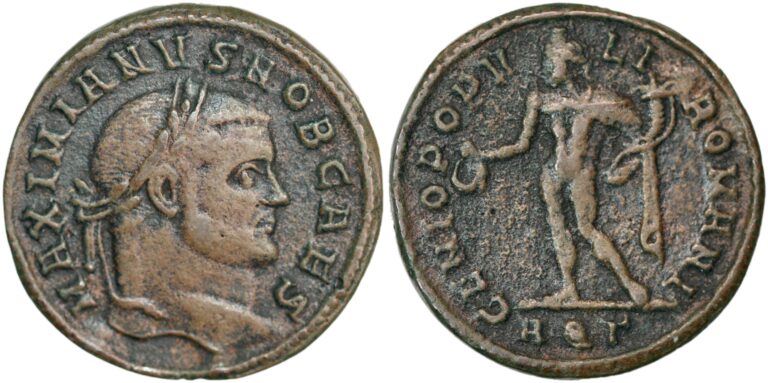
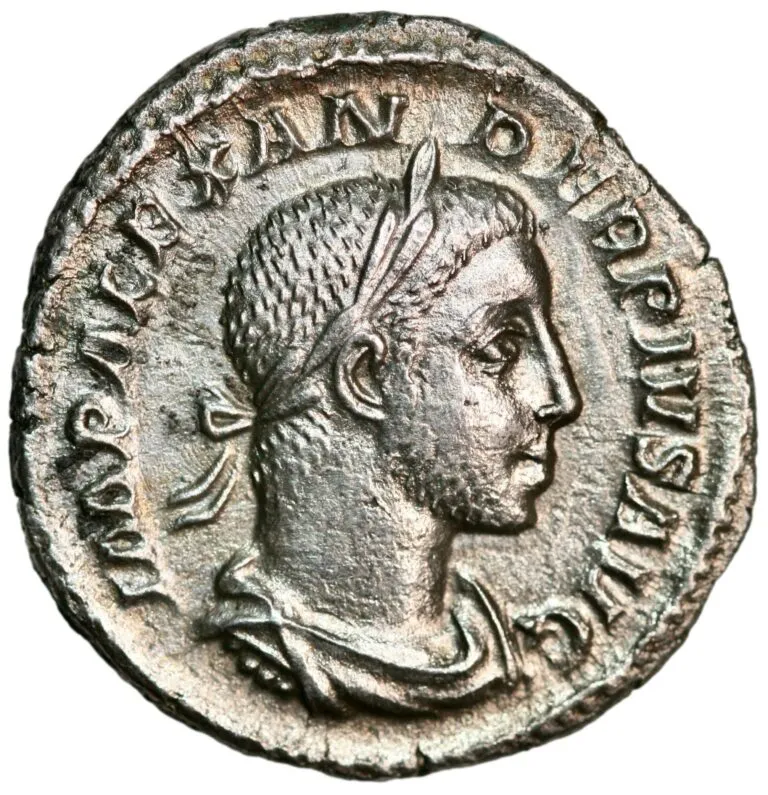
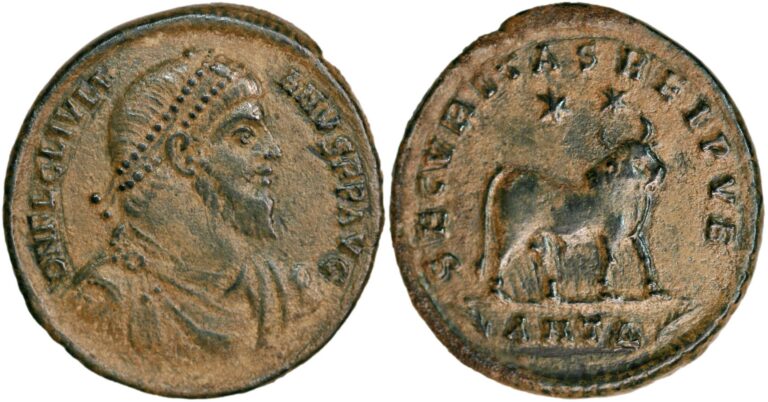
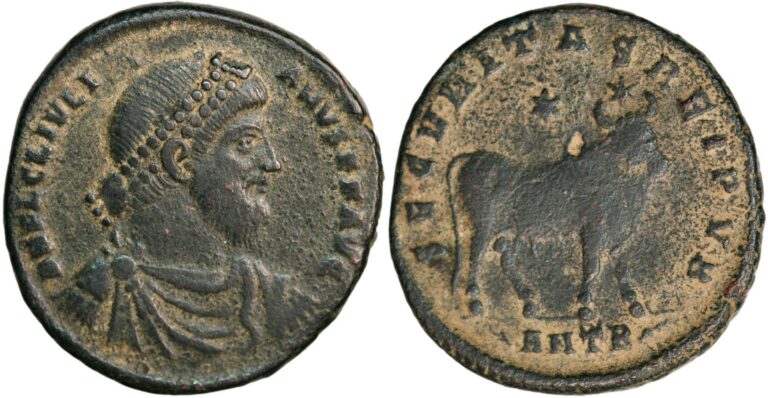
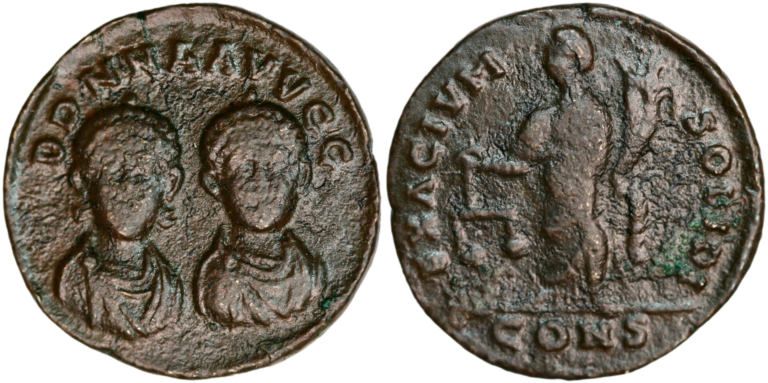
In 215 Caracalla introduced the antoninianus, nominally a double denarius but never with twice the silver. During the crises of the 3rd century its silver content fell to only a few percent. Diocletian’s reforms at the end of the century brought new denominations, among them a large bronze follis, and Constantine the Great introduced the gold solidus, which lived on in the Byzantine Empire. Late Roman bronzes such as the nummus and the double maiorina of Julian II close the series.
Many collectors build their collection around a theme: one coin of each emperor, a single denomination, or reverse types showing a particular god or building. Whatever the theme, the same factors decide the price.
Read more in What is a denarius worth?, How to clean Roman coins (and when not to) and The widow’s mite, about the coins of the Gospels. The eastern empire continues in Byzantine coins.
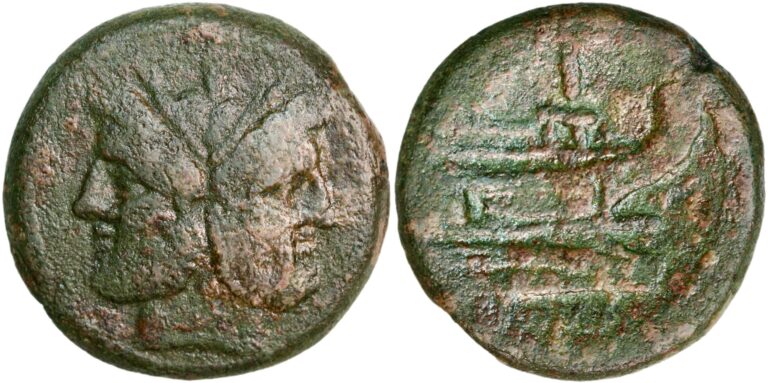
In the early Empire the gold aureus was worth 25 silver denarii, and one denarius was worth 4 brass sestertii or 16 copper asses. From the 3rd century new coins such as the antoninianus, the follis and the gold solidus took over.
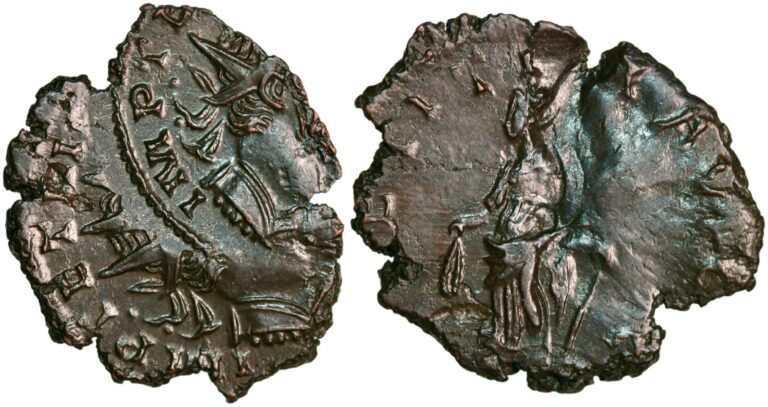
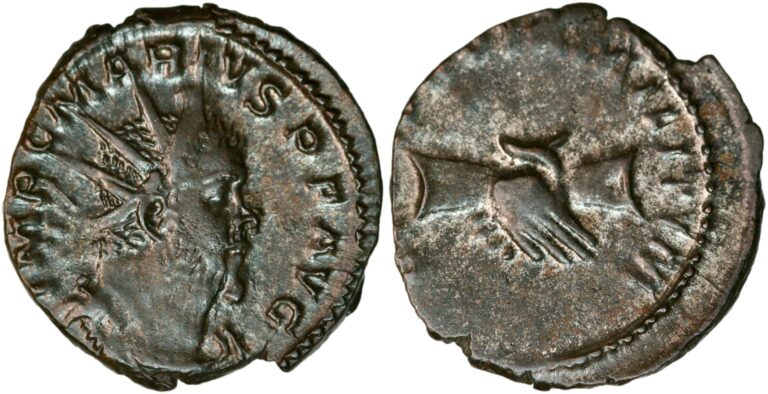
The antoninianus was introduced by Caracalla in 215 and was valued as a double denarius. The emperor wears a radiate crown on it. Its silver content fell sharply during the 3rd century, and late examples are almost pure bronze with a thin silvering.
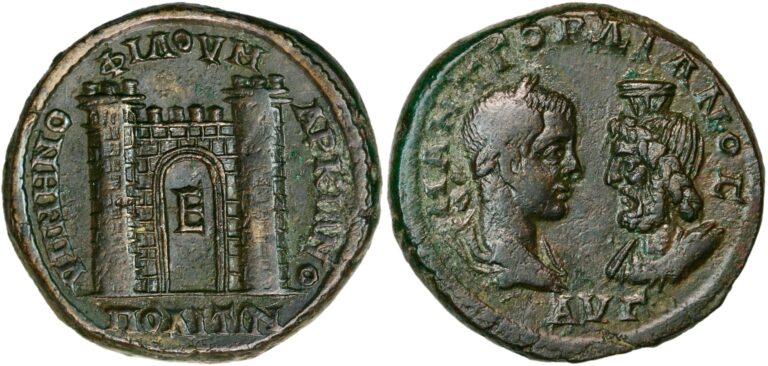
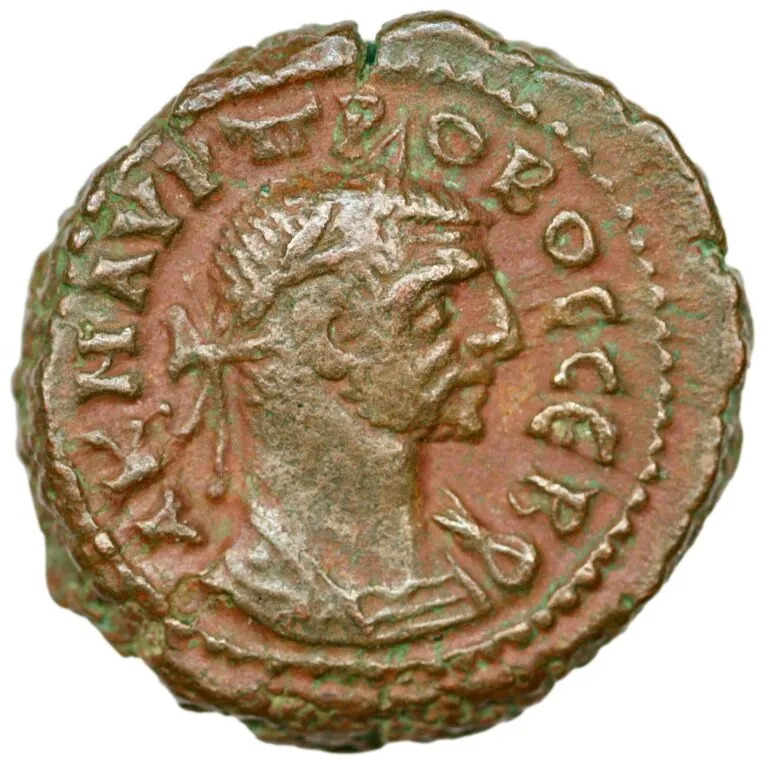
Provincial coins were struck by cities and provinces in the eastern part of the Empire, usually with Greek legends and local denominations such as the tetradrachm. They carry the emperor's portrait, but their reverses often show local gods and buildings.
Yes. Every item is researched and described as accurately as possible, and Denarius guarantees that everything sold is genuine and as described.
Every item gets its own number when it is catalogued. The number is shown on the product page, so you always know exactly which example it is.
Yes. We ship worldwide. Shipping method and price are shown at checkout before you pay.
Read more
As, sestertius, denarius, antoninianus, nummus, maiorina and solidus: the names of Roman coins, what they were worth and which emperors introduced them.
From Anastasius' big follis of 498 to the fall of Constantinople in 1453: how to read Byzantine coins, what the M and…
Cleaning ancient coins usually does more harm than good. Here is when to leave a Roman coin alone, and how to clean…