The widow’s mite: the coin from the Gospel
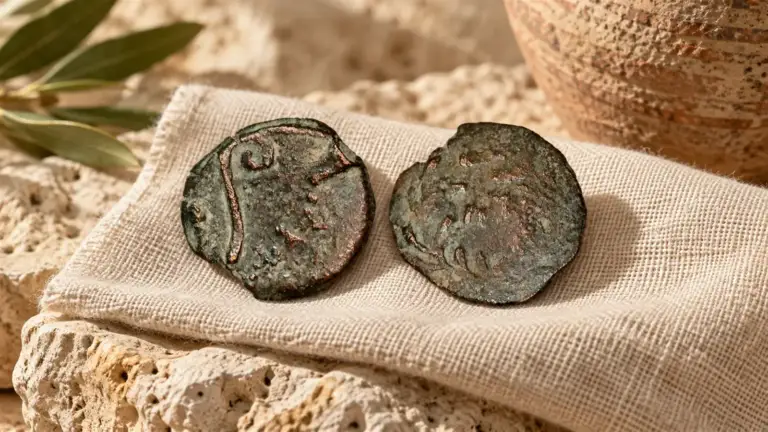
The widow's mite is the tiny bronze coin from Mark 12 and Luke 21. Here is what a lepton was, which ancient…
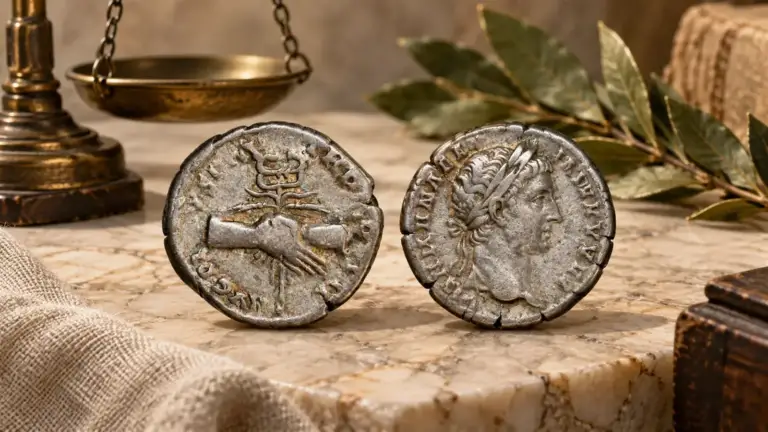
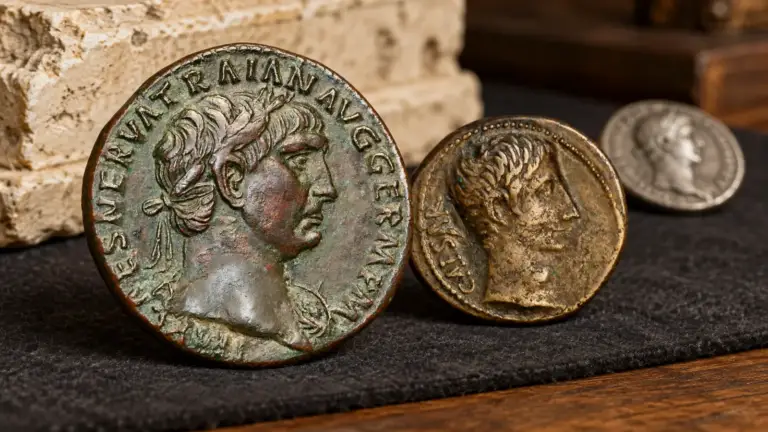
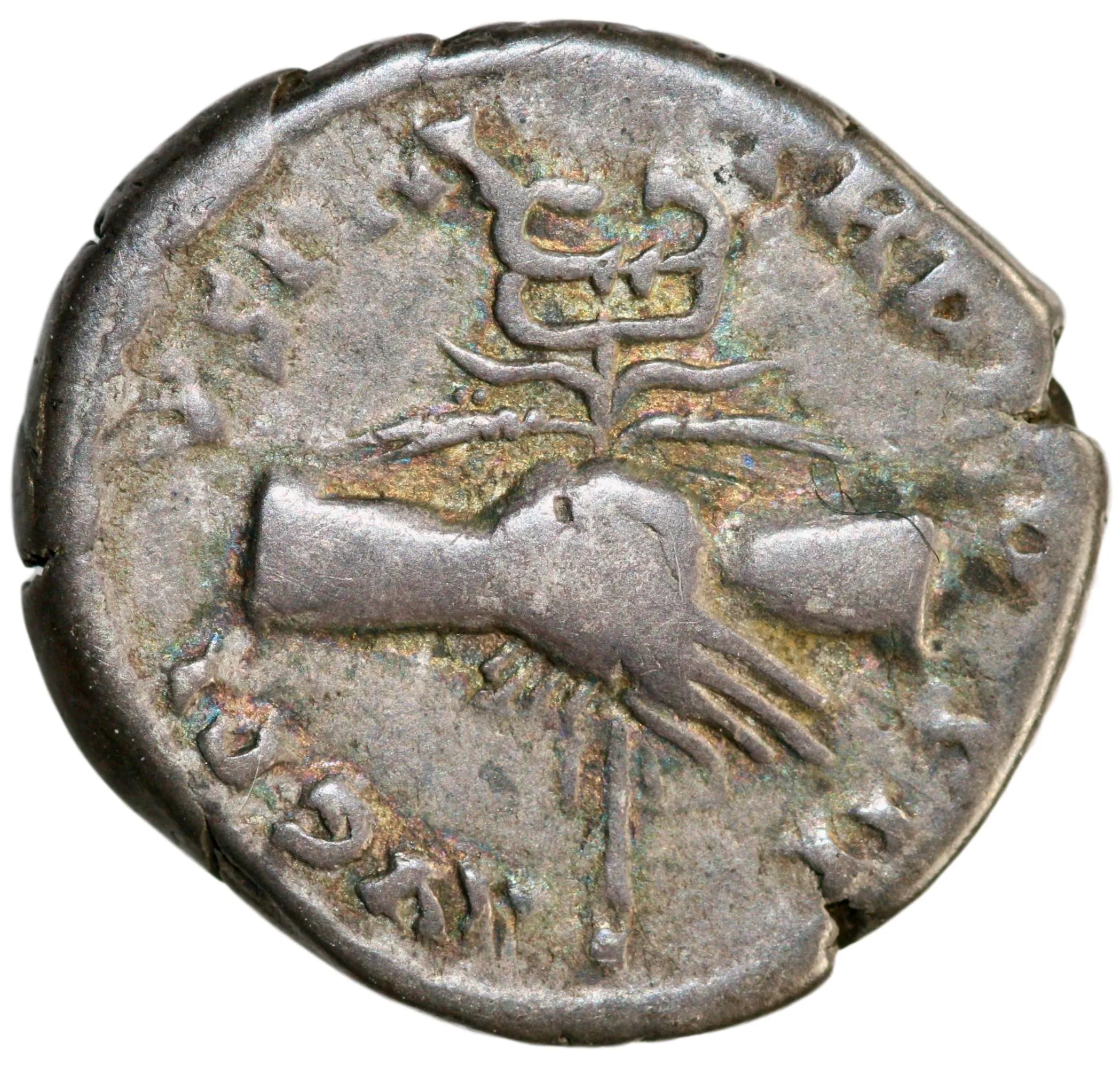
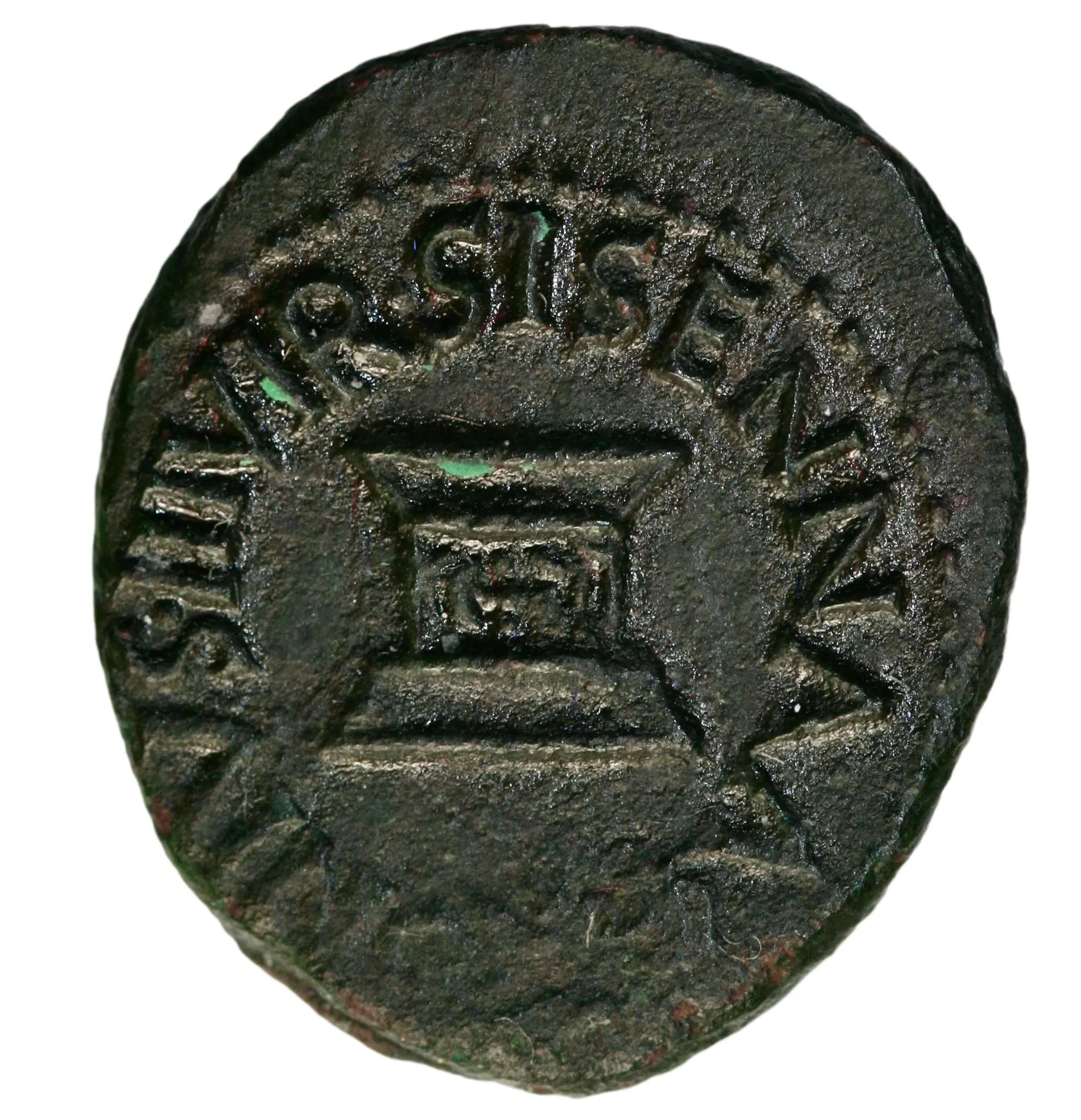
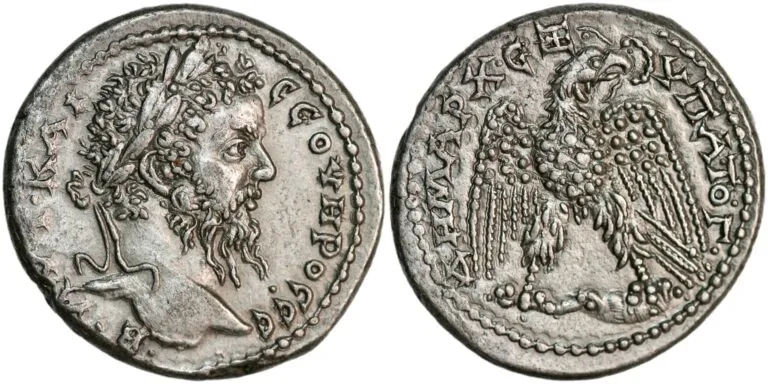
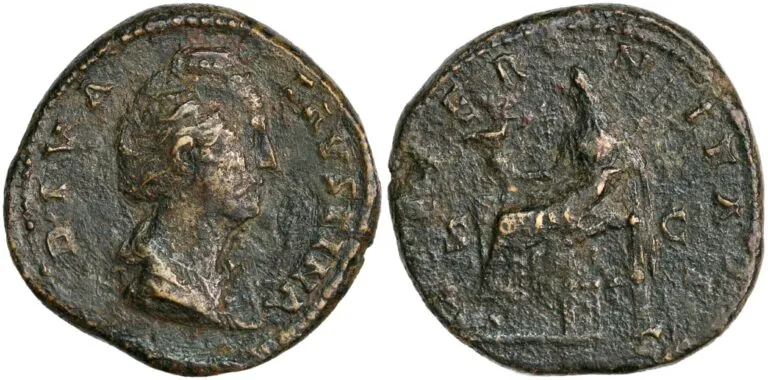
Roman coins from Augustus to the early 200s: asses and a quadrans of Augustus, sestertii of Trajan and the deified Faustina, denarii of Antoninus Pius, and provincial tetradrachms from Antioch. Each coin has its own protocol number and is guaranteed genuine.
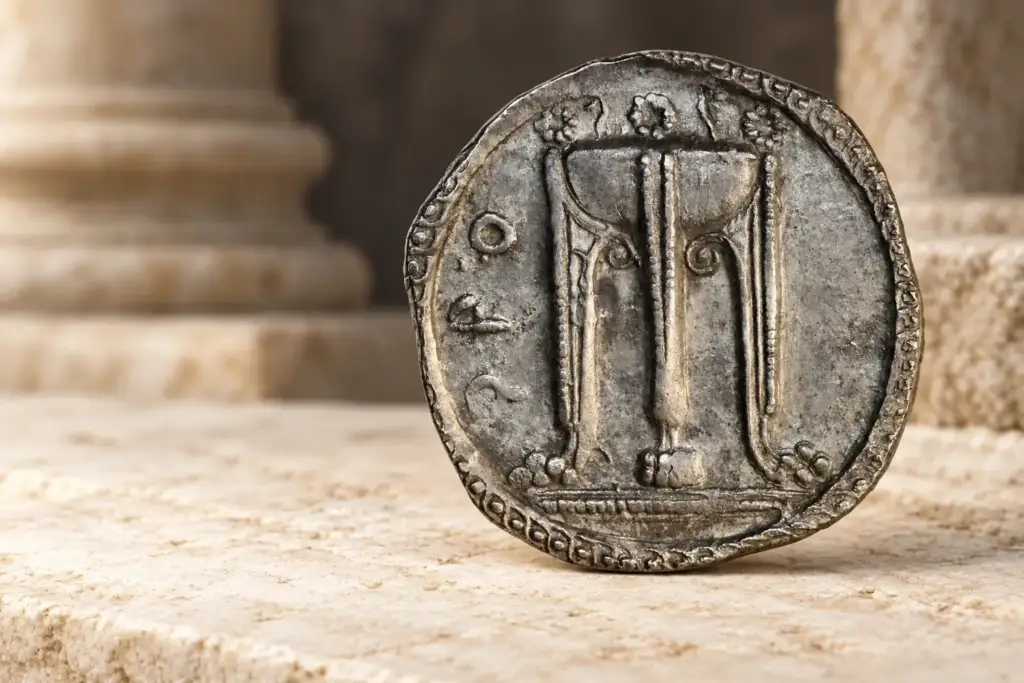
When Octavian became Augustus in 27 BC, he organised a coinage that lasted for more than two centuries: the gold aureus, the silver denarius and a range of base-metal coins – the large sestertius and the dupondius in brass (orichalcum), the as in copper and the small quadrans, a quarter of an as. One aureus was worth 25 denarii, one denarius four sestertii and one sestertius four asses. Bronze coins struck in Rome usually carry the letters S C, senatus consulto, “by decree of the Senate”.
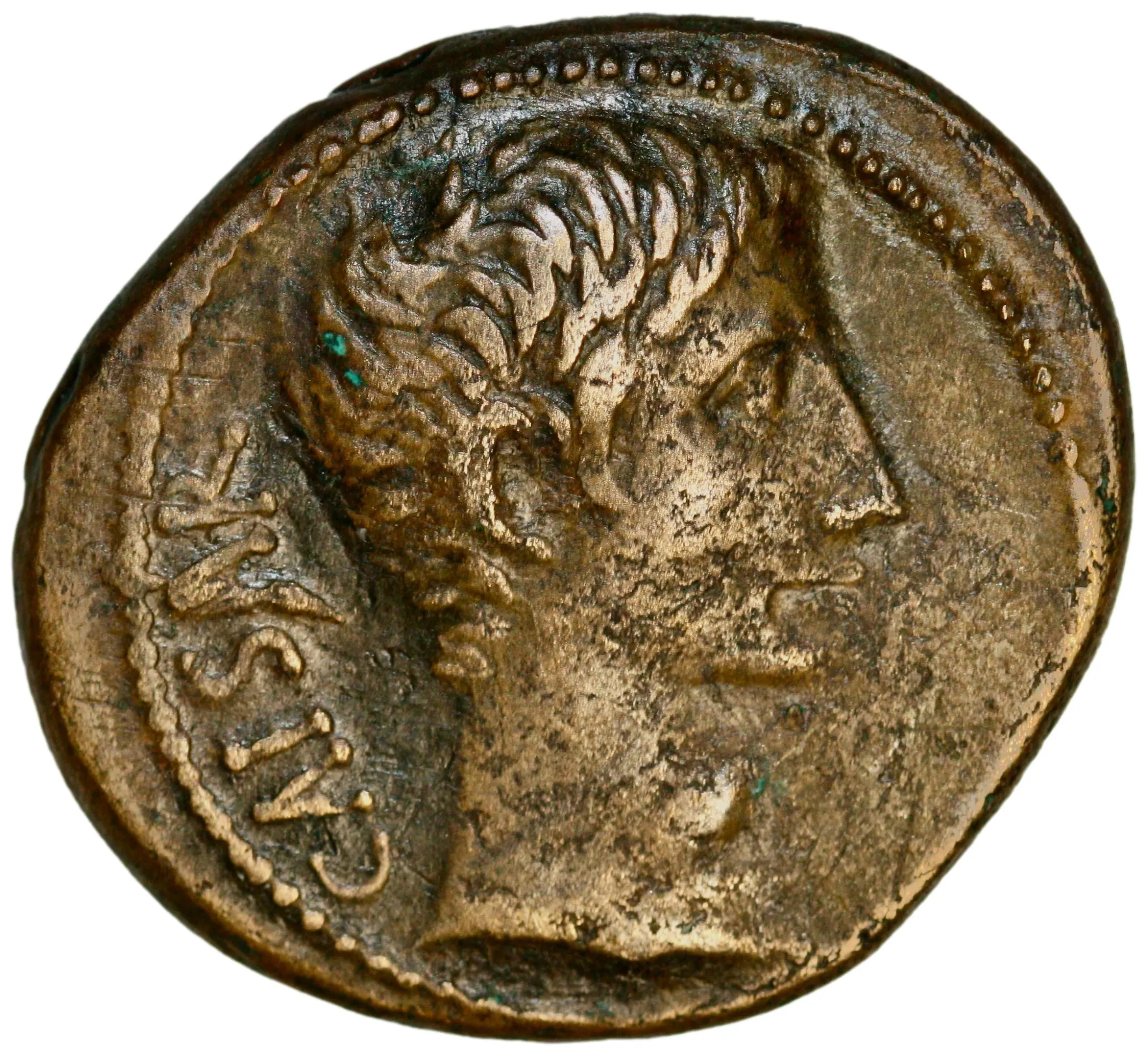
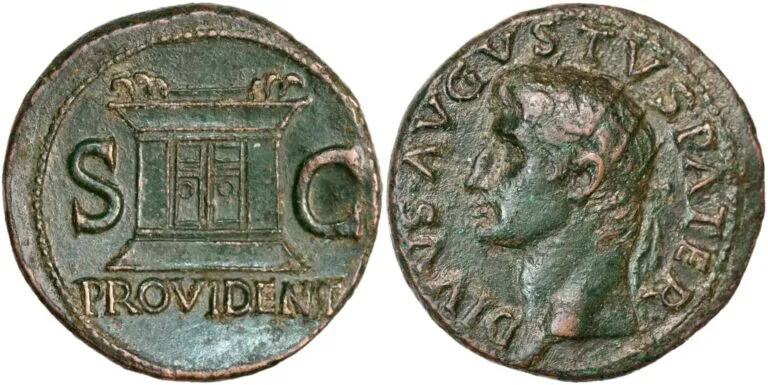
This category covers the period from Augustus to the beginning of the 200s. Among the coins are an as of Augustus from Asia Minor with the misspelled legend CAISAR, a quadrans from Rome, and an as struck under Tiberius in honour of the deified Augustus.
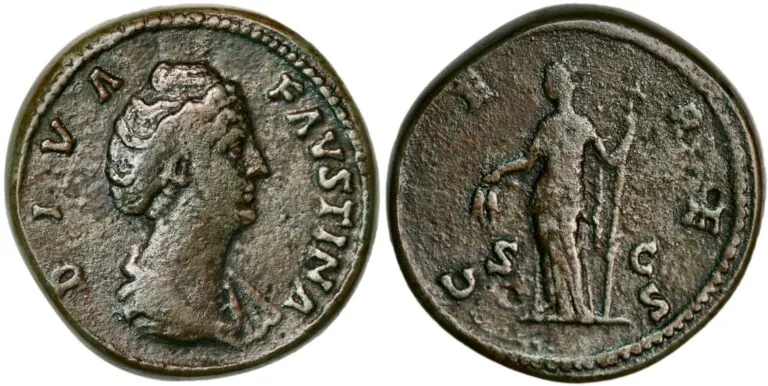
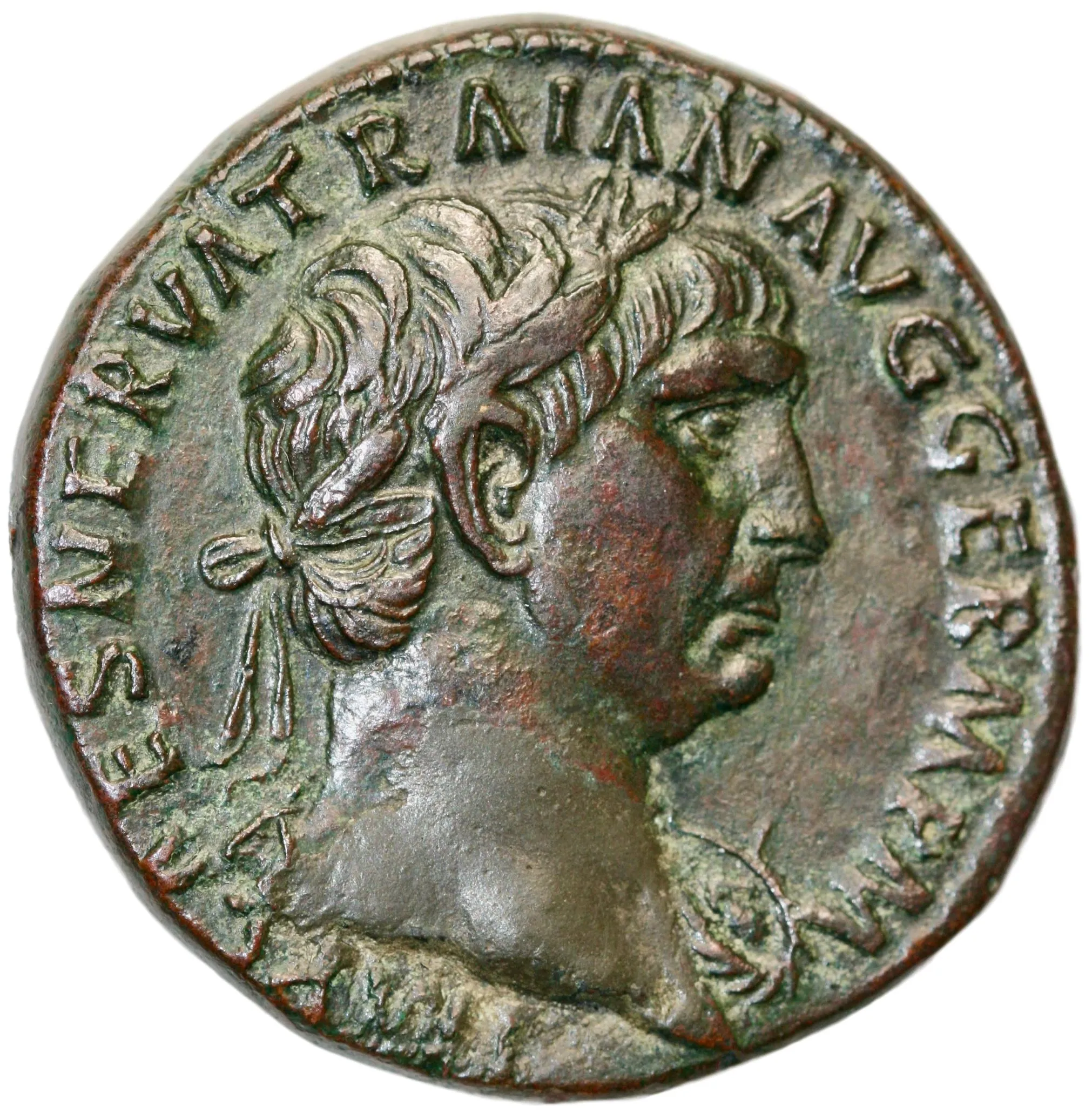
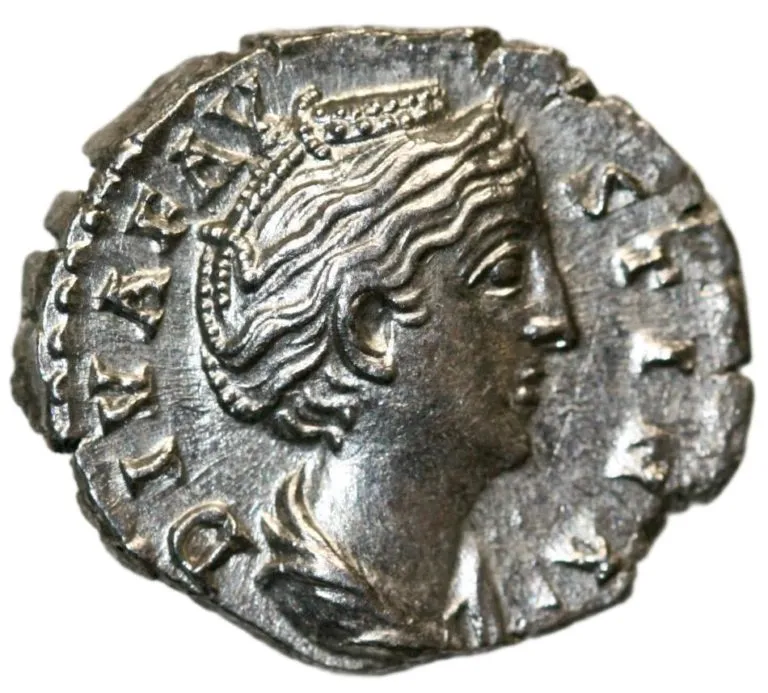
Imperial coins were also a means of communication. The obverse carried the portrait and titles of the emperor or a member of his family, the reverse a personification, a deity or a political message. When Faustina the Elder, wife of Antoninus Pius, died early in his reign, she was deified, and a large series of coins with the legend DIVA FAVSTINA was struck in her memory. Sestertii and denarii from this series, together with the large sestertii of Trajan, show the fine portraiture of the 2nd century.
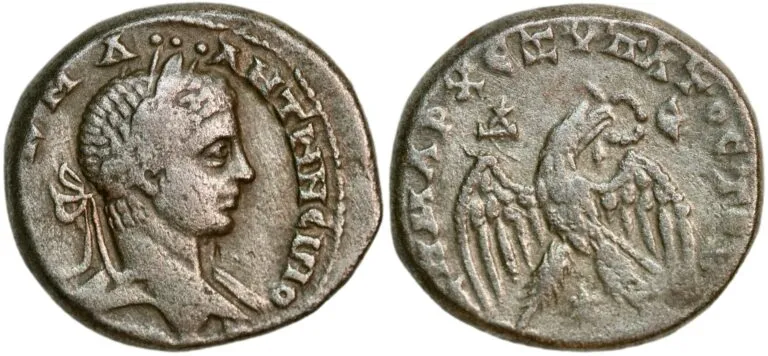
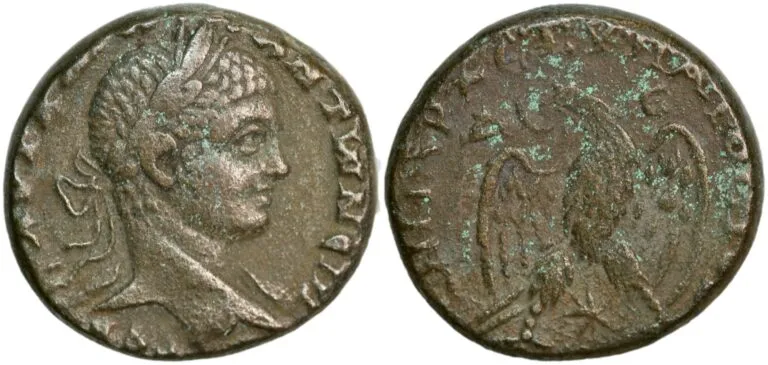
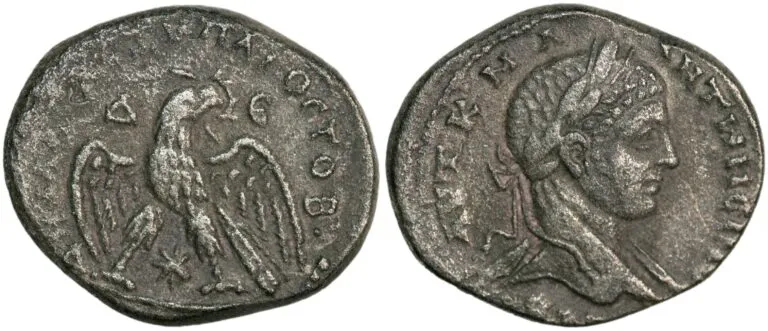
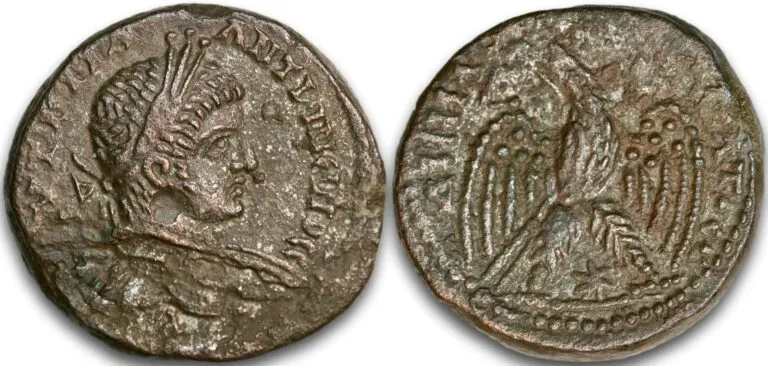
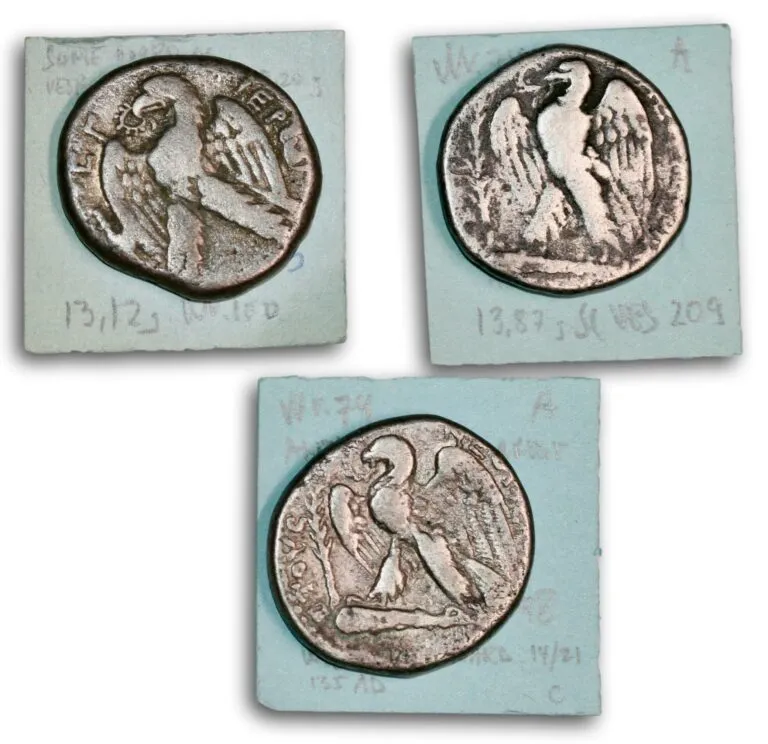
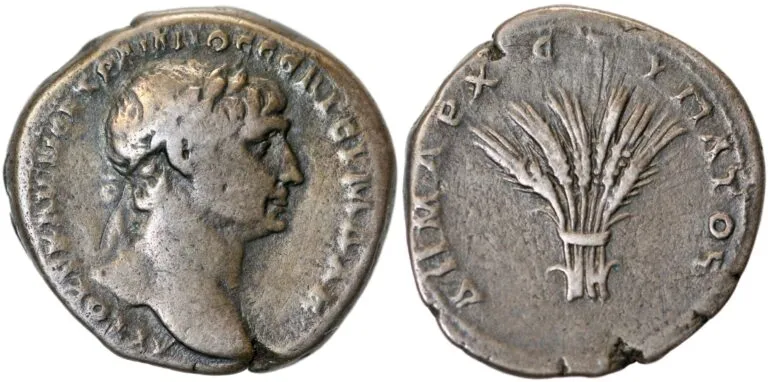
In the eastern provinces, Greek-style coinage continued under Roman rule. Antioch in Syria struck silver tetradrachms with the emperor’s portrait and Greek legends; here you find examples of Vespasian, Septimius Severus and Elagabalus. A tridrachm of Trajan from Bostra, capital of the new province of Arabia, shows a bundle of grain ears.
The denarius began in nearly pure silver, but from Nero’s reform around 64 AD its weight and silver content were reduced, and the debasement accelerated under Septimius Severus. With sestertii, collectors look above all for a clear portrait, a full legend and an attractive, stable patina; with denarii, a sharp strike and good metal. Catalogue references such as RIC, BMC and Sear are given where possible, as is provenance when known, for example an old Jacques Schulman collector’s envelope. The story continues under 221 – 313 AD, and the earlier coins under Roman republican.
The denarius is a small silver coin, while the sestertius is a large brass coin worth a quarter of a denarius. Because of its size, often more than 20 grams, the sestertius gave room for detailed portraits and reverse scenes, and it is popular with collectors for that reason.
It marks a member of the imperial family who has been officially deified, usually after death. Such coins were struck in their memory. Both the deified Augustus and the deified Faustina the Elder appear in this category.
They are coins struck in the provinces, often with Greek legends and local denominations such as the tetradrachm. They mainly circulated in their own region and are an important part of the coinage of the Roman Empire.
Yes. Every item is researched and described as accurately as possible, and Denarius guarantees that everything sold is genuine and as described.
Every item gets its own number when it is catalogued. The number is shown on the product page, so you always know exactly which example it is.
Yes. We ship worldwide. Shipping method and price are shown at checkout before you pay.
Read more
The widow's mite is the tiny bronze coin from Mark 12 and Luke 21. Here is what a lepton was, which ancient…
The denarius was Rome's main silver coin for more than four centuries. Here is what it was worth in ancient Rome, and…
As, sestertius, denarius, antoninianus, nummus, maiorina and solidus: the names of Roman coins, what they were worth and which emperors introduced them.