Rare Norwegian coins: Norway’s most valuable dates and types
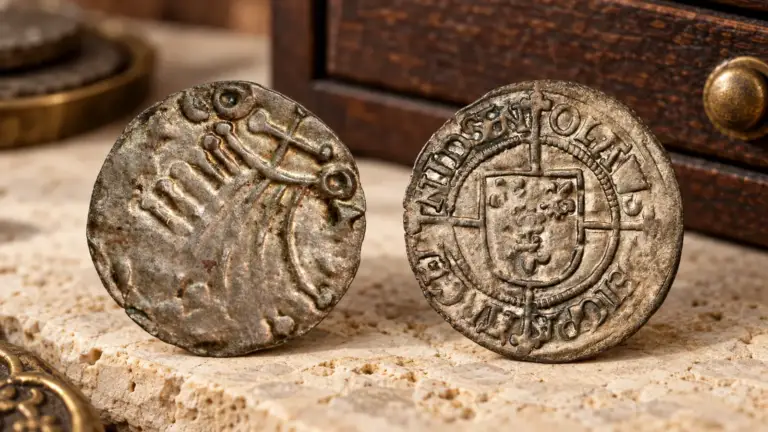
Which Norwegian coins are the rarest, and why? From Olav Kyrre's pennies and the archbishop's skillings to the Schydtz coins of 1689…
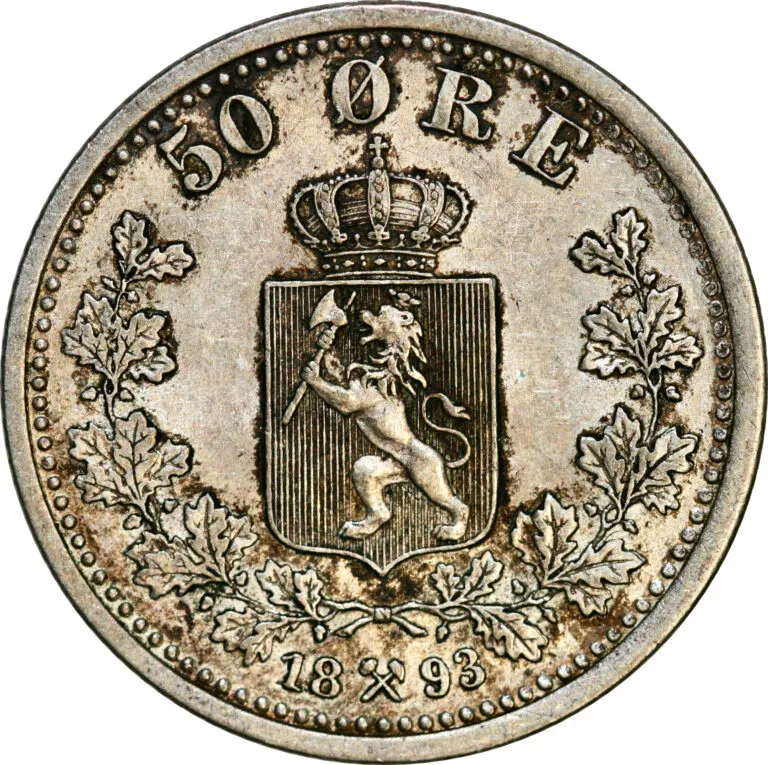
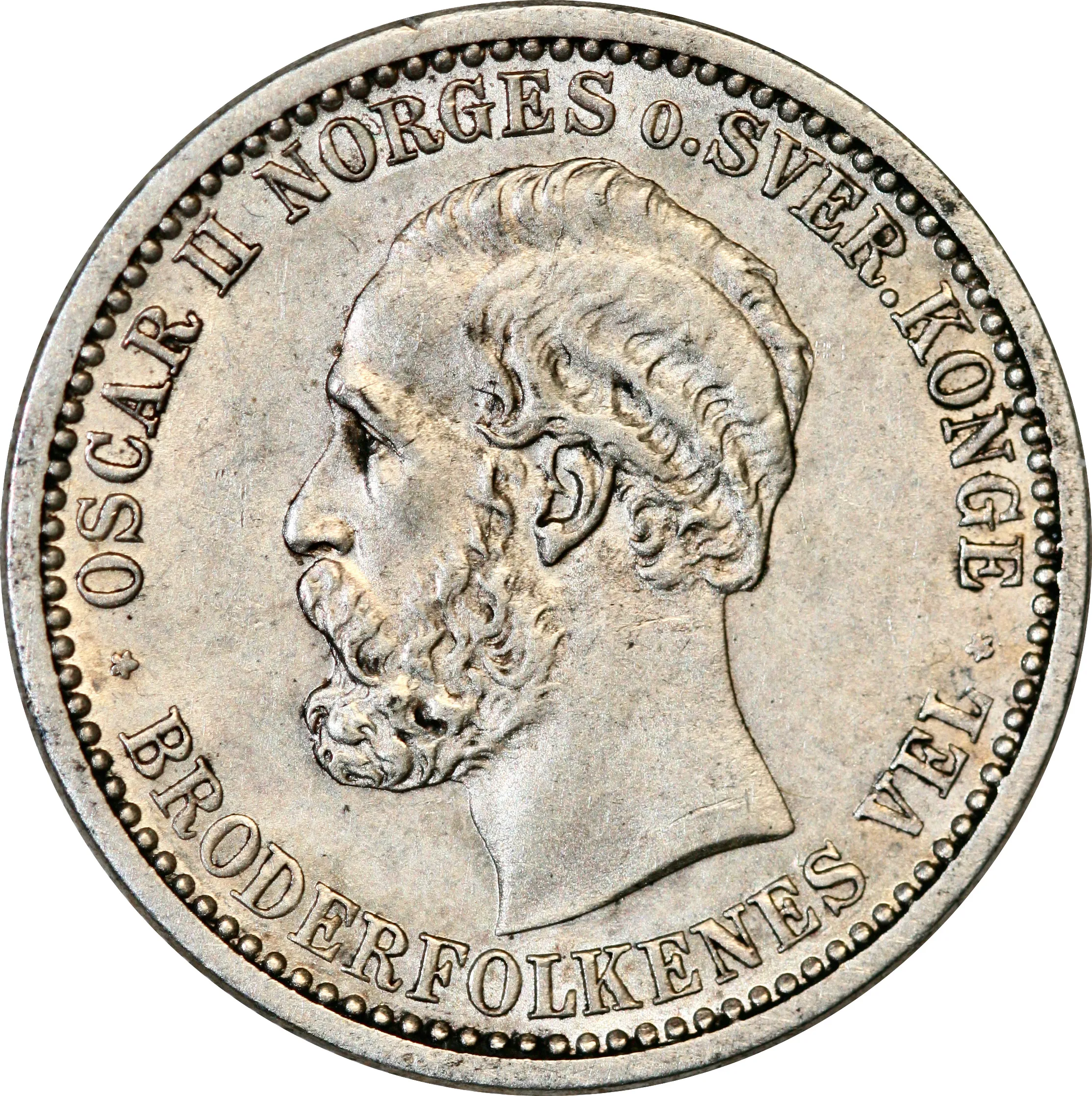
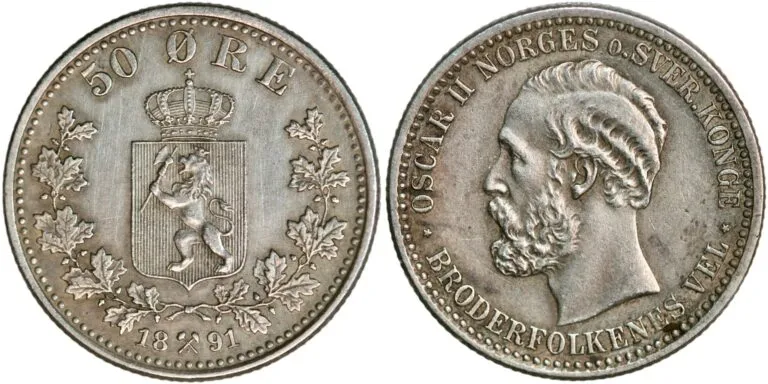
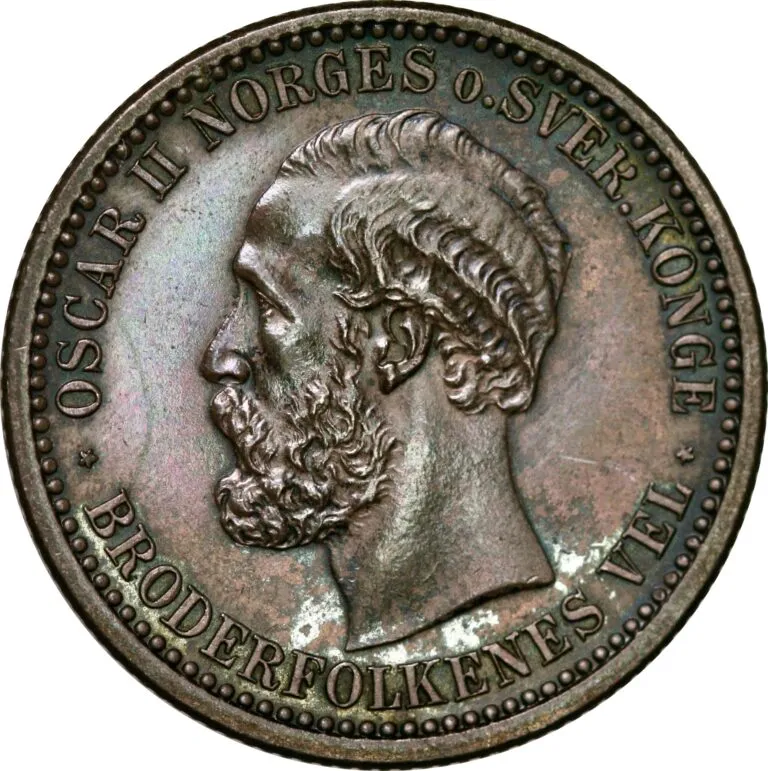
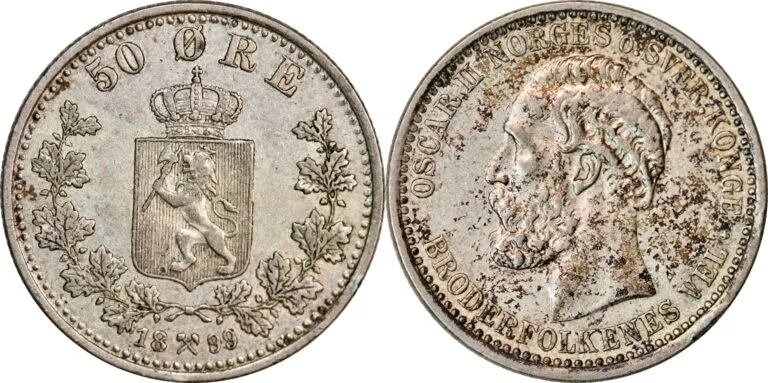
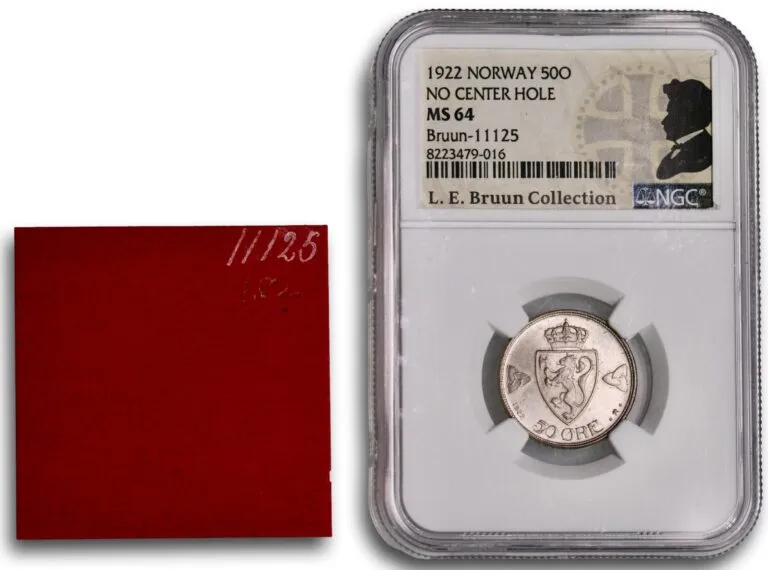
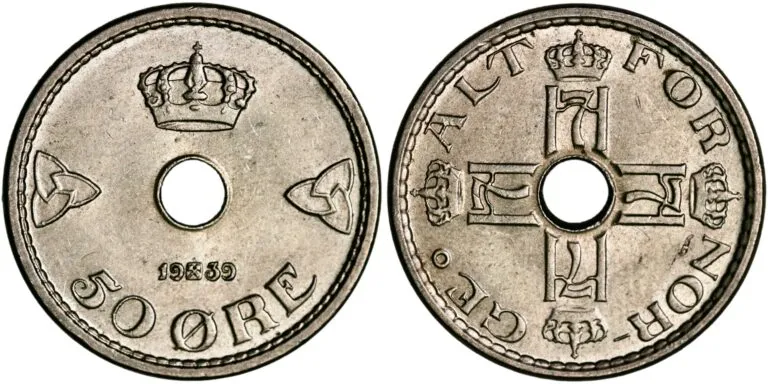
Norwegian 50 øre coins: five Oscar II silver coins from 1891 to 1900, and Haakon VII coins in copper-nickel from 1922 and 1939, several in mint state. Every coin is photographed, has its own protocol number and is guaranteed genuine.
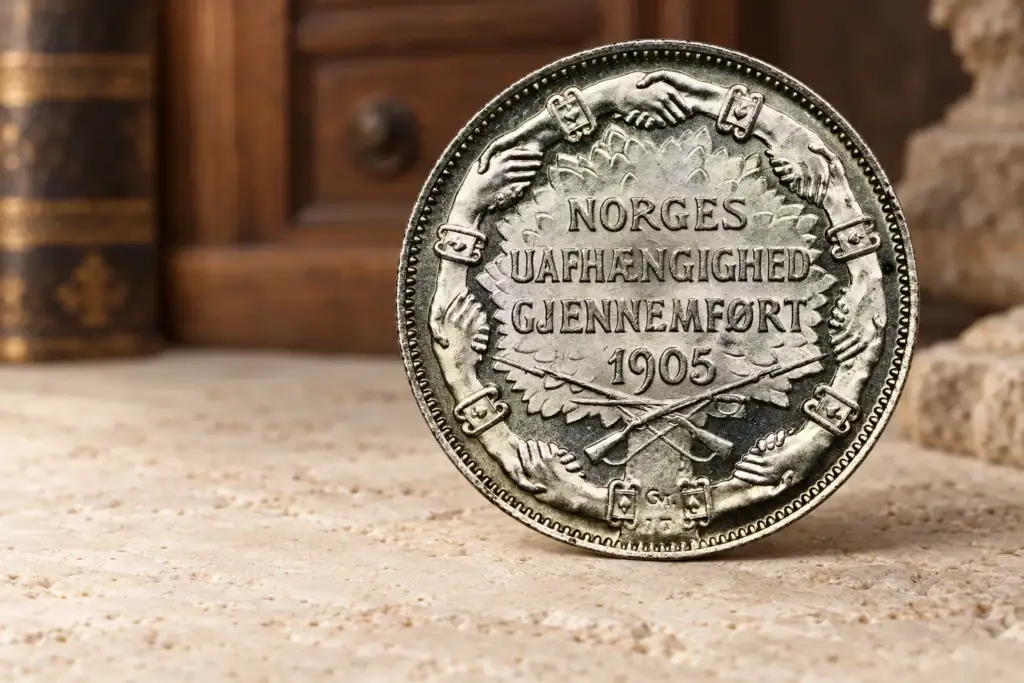
The 50 øre was among the first coins of the Norwegian krone. The earliest pieces, dated 1874 and 1875, carry a double value: 50 øre and 15 skilling, as Norway was moving from speciedaler and skilling to kroner and øre. From 1877 the coin carried only the øre value. The Oscar II type was struck in 600/1000 silver, weighs 5 grams and was made until 1904. Haakon VII’s silver 50 øre followed in 1909–1919.
In 1920 silver gave way to copper-nickel. The 50 øre of 1920–1923 exists both with and without a hole, and from 1926 to 1949 the coin was holed, with the crowned monogram of Haakon VII. During the German occupation, 50 øre coins were struck in zinc in 1941–1945, with the royal crown and monogram removed. The government in London had its own 50 øre struck in England in nickel-brass, keeping the pre-war design.
After the war came a coin without a hole (1953–1957), then Olav V’s 50 øre with an elkhound (1958–1973) and a type with the national arms (1974–1991). Under Harald V the coin was first struck in copper-nickel; from 1996 it became smaller and was struck in a bronze-coloured copper alloy with a beast from the Urnes stave church. The last 50 øre was struck in 2011, and the coin ceased to be legal tender in 2012.
For the silver coins, condition and surfaces decide: untouched coins with original toning are preferred, and coins in mint state with full lustre are much harder to find than worn ones. Collectors also note the year, since the number struck varied a lot. For the copper-nickel coins, sharpness around the monograms and the hole matters. Some coins have a documented provenance, such as earlier collections or auction sales, which adds interest. More denominations are found under Norway after 1874.
Yes, until 1919. The silver 50 øre was struck in 600/1000 silver and weighs 5 grams. From 1920 the coin was made in copper-nickel, and during the occupation in zinc.
The first 50 øre coins, dated 1874 and 1875, show the value in both the new and the old system: 50 øre and 15 skilling. Norway switched from speciedaler and skilling to kroner and øre in these years, and the double value was dropped in 1877.
The last 50 øre coins were struck in 2011, and the coin ceased to be legal tender in 2012. Norway has had no øre coins in circulation since.
Yes. Every item is researched and described as accurately as possible, and Denarius guarantees that everything sold is genuine and as described.
Every item gets its own number when it is catalogued. The number is shown on the product page, so you always know exactly which example it is.
Yes. We ship worldwide. Shipping method and price are shown at checkout before you pay.
Read more
Which Norwegian coins are the rarest, and why? From Olav Kyrre's pennies and the archbishop's skillings to the Schydtz coins of 1689…
Most old Norwegian coins are worth little, but condition, silver, gold and rare dates can command high prices. Here is the price…
A thousand years of Norwegian coins in one guide: the main periods, kings and mints, how grading works in Norway, and how…