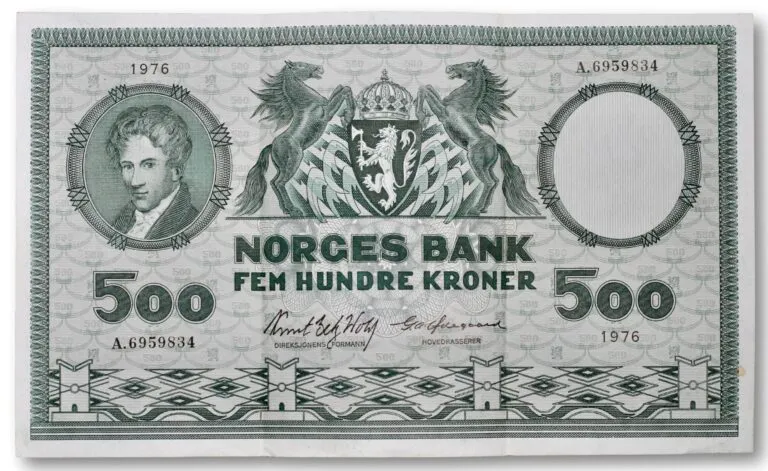
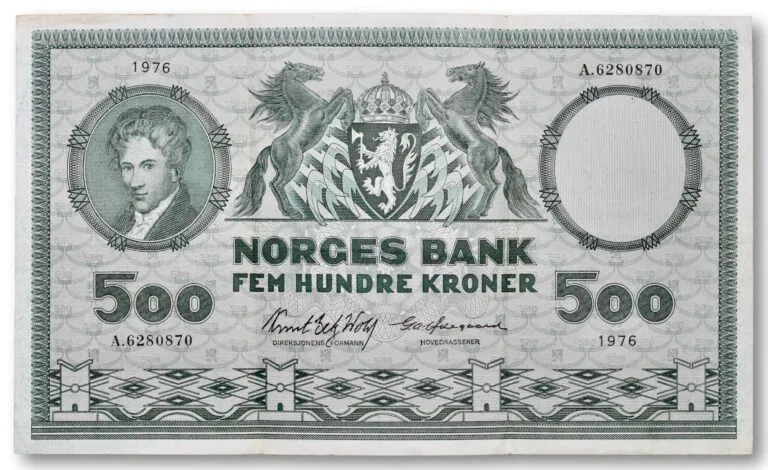
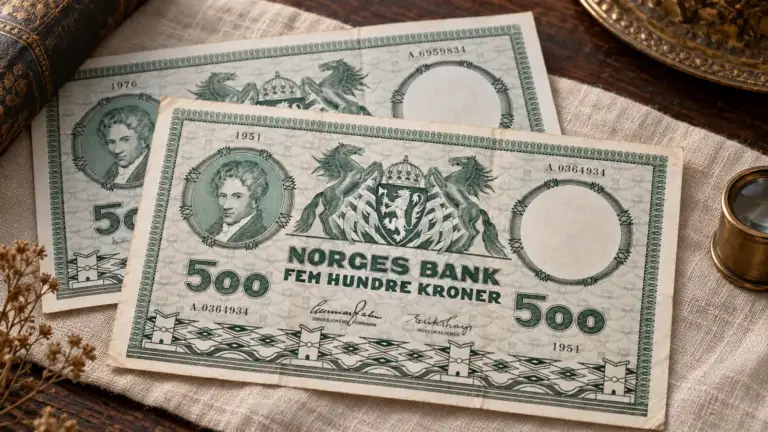
Old Norwegian banknotes: the 500-krone note and other withdrawn series
Which old Norwegian banknotes can still be exchanged at Norges Bank, and which only have collector value? The rules, the 500-krone note…
Norwegian banknotes from the early 1800s to recent series. Every note is photographed, graded and catalogued with its own number.
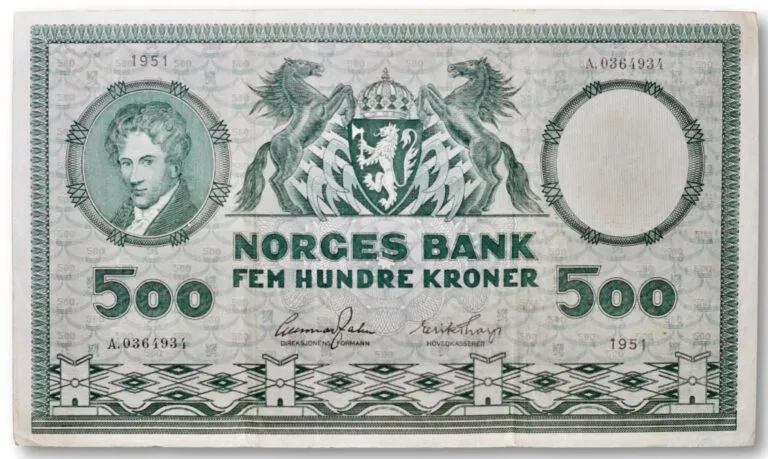
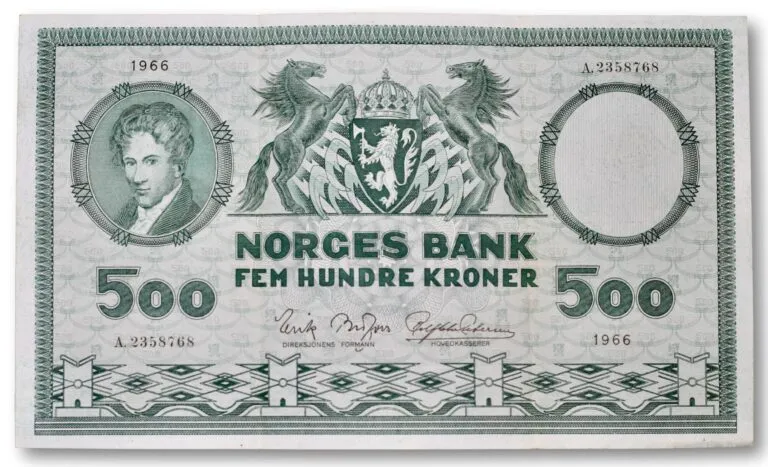
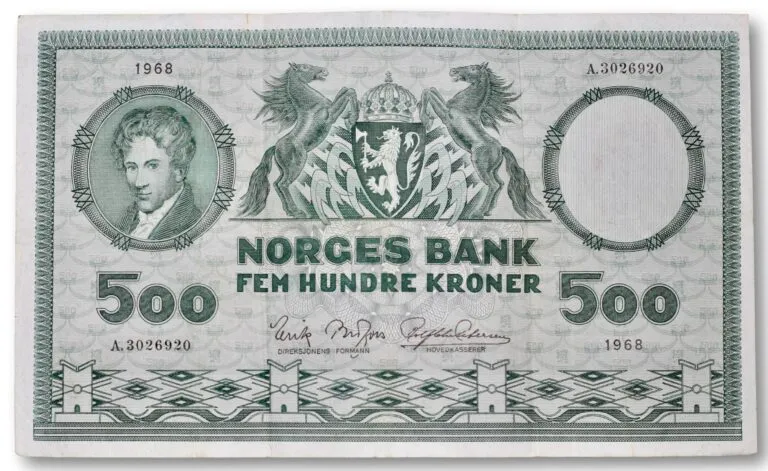
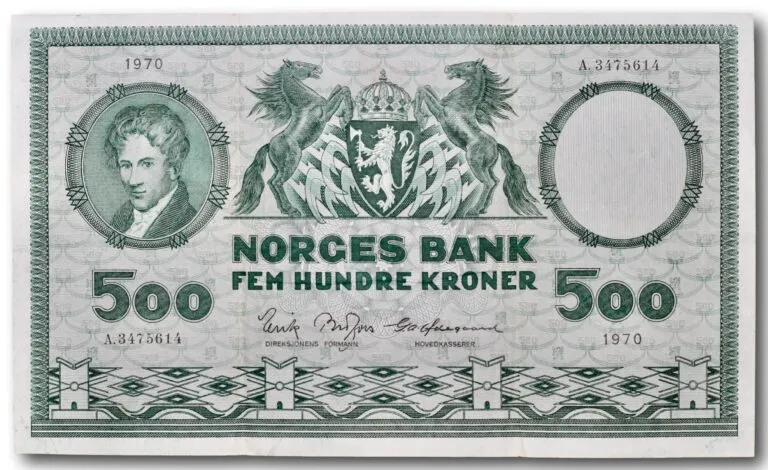
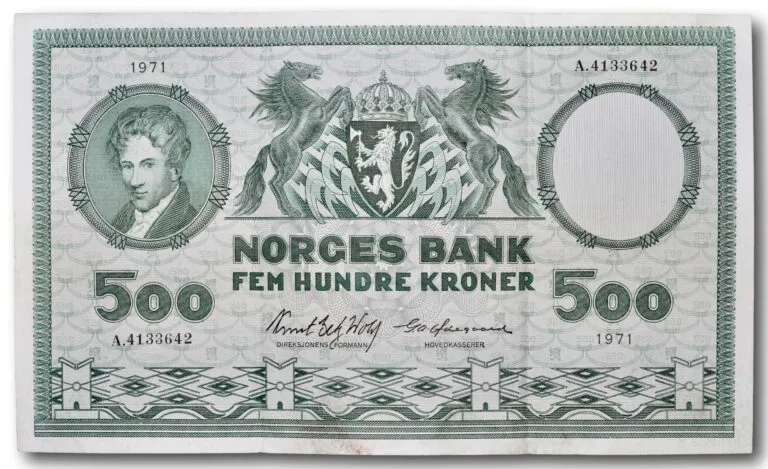
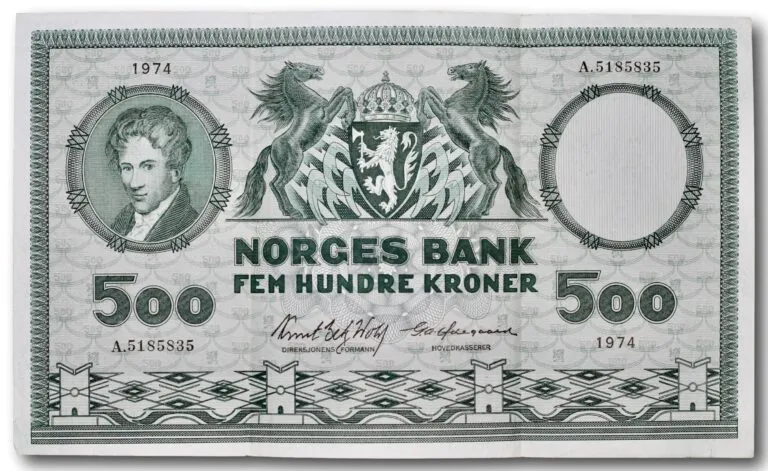
This category holds Norwegian banknotes from the Danish-Norwegian era to the late 20th century: rigsdaler and rigsbankdaler notes from before Norges Bank, London notes and specimens from the Second World War, the 500-krone notes of Series IV, and proofs and replacement notes from later series. Every note is photographed, graded and given its own protocol number.
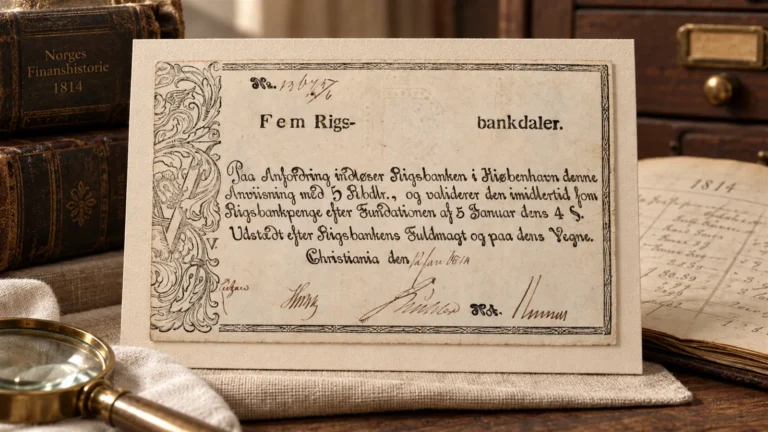
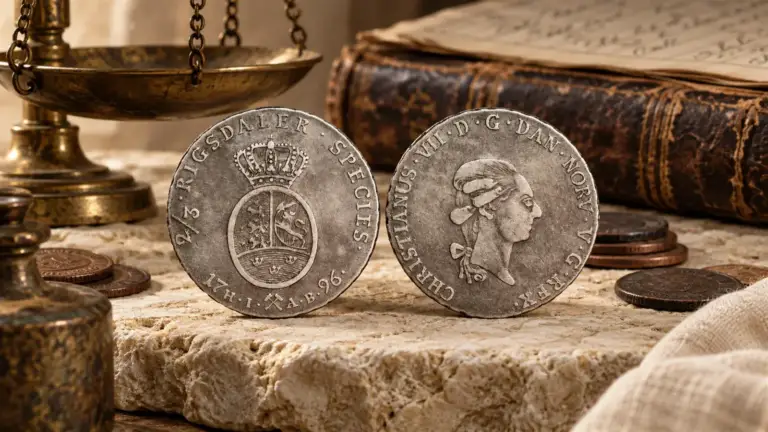
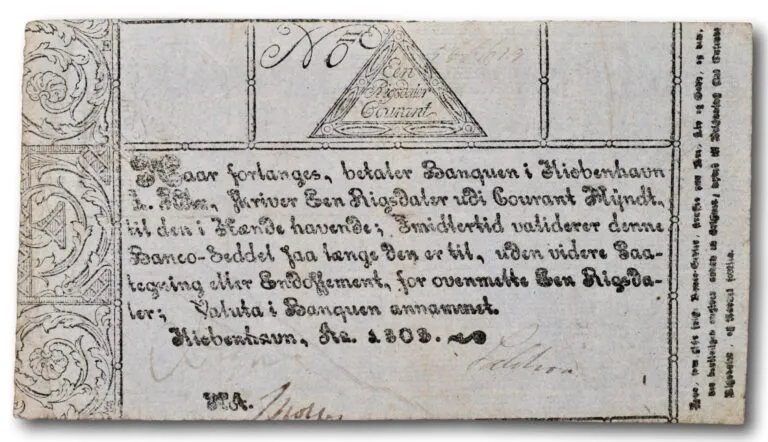
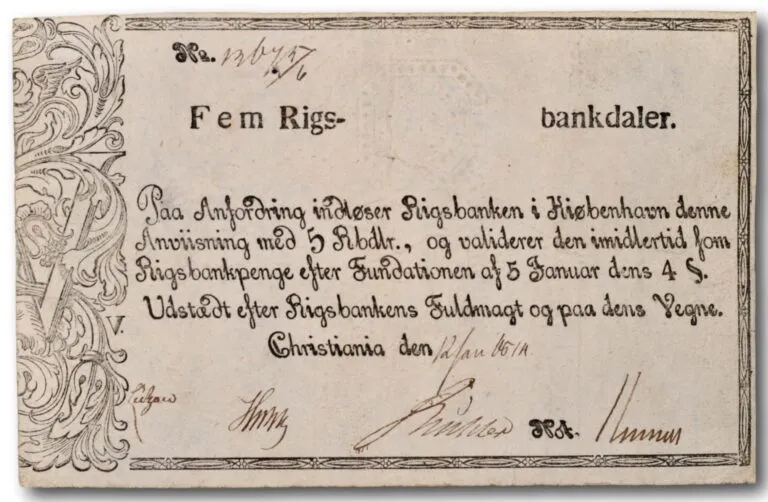
The first Norwegian banknotes were issued in 1695 by the Bergen merchant Jørgen thor Møhlen, but the experiment lasted only about a year. From 1736 Danish-Norwegian notes in rigsdaler courant circulated, and they lost value as the state paid for its wars with paper money. After the state bankruptcy of 1813 the rigsbankdaler replaced the old rigsdaler. The 5 rigsbankdaler 1814 dates from the year Norway left the union with Denmark.
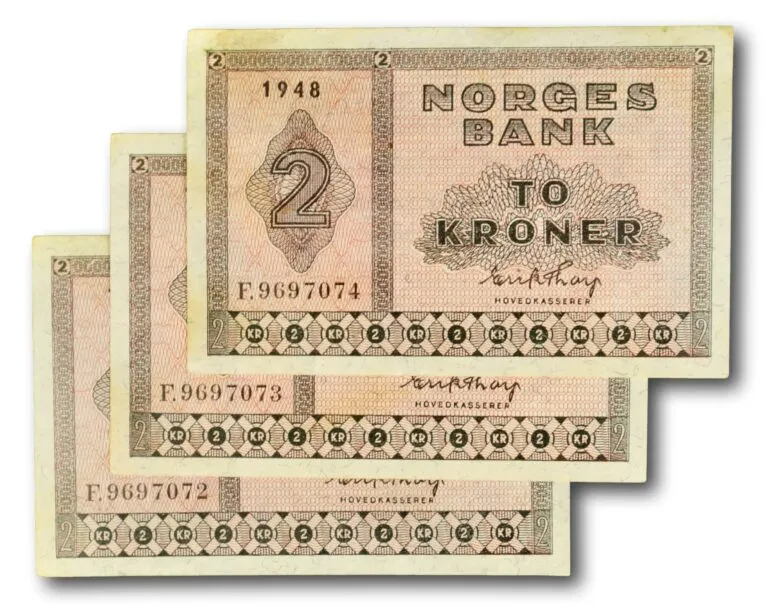
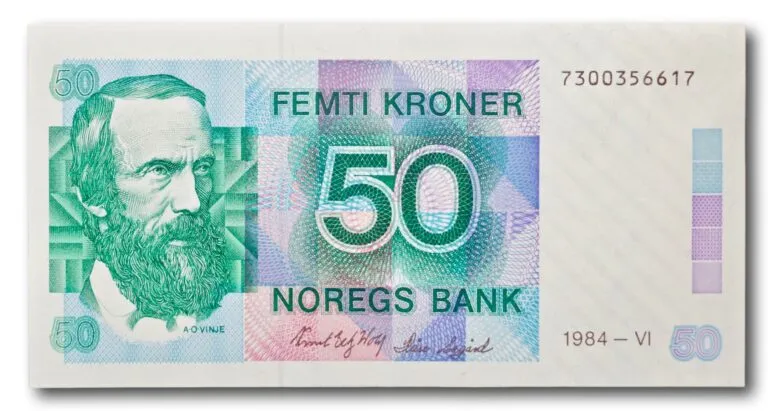
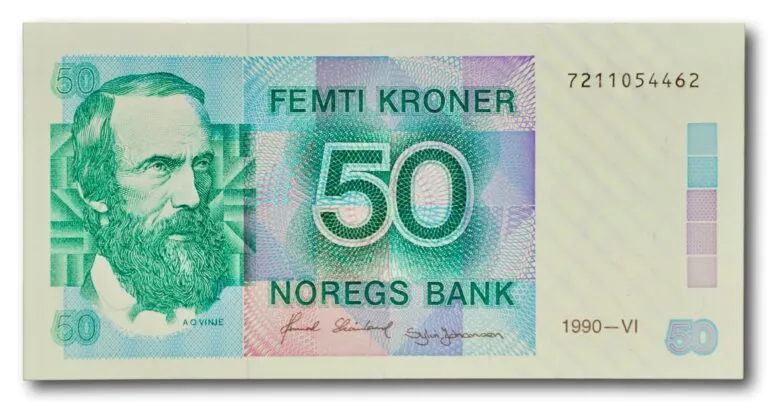
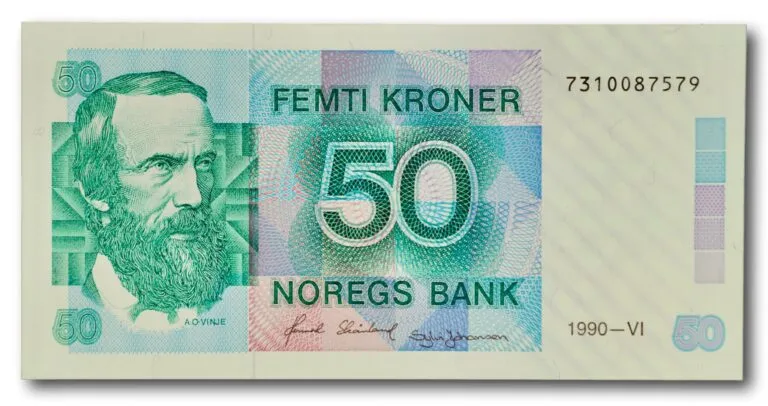
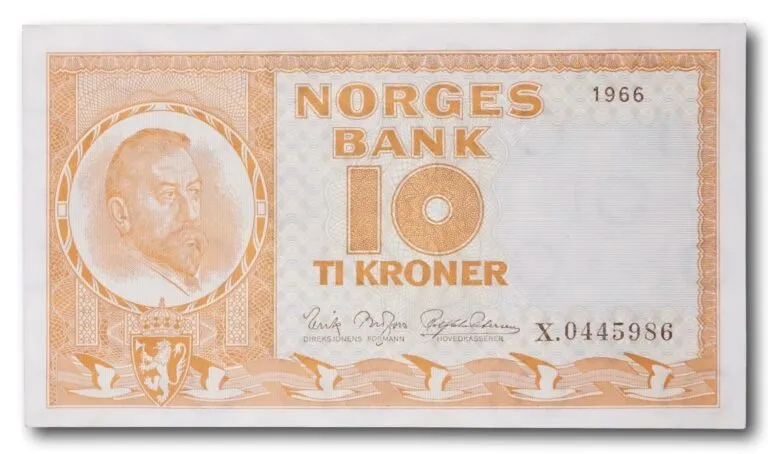
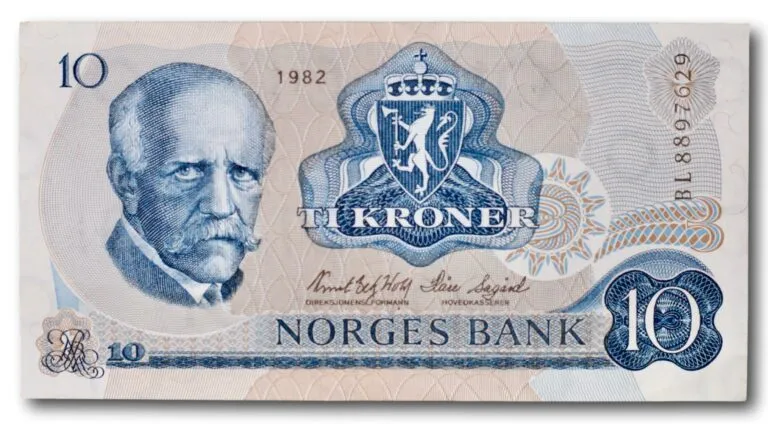
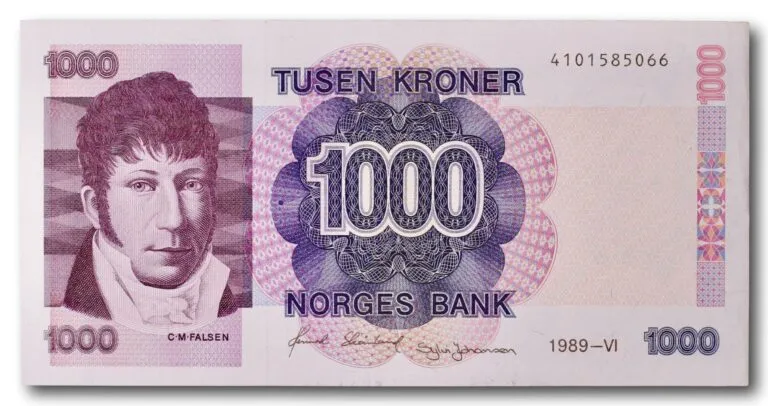
Norges Bank was founded in 1816 and has had the sole right to issue banknotes in Norway ever since. After the krone was introduced, the bank issued eight series of notes:
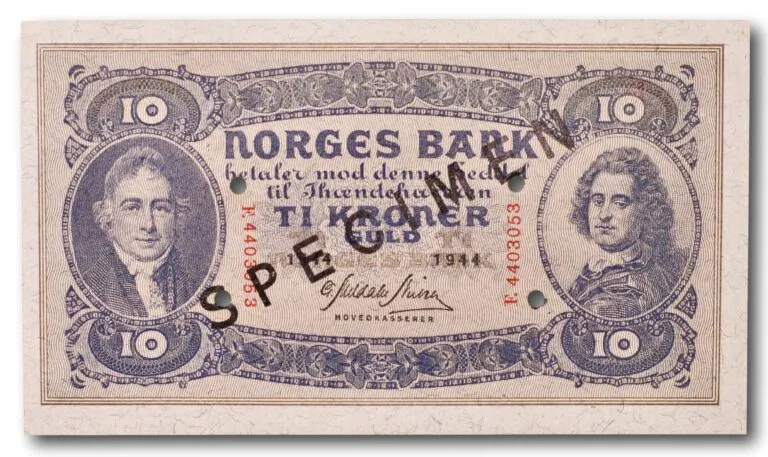
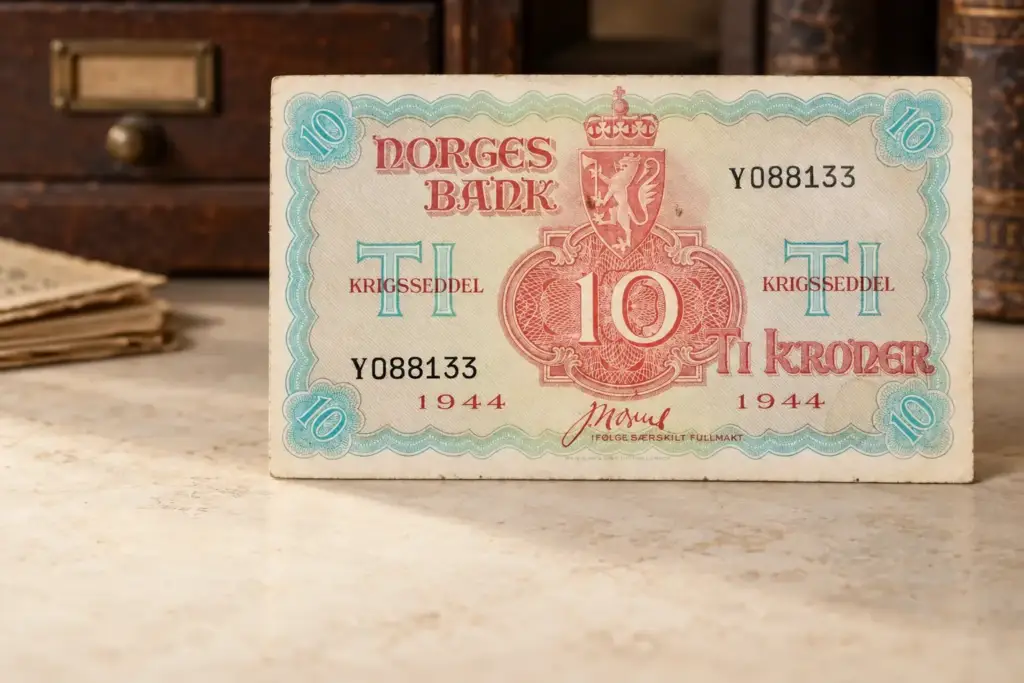
During the Second World War the Norwegian government in exile had banknotes printed by Waterlow & Sons in London, such as the 10 kroner 1944. The London notes are a collecting field of their own.
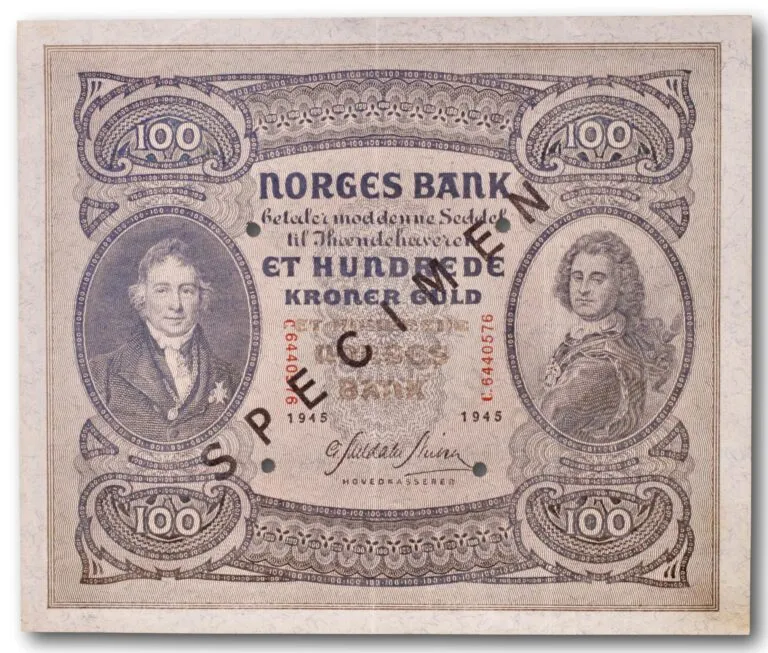
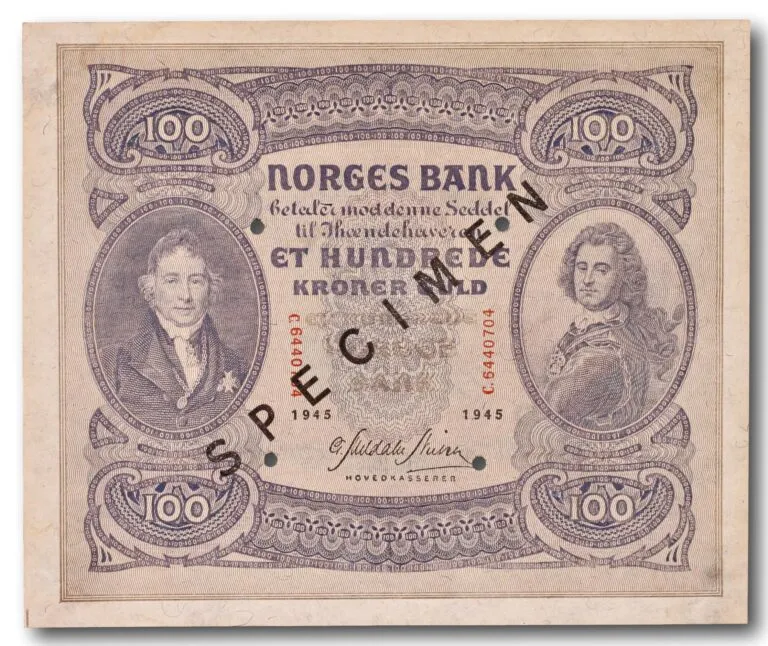
Specimens are notes marked SPECIMEN and made to show banks and authorities what a new note looked like. They were never meant for circulation and are much scarcer than ordinary notes. The category also holds proof prints from the printing works, replacement notes, which were printed to replace notes rejected during production, and notes in consecutive serial numbers.
Condition matters more for banknotes than for almost any other collectible. Folds, stains, tears and pinholes reduce the value, and an uncirculated note can be worth many times as much as a circulated one. Norwegian dealers use a scale where 0 is uncirculated, 01 almost uncirculated, and 1+, 1, 1-, 2 and 3 show increasing wear. On the English product pages the grade is also given in terms such as Very Fine and Extremely Fine.
Besides condition, collectors look at year, signatures, series letters and special serial numbers. Norges Bank itself points out that some withdrawn notes are worth more to collectors than their face value, especially in good condition.
Read more in Norwegian banknotes through history, and about two rare proofs: the 500 kroner proof from c. 1900 and the final proof for the 5-krone note of Series IV. Notes from other countries are under Banknotes.
A specimen is a banknote marked SPECIMEN and made to show banks and authorities what a new note looked like. It was never meant for circulation, so specimens are much scarcer than ordinary notes and popular with collectors.
During the Second World War the Norwegian government in exile had banknotes printed by Waterlow & Sons in London. Today they are a separate collecting field, usually called the London issue.
This is the Norwegian grading scale. 0 is uncirculated, 01 almost uncirculated, and 1+, 1, 1-, 2 and 3 show gradually more wear. A lower number is better.
Yes. Every item is researched and described as accurately as possible, and Denarius guarantees that everything sold is genuine and as described.
Every item gets its own number when it is catalogued. The number is shown on the product page, so you always know exactly which example it is.
Yes. We ship worldwide. Shipping method and price are shown at checkout before you pay.
Read more
Which old Norwegian banknotes can still be exchanged at Norges Bank, and which only have collector value? The rules, the 500-krone note…
From thor Møhlen’s notes of 1695 to today’s sea-themed series: the history of Norwegian banknotes, the Norges Bank series, what collectors look…
How many skilling made a rigsdaler, and what was a speciedaler worth in kroner? Norway's pre-1875 money system explained, period by period.