The widow’s mite: the coin from the Gospel
The widow's mite is the tiny bronze coin from Mark 12 and Luke 21. Here is what a lepton was, which ancient…
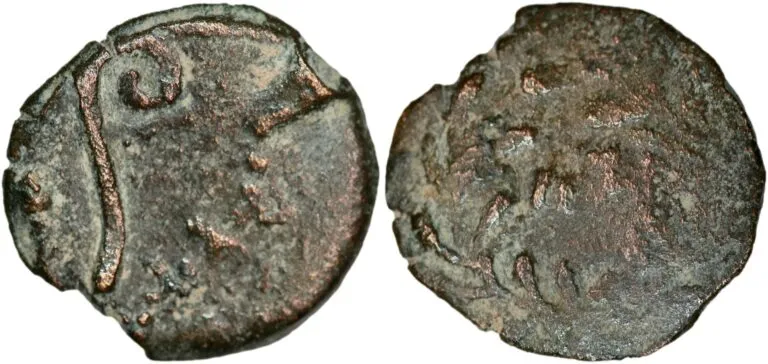
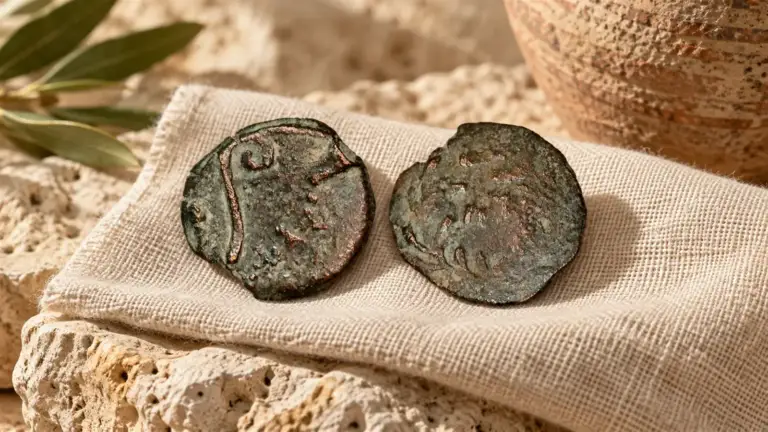
Coins from the world of the Bible: a bronze prutah struck in Judaea under Pontius Pilate in 31 AD. Examined, photographed and described with its own protocol number, and guaranteed genuine by Denarius.
Pontius Pilate governed Judaea as Roman prefect from about 26 to 36 AD and is known from the Gospels as the official who sentenced Jesus. His coins, small bronze prutot struck in Jerusalem, are dated by the regnal years of Emperor Tiberius – years 16, 17 and 18, roughly 29–32 AD. Instead of a portrait they show Roman ritual implements, a libation ladle (simpulum) or an augur’s staff (lituus), with a Greek legend naming Tiberius. Some historians see these pagan symbols as a deliberate provocation in a Jewish province; others regard them as ordinary Roman imagery.
The New Testament mentions several coins, among them the Roman denarius in the question of paying tribute to Caesar, and the small coins (lepta) given by the poor widow. Small bronze coins of Judaea such as the prutah were everyday change in the same period. Prutot are small and often weakly struck, so a legible date and a clear symbol are what collectors look for. Related coins are found among our Roman coins and in the wider Greek & Roman category.
The prutah (plural prutot) was the smallest bronze coin in everyday use in Judaea around the time of Jesus. It was struck locally under Jewish rulers and Roman governors. Pilate's prutot are among the best known because of his role in the Gospels.
Coins struck for Judaea generally avoided human portraits out of regard for Jewish religious law. Pilate's coins instead show Roman cult implements together with the emperor's name in Greek.
Yes. Every item is researched and described as accurately as possible, and Denarius guarantees that everything sold is genuine and as described.
Every item gets its own number when it is catalogued. The number is shown on the product page, so you always know exactly which example it is.
Yes. We ship worldwide. Shipping method and price are shown at checkout before you pay.
Read more
The widow's mite is the tiny bronze coin from Mark 12 and Luke 21. Here is what a lepton was, which ancient…
As, sestertius, denarius, antoninianus, nummus, maiorina and solidus: the names of Roman coins, what they were worth and which emperors introduced them.
From Anastasius' big follis of 498 to the fall of Constantinople in 1453: how to read Byzantine coins, what the M and…