Rare Norwegian coins: Norway’s most valuable dates and types
Which Norwegian coins are the rarest, and why? From Olav Kyrre's pennies and the archbishop's skillings to the Schydtz coins of 1689…
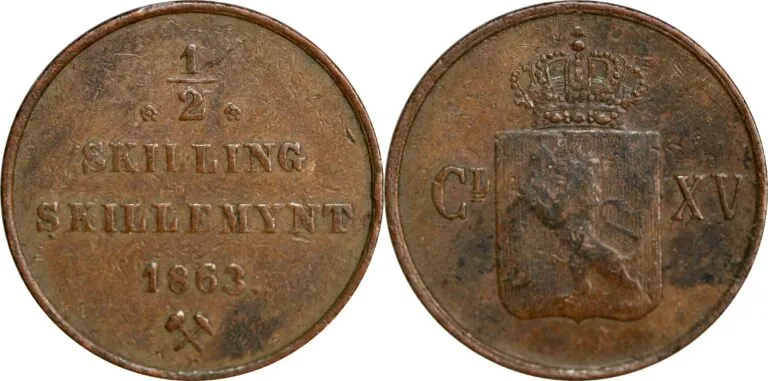
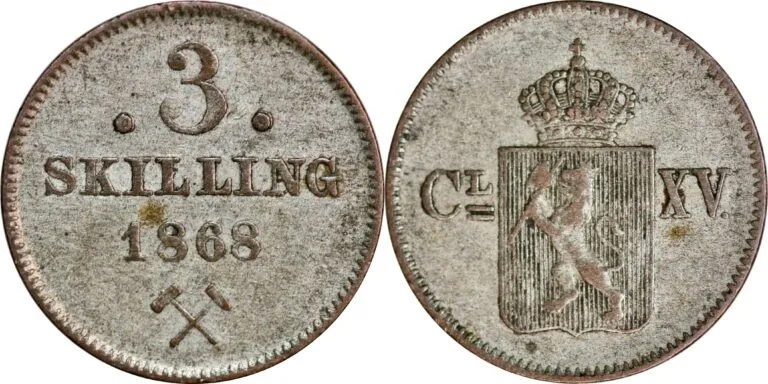
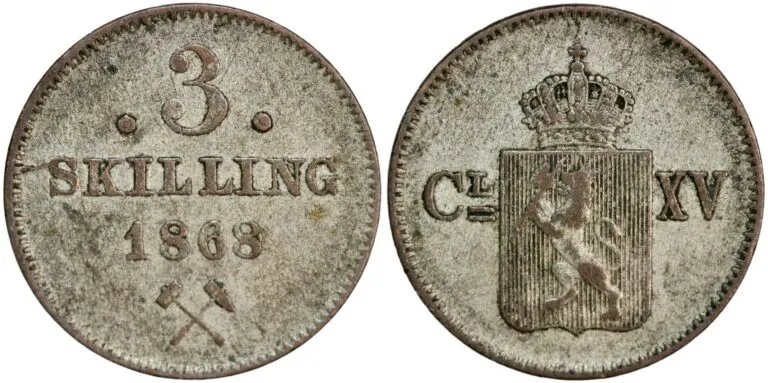
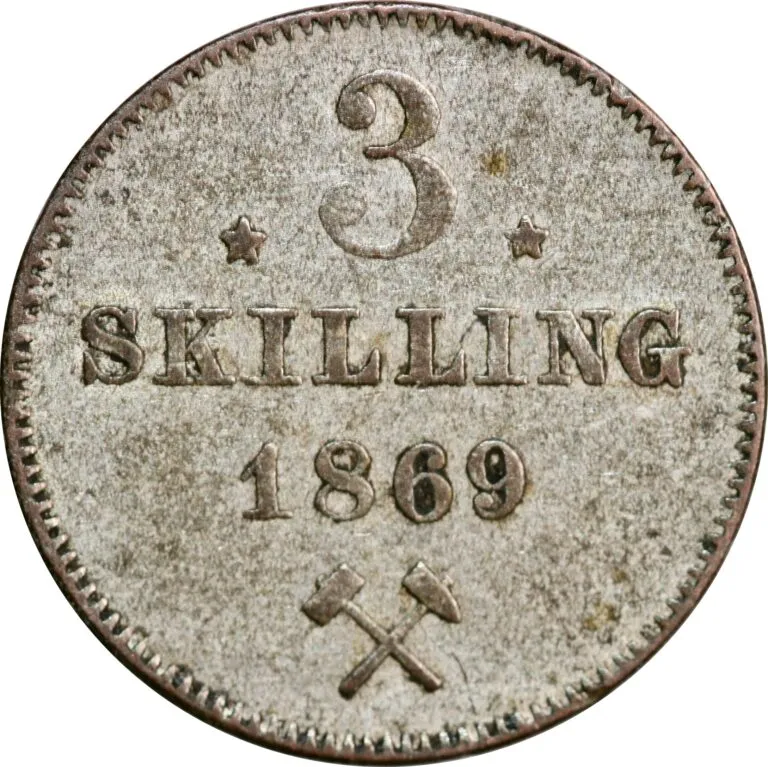
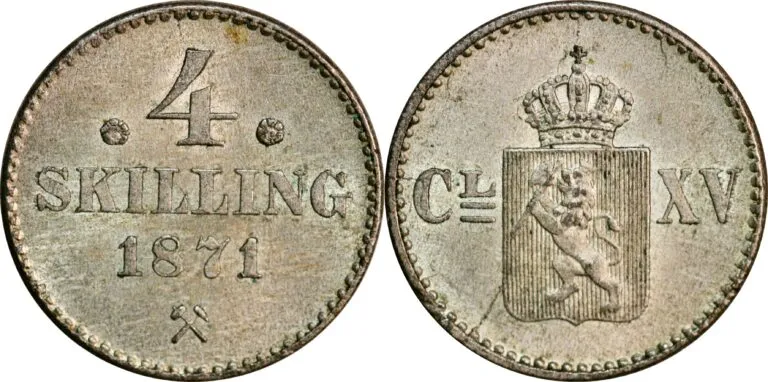
Norwegian skilling coins of Carl XV, king of Sweden and Norway 1859–1872: a copper 1/2 skilling 1863, 3 skilling from 1868 and 1869, and a 4 skilling 1871 in high grade. Each coin is examined, catalogued and guaranteed genuine.
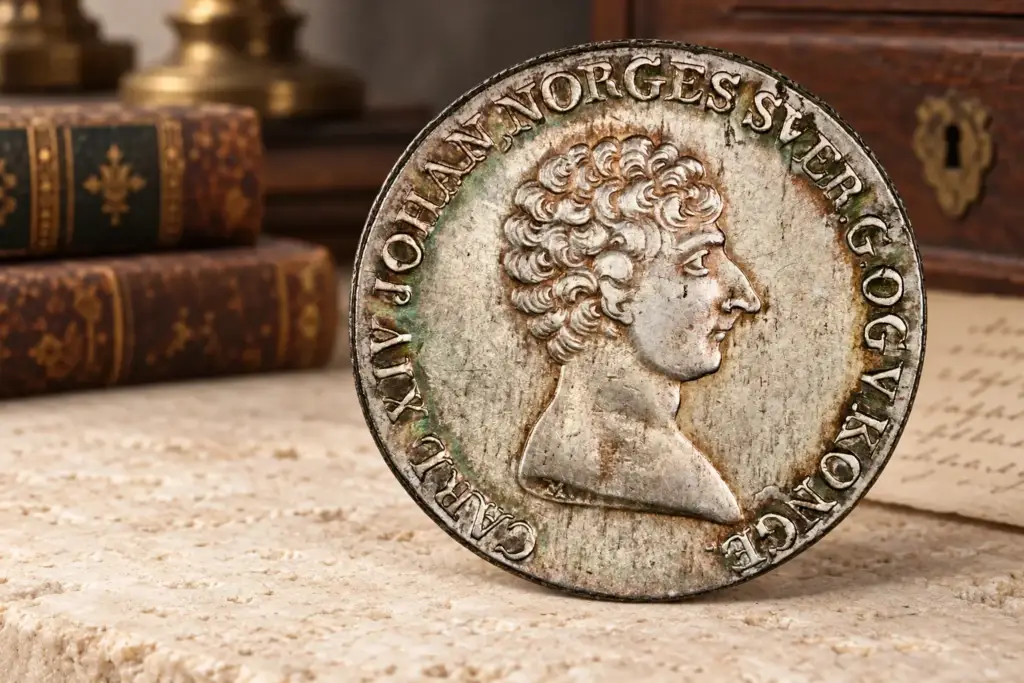
Carl XV succeeded his father Oscar I in 1859 and reigned until his death in 1872, when his brother Oscar II took over. He was also known as a painter. His coins are among the last struck in the skilling system. The year after his death, in 1873, Norway decided to adopt the krone. It came into use from 1874, and the coinage act followed in 1875. One speciedaler was converted at 4 kroner, so 30 skilling equalled one krone. Norway joined the Scandinavian Monetary Union only in October 1875.
All were struck at Kongsberg. The 1/2 skilling of 1863 is a copper coin of about 4.6 grams for the smallest payments. The 3 skilling of 1868 and 1869 are small coins of just over 2 grams, and the catalogues list the years as separate variants. The 4 skilling of 1871 is from the last years before the krone. After the conversion, 3 skilling corresponded to 10 øre, which shows how the old values fitted into the new system.
Small coins of this period were heavily used, so specimens in Very Fine or better are attractive, and coins close to mint state are particularly sought after. Look at the sharpness of the legend and arms, the surface, and whether the coin has been cleaned. On copper coins such as the 1/2 skilling, an even brown colour without spots or corrosion is preferred. The 4 skilling of 1871 here is graded Extremely Fine to Mint State.
See also Oscar I, and for the krone coins that followed, Norway after 1874.
Norway decided to adopt the krone in 1873, it came into use from 1874, and the coinage act followed in 1875. One speciedaler was converted at 4 kroner, so 30 skilling equalled one krone.
At the mint in Kongsberg, which struck all Norwegian coins in the period.
Yes. Every item is researched and described as accurately as possible, and Denarius guarantees that everything sold is genuine and as described.
Every item gets its own number when it is catalogued. The number is shown on the product page, so you always know exactly which example it is.
Yes. We ship worldwide. Shipping method and price are shown at checkout before you pay.
Read more
Which Norwegian coins are the rarest, and why? From Olav Kyrre's pennies and the archbishop's skillings to the Schydtz coins of 1689…
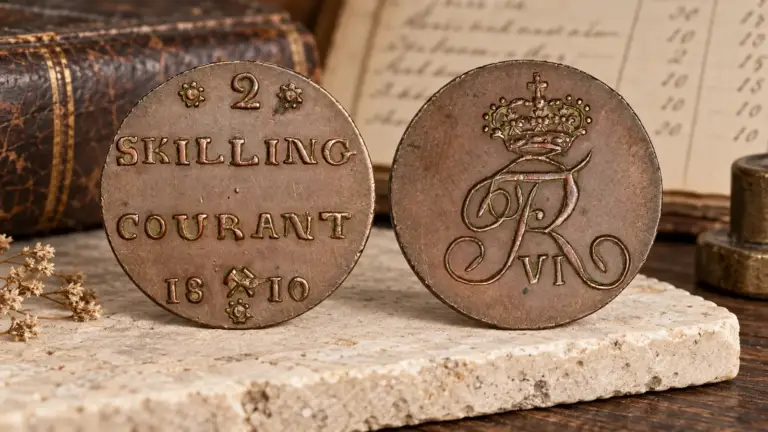
The 2 skilling 1810 is one of the old Norwegian coins people find most often. Here is the story of the Kongsberg…
Most old Norwegian coins are worth little, but condition, silver, gold and rare dates can command high prices. Here is the price…