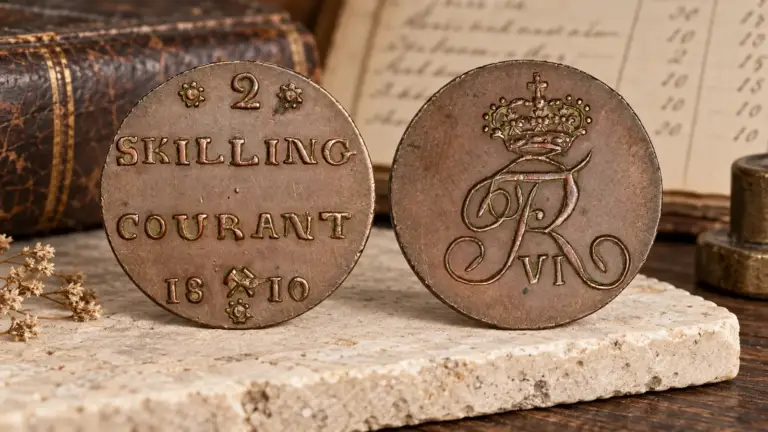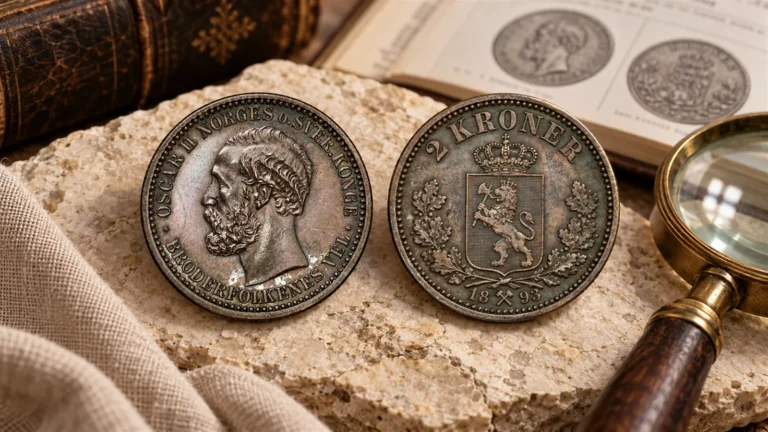
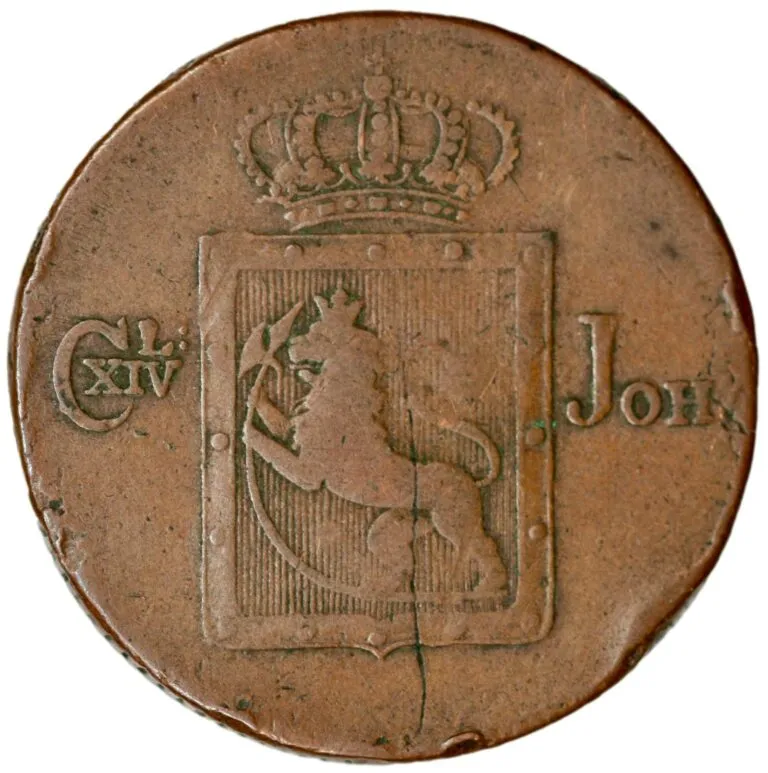
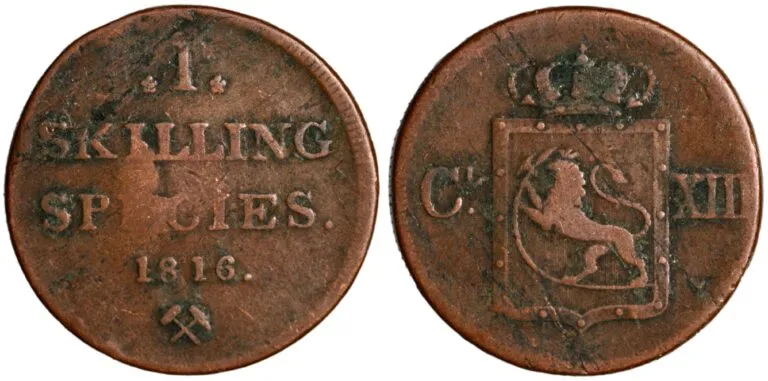
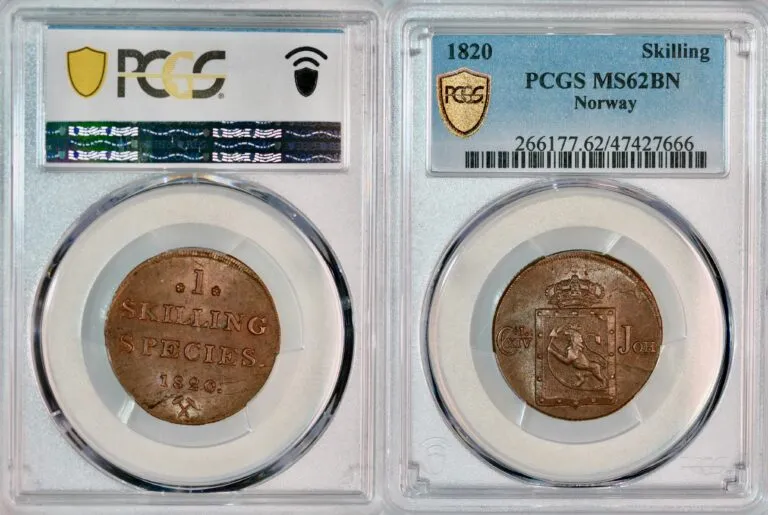
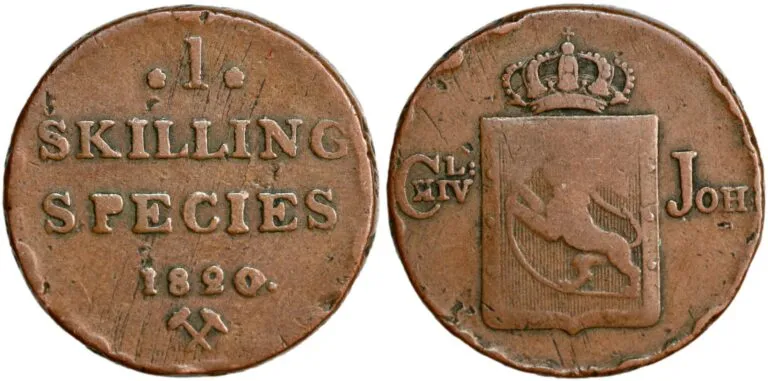
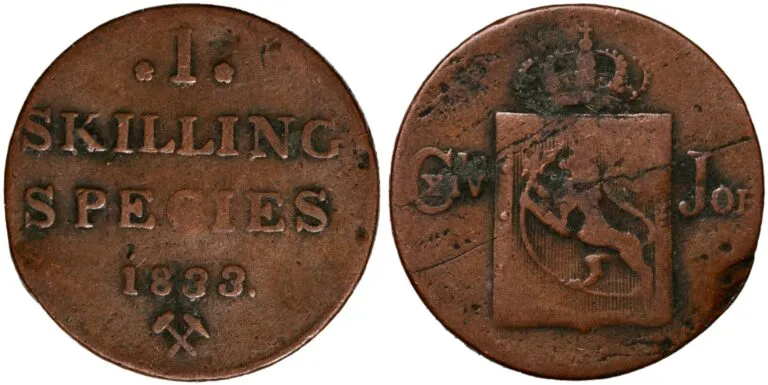
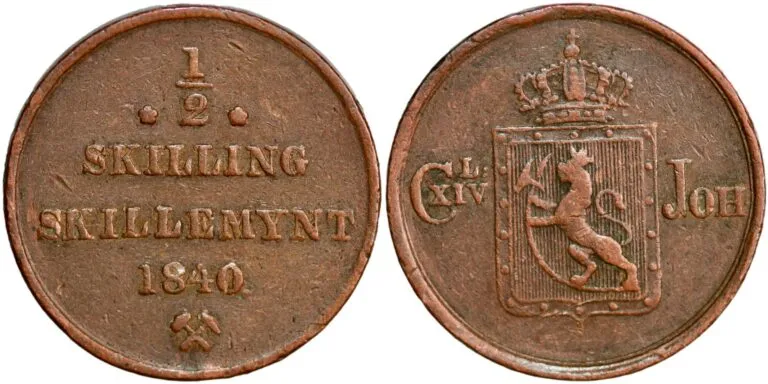
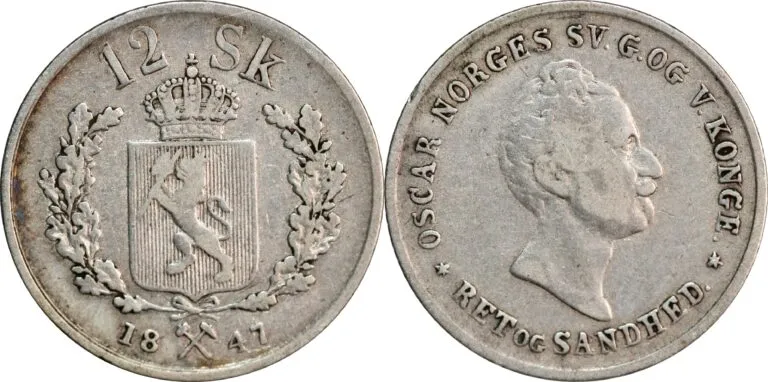
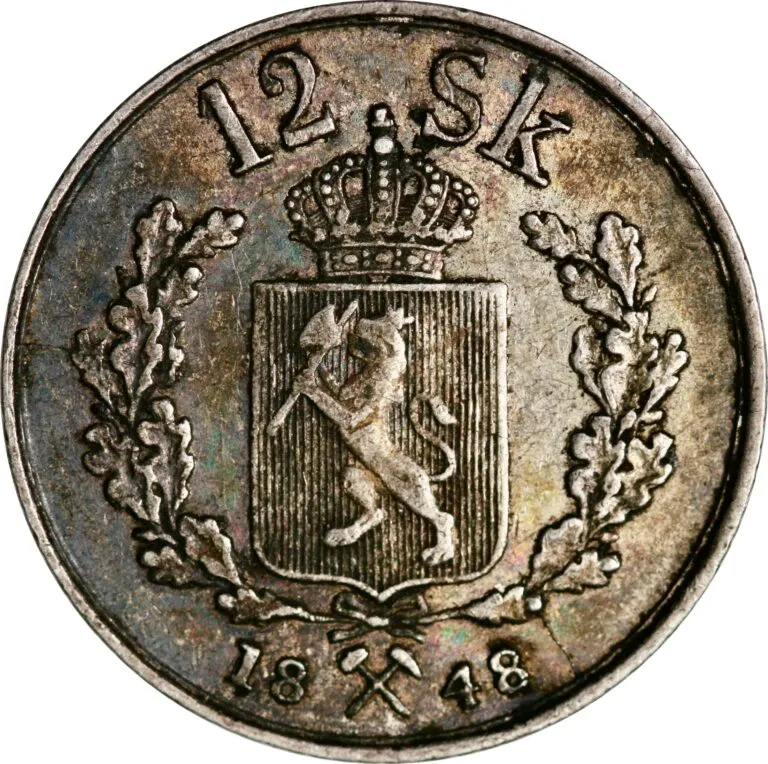
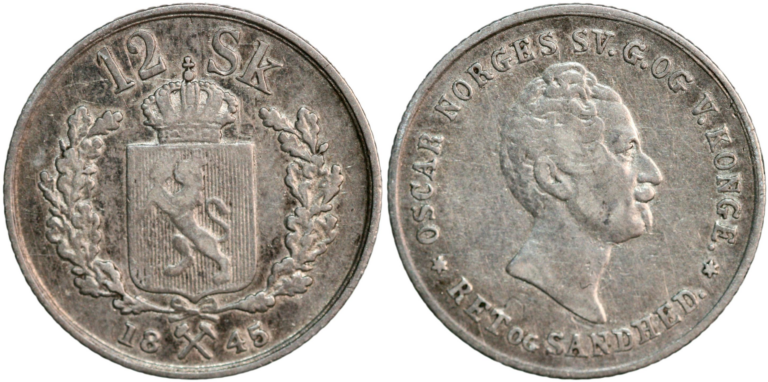
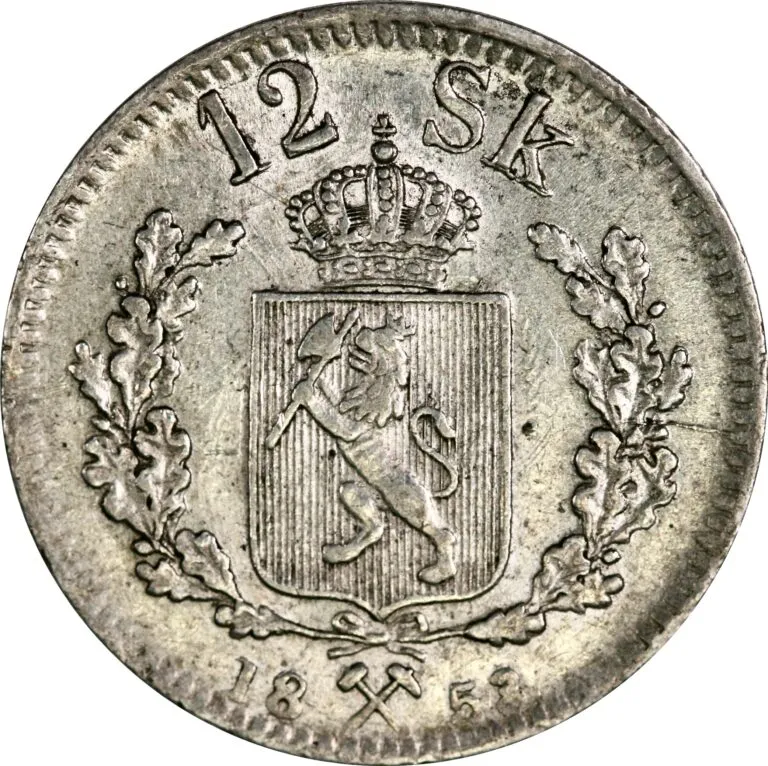
Rare Norwegian coins: Norway’s most valuable dates and types
Which Norwegian coins are the rarest, and why? From Olav Kyrre's pennies and the archbishop's skillings to the Schydtz coins of 1689…
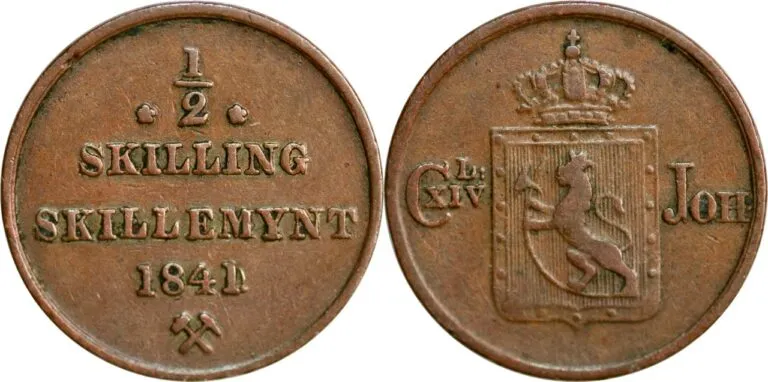
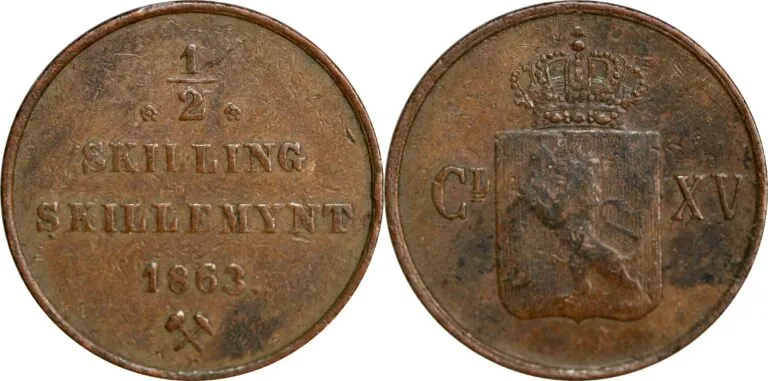
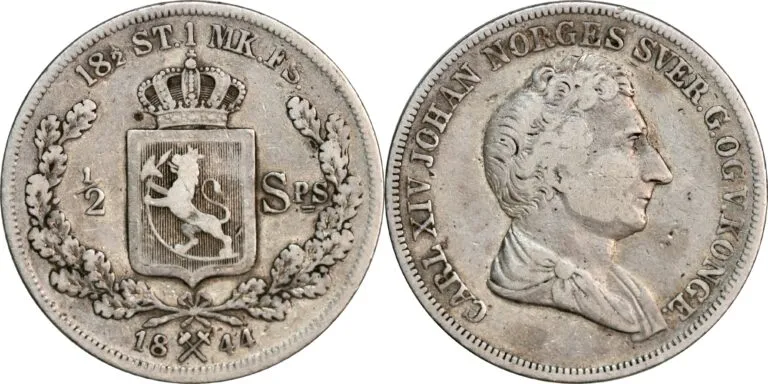
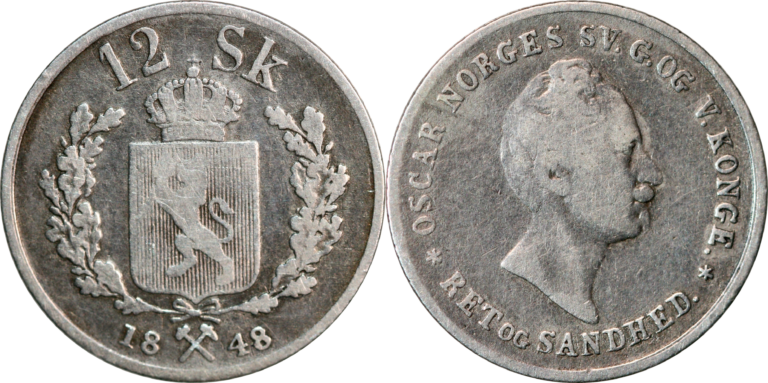
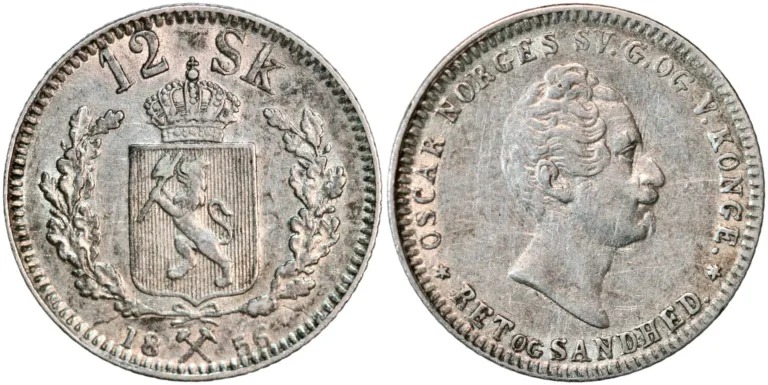
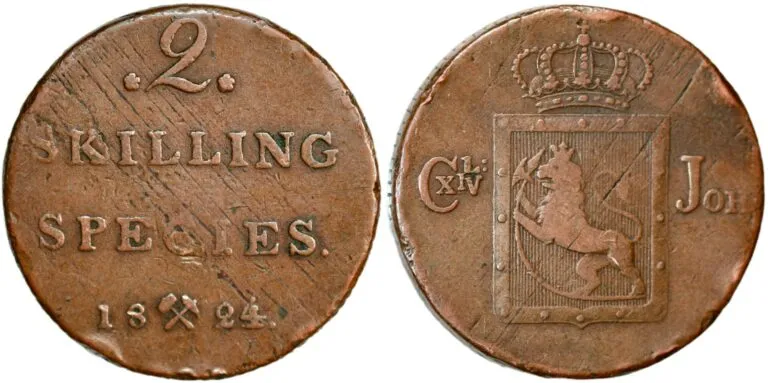
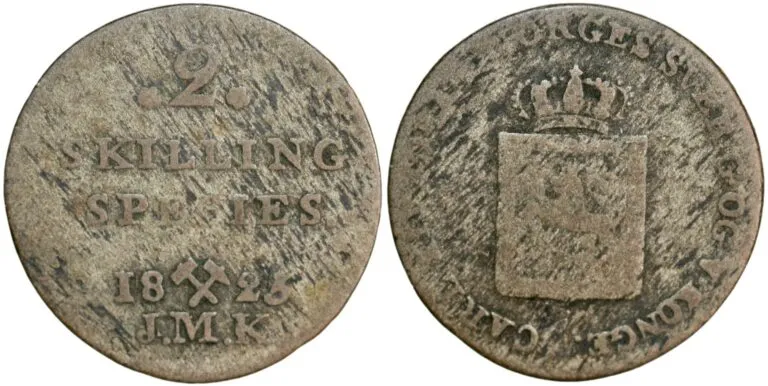
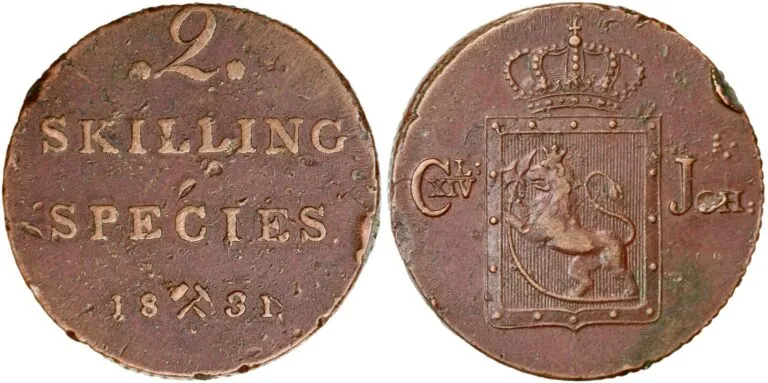
Coins from the union with Sweden, from Carl XIII to Oscar II: speciedaler, skilling and their fractions. Choose a king in the menu on the left.
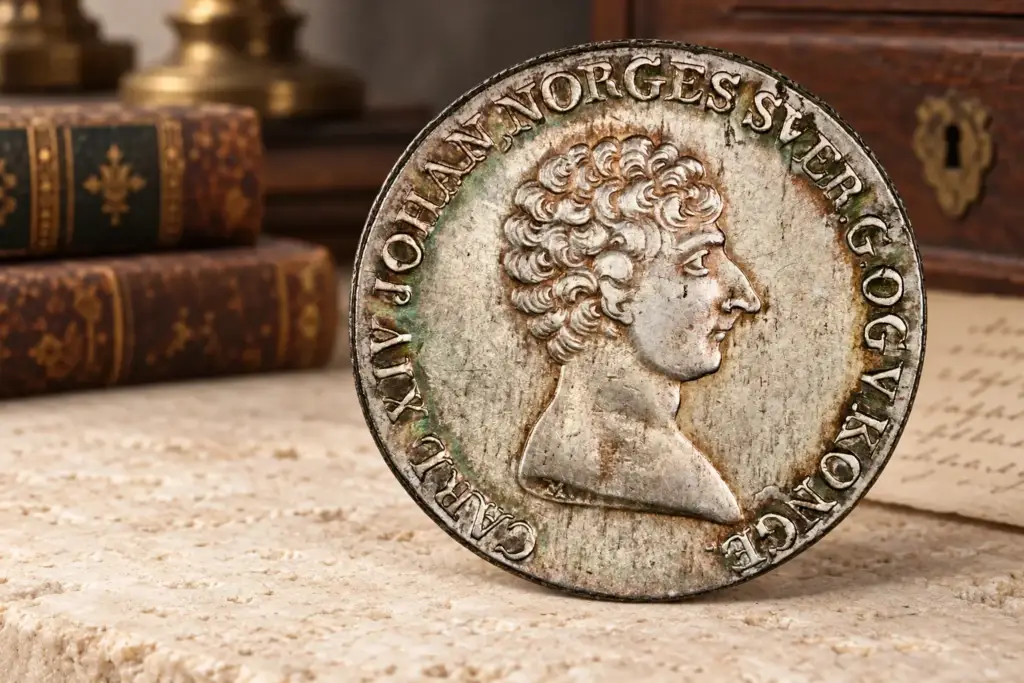
This category holds the coins of the union with Sweden before the krone: the Norwegian skilling in many denominations and the large silver speciedaler. After 1814 Norway kept its own monetary system, and the acts establishing Norges Bank were sanctioned in 1816. The new unit was the speciedaler, divided into 5 ort or 120 skilling. The bank’s silver fund could not be raised by voluntary subscription, so it was collected through a compulsory levy, remembered as the silver tax.
All the coins were struck at the Royal Mint at Kongsberg. They carry the names or portraits of the union kings, and you can browse them king by king: Carl XIII (1814–1818), Carl XIV Johan (1818–1844), Oscar I (1844–1859) and Carl XV (1859–1872).
The skilling system ended in steps. In 1873 Norway decided to adopt the krone. From 1 January 1874 one speciedaler was reckoned as 4 kroner, and the coinage act of 17 April 1875 made the krone of 100 øre the basis of the currency. Norway joined the Scandinavian Monetary Union only in October 1875.
One krone equalled 30 skilling, so 3 skilling became 10 øre. To ease the change, the first coins of Oscar II carried both values, such as 10 øre/3 skilling and 50 øre/15 skilling. The krone coins that followed are in Norway after 1874.
Year, variety and condition decide most of the price. Some years are far scarcer than others, and well-preserved examples are much harder to find than worn ones, because small coins were used hard.
For background, read skilling and speciedaler explained, our collector’s guide to Norwegian coins and what old Norwegian coins are worth. Older coins are under Norway before 1814.
From 1816 one speciedaler was divided into 5 ort or 120 skilling. An ort, the 24 skilling coin, was therefore a fifth of a speciedaler, and the 12 skilling a tenth.
One speciedaler was converted to 4 kroner. The rate applied from 1 January 1874 and was carried into the coinage act of 17 April 1875, so one krone equalled 30 skilling.
An overdate is a coin struck with a die where a new digit was cut over an older one, for example 1853/2. Traces of the old digit can be seen with a magnifying glass. Overdates are listed as separate varieties and are popular with collectors.
Yes. Every item is researched and described as accurately as possible, and Denarius guarantees that everything sold is genuine and as described.
Every item gets its own number when it is catalogued. The number is shown on the product page, so you always know exactly which example it is.
Yes. We ship worldwide. Shipping method and price are shown at checkout before you pay.
Read more
Which Norwegian coins are the rarest, and why? From Olav Kyrre's pennies and the archbishop's skillings to the Schydtz coins of 1689…
The 2 skilling 1810 is one of the old Norwegian coins people find most often. Here is the story of the Kongsberg…
Most old Norwegian coins are worth little, but condition, silver, gold and rare dates can command high prices. Here is the price…