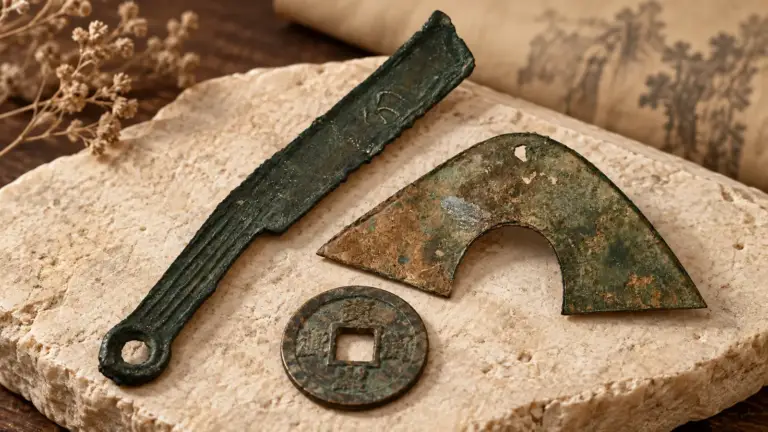
Ancient Chinese coins: knife money, bridge money and cash coins
From Zhou-period knife money and bridge money to round cash coins with a square hole: the story of ancient Chinese coins and…
American banknotes from the United States, the Bahamas, Belize and Guadeloupe, including uncut sheets from around 1850 and the Civil War. Every note is examined, photographed and described with its own protocol number, and guaranteed genuine.
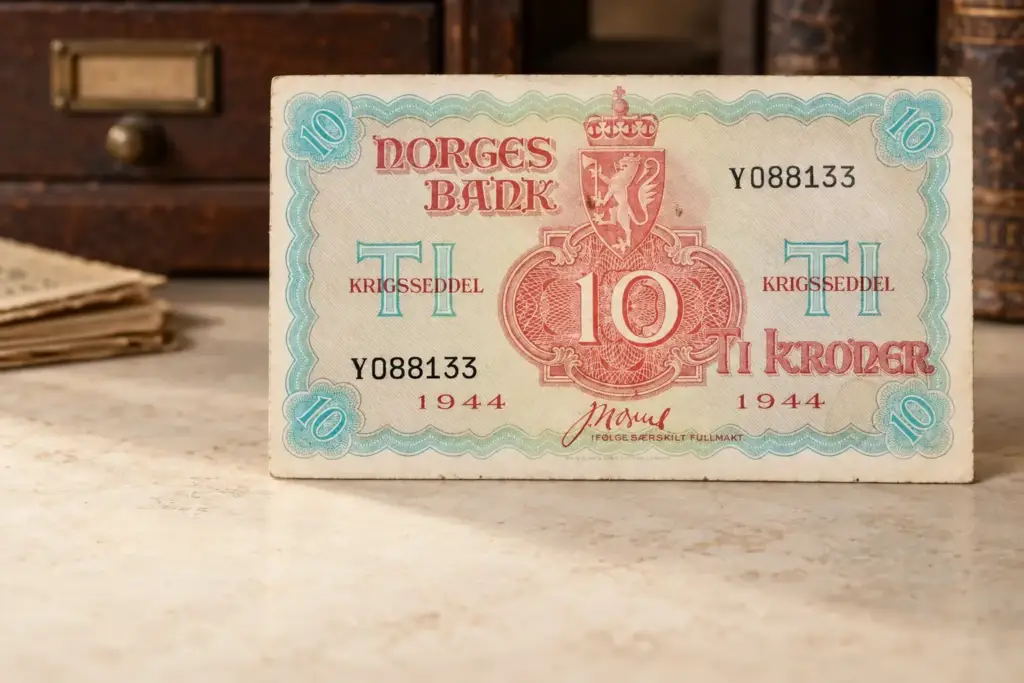
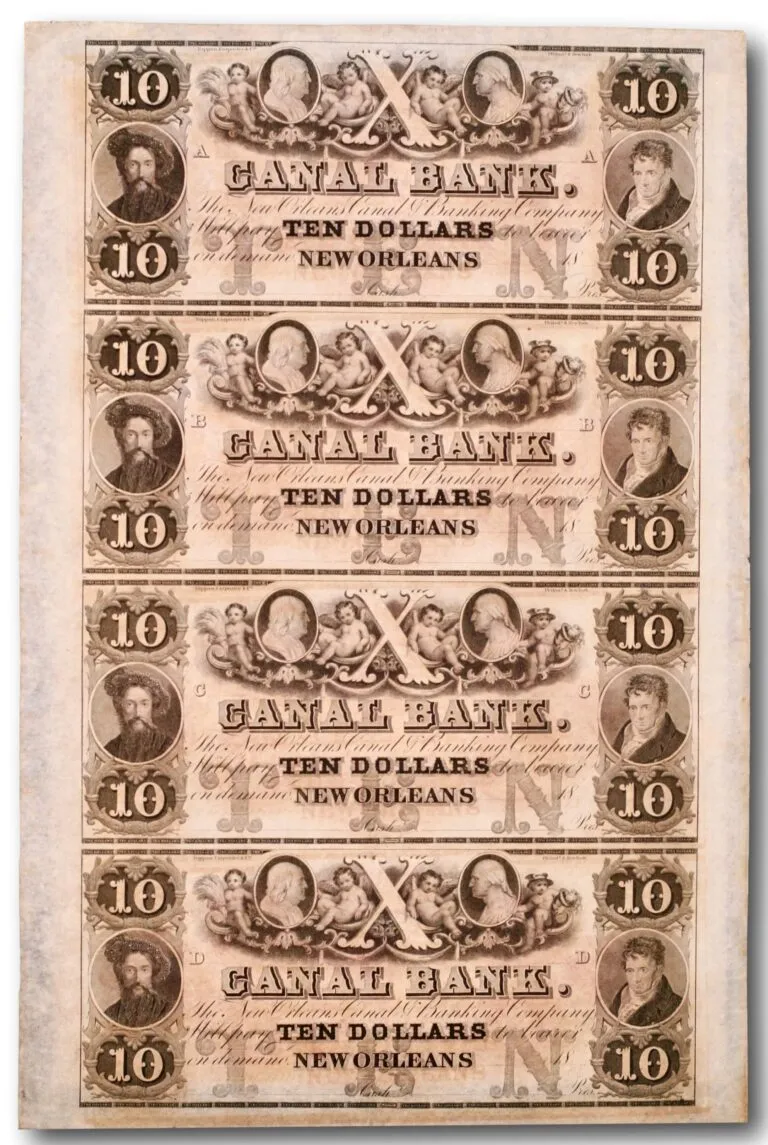
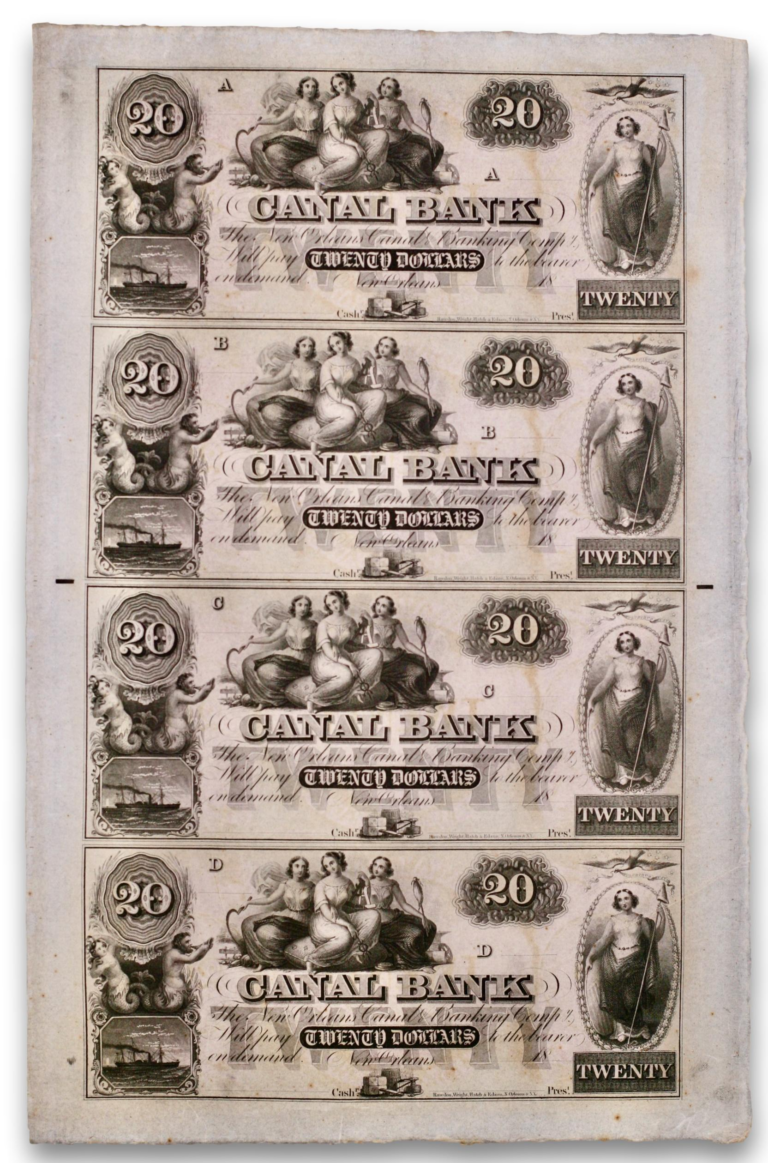
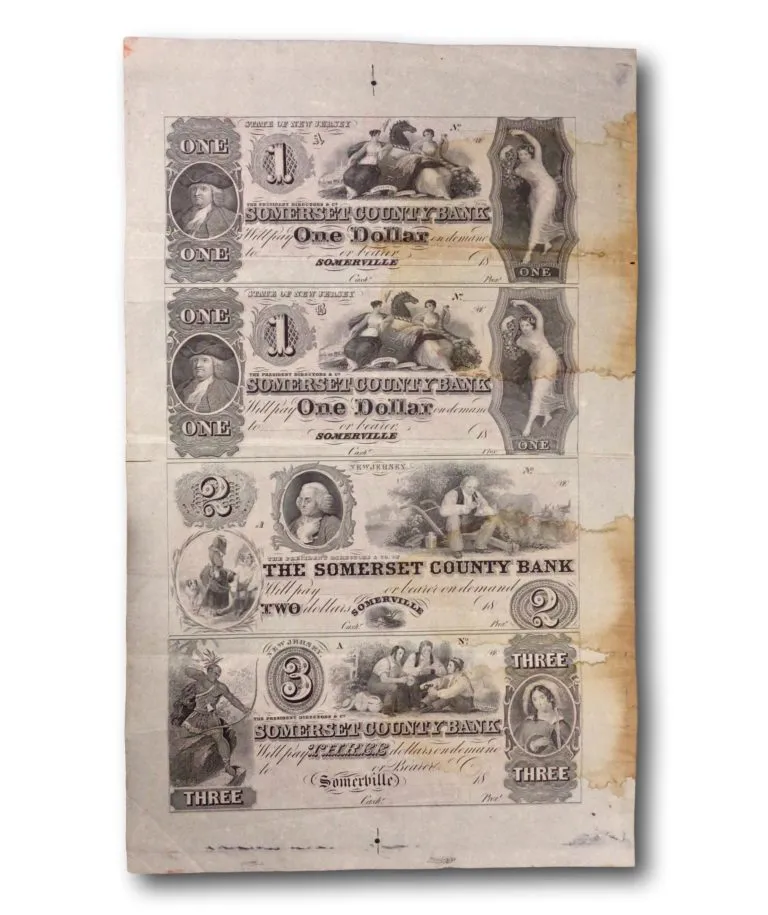
The oldest banknotes in this category come from the United States. Before the Civil War there was no uniform national paper currency: a large number of state-chartered banks issued their own notes, each with its own designs and its own credit risk. An uncut sheet of banknotes from around 1850 shows how such notes were printed several to a sheet before being cut apart and signed.
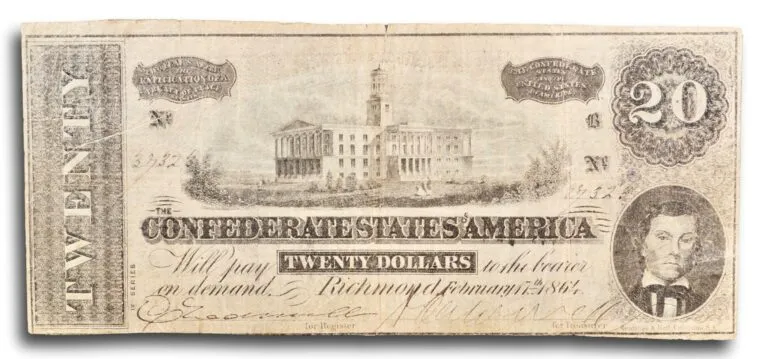
The Civil War (1861–1865) brought paper money on a new scale, as both sides financed the war with notes. The category includes an uncut sheet of Civil War banknotes and a 20 dollars from 1864. Uncut sheets are especially interesting to collectors because they show the notes exactly as they left the printer.
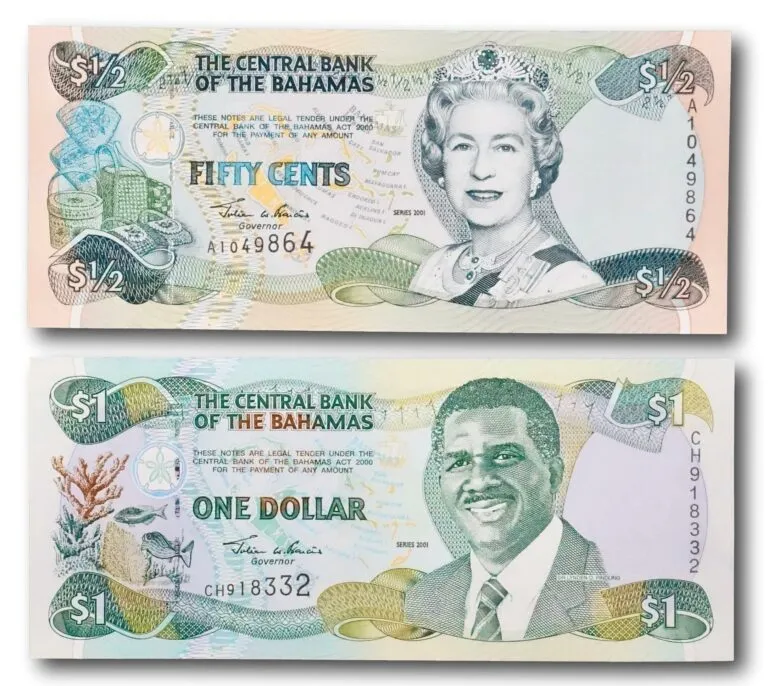
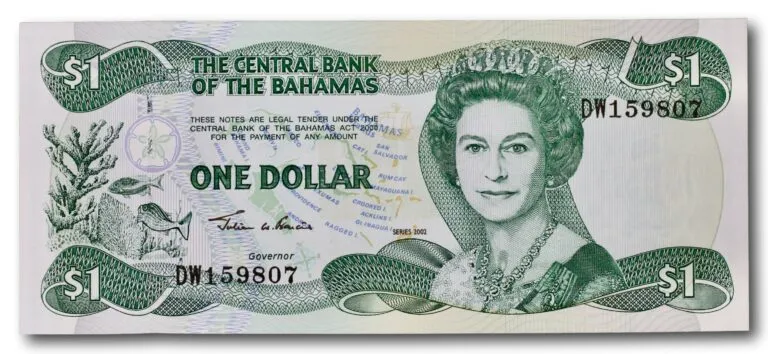
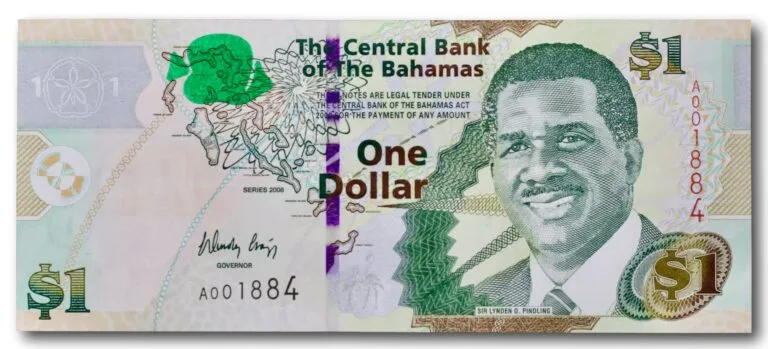
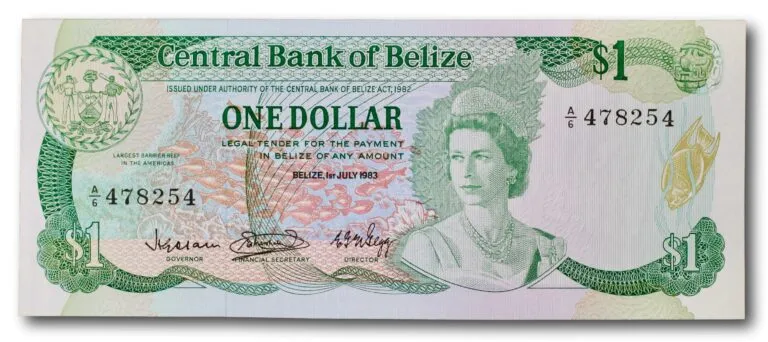
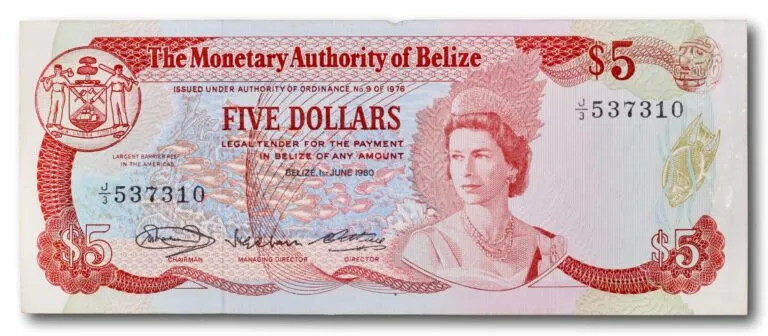
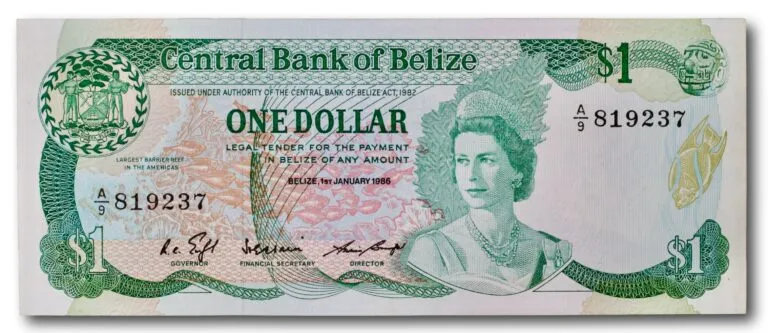
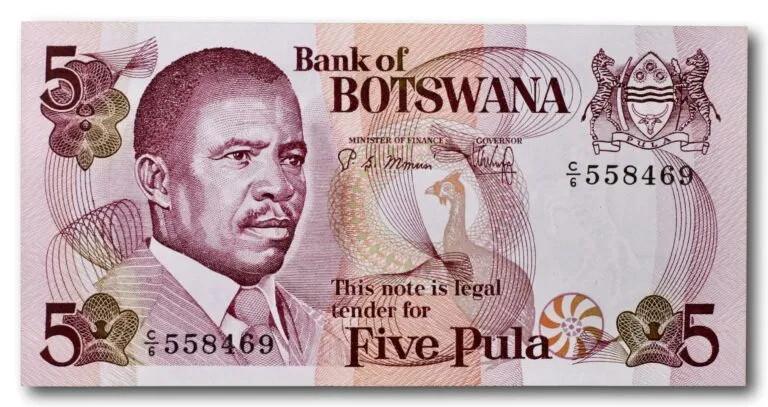
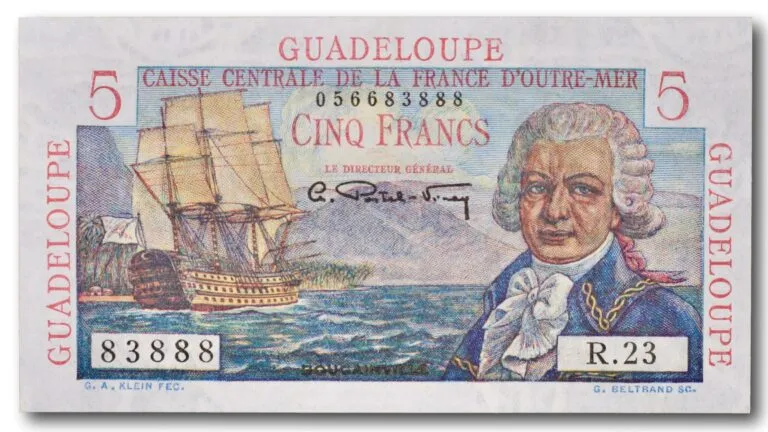
From the Caribbean and Central America there are modern notes from the Bahamas (1 dollar 2002 and 2008, and a 1 dollar and 50 cents from 2001) and from Belize (5 dollars 1980, 1 dollar 1983–1987 and a 1986 dollar), the country that became independent from Britain in 1981. A 5 francs 1947–1949 from Guadeloupe represents the French Caribbean in the years after the island became a French overseas department.
Condition decides much of the value. Uncirculated (UNC) notes have no folds or handling marks; Extremely Fine (EF) and Very Fine (VF) notes have been in use and show light or moderate folds. Stains, tears, pinholes and writing lower the grade. For older American notes it is also worth looking at margins, signatures and whether the paper is fresh or tired.
Collectors also look for replacement notes. Notes printed to replace faulty sheets are marked differently from the ordinary series; in the United States they carry a star next to the serial number. Low or repeating serial numbers are another speciality.
Each note is described with its catalogue reference where relevant. For coins from the same part of the world, see coins from America, or browse all banknotes.
Notes were printed several to a sheet and cut apart before they were issued. Sheets that survive uncut were never put into circulation, so they show the notes exactly as they left the printer.
A star note is an American replacement note, printed to replace a faulty note during production. It has a star next to the serial number and is collected as a variety of its own.
The category currently has banknotes from the United States, the Bahamas, Belize and Guadeloupe. The oldest date from around 1850, the newest from 2008.
Yes. Every item is researched and described as accurately as possible, and Denarius guarantees that everything sold is genuine and as described.
Every item gets its own number when it is catalogued. The number is shown on the product page, so you always know exactly which example it is.
Yes. We ship worldwide. Shipping method and price are shown at checkout before you pay.
Read more
From Zhou-period knife money and bridge money to round cash coins with a square hole: the story of ancient Chinese coins and…
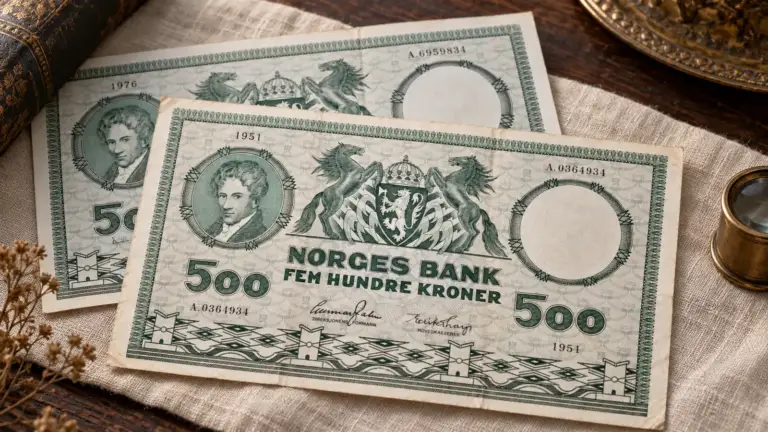
Which old Norwegian banknotes can still be exchanged at Norges Bank, and which only have collector value? The rules, the 500-krone note…
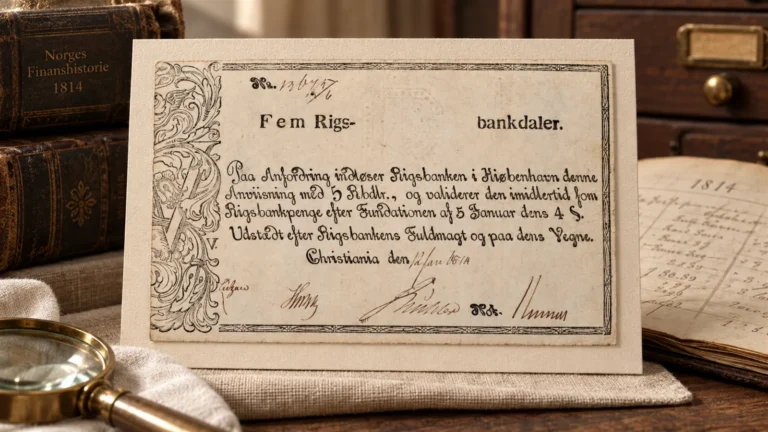
From thor Møhlen’s notes of 1695 to today’s sea-themed series: the history of Norwegian banknotes, the Norges Bank series, what collectors look…