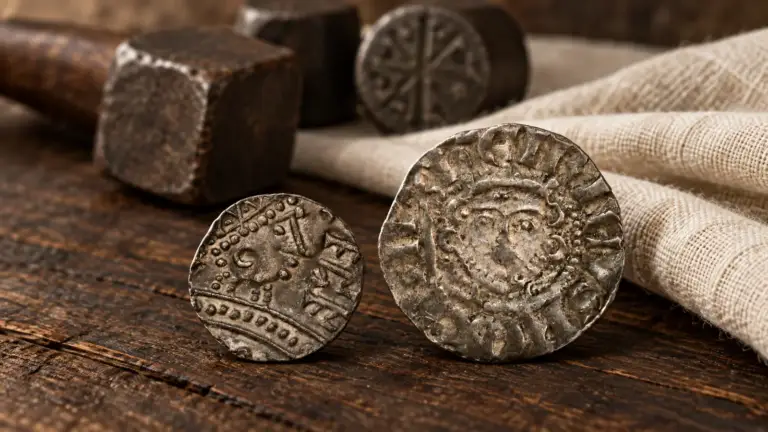
Medieval coins: hammered pennies, groats and gold
From the silver penny to the groat and the great gold coins: a collector's guide to medieval coins, how they were made…
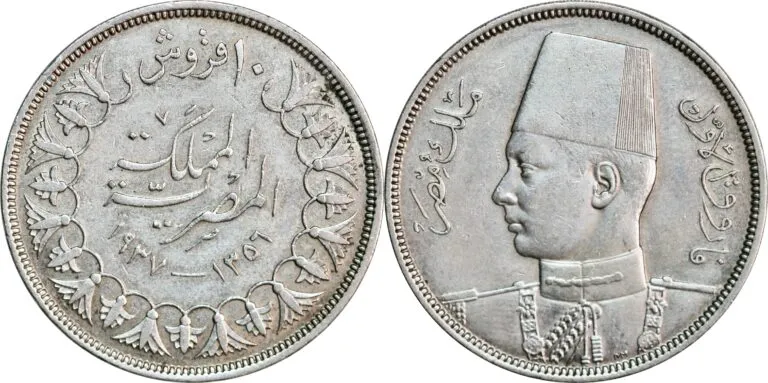
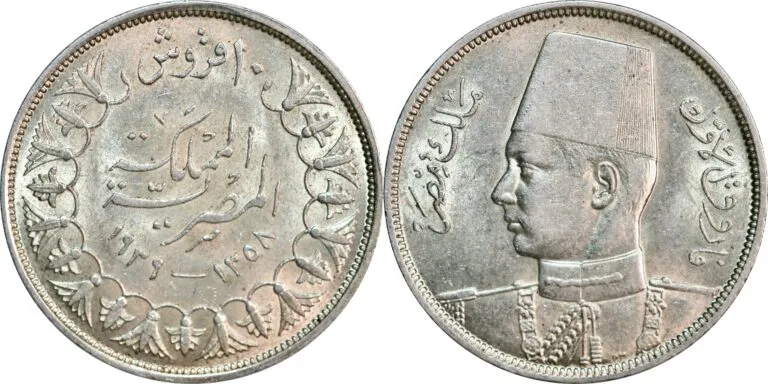
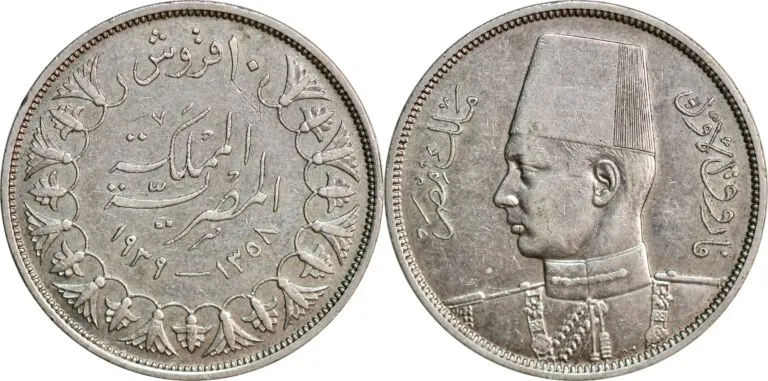
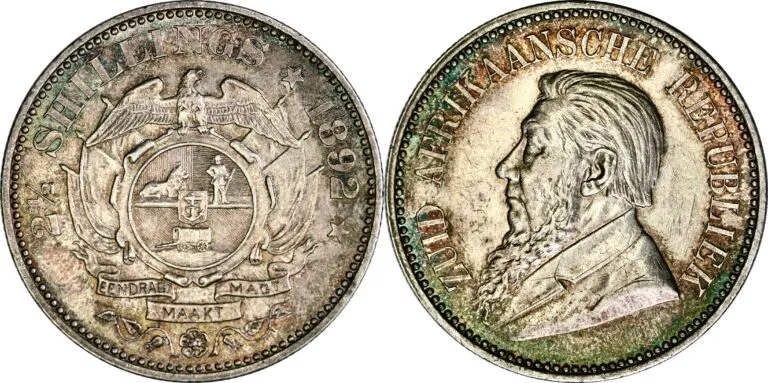
Coins from Africa: silver 10 piastres from Egypt under King Farouk (1937 and 1939) and a 2½ shillings 1892 with Paul Kruger from the South African Republic. Every coin is examined, photographed, described with its own protocol number and guaranteed genuine.
Three of the African coins in this category are silver 10 piastres from Egypt, dated 1937 and 1939. They were struck under King Farouk, who came to the throne in 1936 and ruled until 1952. At the time the Egyptian pound was divided into 100 piastres, so the 10 piastres was a substantial silver coin: about 14 grams in .833 silver.
The coins carry the king’s portrait on one side and the value and dates on the other. Like other Egyptian coins of the period, they are dated in both the Islamic (Hijri) and the Christian calendar, which makes them a good introduction to reading coins from the Arabic-speaking world.
The fourth coin is a 2½ shillings 1892 from the Zuid-Afrikaansche Republiek, the Boer republic in the Transvaal. 1892 was the first year of the republic’s own coinage, with President Paul Kruger on the obverse and the arms of the republic on the reverse. The first coins were struck partly in Berlin, because the republic’s own mint in Pretoria was not yet ready. On some early dies the ox-wagon in the arms was shown with a double shaft instead of a single one, and the varieties of the 1892 series are well known among collectors of South African coins. The republic and its coinage came to an end with the Boer War (1899–1902).
For silver coins like these, condition and surface matter most. Look at the high points of the portrait, such as the hair and cheek, where wear shows first. Original toning is preferred to cleaned, shiny surfaces, as cleaning leaves fine hairlines that lower the value. Each coin is described with its condition and catalogue reference.
For paper money from the same continent, see African banknotes, or browse more coins from the Middle East.
The coin weighs about 14 grams and is struck in .833 silver. It was issued under King Farouk, when the Egyptian pound was divided into 100 piastres.
The coin was struck by the Zuid-Afrikaansche Republiek, the Boer republic in the Transvaal, where Paul Kruger was president. 1892 was the first year of the republic's own coinage.
Egyptian coins of this period are dated in both the Islamic Hijri calendar and the Christian calendar. The two dates refer to the same year of issue.
Yes. Every item is researched and described as accurately as possible, and Denarius guarantees that everything sold is genuine and as described.
Every item gets its own number when it is catalogued. The number is shown on the product page, so you always know exactly which example it is.
Yes. We ship worldwide. Shipping method and price are shown at checkout before you pay.
Read more
From the silver penny to the groat and the great gold coins: a collector's guide to medieval coins, how they were made…
From Zhou-period knife money and bridge money to round cash coins with a square hole: the story of ancient Chinese coins and…
A bracteate is a paper-thin silver coin struck on one side only, and for much of the Middle Ages it was Norway's…