Islamic coins: dinars and dirhams of the caliphates
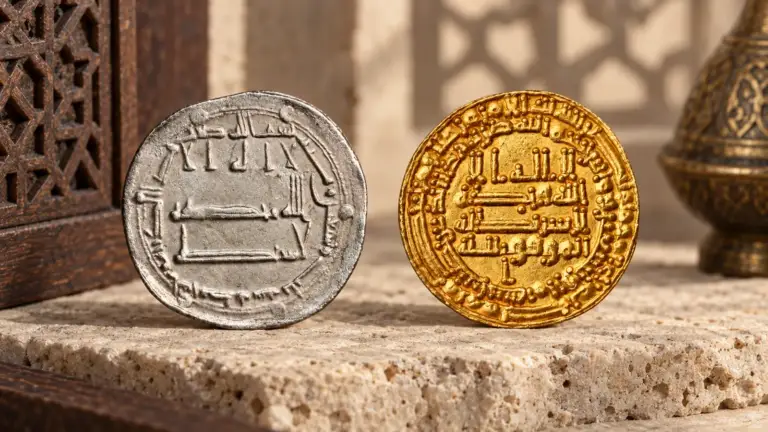
The gold dinar and silver dirham were created by Caliph Abd al-Malik in 696–699 and carry words instead of portraits. Here is…
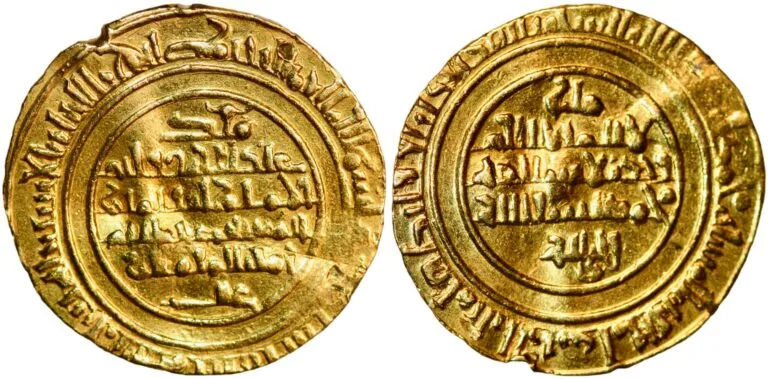
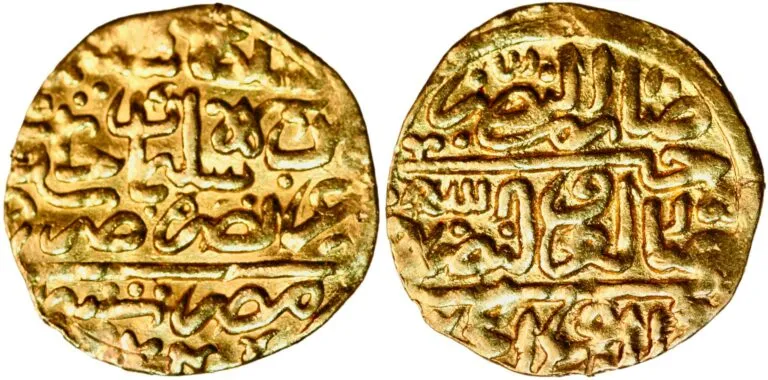
Islamic gold coins: an Abbasid dinar of Caliph al-Mu’tamid, two Fatimid dinars of al-Mustansir and al-Amir, and an Ottoman sultani of Selim II. Each is examined, photographed and described with its own protocol number, and guaranteed genuine.
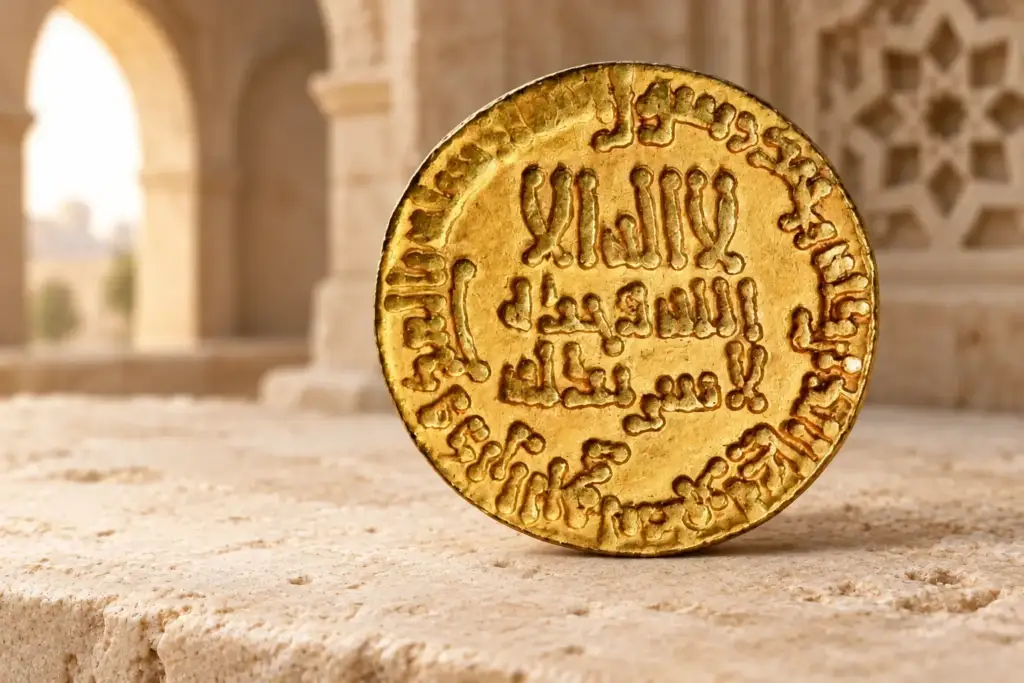
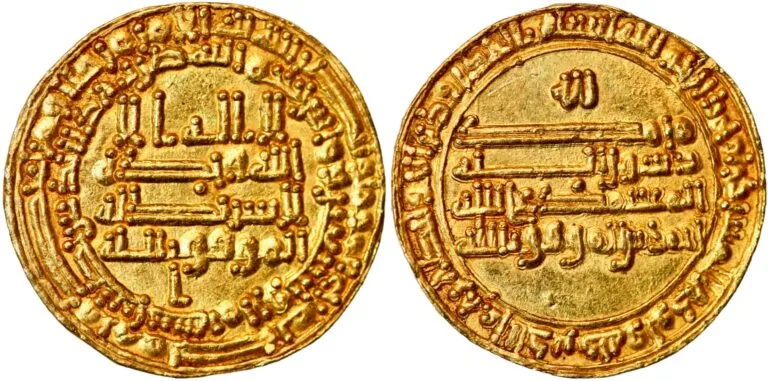
The dinar takes its name from the Roman denarius and became the gold coin of the caliphs. From the end of the 7th century it carried no images, only Arabic inscriptions: the profession of faith and verses from the Qur’an, often the ruler’s name, the mint and the date in the Hijri calendar. Dinars were struck in high-grade gold, but the weights of surviving coins vary, so the weight is stated for every object.
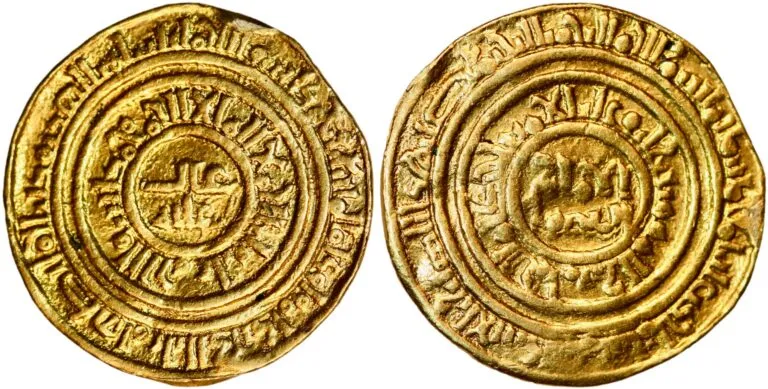
The Abbasid dinar in this category was struck in 891/2 (AH 278) in San‘a in Yemen under Caliph al-Mu’tamid (870–892), and is in Extremely Fine condition. The Fatimids, an Ismaili Shia dynasty that ruled from North Africa and, from 969, from Cairo, are represented by dinars of al-Mustansir, whose reign of almost sixty years (1036–1094) was one of the longest of any caliph, and of al-Amir (1101–1130). Many Fatimid dinars have their legends arranged in concentric circles around a central point, a style that began under the caliph al-Mu‘izz.
The sultani was the Ottoman gold coin, first struck under Mehmed II around 1477 on the standard of the Venetian ducat, which dominated trade in the Mediterranean. In the 16th century it was the empire’s only gold coin. The example here was struck under Selim II (1566–1574), son of Suleiman the Magnificent. Unlike the dinars, it names the sultan with his titles rather than carrying the religious formulas.
Gold coins were often kept as stores of value and sometimes worn as jewellery; traces of a mount lower the value, and one dinar here is described as possibly ex mount. Collectors look for a legible mint and date, a well-centred strike and an even surface. Islamic silver is found under silver coins, and gold from other periods and countries under Gold coins.
Islamic coins are dated in the lunar Hijri calendar, whose years are about eleven days shorter than ours. One Hijri year therefore usually falls across two Western years, and the date is written with both.
The dinar is the gold coin of the caliphs, struck from the late 7th century onward. The sultani is the Ottoman gold coin, introduced around 1477 on the standard of the Venetian ducat, and it names the sultan rather than carrying religious formulas.
The Fatimids were an Ismaili Shia dynasty that ruled North Africa and Egypt from 909 to 1171 and founded Cairo as their capital. Their gold dinars are known for high-grade gold and legends often set in concentric circles.
Yes. Every item is researched and described as accurately as possible, and Denarius guarantees that everything sold is genuine and as described.
Every item gets its own number when it is catalogued. The number is shown on the product page, so you always know exactly which example it is.
Yes. We ship worldwide. Shipping method and price are shown at checkout before you pay.
Read more
The gold dinar and silver dirham were created by Caliph Abd al-Malik in 696–699 and carry words instead of portraits. Here is…
Thinking of buying gold coins as a collector? Here is how collectible gold coins differ from bullion, what drives their value, and…
The Vikings paid in silver by weight, often cut into pieces. This guide explains which Viking age coins exist, from dirhams to…