Ancient Chinese coins: knife money, bridge money and cash coins
From Zhou-period knife money and bridge money to round cash coins with a square hole: the story of ancient Chinese coins and…
Coins from Asia: Chinese knife money, cash coins from the Han, Xin and Song dynasties and Qing dragon silver, Mughal and East India Company rupees, and a Japanese Tenpō Tsūhō. Every coin is examined, photographed, described with its own protocol number and guaranteed genuine.
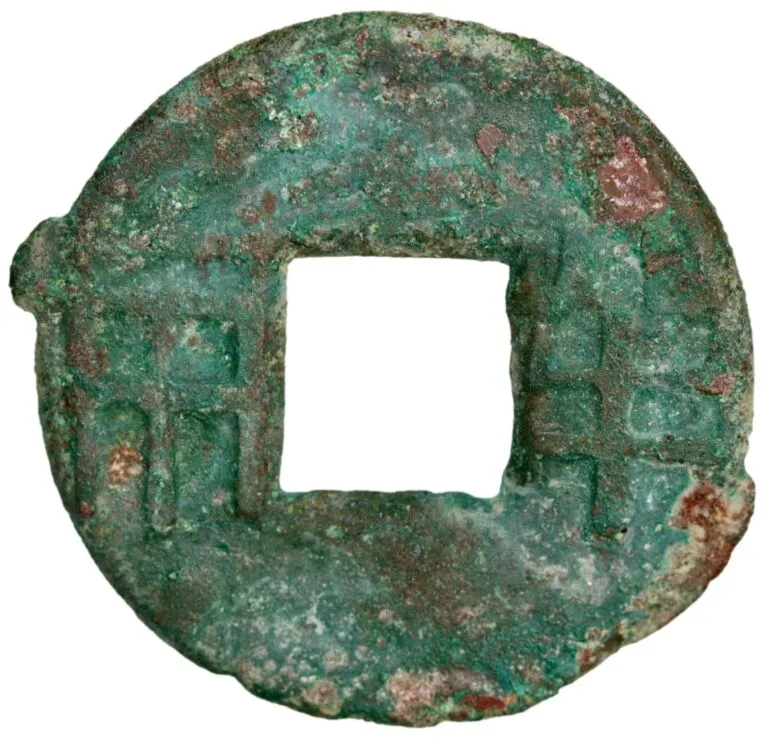
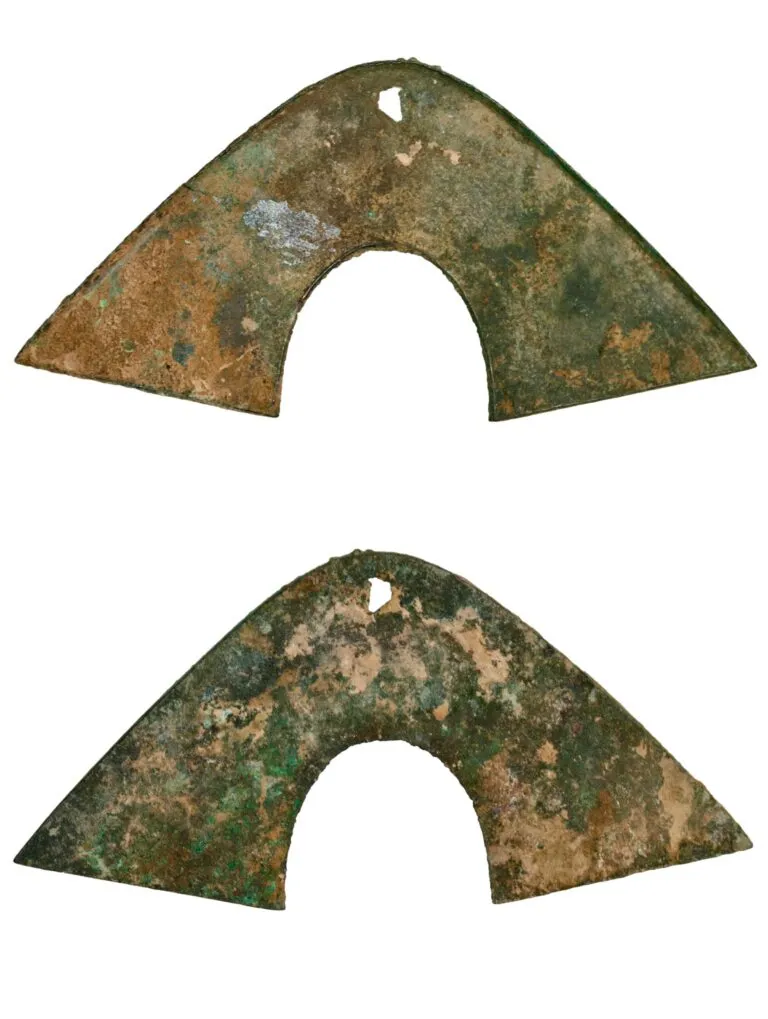
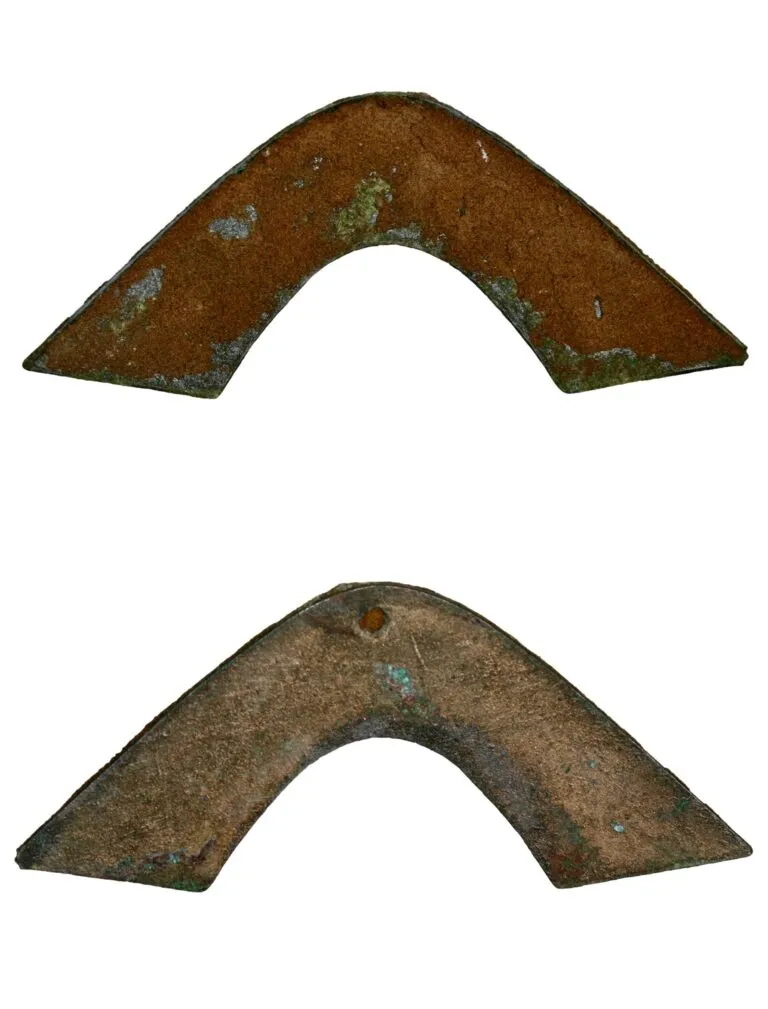
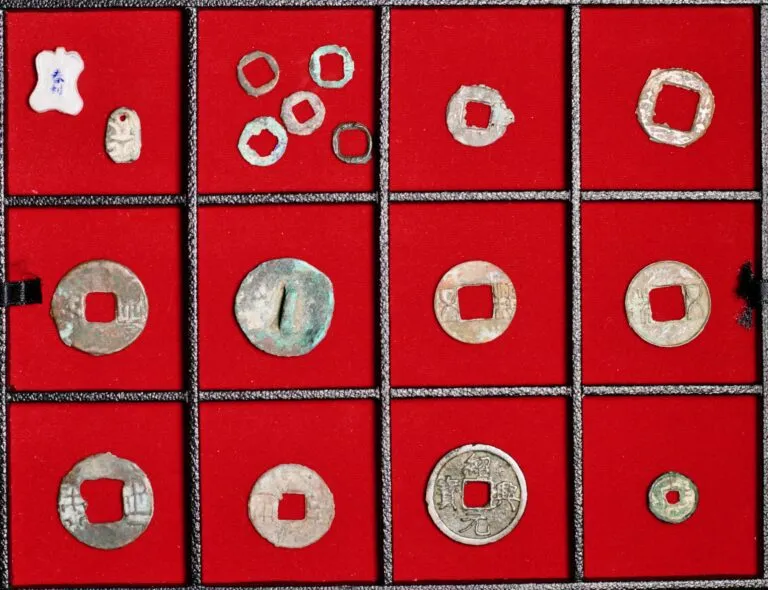
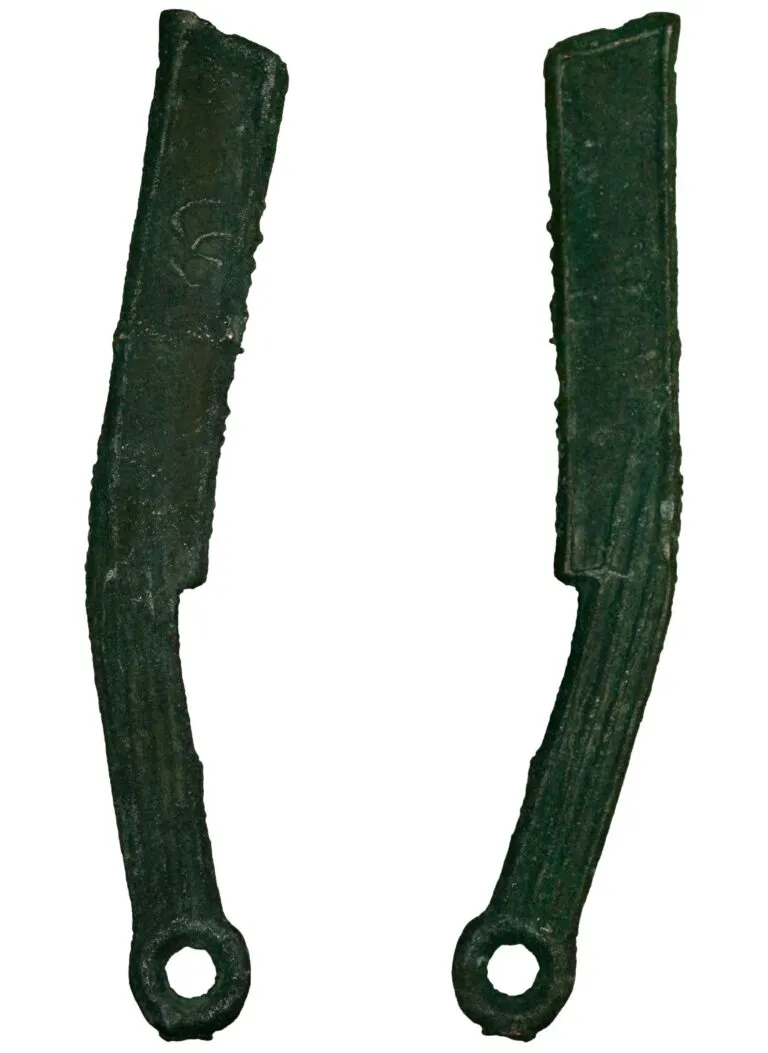
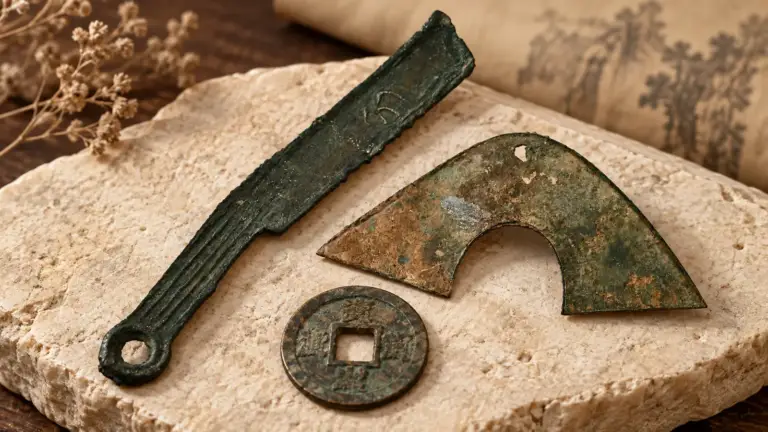
China dominates the Asian coins, and the category spans more than two thousand years. The oldest pieces are pre-imperial forms of money: knife money from 400–220 BC, cast in the shape of small knives during the Warring States period, and so-called bridge money attributed to the Zhou dynasty.
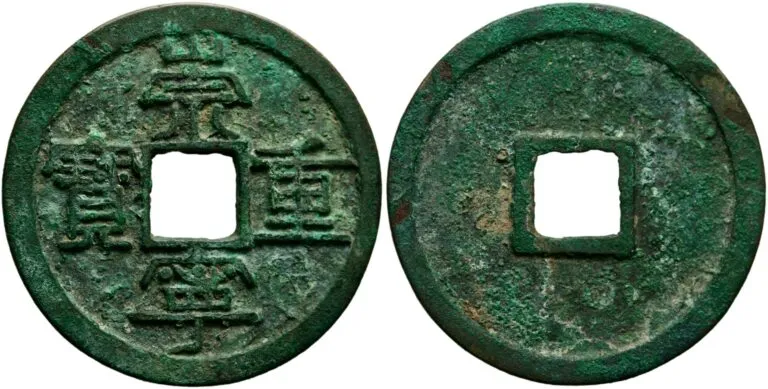
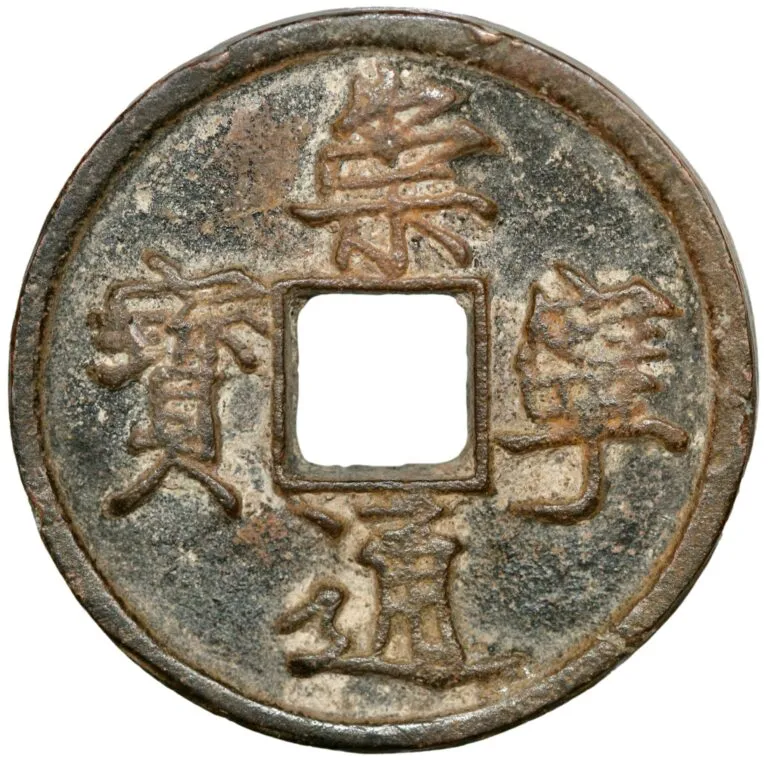
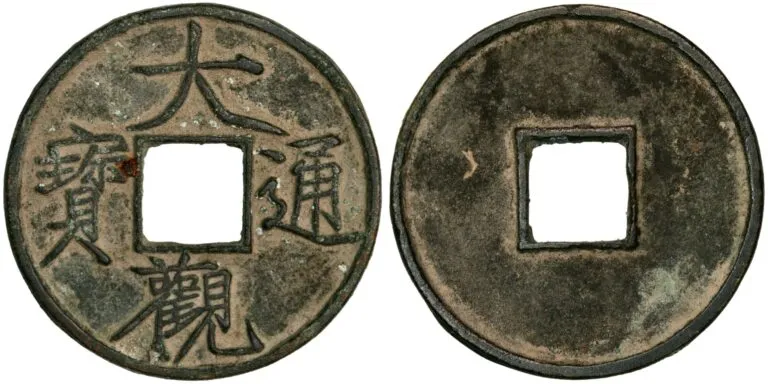
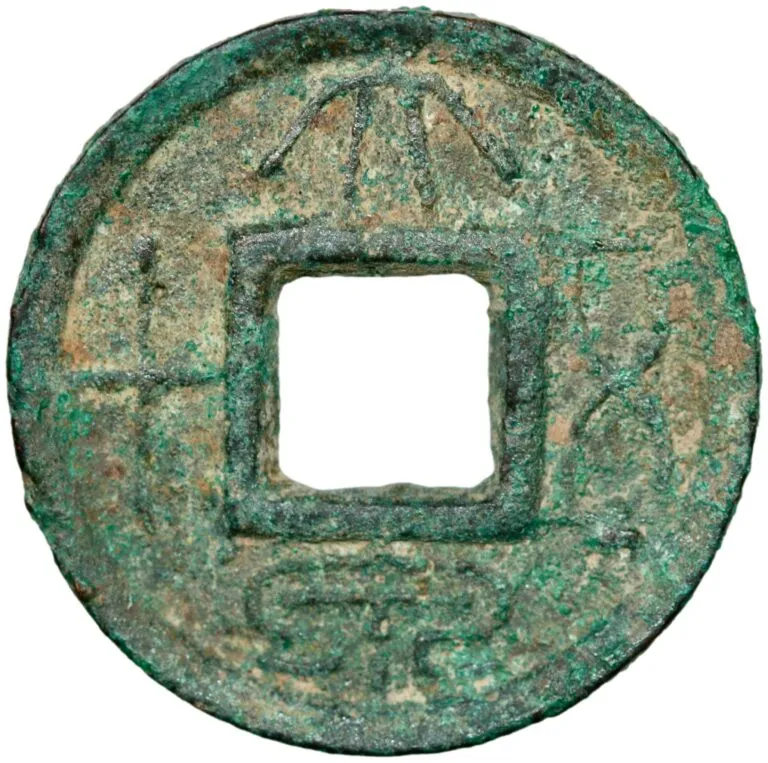
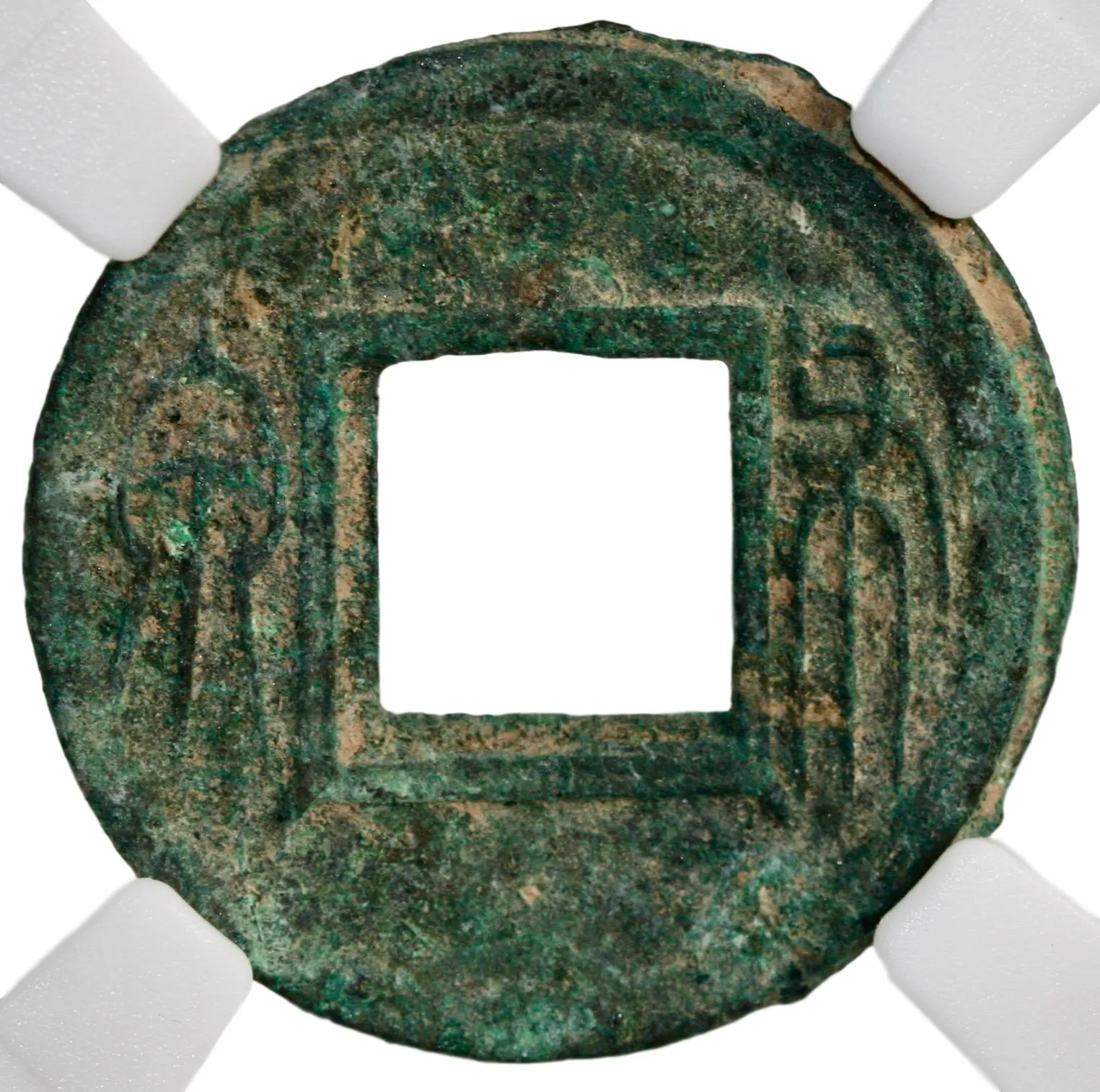
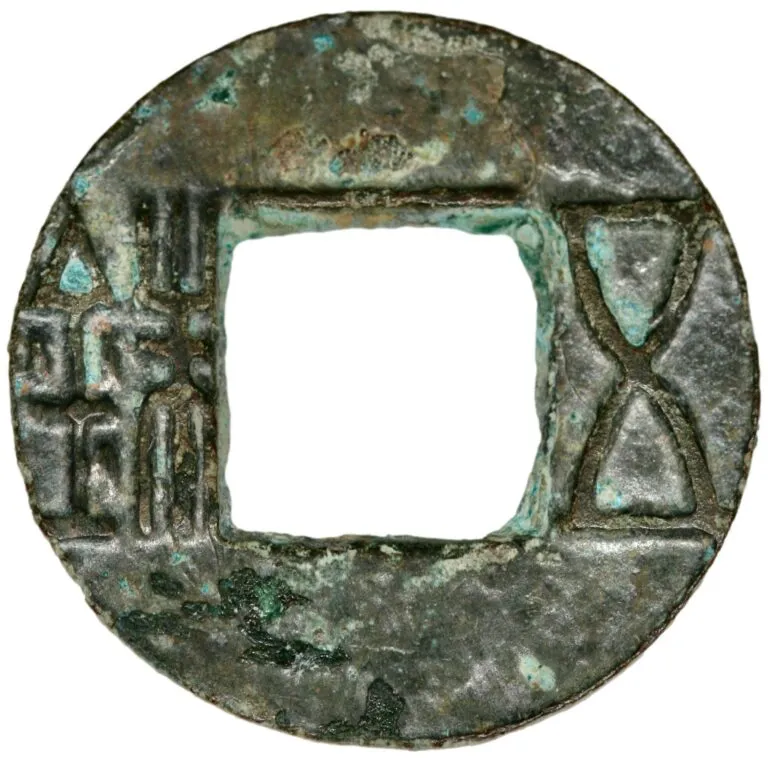
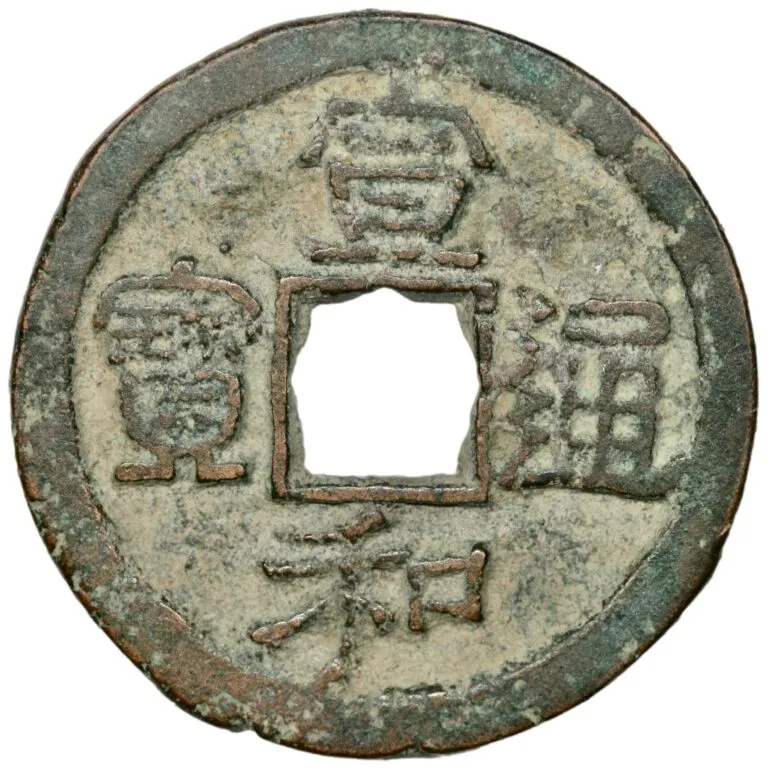
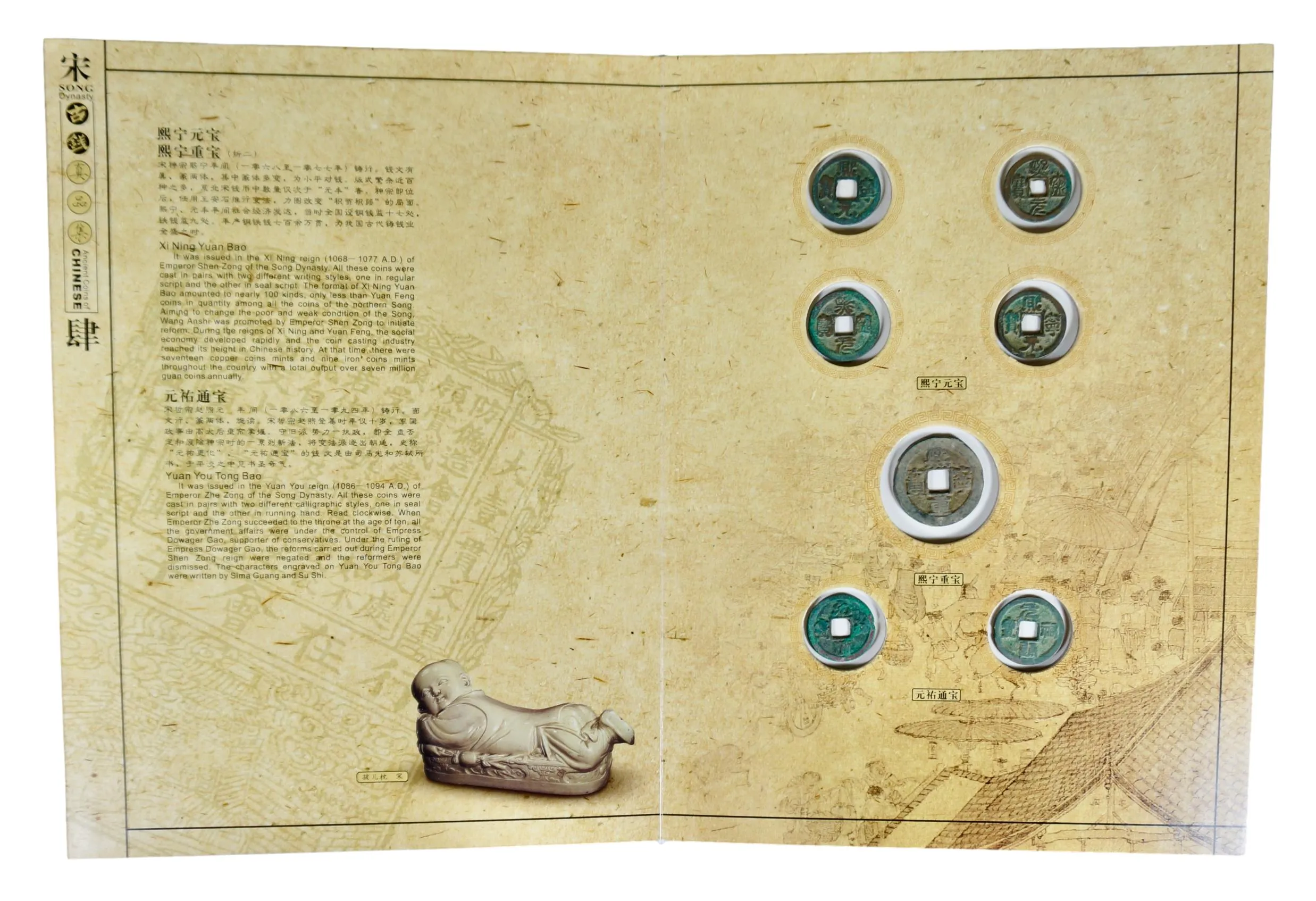
Then comes the round coin with a square hole, the form Chinese coins kept for two thousand years. Unlike Western coins, these cash coins were cast in moulds rather than struck. The category includes a Ban Liang from the reign of Emperor Wu of Han, Wu Zhu cash, introduced in 118 BC and used for centuries, and coins from Wang Mang’s short-lived Xin dynasty (9–23 AD), whose monetary reforms produced unusual types such as the Bu Quan and a 50 cash. From the Song dynasty (960–1279) there are coins of Emperor Huizong (1101–1125), whose elegant slender gold calligraphy appears on his coins, as well as a small collection of Song coins.
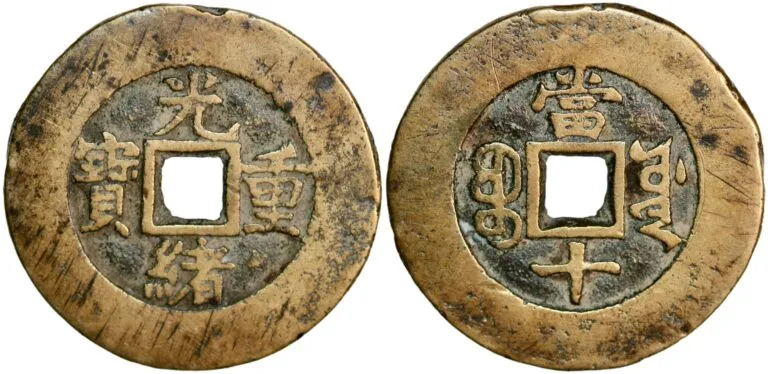
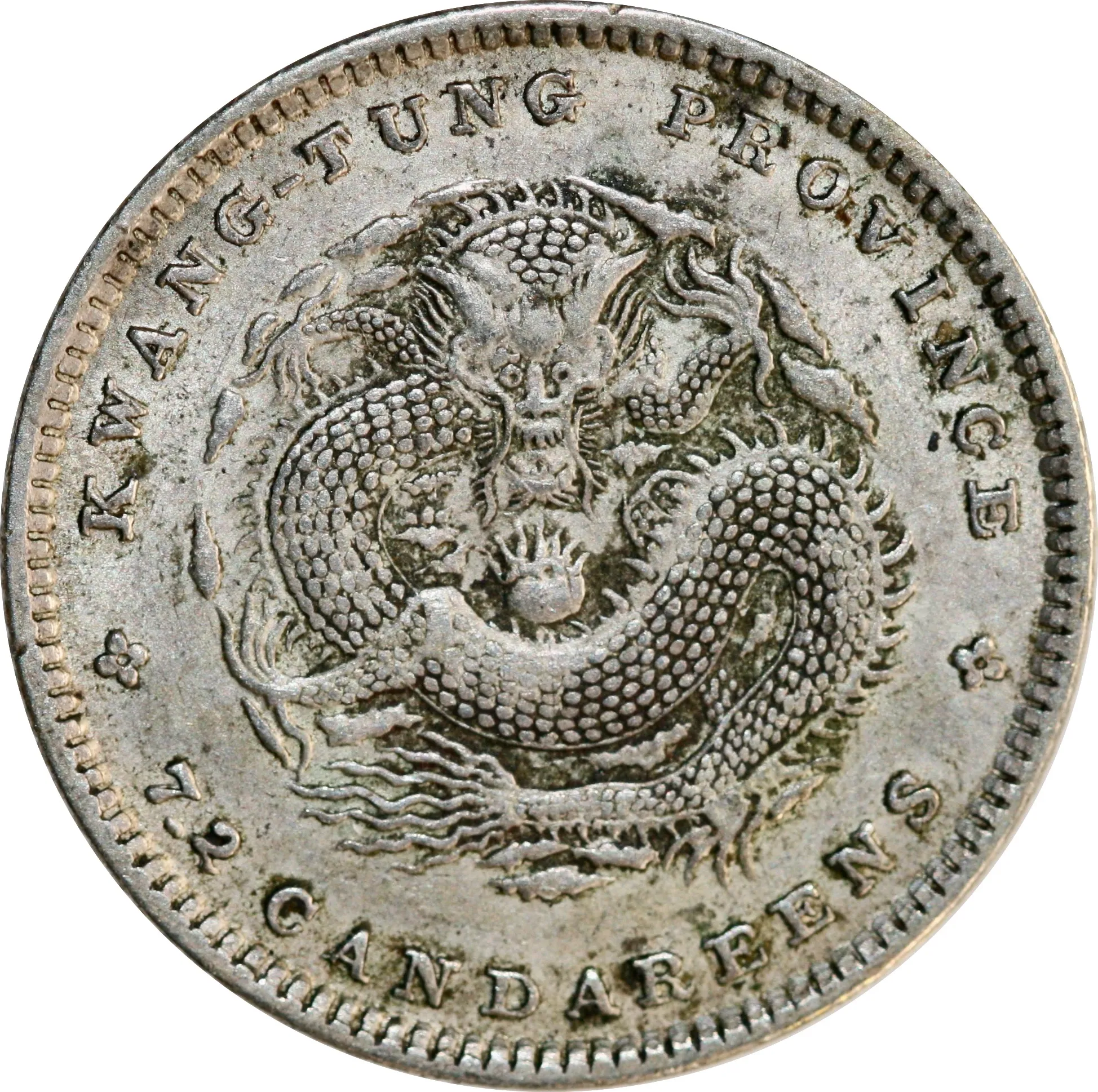
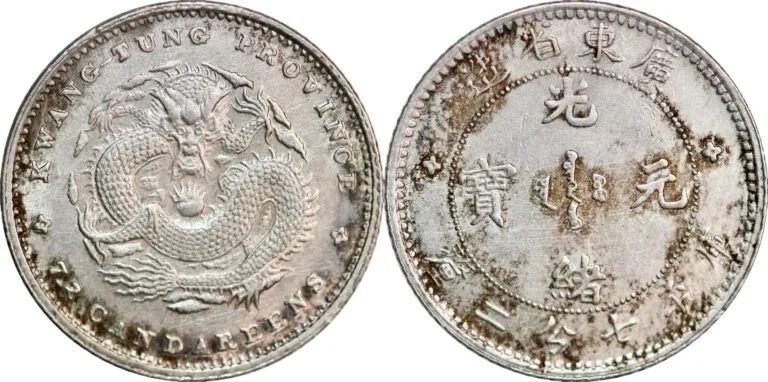
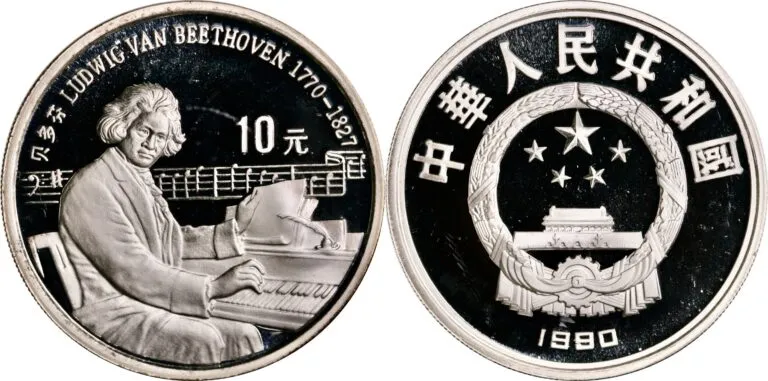
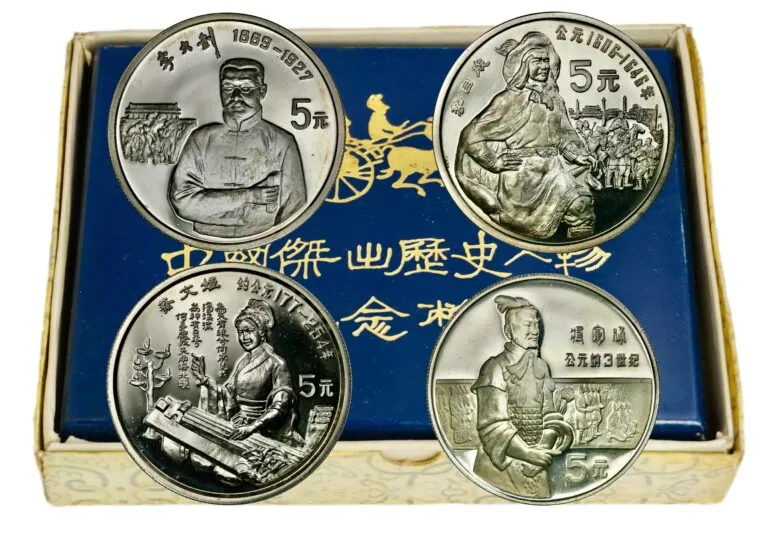
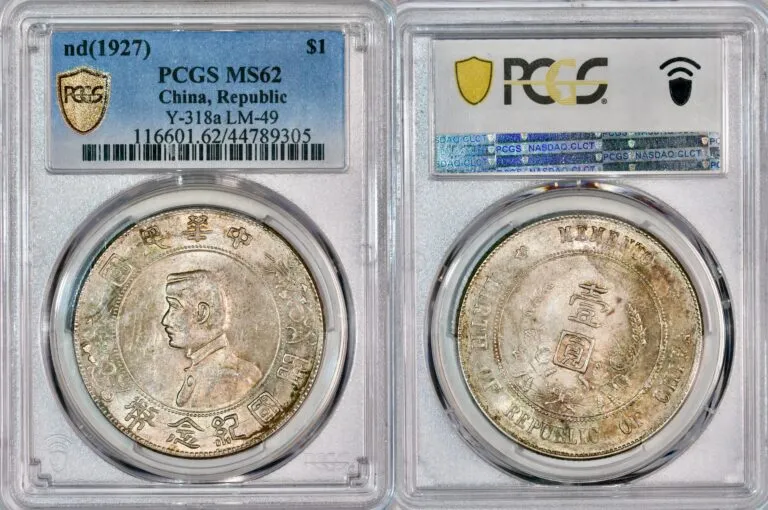
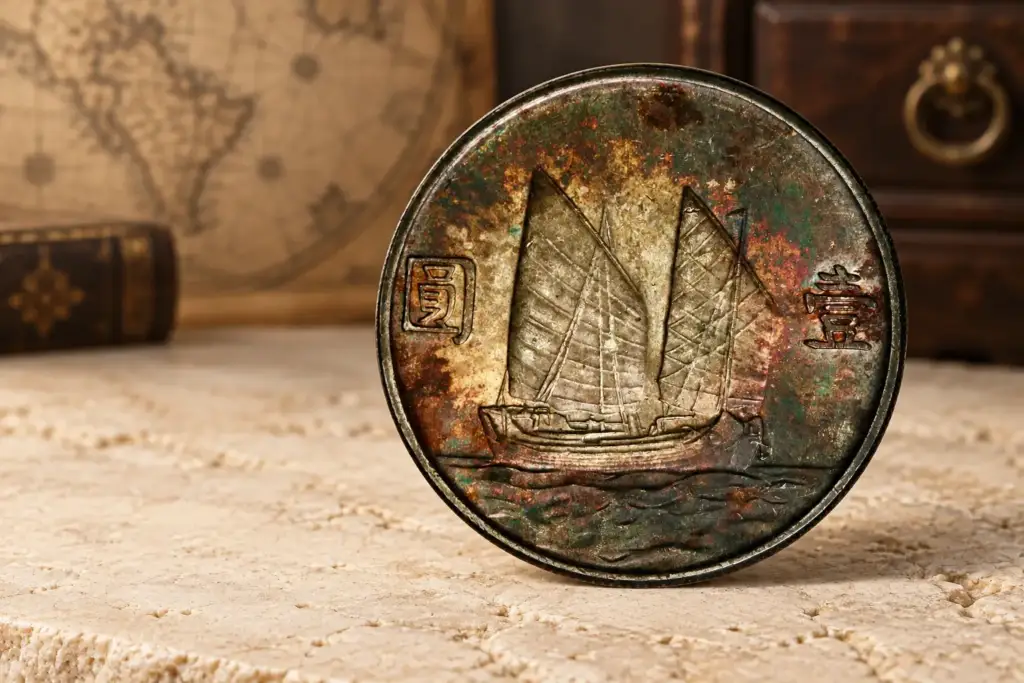
The last imperial dynasty, the Qing, is represented by 10 cash from 1875–1908 and machine-struck silver dragon coins of 10 and 20 cents from 1890–1908. From the Republic there is a dollar 1927, and from modern China a 10 yuan 1990 and a set of 5 yuan in its original case.
The Indian coins show how the rupee developed. A rupee of Sultan Islam Shah (1545–1552) of the Sur dynasty belongs to the period when the silver rupee was established, and a Mughal rupee from 1748–1754 shows the classic form with inscriptions in Persian instead of portraits. The British East India Company continued this tradition: the Bengal Presidency rupee 1776–1778 is in Mughal style, while the copper pice of the 1820s and the rupee of 1823 show the transition towards colonial coinage. A 5 kori 1936 comes from Kutch, one of the princely states with its own coinage.
From Japan there is an oval 100 mon (Tenpō Tsūhō), cast from 1835 to 1870 in the late Edo period. Thailand is represented by 50 and 100 baht from 1974.
For cast Chinese coins, legibility of the characters, an even patina and freedom from cracks matter most; old Chinese coins have been widely copied, so a reliable description is important. For struck silver such as the dragon coins and rupees, look at wear on the high points and an original surface. Each coin is described with its period, condition and catalogue reference.
See also Asian banknotes and coins from the Middle East.
Chinese cash coins were cast in moulds and strung on cords through the hole, which made them easy to count and carry. The round coin with a square hole was used in China for some two thousand years.
Knife money is an early Chinese form of cast bronze money shaped like a small knife. It was used during the Warring States period, before the round coin with a square hole became standard.
Mughal rupees normally carry inscriptions in Persian with the ruler's name, titles, mint and date instead of images. The East India Company copied this style on its early rupees in Bengal.
Yes. Every item is researched and described as accurately as possible, and Denarius guarantees that everything sold is genuine and as described.
Every item gets its own number when it is catalogued. The number is shown on the product page, so you always know exactly which example it is.
Yes. We ship worldwide. Shipping method and price are shown at checkout before you pay.
Read more
From Zhou-period knife money and bridge money to round cash coins with a square hole: the story of ancient Chinese coins and…
From the silver penny to the groat and the great gold coins: a collector's guide to medieval coins, how they were made…
A bracteate is a paper-thin silver coin struck on one side only, and for much of the Middle Ages it was Norway's…