Rare Norwegian coins: Norway’s most valuable dates and types
Which Norwegian coins are the rarest, and why? From Olav Kyrre's pennies and the archbishop's skillings to the Schydtz coins of 1689…
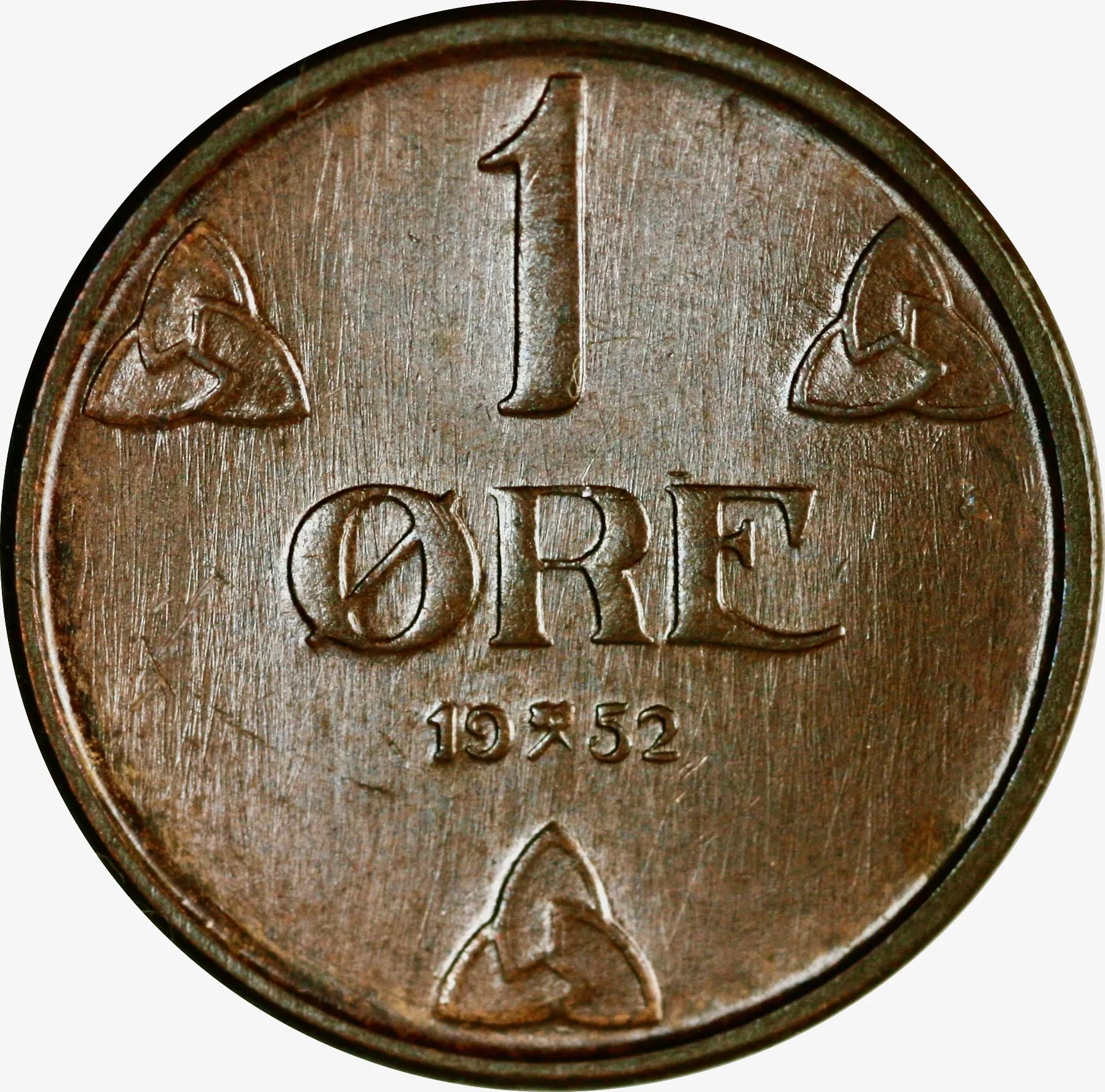
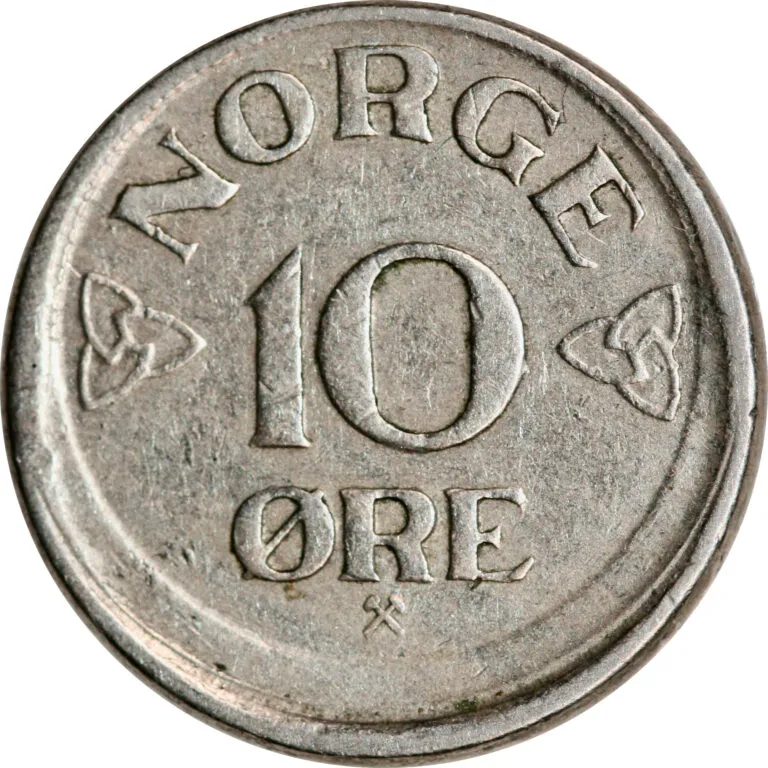
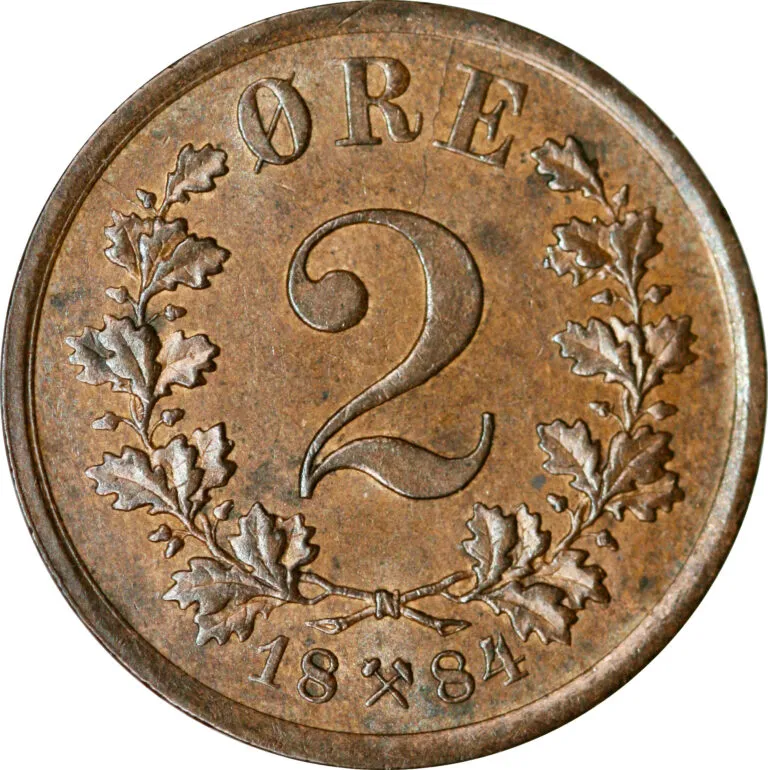
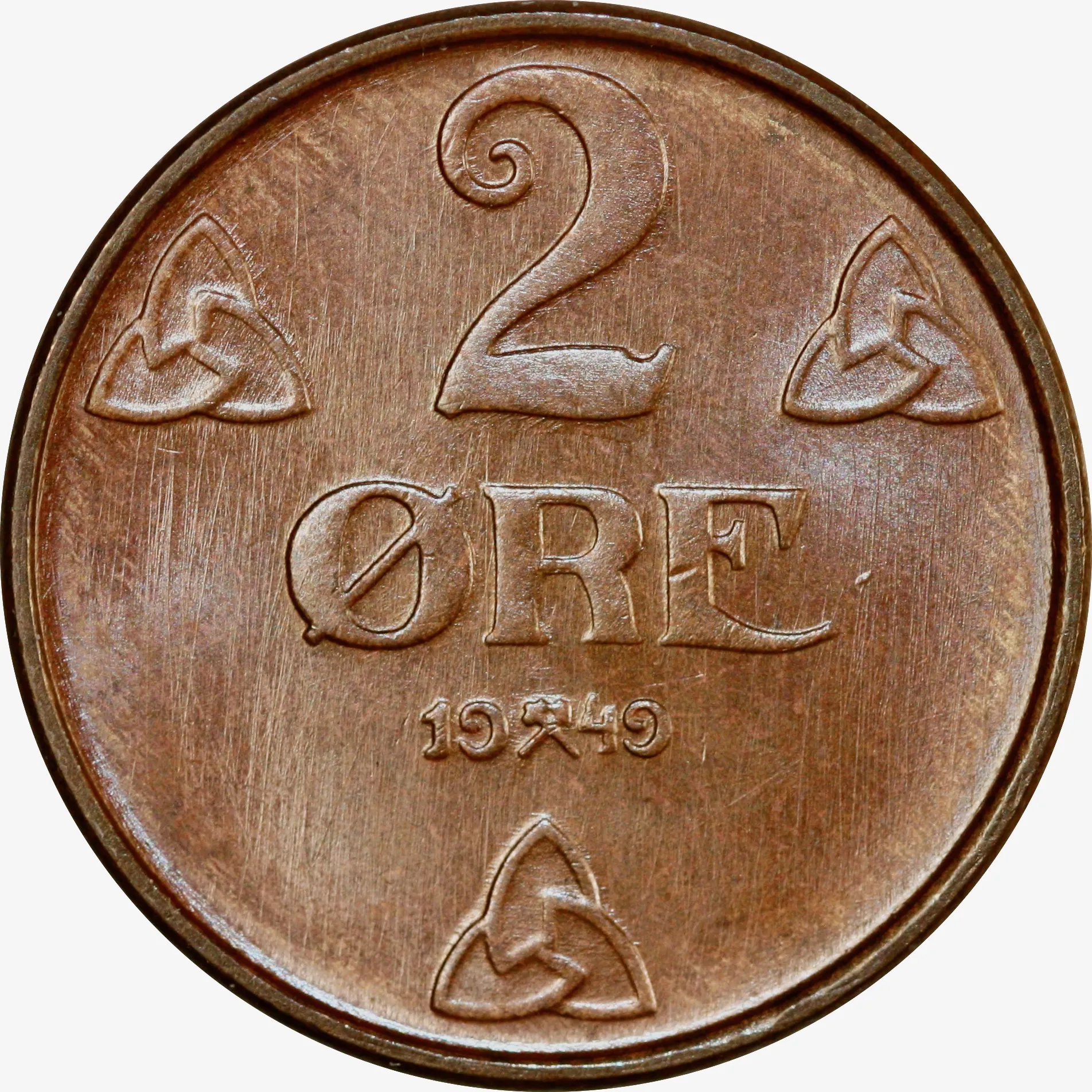
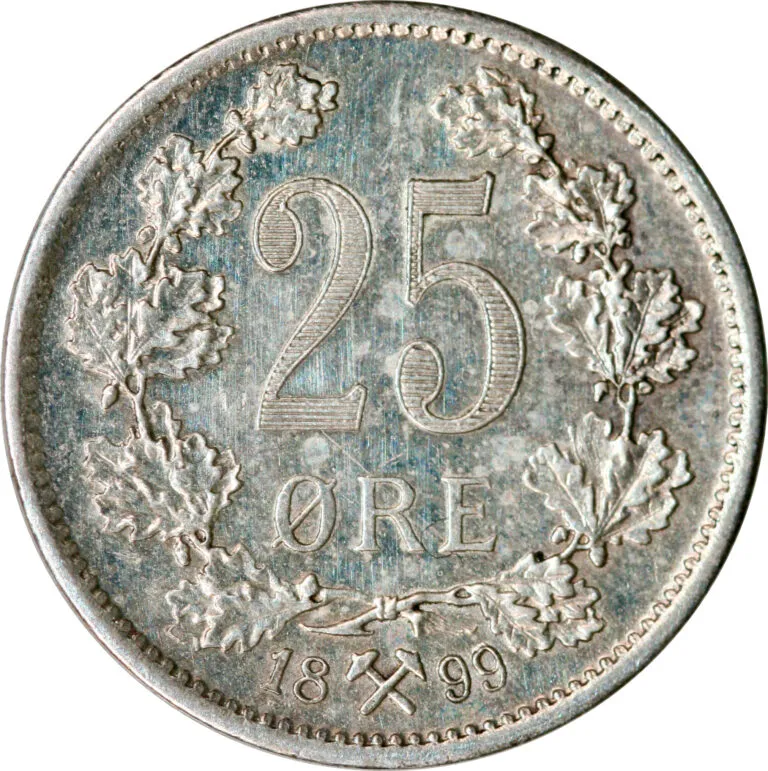
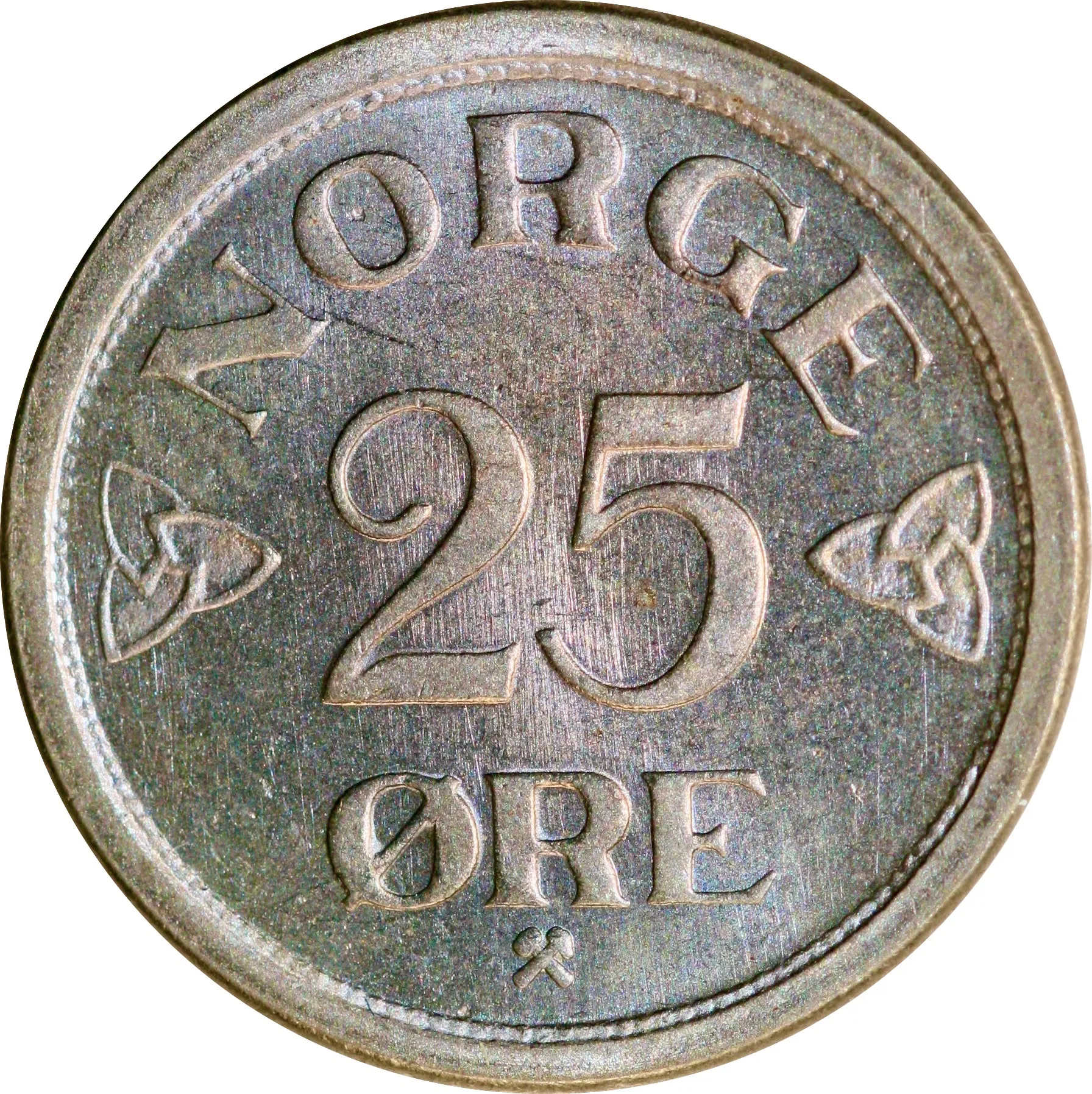
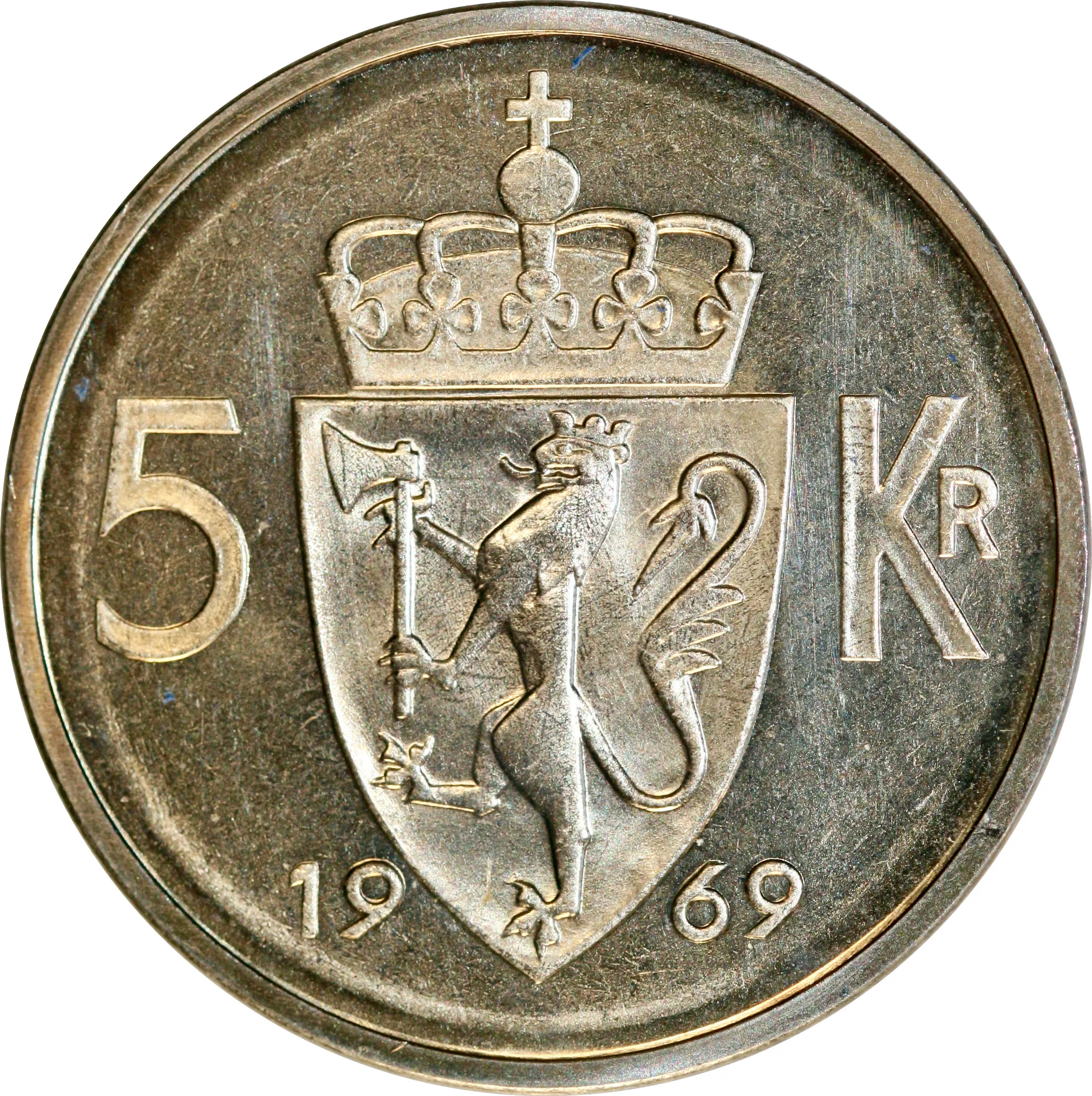
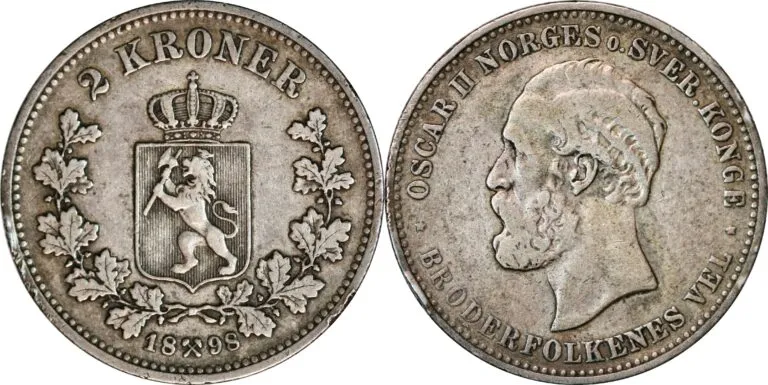
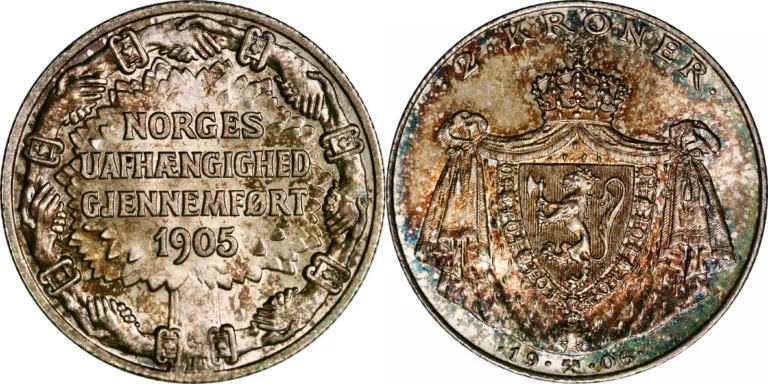
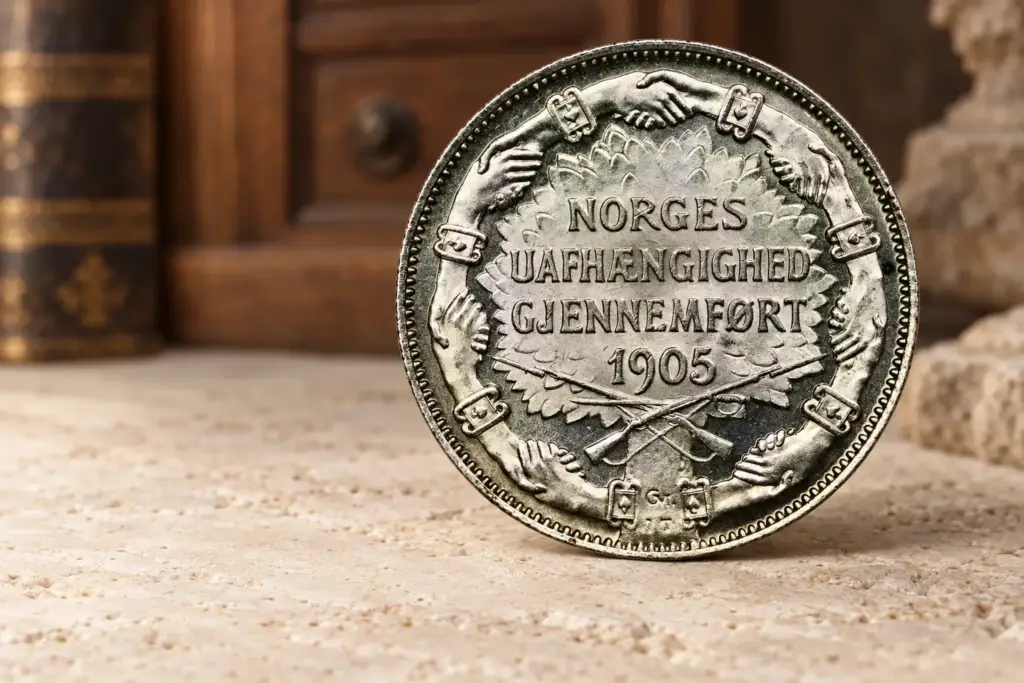
Norwegian coins after 1874: kroner and øre from Oscar II, Haakon VII, Olav V and Harald V, from 1 øre in bronze and wartime iron to silver 2 kroner and commemorative coins. Every coin is photographed, catalogued and guaranteed genuine.
The krone came to Norway in several steps. In 1873 Denmark and Sweden formed the Scandinavian Monetary Union, based on gold, with the krone divided into 100 øre. The Storting at first voted against joining, but on 4 June 1873 it adopted the krone alongside the speciedaler and tied the currency to gold. From 1 January 1874 one speciedaler was reckoned as four kroner, and the first new coins carried both values, such as 50 øre / 15 skilling and 10 kroner / 2½ speciedaler.
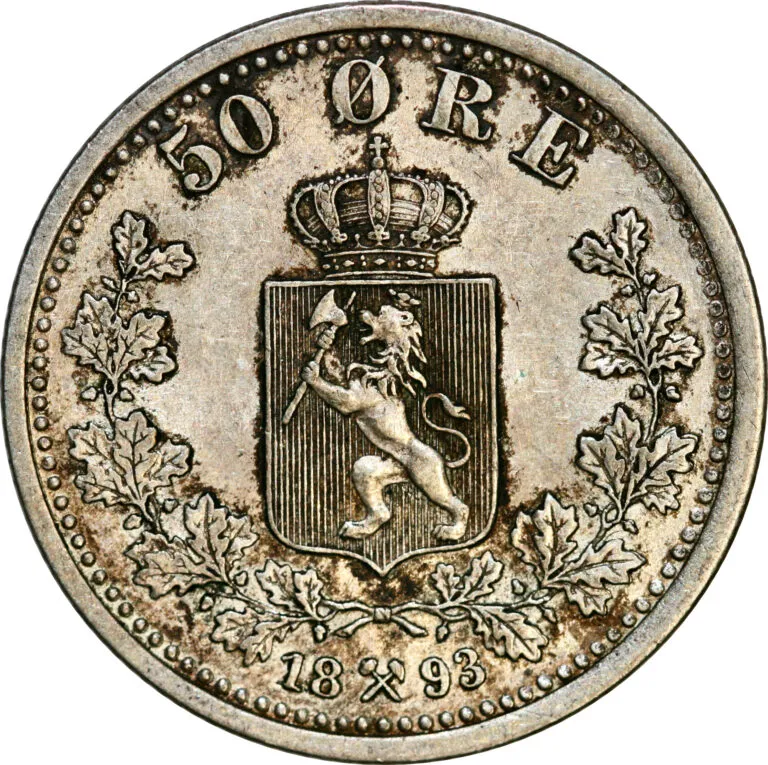
The monetary act of 17 April 1875 made the krone of 100 øre Norway’s only currency unit, and on 16 October 1875 Norway joined the Scandinavian Monetary Union. Coins from all three countries now had the same weight and fineness and were accepted across the borders. Between 1875 and 1878 the full series was in place: 1, 2 and 5 øre in bronze; 10, 25 and 50 øre, 1 krone and 2 kroner in silver; and 10 and 20 kroner in gold. The older coins are found under Norway 1814 – 1874.
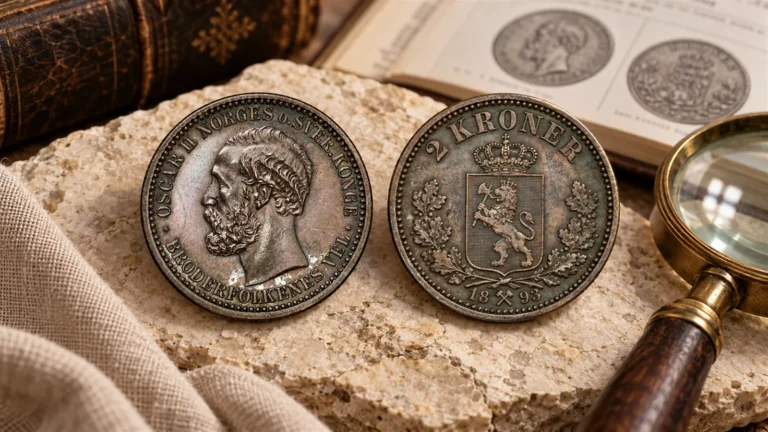
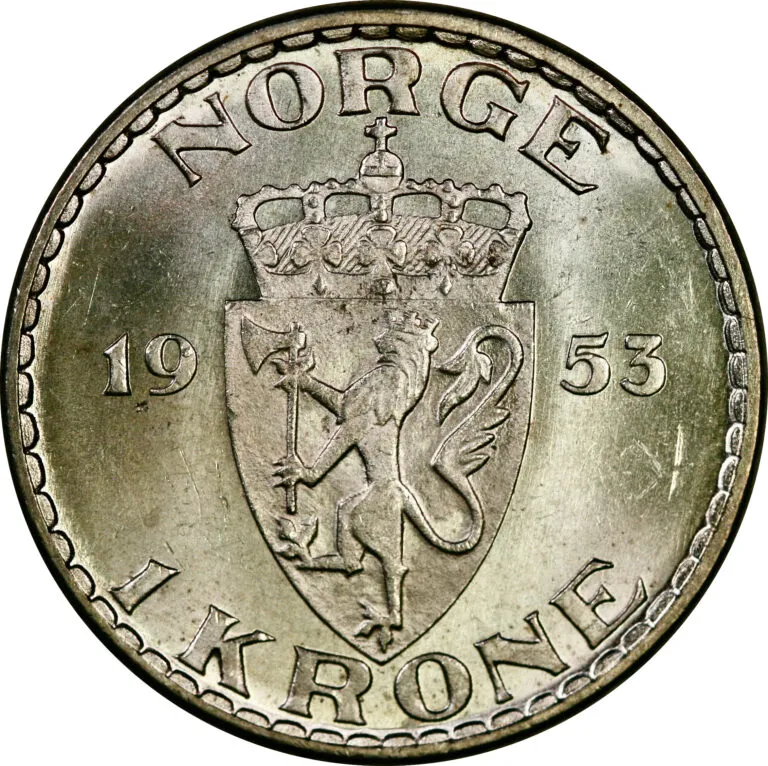
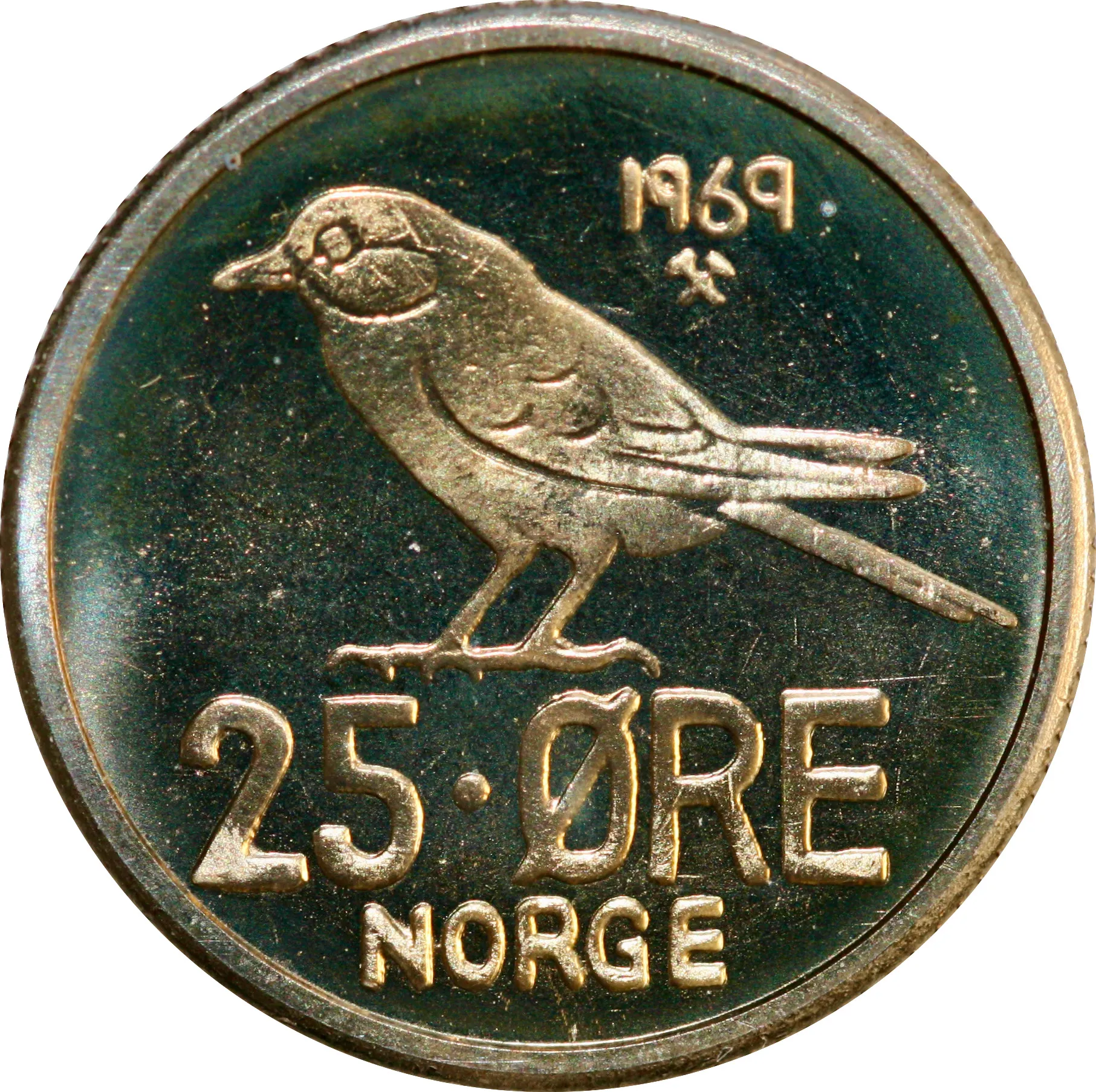
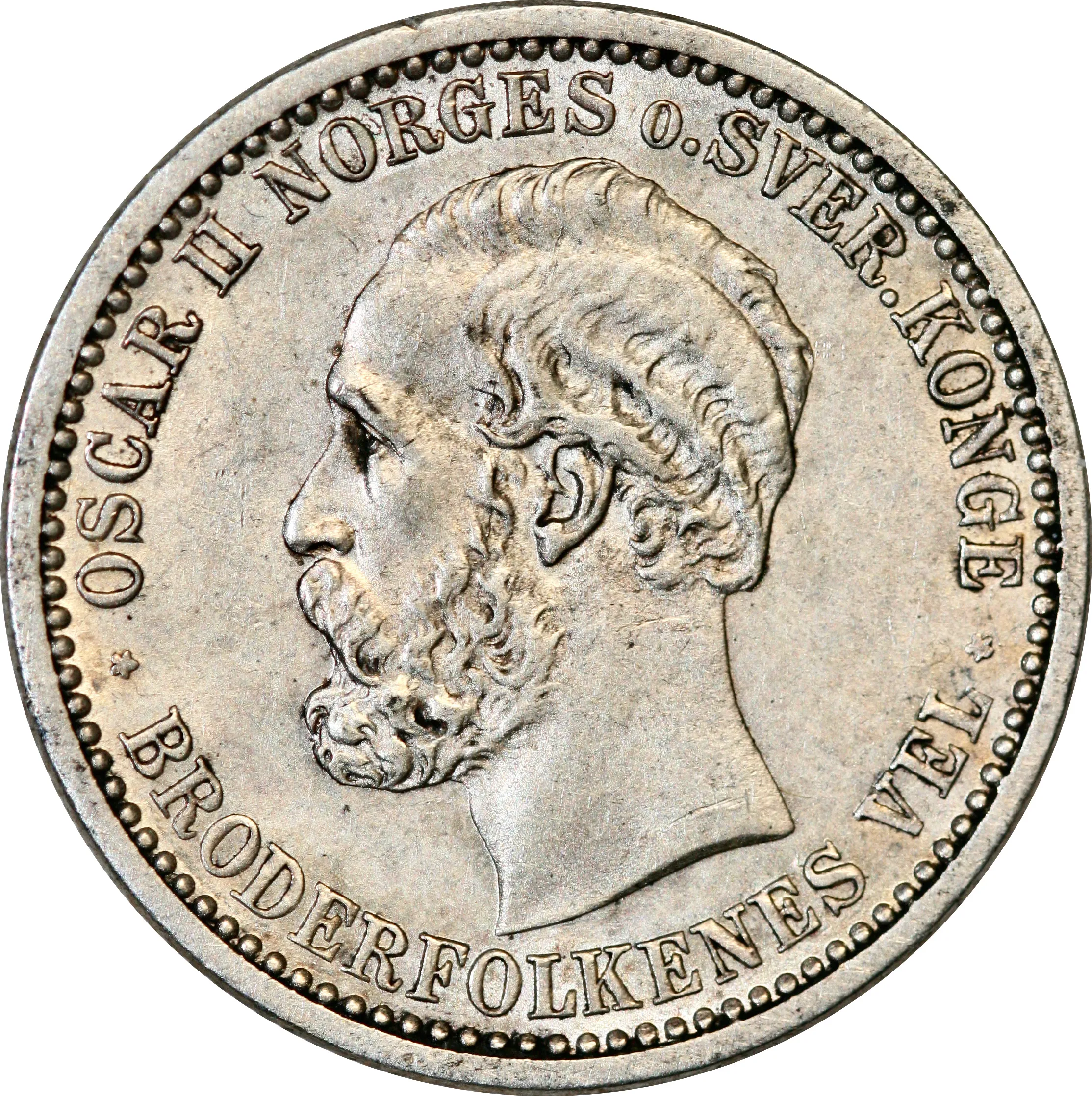
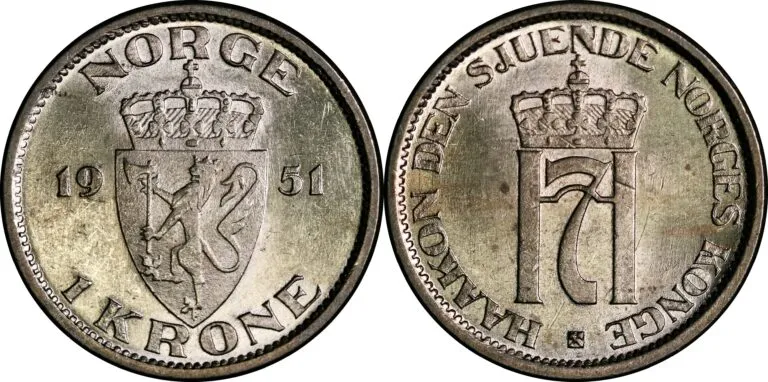
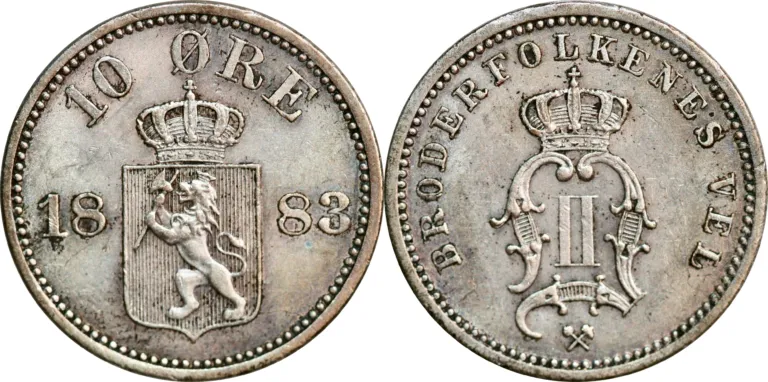
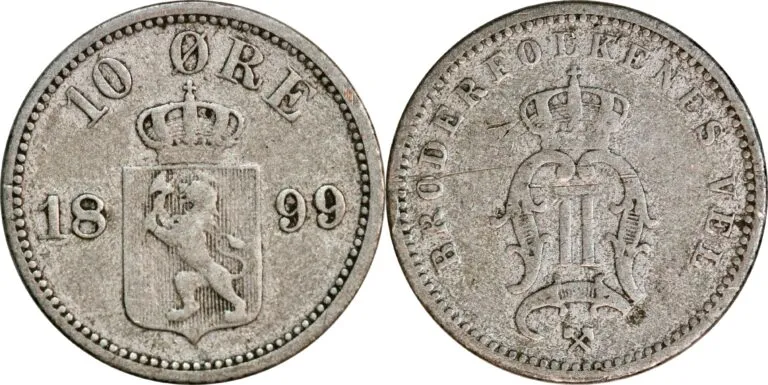
The coins follow the line of kings: Oscar II until the dissolution of the union in 1905, then Haakon VII (1905–1957), Olav V (1957–1991) and Harald V. Under Oscar II the bronze coins show the crowned lion on a shield, while the small silver coins carry his crowned monogram. Haakon VII’s crowned H7 monogram is found on most of his coins, and Olav V’s OV monogram appears on the small coins. Between 1958 and 1973 Olav V’s coins also carried animals: a squirrel, a capercaillie, an elk, a bee, a bird, an elkhound and a horse. The gold coins of 10 and 20 kroner were struck until 1910 and are found under Gold coins.
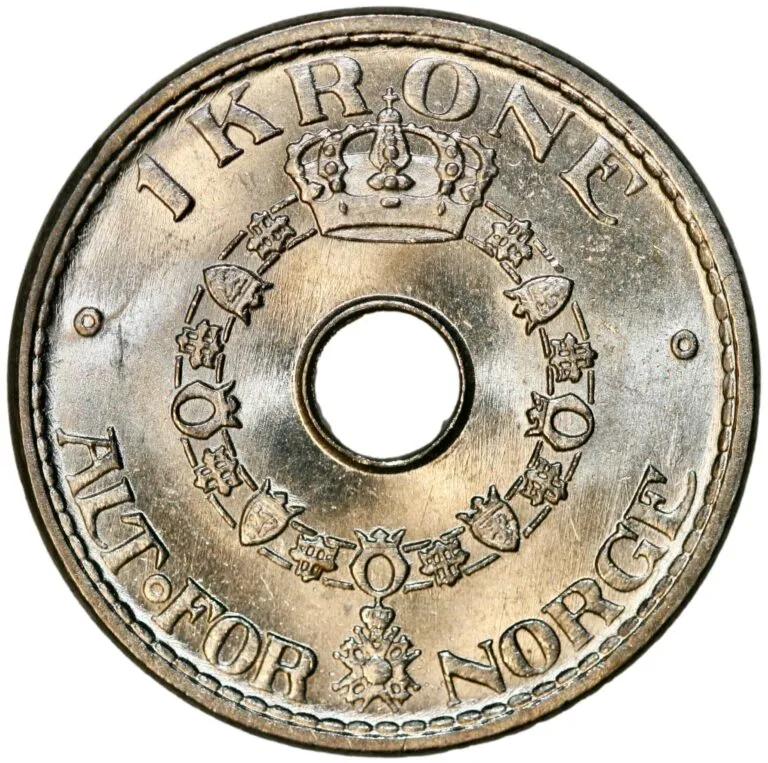
The First World War made metal scarce. From 1917 to 1921 the bronze coins were partly struck in iron, the last 2 kroner was issued in 1917, and from 1920 copper-nickel replaced silver. In the 1920s several copper-nickel coins were given a hole in the centre; the holed 1 krone was struck from 1925 to 1951.
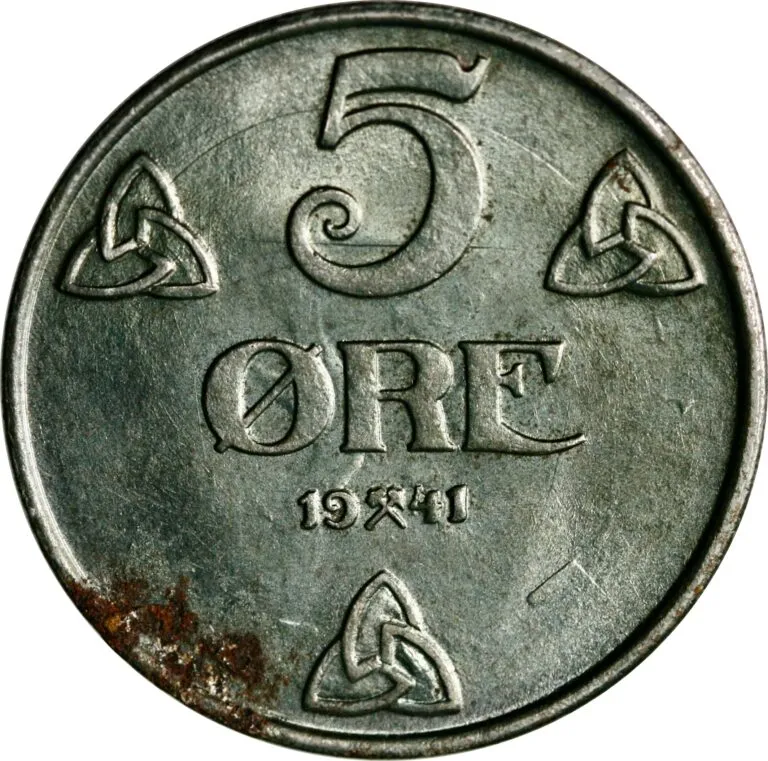
During the German occupation of 1940–1945 copper and nickel went to the war industry. The 1, 2 and 5 øre were struck in iron and the 10, 25 and 50 øre in zinc, and the royal crown and Haakon VII’s monogram were removed. The government in London had 10, 25 and 50 øre struck in England in nickel-brass with the pre-war design. After the war the coins were again struck in bronze and copper-nickel. The small øre coins disappeared one by one: 1 and 2 øre were last struck in 1972, 5 and 25 øre in 1982, and the 50 øre was withdrawn in 2012.
Year, the number struck and condition. Some years were struck in small numbers, and coins in the Norwegian grades 0 (uncirculated) and 01 are far scarcer than circulated ones. Untouched surfaces and original toning are preferred, and cleaning lowers the value. For bronze coins the original colour counts, and for iron coins the absence of rust. Varieties, error strikes and documented provenance add interest.
The Storting adopted the krone in 1873, and from 1 January 1874 one speciedaler was reckoned as four kroner. The monetary act of 17 April 1875 made the krone of 100 øre the only unit, and Norway joined the Scandinavian Monetary Union on 16 October 1875.
Copper and nickel were scarce during both world wars. Bronze coins were partly struck in iron in 1917–1921, and during the occupation in 1940–1945 the 1, 2 and 5 øre were made of iron and the 10, 25 and 50 øre of zinc.
Several copper-nickel coins under Haakon VII were holed from the 1920s, including the 1 krone of 1925–1951 and the 10, 25 and 50 øre. Today's 1 krone and 5 kroner, introduced in 1997 and 1998, also have a hole.
Yes. Every item is researched and described as accurately as possible, and Denarius guarantees that everything sold is genuine and as described.
Every item gets its own number when it is catalogued. The number is shown on the product page, so you always know exactly which example it is.
Yes. We ship worldwide. Shipping method and price are shown at checkout before you pay.
Read more
Which Norwegian coins are the rarest, and why? From Olav Kyrre's pennies and the archbishop's skillings to the Schydtz coins of 1689…
Most old Norwegian coins are worth little, but condition, silver, gold and rare dates can command high prices. Here is the price…
A thousand years of Norwegian coins in one guide: the main periods, kings and mints, how grading works in Norway, and how…