Falck-Muus’ Røros Medal 1944
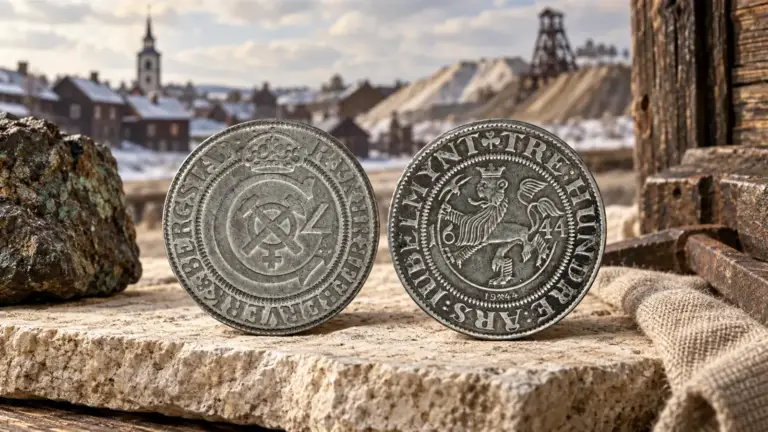
Falck-Muus’ Røros medal 1944, known in Norwegian as Bergstadsmedaljen, was made for the 300th anniversary of the mining town of Røros, and…
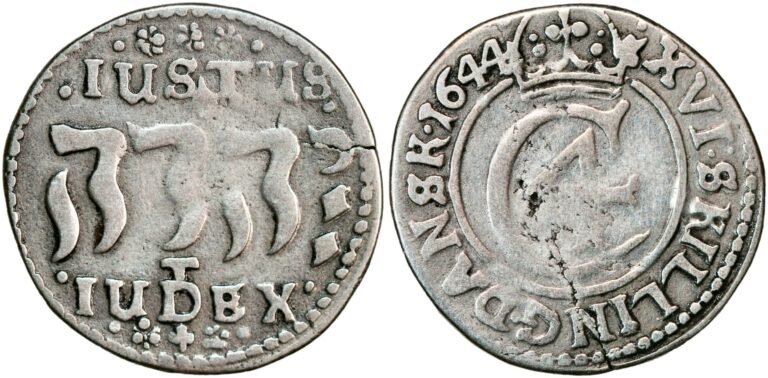
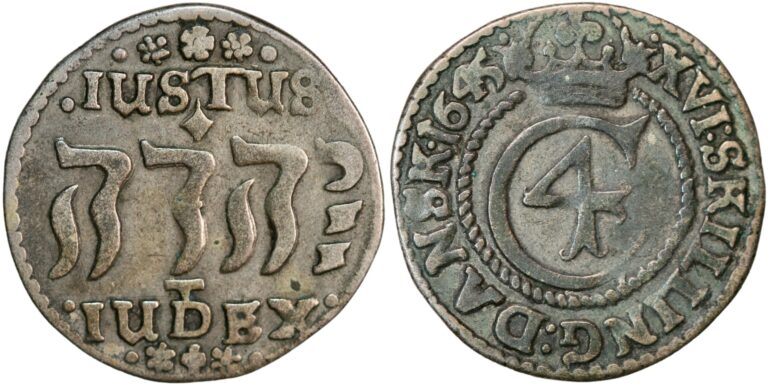
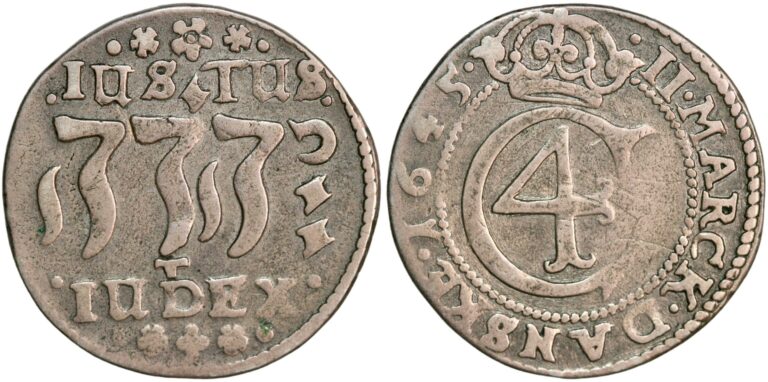
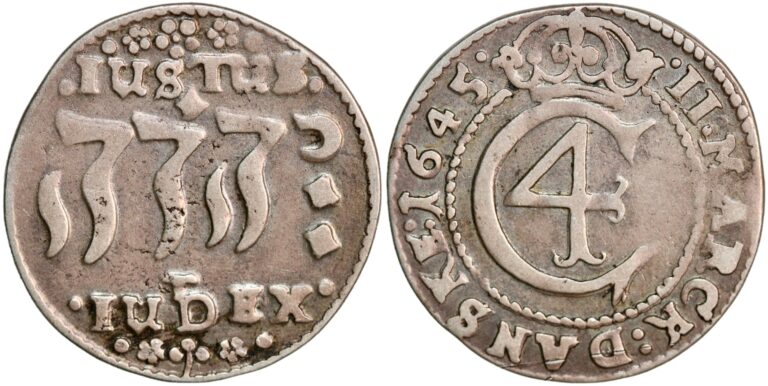
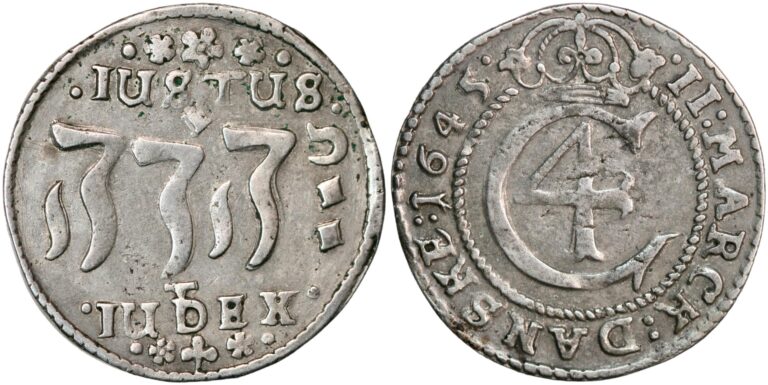
Norwegian coins of Christian IV, king of Denmark-Norway 1588–1648: 1 mark and 2 mark pieces dated 1644 and 1645 from the Christiania mint. Every coin is examined, photographed, given its own protocol number and guaranteed genuine.
Christian IV ruled Denmark-Norway from 1588 to 1648 and is one of the kings who shaped Norway most directly. He founded Christiania after the fire of 1624, and the same year the silver works at Kongsberg began operating. In 1628 a mint started work in Christiania, so that Norwegian silver could be coined in Norway. That mint remained the country’s only coin workshop until Kongsberg got its own mint in 1686.
Christian IV’s coinage ordinance of 1625 also fixed the system used in Denmark-Norway until 1816: 16 skilling made one mark, and six marks (96 skilling) made one riksdaler of account.
From the 1640s the Christiania mint concentrated on so-called kronemynt: coins of 1, 2 and 4 mark. According to Norges Bank they held about 67 percent silver, against 87.5 percent in the full riksdaler species. The 1 and 2 mark pieces in this category belong to this production. The 1 mark weighs around 5.1 grams and the 2 mark around 10.5 grams.
For the next reign, see Frederik III. More early Norwegian coins are found under Norway before 1814.
Norwegian coins of the 1640s were struck at the mint in Christiania, which opened in 1628. The Kongsberg mint was not established until 1686, under Christian V.
Under the system from 1625 one mark was 16 skilling, and six marks made one riksdaler of account. A 2 mark coin was therefore worth a third of a riksdaler.
The mark coins belonged to the krone coinage, which was struck with a lower silver content than the riksdaler species. Norges Bank gives about 67 percent silver for the krone coins against 87.5 percent for the species.
Yes. Every item is researched and described as accurately as possible, and Denarius guarantees that everything sold is genuine and as described.
Every item gets its own number when it is catalogued. The number is shown on the product page, so you always know exactly which example it is.
Yes. We ship worldwide. Shipping method and price are shown at checkout before you pay.
Read more
Falck-Muus’ Røros medal 1944, known in Norwegian as Bergstadsmedaljen, was made for the 300th anniversary of the mining town of Røros, and…
Which Norwegian coins are the rarest, and why? From Olav Kyrre's pennies and the archbishop's skillings to the Schydtz coins of 1689…
From Eirik Magnusson's lion pennies to Olav Engelbrektsson's skillings: Norwegian medieval coins from 1280 to 1537 explained, including the gap after 1387…