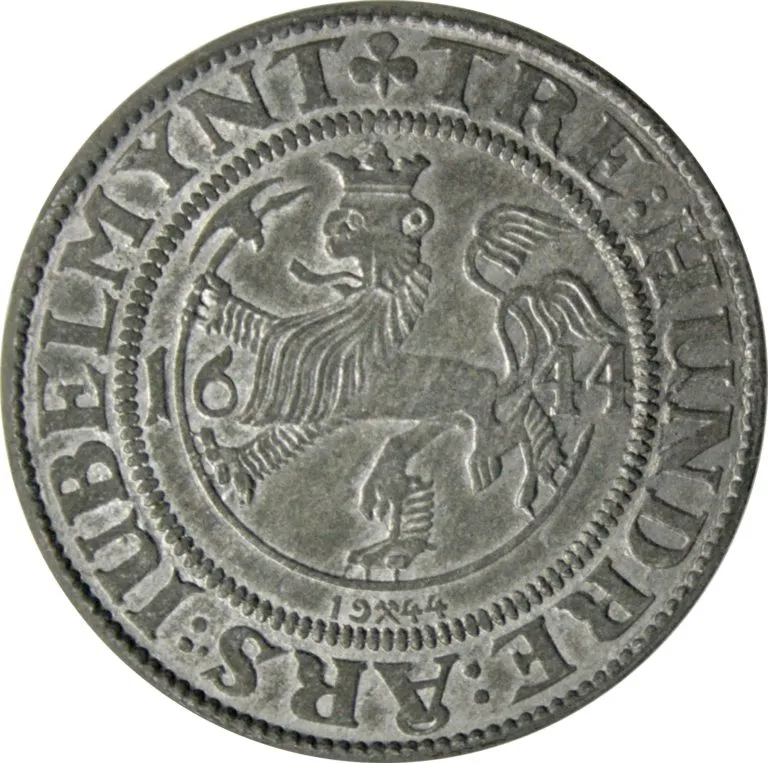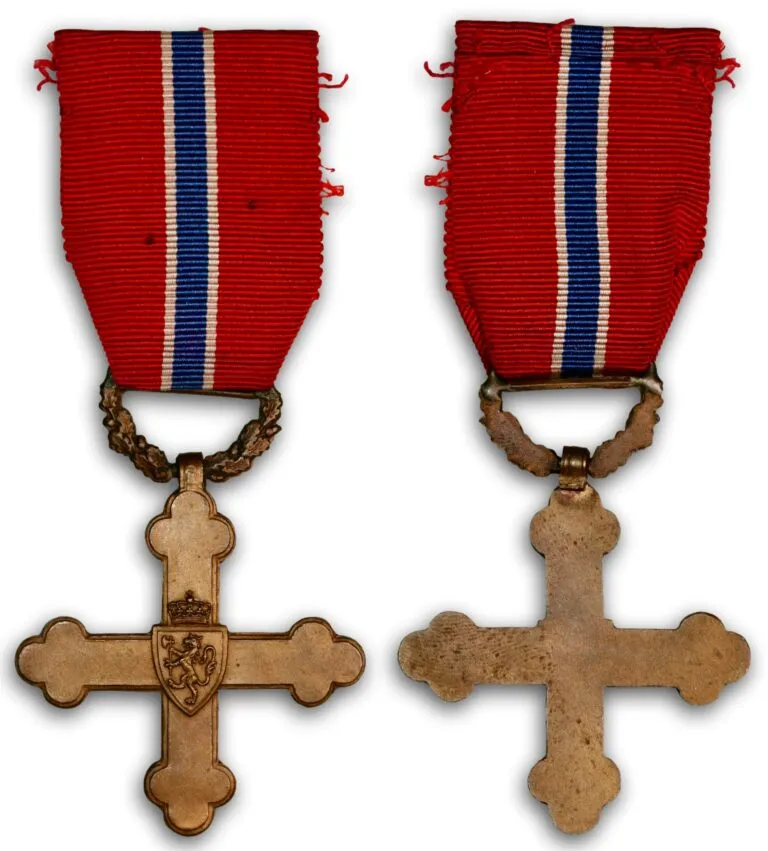
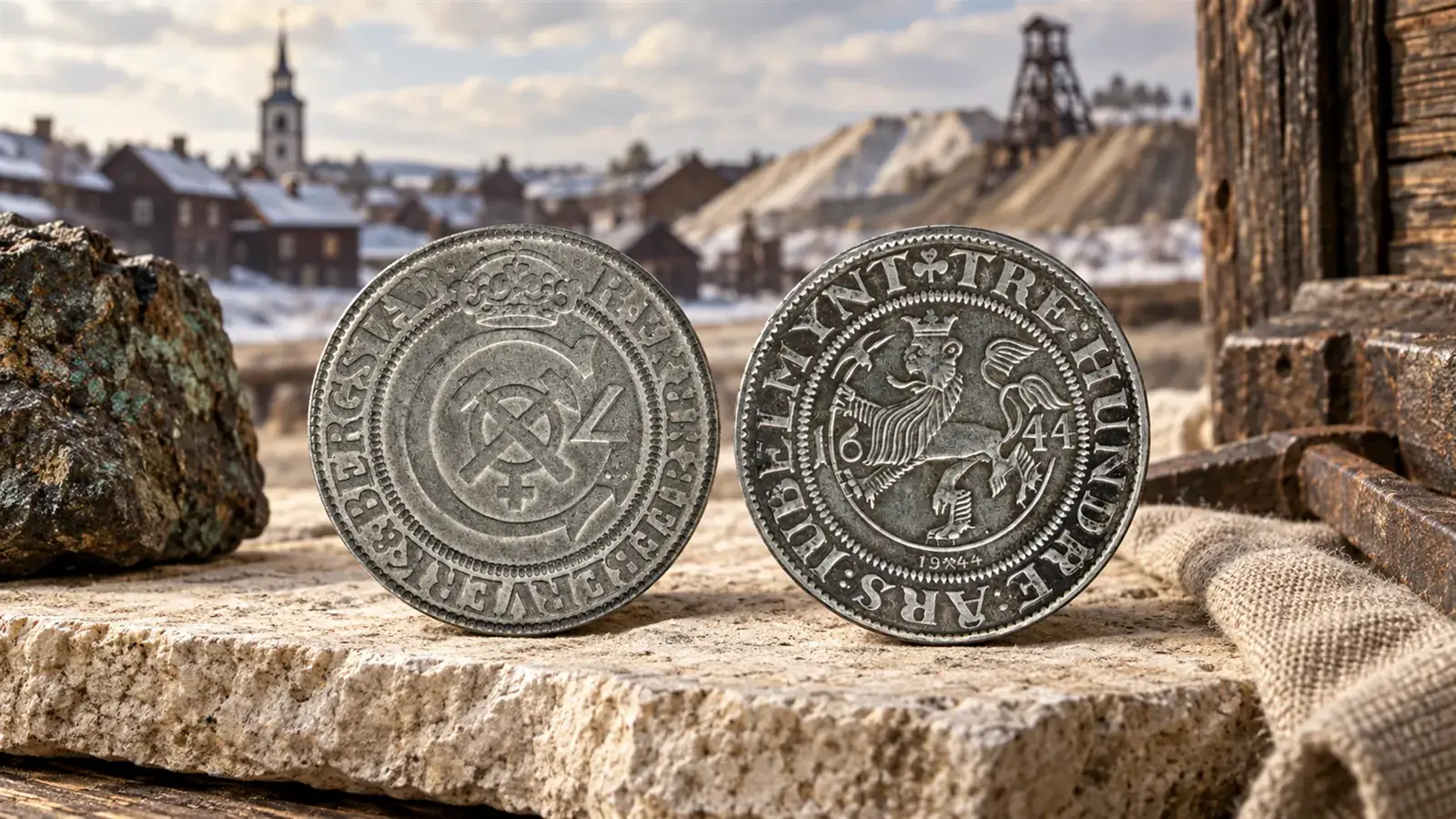
Falck-Muus’ Røros medal 1944, known in Norwegian as Bergstadsmedaljen, was made for the 300th anniversary of the mining town of Røros, and the small zinc medal has an exciting wartime story behind it. In September 2018 Denarius acquired a couple of examples of the medal, which carries several well-known features from Norwegian numismatic history.
Contents
A commemorative coin the Germans refused
Mining at Røros began in 1644, and the Røros Copper Works remained in operation until 1977. As the 300th anniversary approached, Norway was under German occupation.
As early as 1942, Jon Guldahl, a former mayor of Røros, proposed that a copper commemorative coin should be struck for the anniversary in 1944. Copper, however, was more useful to the Germans as raw material for cartridge cases and other war materials, so such a coin was out of the question. The proposal was rejected.
Falck-Muus’ proposal and the coins of Christian IV
In 1944 Rolf Falck-Muus, vice-chairman of the Norwegian Numismatic Society (Norsk Numismatisk Forening), revived the idea of celebrating the mining town with a numismatic issue. He proposed two denominations: 4 kroner (1 daler) and 2 kroner (1/2 daler).
His models came from the reign of King Christian IV. The obverse was to be inspired by the king’s so-called Hebrew marks, coins bearing the name of God in Hebrew letters. Naturally, it was not the side with the Hebrew text that was used, but the side with the king’s monogram, C4. The reverse was a copy of the same king’s speciedaler. The choice made sense: the mining town was, after all, founded under Christian IV.
The Røros medal 1944 in zinc
The Germans did not approve this coin either. Falck-Muus nevertheless brought his design to life when the Norwegian Numismatic Society issued it as a zinc medal. According to Numista, the medal measures 31 millimetres and reads TRE HUNDRE ÅRS JUBELMYNT 1644 1944 on one side and RØROS KOBBERVERK & BERGSTAD on the other.
The society also offered all collectors the chance to buy the design in silver and copper at a favourable price after the war. Our original source states that this never happened, but the catalogues show otherwise: Numista, citing Trosdahl’s Norges medaljer 1920–1995 (nos. 103a and 103b), lists versions in silver and copper struck in 1945, with a mintage given as 585.
The Røros medal 1944 from the Denarius stock: Bergstadsmedaljen 1944.
You will find more commemorative pieces among our medals, and coins of the king who inspired the design under Christian IV.
Literature: Rønning, B.R.: Norges mynter og pengesedler etter 1874, Universitetsforlaget, Oslo.