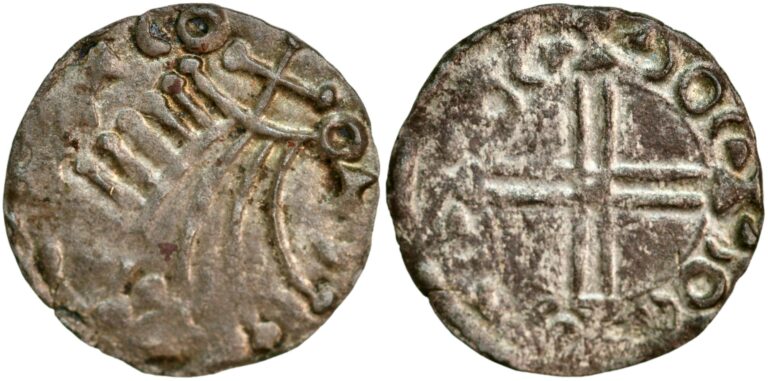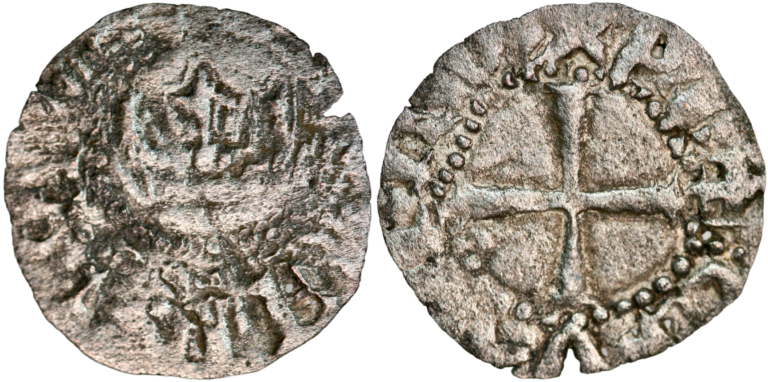
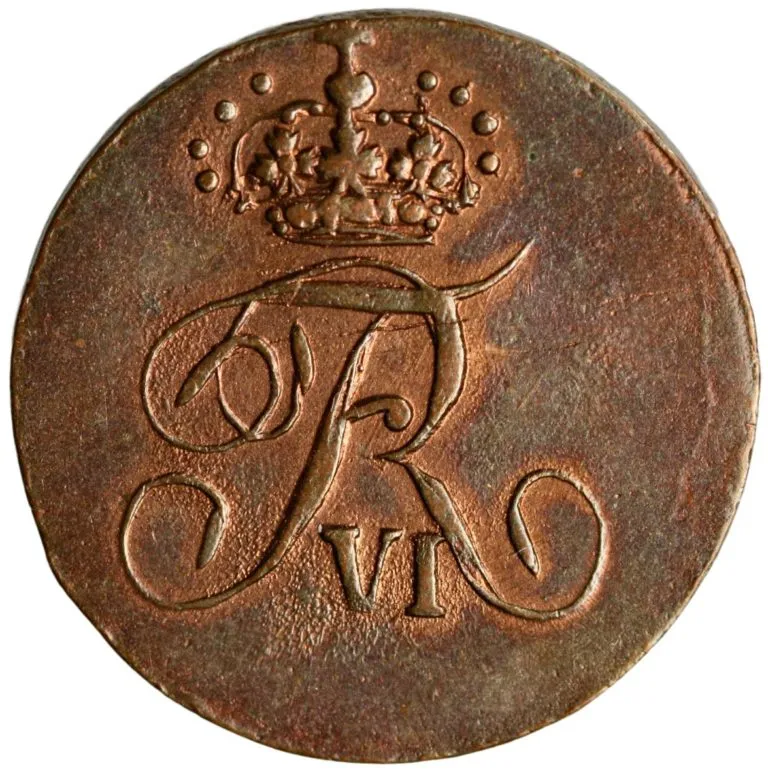
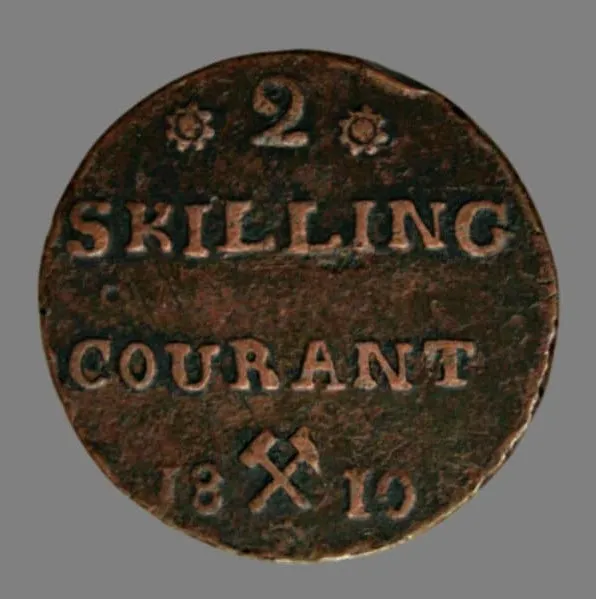
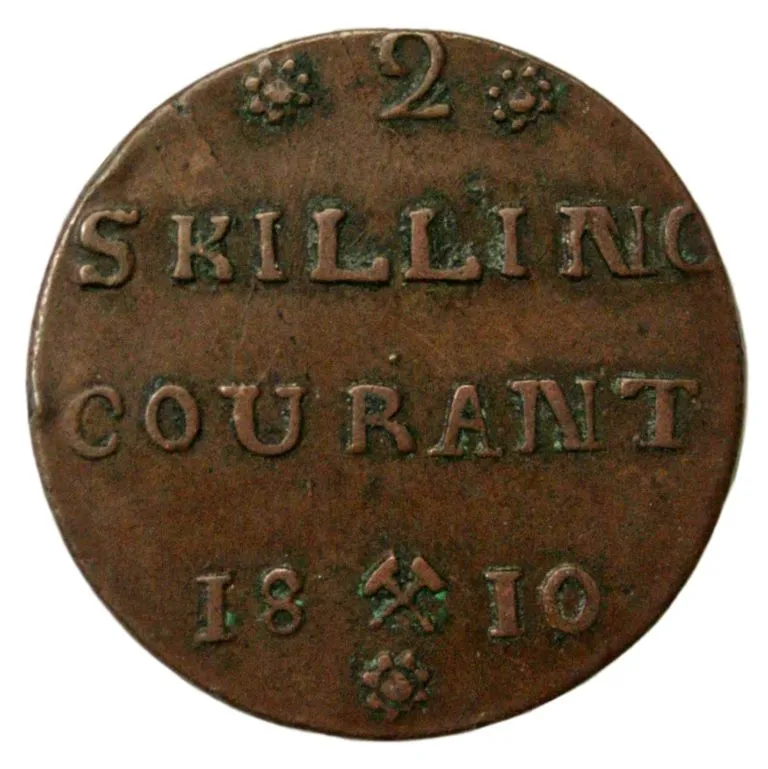
2 skilling 1810: one of Norway’s most common old coins and the coins of Frederik VI
The 2 skilling 1810 is one of the old Norwegian coins people find most often. Here is the story of the Kongsberg…
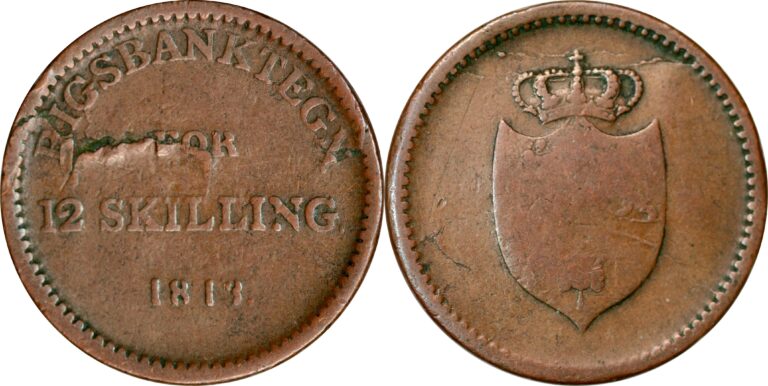
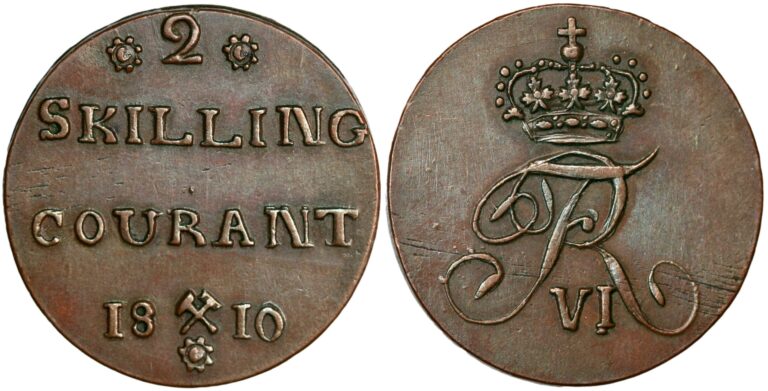
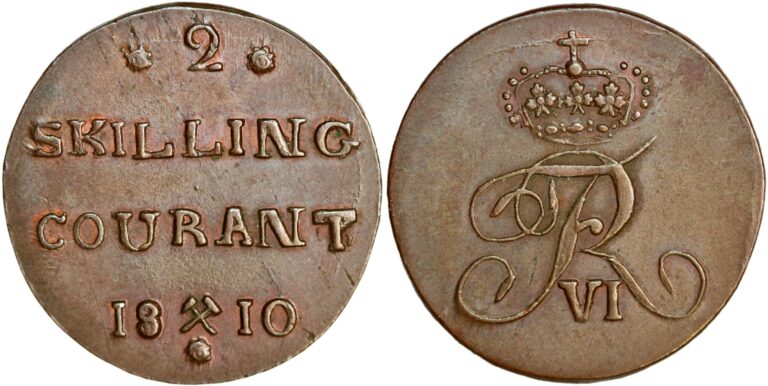
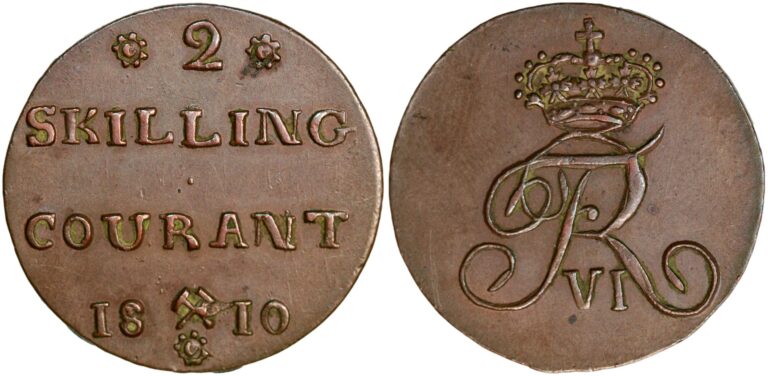
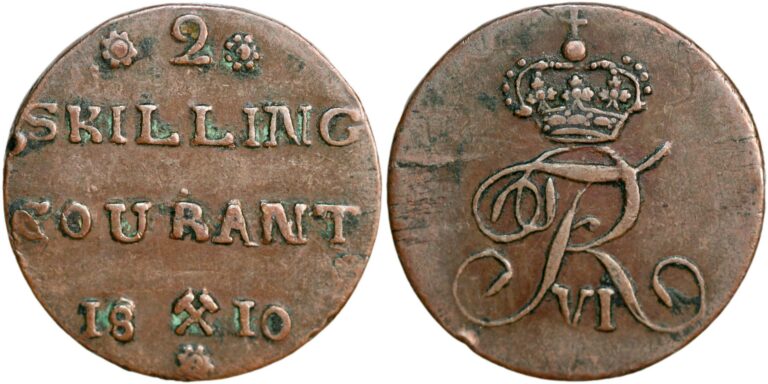
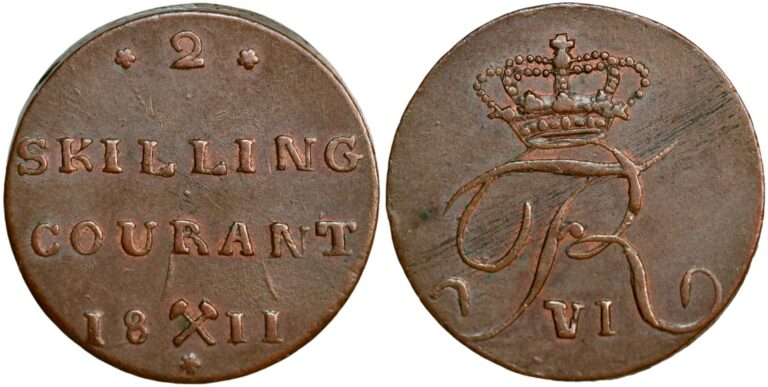
Norwegian coins of Frederik VI, the last king of Denmark-Norway (king 1808–1814): 2 skilling dated 1810 and 1811 and a 12 skilling riksbanktegn of 1813. Each coin is examined, photographed, given its own protocol number and guaranteed genuine.
Frederik VI governed as regent for his father Christian VII from 1784 and became king in 1808. His years as king of Norway were dominated by the Napoleonic Wars: the British blockade cut off grain imports, causing hardship in Norway, and the state finances collapsed. By the Treaty of Kiel on 14 January 1814 Norway was ceded to the king of Sweden, ending more than four centuries of union with Denmark. One of his lasting legacies in Norway is the university in Christiania, founded in 1811 and named after him.
The 2 skilling was a key small coin in the war years. The coins here weigh around 8–9 grams and are found in several die variants, which specialist catalogues such as Thesen (2015) and the Norwegian NM/NMB references separate by letter (for example 5A and 5b). That makes the type well suited for variant collecting.
After the state bankruptcy of 1813 a new currency, the riksbankdaler, was introduced. Riksbanktegn were copper coins in this currency. At Kongsberg they were struck from 1813 to 1815 in values of 6 and 12 skilling, all dated 1813. In Norway they were recalled towards the end of 1815, while they remained valid longer in Denmark. Norges Bank and the speciedaler only arrived in 1816, under Carl XIII.
Several of the 2 skilling here are in Very Fine to Extremely Fine condition, which is attractive for war-time coins. Look at sharpness, surface, any cleaning and variant attribution. On the riksbanktegn, die breaks and an uneven strike are common.
See also Christian VII, and continue with Carl XIII, Norway’s first king after 1814.
A copper coin in the riksbankdaler currency introduced after the state bankruptcy of 1813. In Norway they were struck at Kongsberg in 6 and 12 skilling, all dated 1813, and recalled towards the end of 1815.
Under the Treaty of Kiel of 14 January 1814 Frederik VI ceded Norway to the king of Sweden. He remained king of Denmark until his death in 1839.
The coins were struck from many hand-made dies with small differences. Specialist catalogues list these as separate variants, and each coin here is attributed with its reference.
Yes. Every item is researched and described as accurately as possible, and Denarius guarantees that everything sold is genuine and as described.
Every item gets its own number when it is catalogued. The number is shown on the product page, so you always know exactly which example it is.
Yes. We ship worldwide. Shipping method and price are shown at checkout before you pay.
Read more
The 2 skilling 1810 is one of the old Norwegian coins people find most often. Here is the story of the Kongsberg…
Which Norwegian coins are the rarest, and why? From Olav Kyrre's pennies and the archbishop's skillings to the Schydtz coins of 1689…
From Eirik Magnusson's lion pennies to Olav Engelbrektsson's skillings: Norwegian medieval coins from 1280 to 1537 explained, including the gap after 1387…