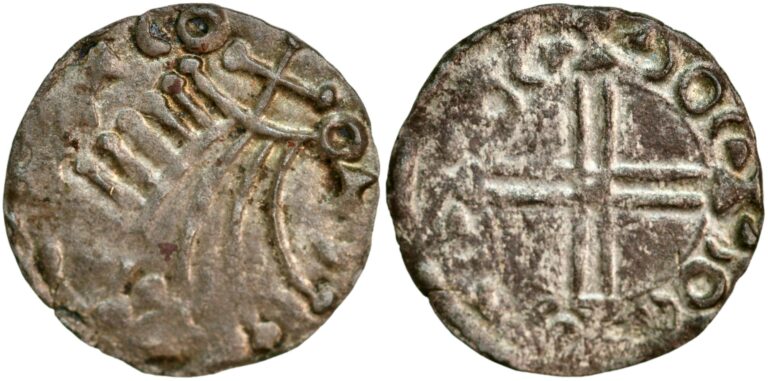
Rare Norwegian coins: Norway’s most valuable dates and types
Which Norwegian coins are the rarest, and why? From Olav Kyrre's pennies and the archbishop's skillings to the Schydtz coins of 1689…
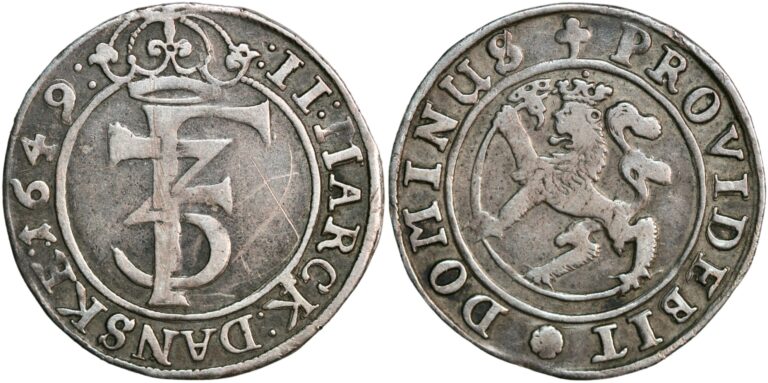
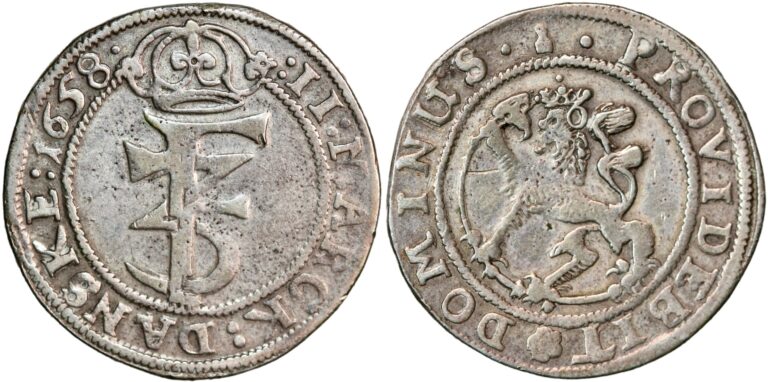
Norwegian 2 mark coins of Frederik III, king of Denmark-Norway 1648–1670, dated 1649 and 1658 and struck in Christiania. Each coin is examined, photographed, has its own protocol number and is guaranteed genuine.
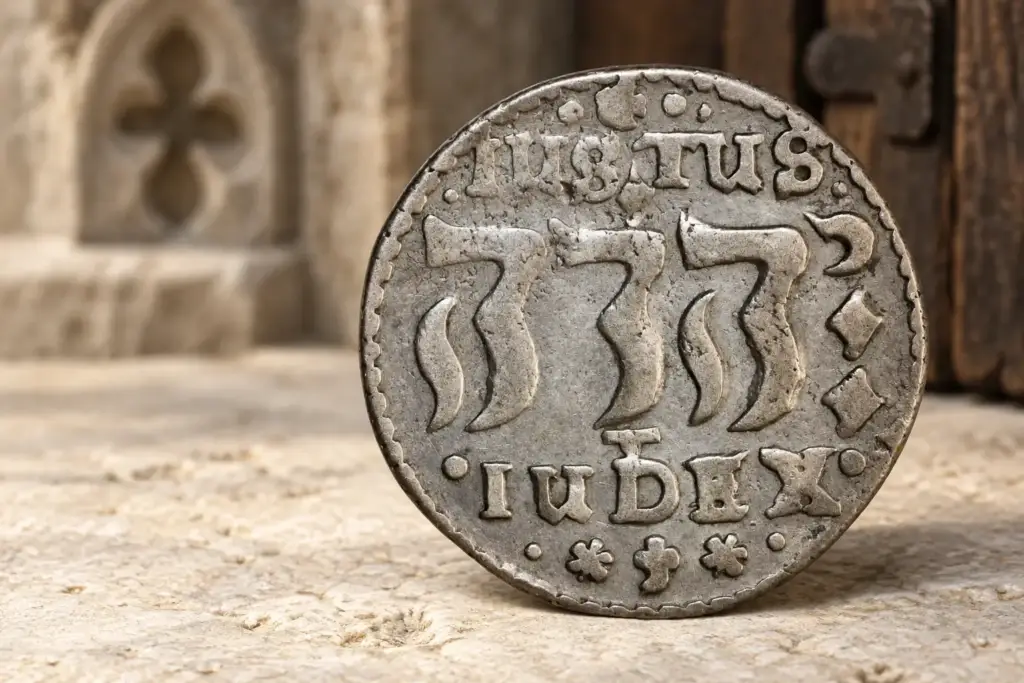
Frederik III succeeded his father Christian IV in 1648 and reigned until 1670. His years were marked by wars with Sweden, and in 1660 hereditary absolute monarchy was introduced, giving the king full power over Denmark-Norway. At the Peace of Roskilde in 1658 Bohuslän, until then Norwegian, was ceded to Sweden.
All Norwegian coins of the reign were struck at the mint in Christiania, which had opened in 1628. As under Christian IV, production was dominated by krone coins of 1, 2 and 4 mark. A 2 mark was 32 skilling, or a third of a riksdaler of account, and weighs around 10.6–10.8 grams. The two coins here are dated 1649, the first years of the reign, and 1658, in the middle of the Swedish wars.
Look at how much of the legend and the arms can be read, whether the strike is centred, and whether there are scratches or other damage. These are described on each coin, together with catalogue references (NMD, KM). For coins of this age, a legible date and a whole, round flan count for a lot.
See also Christian IV and Christian V.
At the mint in Christiania, which was Norway's only mint until Kongsberg opened in 1686.
A mark was 16 skilling, so a 2 mark was 32 skilling, a third of a riksdaler of account.
Yes. Every item is researched and described as accurately as possible, and Denarius guarantees that everything sold is genuine and as described.
Every item gets its own number when it is catalogued. The number is shown on the product page, so you always know exactly which example it is.
Yes. We ship worldwide. Shipping method and price are shown at checkout before you pay.
Read more
Which Norwegian coins are the rarest, and why? From Olav Kyrre's pennies and the archbishop's skillings to the Schydtz coins of 1689…
From Eirik Magnusson's lion pennies to Olav Engelbrektsson's skillings: Norwegian medieval coins from 1280 to 1537 explained, including the gap after 1387…
The 2 skilling 1810 is one of the old Norwegian coins people find most often. Here is the story of the Kongsberg…