Rare Norwegian coins: Norway’s most valuable dates and types
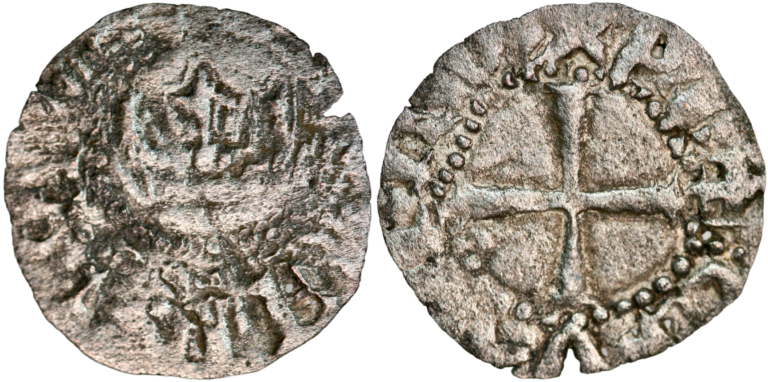
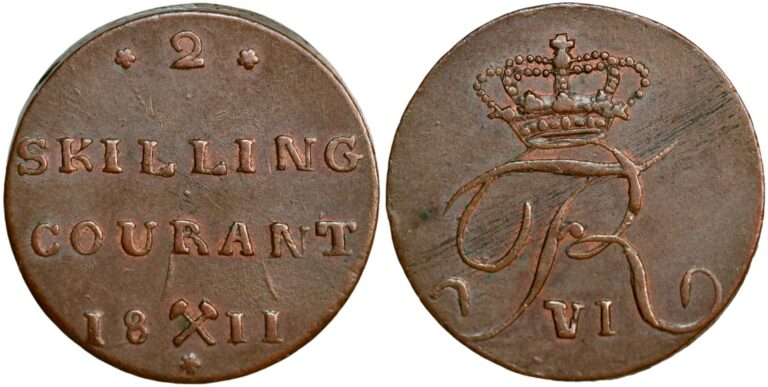
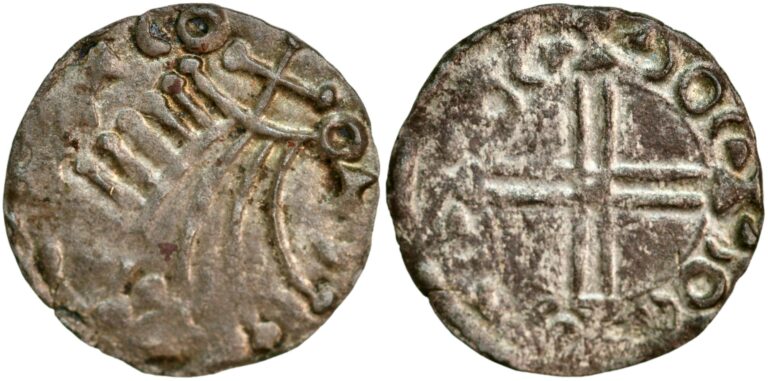
Which Norwegian coins are the rarest, and why? From Olav Kyrre's pennies and the archbishop's skillings to the Schydtz coins of 1689…
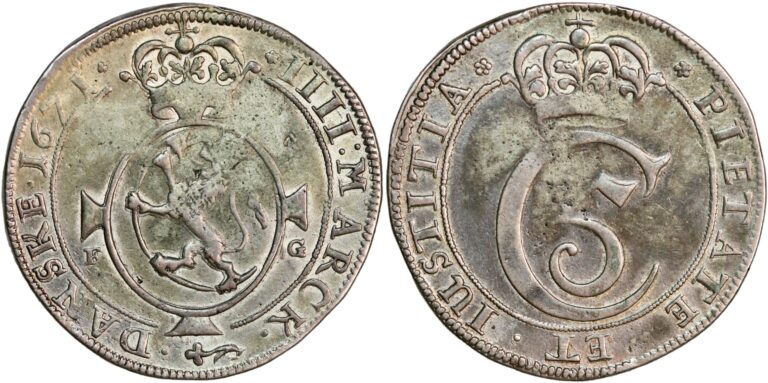
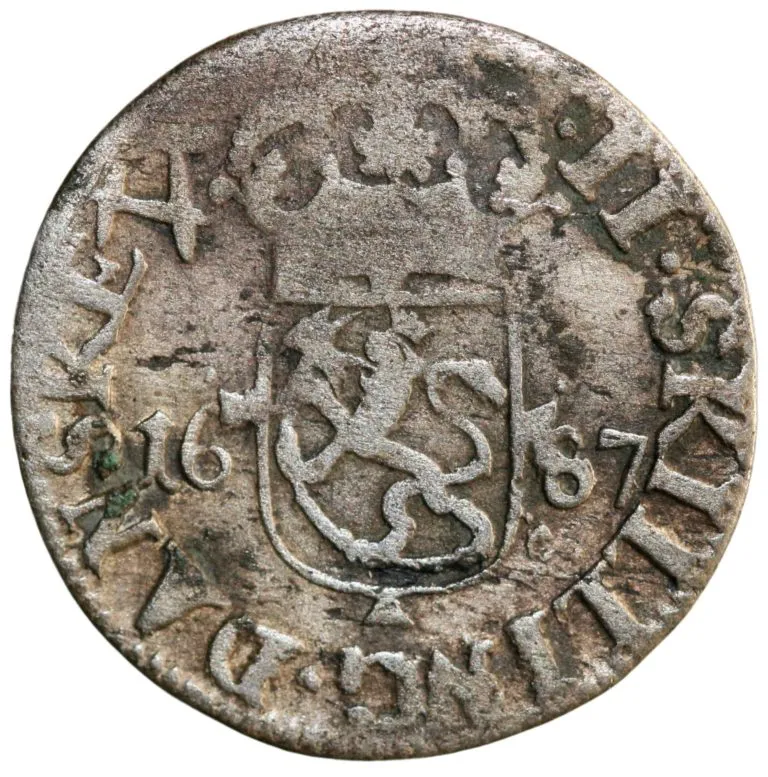
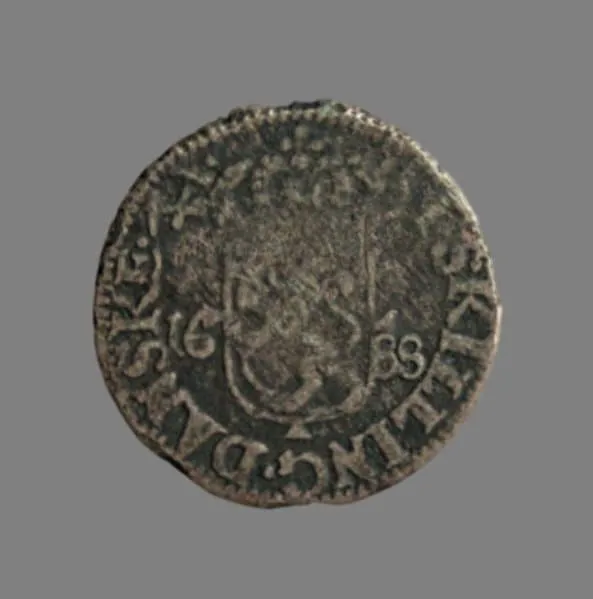
Norwegian coins of Christian V (1670–1699): a 4 mark 1671, small 2 skilling pieces from 1687 and 1688, and the rare 12 and 16 skilling 1689 inscribed SOMMER SCHYDTZ and WINTER SCHYDTZ. All examined, catalogued and guaranteed genuine.
Christian V reigned over Denmark-Norway from 1670 to 1699. His reign brought the Norwegian Law of 1687 and a major change in Norwegian coinage: in the 1680s it was decided that silver from the Kongsberg mines should be coined on the spot, and the Kongsberg mint was completed in 1686. The old mint in Christiania continued for some years and closed in 1695. Coins from this reign can therefore come from either mint.
The 4 mark, also called a krone, was the largest of the krone coins and was worth two thirds of a riksdaler. The specimen here from 1671 weighs about 21 grams. At the other end of the scale are the small 2 skilling coins of 1687 and 1688, weighing less than a gram. Norges Bank notes that the smallest skilling coins held only around 20 percent silver, so they wear easily and are often found in modest condition.
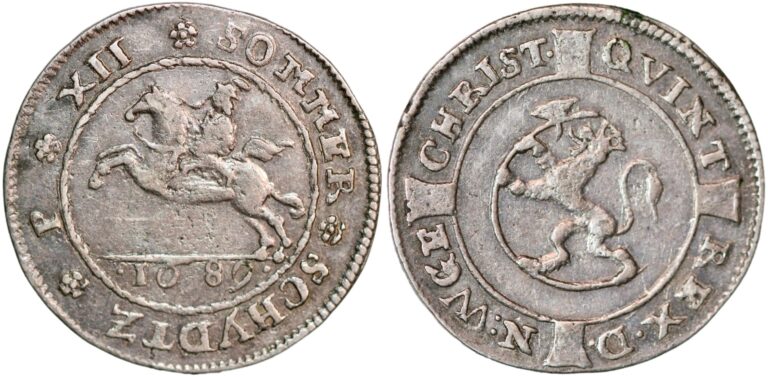
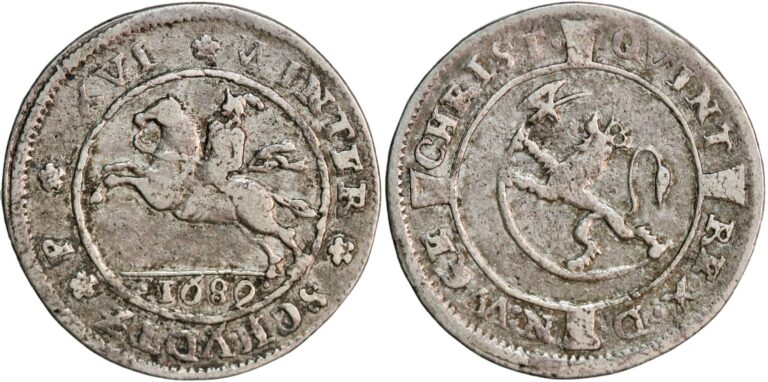
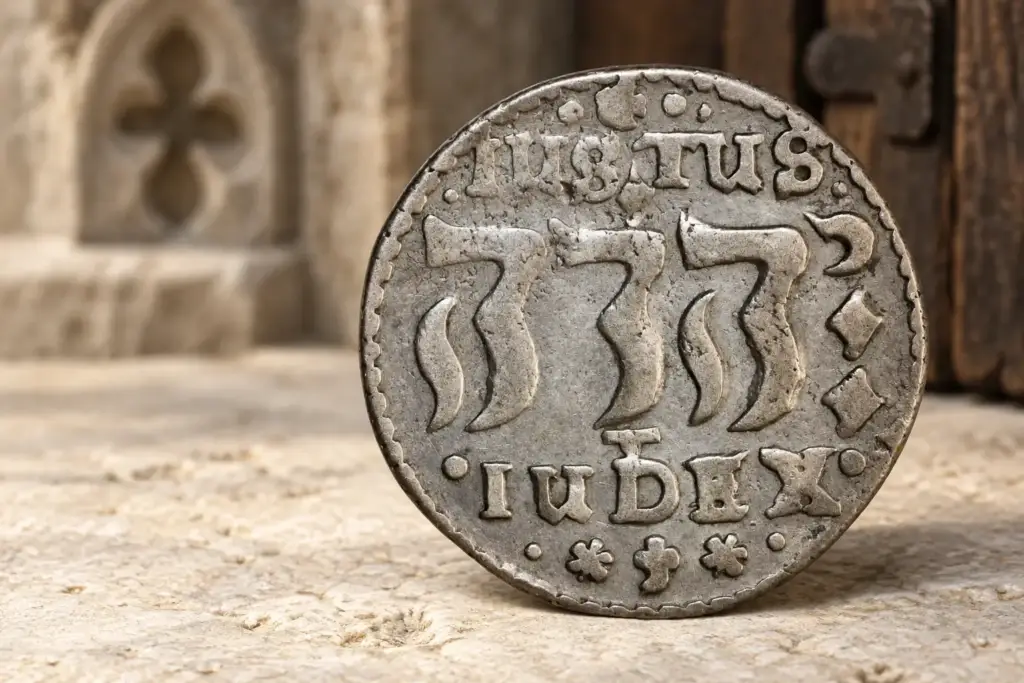
The most unusual coins in the category are the 12 skilling with the inscription SOMMER SCHYDTZ and the 16 skilling (1 mark) with WINTER SCHYDTZ, both dated 1689. Skyds means transport, and the inscriptions are linked to payment for one mile of postal transport, priced at 12 skilling in summer and 16 skilling in winter. Both are rare and are among the most sought-after Norwegian coins of the 17th century.
For the small skilling coins, legibility of date and legend is decisive. For the larger coins, look at strike, edge and surface. Rarity, condition and documented provenance weigh heavily on the Schydtz coins.
See also Frederik III and Frederik IV.
Skyds is an old word for transport. The inscriptions on the 1689 coins are linked to payment for one mile of postal transport: 12 skilling in summer and 16 skilling in winter.
In Christiania and, from 1686, at the new mint in Kongsberg. Christiania stopped coining in 1695, so both mints were active for part of the reign.
The 4 mark, also called a krone, was the largest of the krone coins and was worth two thirds of a riksdaler. One mark was 16 skilling.
Yes. Every item is researched and described as accurately as possible, and Denarius guarantees that everything sold is genuine and as described.
Every item gets its own number when it is catalogued. The number is shown on the product page, so you always know exactly which example it is.
Yes. We ship worldwide. Shipping method and price are shown at checkout before you pay.
Read more
Which Norwegian coins are the rarest, and why? From Olav Kyrre's pennies and the archbishop's skillings to the Schydtz coins of 1689…
From Eirik Magnusson's lion pennies to Olav Engelbrektsson's skillings: Norwegian medieval coins from 1280 to 1537 explained, including the gap after 1387…
The 2 skilling 1810 is one of the old Norwegian coins people find most often. Here is the story of the Kongsberg…