
Greenland
Greenland banknotes and coins: rare skilling notes from 1803 and 1804, trading-post notes from 1875 to 1911, the first coins of 1926, a 1942 wartime specimen and a 1953 specimen. All examined and guaranteed genuine by Denarius.
About Greenland
The history of money in Greenland
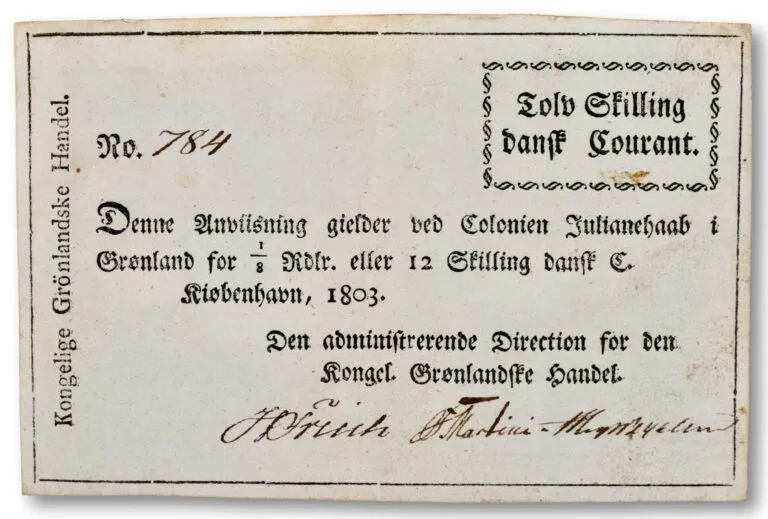
From the late 18th century well into the 20th, trade in Greenland was a Danish state monopoly. The Royal Greenland Trade Department (Den Kongelige Grønlandske Handel, KGH) bought skins, blubber and other goods from the Greenlanders and supplied the colonies. Money in Greenland grew out of this system. The first printed notes were issued in 1803, and Greenland notes often state that they are valid at the trading posts. Coins followed only in 1926.
What is in this category?
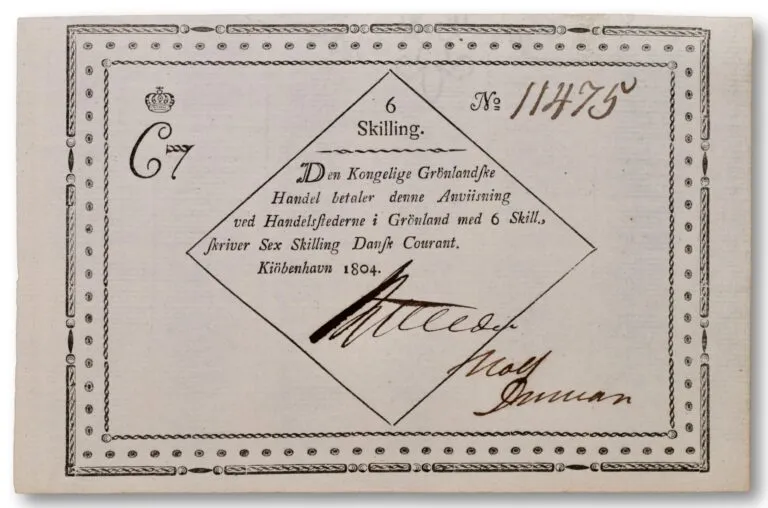
- 12 skilling 1803, made for the colony of Julianehaab (today Qaqortoq), and 6 skilling 1804, an uncirculated example. These early notes are among the great rarities of Nordic paper money.
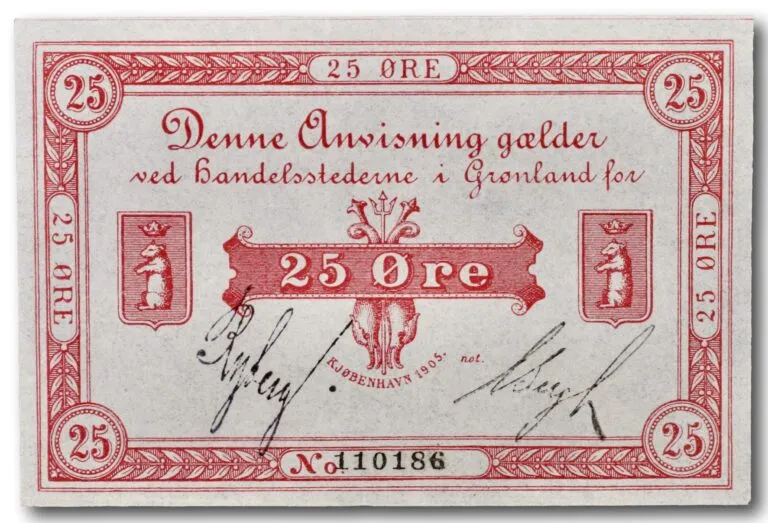
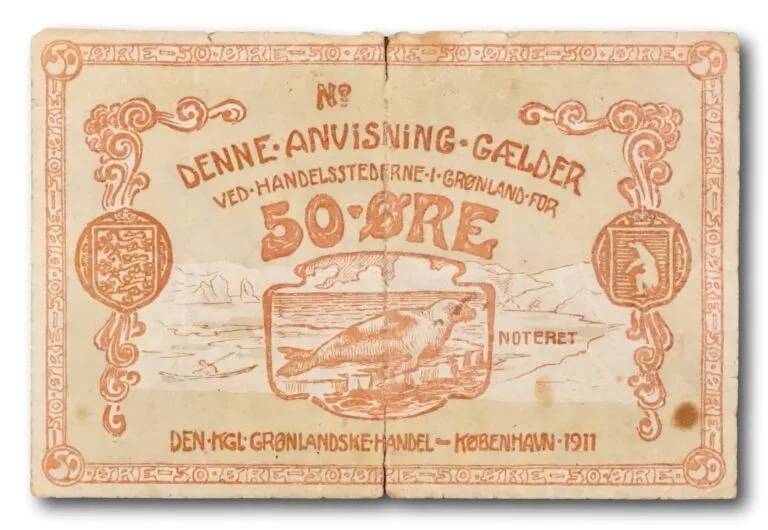
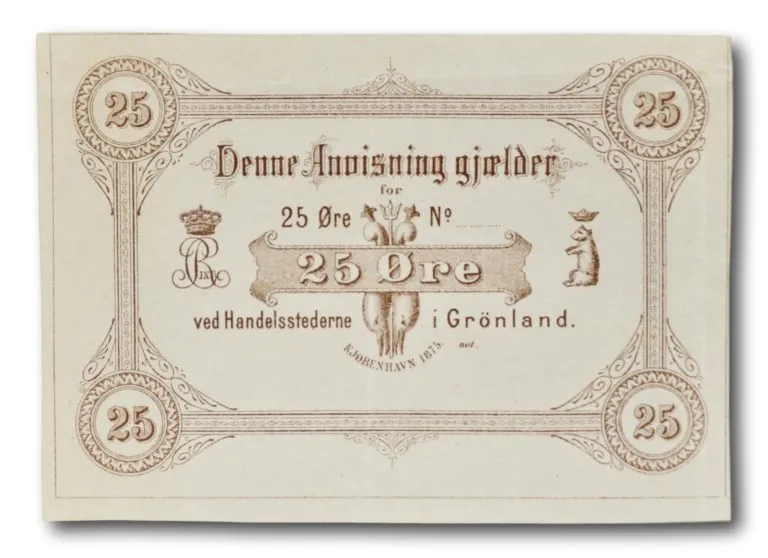
- Øre notes: 25 øre 1875 (a remainder), 25 øre 1905 (uncirculated) and 50 øre 1911 (a remainder).
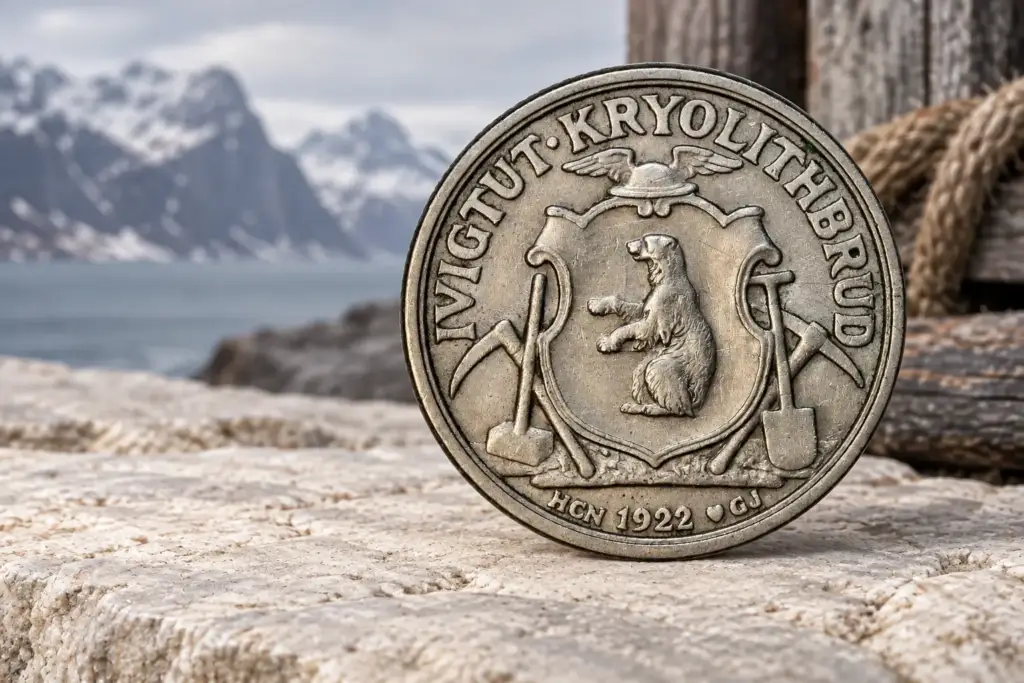
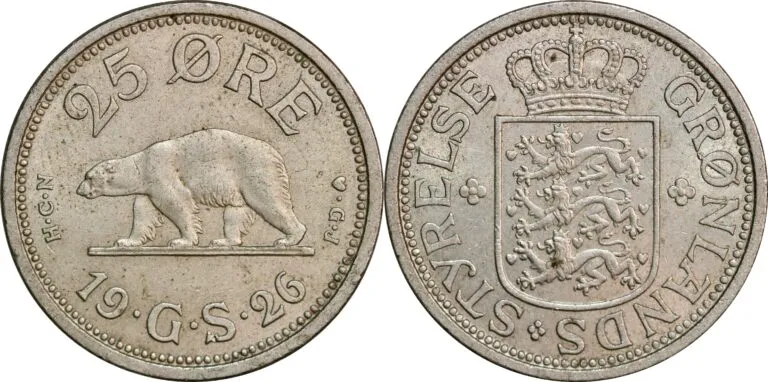
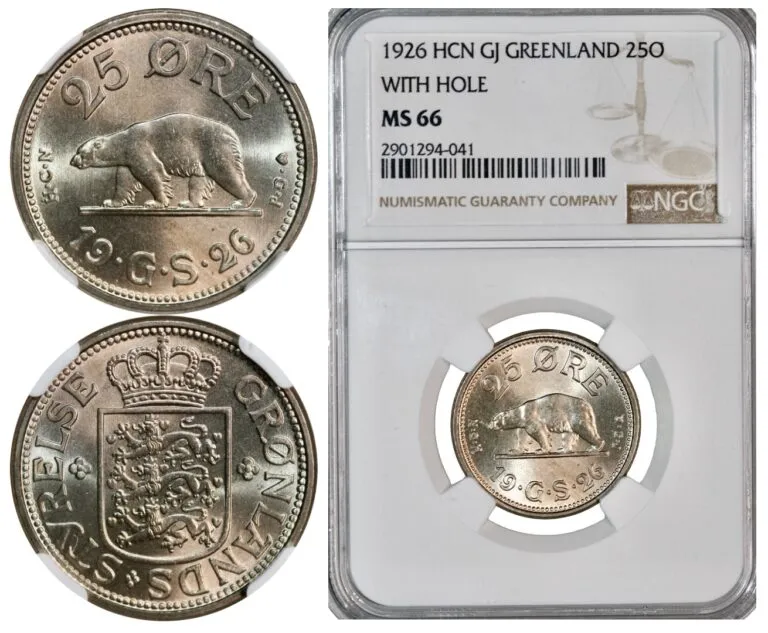
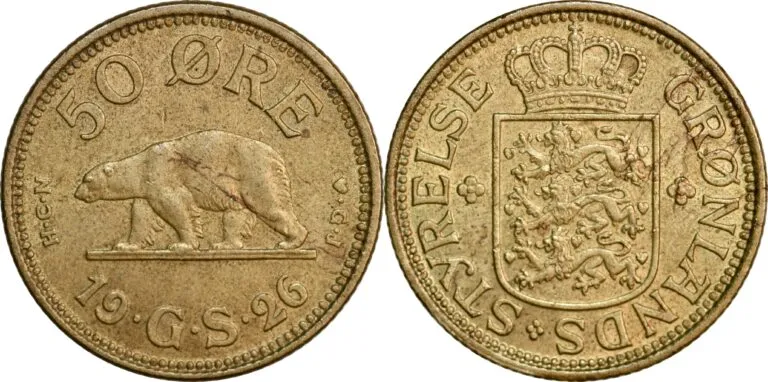
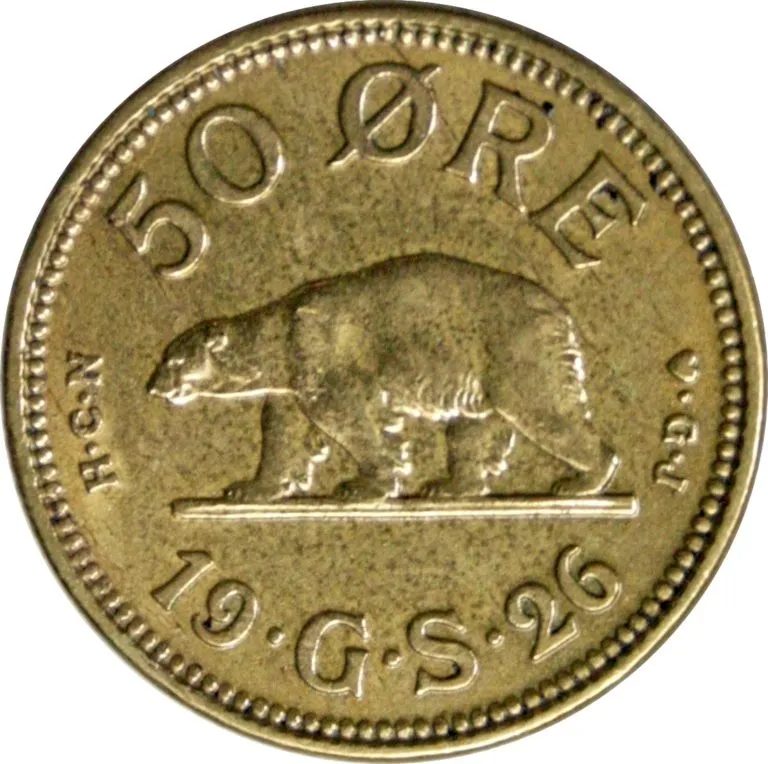
- Coins of 1926: 25 øre in cupronickel, one of them graded MS 66 by NGC, and 50 øre in aluminium-bronze.
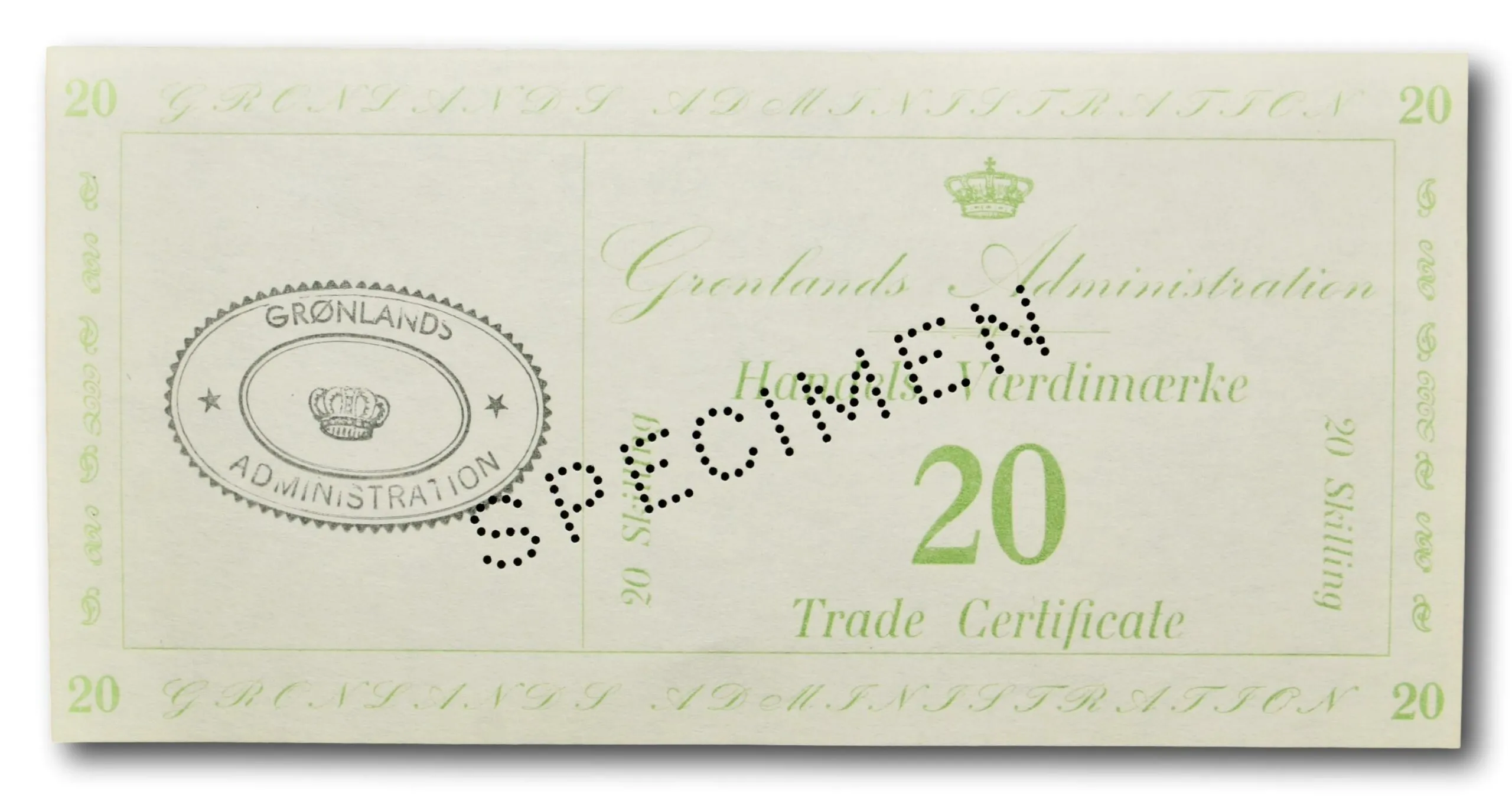
- 20 skilling 1942 SPECIMEN, from the wartime issues made for American military personnel in Greenland.
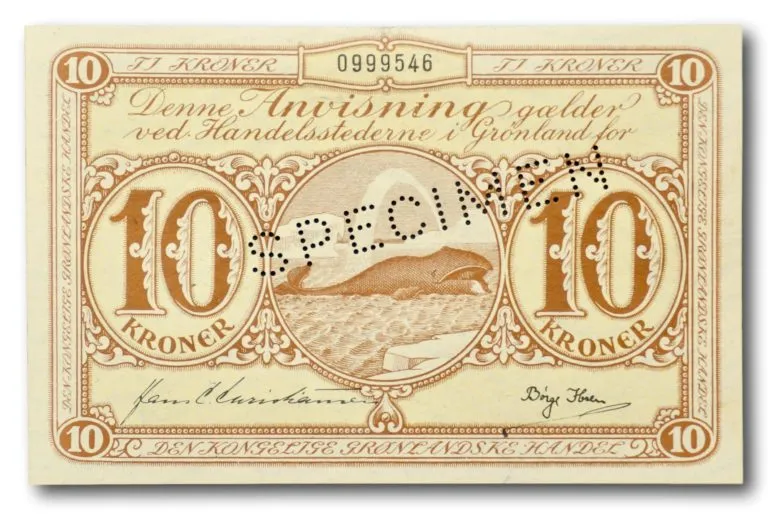
- 10 kroner 1953 SPECIMEN, from the notes issued after KGH resumed note production in 1953.
Greenland in the Second World War
When Germany occupied Denmark in 1940, Greenland was cut off from Copenhagen, and the United States established military bases on the island. The local Greenland administration issued its own trade certificates in skilling for use by the American forces. Not all were put into circulation, and specimens of these notes are seldom offered. The 20 skilling specimen of 1942 is an unusual piece of both Danish and American wartime history.
What do collectors look for?
Greenland notes were printed in small numbers, and the early notes were often cut from sheets by hand, so size and margins vary. Collectors look at condition, serial numbers, signatures and any repairs. Remainders and specimens offer a way to own scarce types in fine condition. The 1926 coins are more accessible, but high grades such as MS 66 are scarce. For Iceland and an overview of the region, see The Arctic.
Frequently asked questions
When did Greenland get its first coins?
Greenland's first coins were issued in 1926: a 25 øre in cupronickel and a 50 øre and 1 krone in aluminium-bronze. They matched the size of the corresponding Danish coins.
What were the 1942 skilling notes used for?
During the Second World War, the Greenland administration issued small notes in skilling for American military personnel stationed in Greenland. The example here is a specimen, a sample note that never circulated.
Who issued Greenland banknotes?
The issuer changed over time. The early notes of 1803–1804 name the Royal Greenland Trade Department (KGH), notes from 1874 to 1905 were issued in the name of the trading posts in Greenland, and later issues came from KGH and the Danish administration of Greenland.
Are the items genuine?
Yes. Every item is researched and described as accurately as possible, and Denarius guarantees that everything sold is genuine and as described.
What is the protocol number?
Every item gets its own number when it is catalogued. The number is shown on the product page, so you always know exactly which example it is.
Do you ship internationally?
Yes. We ship worldwide. Shipping method and price are shown at checkout before you pay.