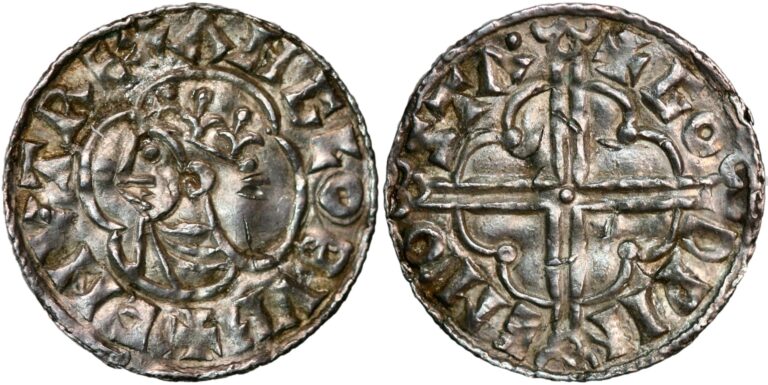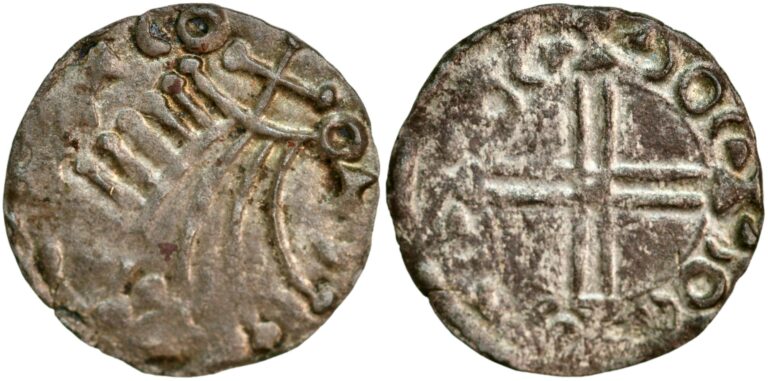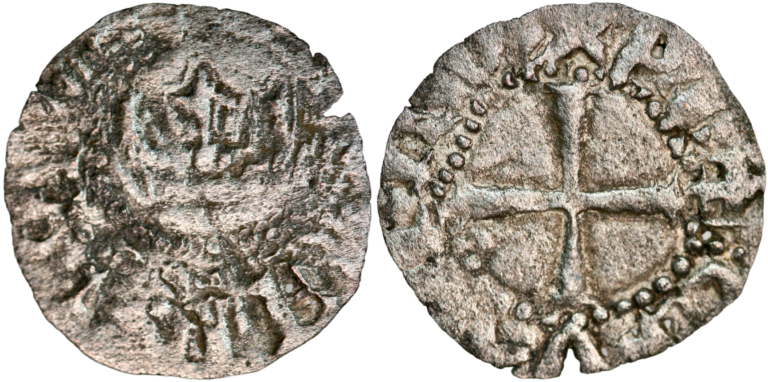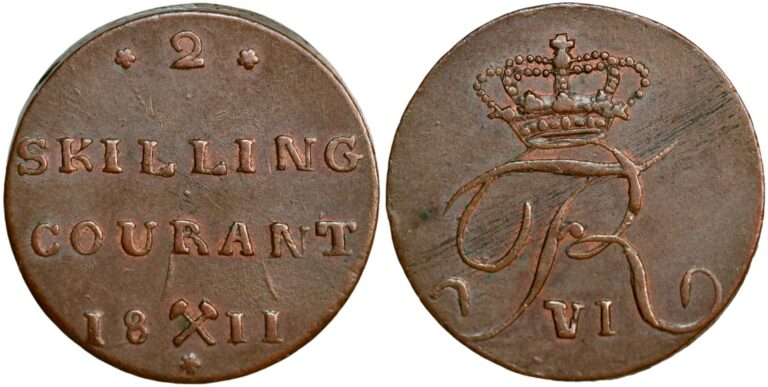
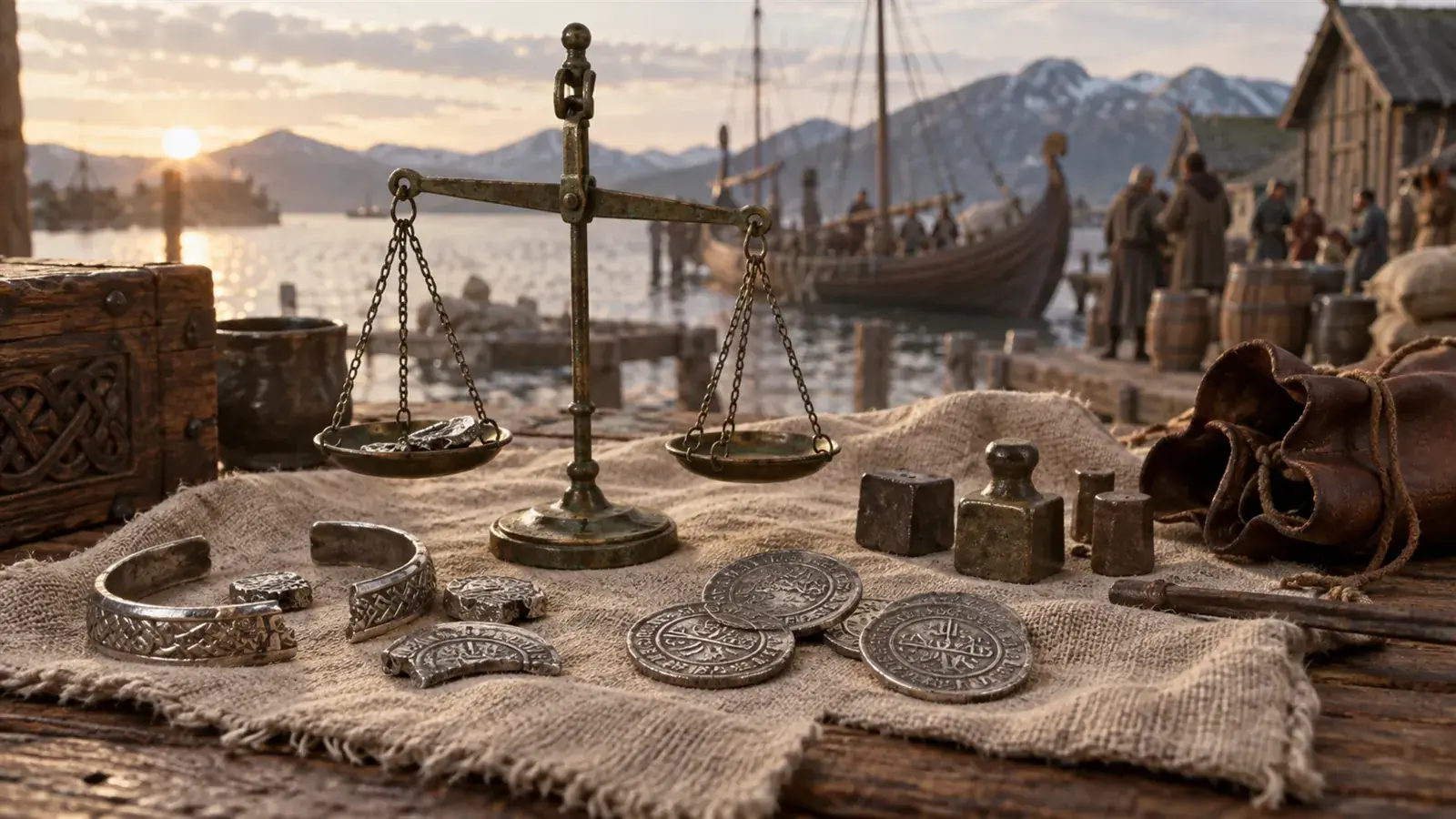
Viking coins are, for the most part, foreign silver coins that circulated in Scandinavia between about 800 and 1050 and were valued by weight: first Islamic dirhams, later Anglo-Saxon and German pennies, often cut up into hacksilver. Norway’s own coinage began with Olav Tryggvason around 995–1000, but only under Harald Hardrada and Olav Kyrre in the 11th century did the king’s coin become the everyday money. For buyers, that means Norwegian royal coins from the period are rare and expensive, while dirhams and Anglo-Saxon pennies of the kinds found in Viking hoards are far easier to find.
In short
- In the Viking Age, payment was made in silver by weight: jewellery, ingots, hacksilver and coins.
- Until about 950, most coin silver reaching Scandinavia came from the Islamic world. After about 975, Anglo-Saxon and German coins dominated.
- Olav Tryggvason (995–1000) was the first Norwegian king to issue coins.
- Harald Hardrada built a national coinage and cut its silver content to about a third. Under Olav Kyrre (1067–1093), foreign coins disappeared from circulation in Norway.
- Coins older than 1650 found in Norwegian soil belong to the state, so provenance matters.
Contents
What counts as Viking coins?
When you look for Viking coins for sale, you will meet three main groups:
- Islamic dirhams of the 8th to 10th centuries, the silver that poured into Scandinavia by the eastern trade routes.
- Anglo-Saxon and German pennies of the late 10th and early 11th centuries, the coins that dominate later Viking hoards.
- Scandinavian royal coins, struck for kings such as Olav Tryggvason, Olav Haraldsson and Harald Hardrada. These are the true rarities.
Coins of Olav Kyrre are, strictly speaking, just after the Viking Age, which is often said to end around 1050–1066. They still end the story, because his reign completed the shift from weighed silver to a national coinage.
How did the Vikings pay? Weight, scales and hacksilver
When the trading places of Kaupang and Heimdalsjordet in south-east Norway were founded around 800, what mattered was the silver, not the coin. According to Norges Bank, people paid with jewellery, ingots and hacksilver, and also with goods such as dried fish, butter, hides and livestock. At Kaupang, silver was weighed with local lead weights from about 825, and standardised weights, probably of Islamic origin, appeared later in the 9th century.
Hacksilver is simply silver cut into pieces: rings, arm-rings, ingots and coins. Because weight was what counted, a dirham could be cut in half or in quarters to make up the right amount. Many hoard coins also carry small nicks, usually explained as tests to make sure the metal was silver all the way through. Collectors call them peck marks, and on a Viking-age coin they are part of the history rather than a fault.
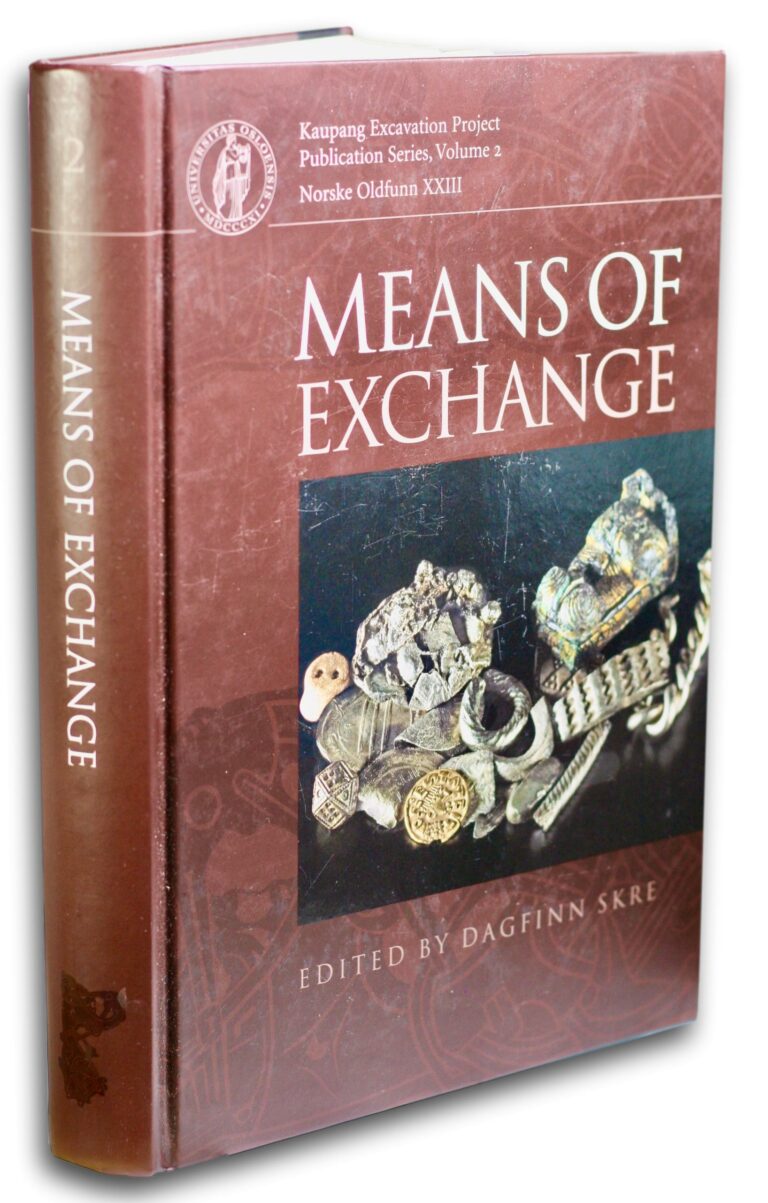
The standard work on the Kaupang silver economy is Means of Exchange: Dealing with Silver in the Viking Age, edited by Dagfinn Skre. At Denarius it currently costs NOK 500 (see the book).
Islamic dirhams: the Vikings’ silver supply
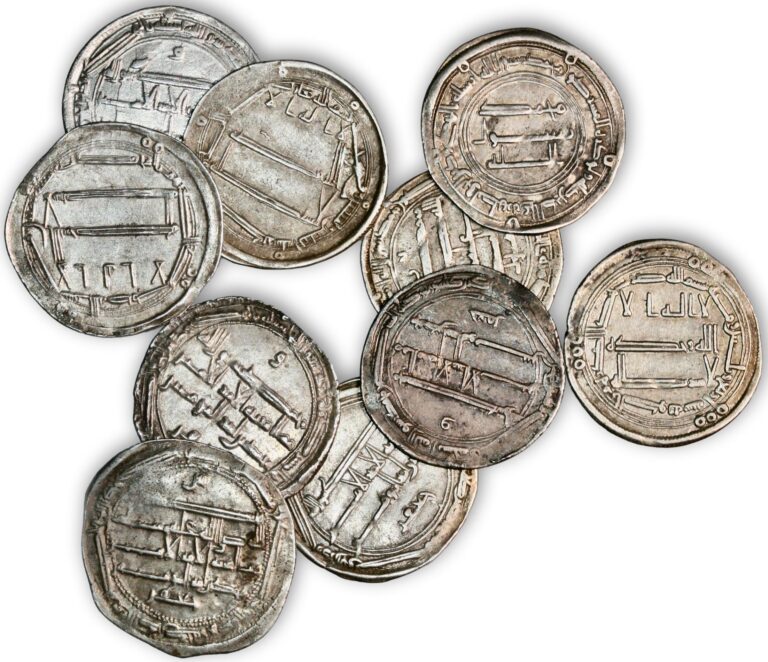
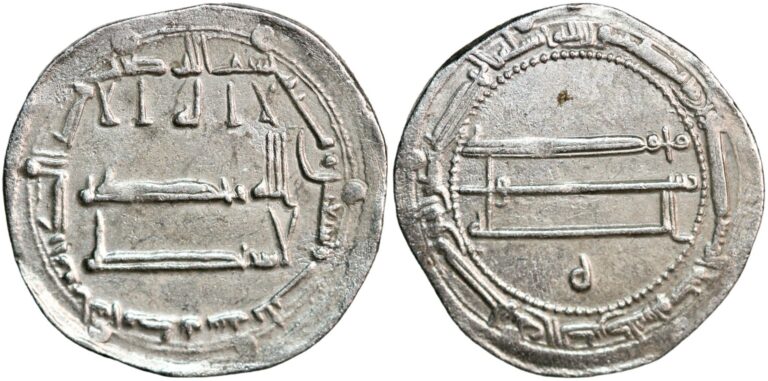
The dirham was the silver coin of the Islamic monetary system, with a standard weight of around 2.975 grams according to the Norwegian encyclopaedia Store norske leksikon. Norwegian numismatist Svein H. Gullbekk of the University of Oslo estimates that perhaps a billion dirhams flowed into Scandinavia and the wider Viking world between 800 and 950. Scandinavians traded furs and slaves along the eastern routes and brought dirhams home.
Norway has far fewer finds than Sweden, and Gotland in particular, but dirhams turn up in hoards, at market sites and around farms. A dirham struck in Tashkent between 907 and 914 was found at Grimestad in Vestfold in 1936. By the end of the 10th century the flow had dried up.
Dirhams are the most affordable way to own the kind of coin the Vikings weighed out. At Denarius, a dirham of Caliph Harun al-Rashid (786–809) currently costs NOK 400 (protocol no. 6163), and lots of 8th-century Abbasid dirhams cost NOK 2,900 (protocol no. 6164).
Anglo-Saxon and German pennies in Viking hoards
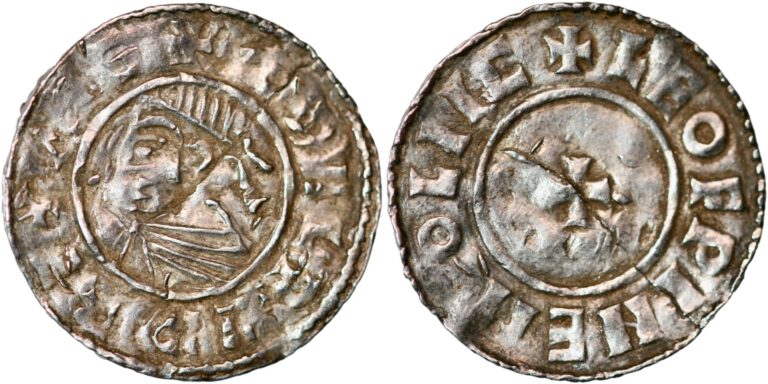
After about 975, Norges Bank notes, imports from Anglo-Saxon and German lands dominated. In England, King Edgar’s reform of about 973 introduced regular recoinage, and under Æthelred II (978–1016) huge sums were paid to Viking armies. His pennies, and those of Cnut the Great, are typical finds in Scandinavian hoards.
A striking recent example is the Mørstad hoard near Rena in eastern Norway, found by two metal detectorists in April 2026 who stopped and called in the county archaeologists. By May more than 3,150 silver coins had been recorded, most of them struck in England and the German lands, including coins of Æthelred II, Cnut and Emperor Otto III, with smaller numbers from Denmark and Norway and some hacksilver.
Anglo-Saxon pennies of these types are also found on the market. At Denarius, a Small Cross penny of Æthelred II from the Lincoln mint, 1009–1016, currently costs NOK 6,250 (protocol no. 6052), and a Quatrefoil penny of Cnut from Stamford, about 1017–1023, costs NOK 7,500 (protocol no. 6071).
The first Norwegian coins, from Olav Tryggvason to Olav Kyrre
Olav Tryggvason (995–1000)
Norway’s first coins are faithful copies of an Anglo-Saxon penny type of Æthelred II, with a royal bust and a cross with the letters CRVX. The legend ONLAF REX NOR means “Olav, king of the Norwegians”, and the moneyer Godwine is named. According to the University of Oslo coin cabinet, only four are known, all from the same dies, and where they were struck is uncertain.
Olav Haraldsson (1015–1028)
Three penny types are known for St Olav, all on Anglo-Saxon models and reading ONLAF REX NORMANORUM. The earliest were struck on square blanks. They are extremely rare: a unique example was knocked down for NOK 1,400,000 at Oslo Myntgalleri in May 2023.
Harald Hardrada (1046–1066)
Harald gave Norway a national coinage, with a standard of about 0.9 grams per penny and 240 pennies to the mark. He deliberately lowered the silver content from about 90 per cent to an average of just over 30 per cent. His main type shows a triquetra and was struck at Nidarnes (Trondheim) and Hamar. Hoards show foreign pennies vanishing from circulation early in his reign.
Olav Kyrre (1067–1093)
Olav Kyrre ruled jointly with his brother Magnus until 1069, then alone. Norges Bank credits him with a monetary reform after which foreign coins disappeared. His pennies are known for inscriptions naming the moneyers, some in Old Norse and some in runes. The key source is the Græsli hoard from Tydal, found in 1878: 2,253 coins, of which 2,209 Norwegian.
That is why Olav Kyrre pennies are the Norwegian 11th-century royal coins you are most likely to see offered. At Denarius, a penny struck under Olav Kyrre, 0.89 grams, in Norwegian grade 1+/01, currently costs NOK 39,750 (protocol no. 5478). In the 12th century Norwegian coins grew ever thinner, leading to the one-sided bracteates of Sverre Sigurdsson’s time.
Buying Viking coins: what to check
Legality
Under Norway’s Cultural Heritage Act (kulturminneloven §§ 12–13), coins older than 1650 found in Norway belong to the state and must be reported. A new Cultural Environment Act has been proposed (NOU 2025: 3), but as of October 2026 the Cultural Heritage Act still applies. Avoid freshly found coins offered without paperwork. Older Norwegian coins are also cultural objects that may need an export licence to leave Norway, and some auction lots are marked as not for export.
Provenance
Ask where the coin has been: old collections, earlier auction catalogues and 19th-century museum duplicate sales are good answers. A traceable history supports both legality and value.
Authenticity
Famous types are often copied, frequently by casting. Check the weight against the type (about 0.9 grams for a Hardrada or Olav Kyrre penny), look for a grainy surface, soft details and a seam on the edge, and buy from a seller who guarantees authenticity. Denarius guarantees that everything it sells is genuine and as described, and each object has its own protocol number.
Condition
Hoard coins are often bent, cracked or peck-marked. Norwegian grades are common here: 01 is roughly EF, 1+ roughly VF.
How much are Viking age coins worth?
Guide prices as of October 2026. Auction results are hammer prices before buyer’s premium, as recorded on Numista, and every coin is judged on its own merits.
| Coin | Source | Price |
|---|---|---|
| Abbasid dirham, 8th–9th century | Denarius, protocol no. 6163 | NOK 400 |
| Æthelred II, Long Cross penny | Spink auctions | Under £200 for worn coins, £750 for an extremely fine Rochester coin |
| Æthelred II, Small Cross, Lincoln | Denarius, protocol no. 6052 | NOK 6,250 |
| Cnut, Quatrefoil, Stamford | Denarius, protocol no. 6071 | NOK 7,500 |
| Olav Kyrre penny, grade 01 to 1+/01 | Oslo Myntgalleri, May 2023 | NOK 36,000–42,000 |
| Olav Kyrre penny, grade 1+/01 | Denarius, protocol no. 5478 | NOK 39,750 |
| Harald Hardrada penny (triquetra) | Oslo Myntgalleri, May 2022 and Nov. 2023 | NOK 65,000 (pierced) to NOK 220,000 |
| Olav Haraldsson penny (unique) | Oslo Myntgalleri, May 2023 | NOK 1,400,000 |
Frequently asked questions
What are Viking coins?
Usually silver coins that circulated in Scandinavia during the Viking Age, about 800–1050. Most were foreign, such as Islamic dirhams and Anglo-Saxon and German pennies, and they were valued by weight. Scandinavian royal coins from the period also exist but are rare.
Did the Vikings make their own coins?
Yes, but late and in small numbers at first. Norway’s first coins were struck for Olav Tryggvason between 995 and 1000, copying an Anglo-Saxon penny. A national Norwegian coinage only took hold under Harald Hardrada in the mid-11th century.
How much are Viking coins worth?
It ranges widely. A single Abbasid dirham can cost a few hundred Norwegian kroner, Anglo-Saxon pennies of Æthelred II typically sell for a few hundred pounds, and Norwegian royal coins run from a few tens of thousands of kroner for an Olav Kyrre penny to over a million for a unique coin of Olav Haraldsson.
Is it legal to buy Viking coins?
Yes, when the coin has been legally acquired. In Norway, coins older than 1650 that are found in the ground belong to the state, so avoid newly found coins without documentation, ask for provenance and remember that older Norwegian coins may need an export licence.
How can I tell if a Viking coin is genuine?
Check the weight against the type, look for signs of casting such as a grainy surface or an edge seam, and compare with published examples. The safest route is to buy from a dealer who guarantees authenticity.
What is hacksilver?
Hacksilver is silver cut into pieces, including jewellery, ingots and coins. In the Viking Age it was weighed out as payment, because the weight of the silver determined its value.
Explore medieval Norwegian coins at Denarius
To see coins from the centuries after the Viking Age, browse Norway before 1814, with separate sections for Sverre Sigurdsson and the late medieval coins under Gaute Ivarsson and others. Dirhams and other Islamic silver are in Middle Eastern silver coins. Every object is examined, photographed and described, and has its own protocol number. Denarius ships worldwide.