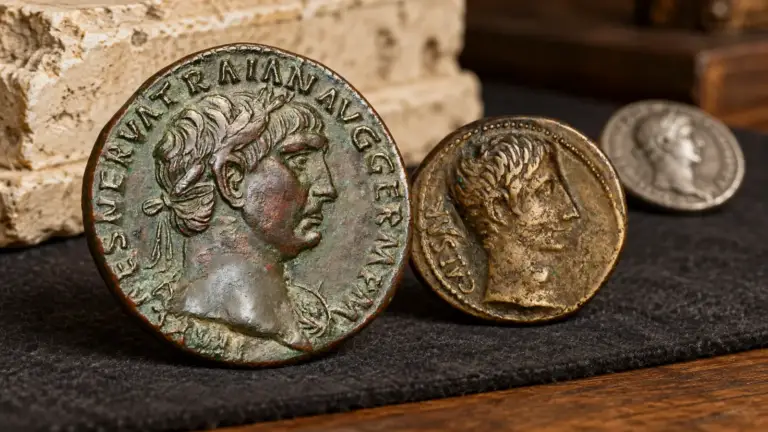
Names of Roman Coins: From the As to the Solidus
As, sestertius, denarius, antoninianus, nummus, maiorina and solidus: the names of Roman coins, what they were worth and which emperors introduced them.
Late Roman coins from Constantine the Great to the end of the Western Empire: bronze coins of Constantine, large bronzes of Julian II with the bull, and an exagium solidi weight. Each object has its own protocol number and is guaranteed genuine.
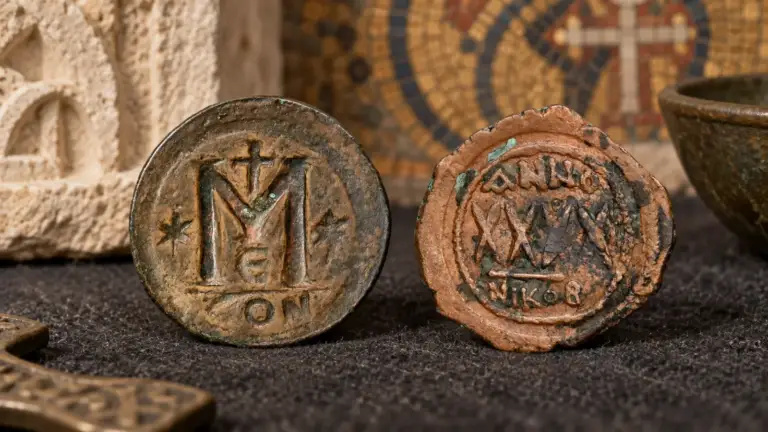
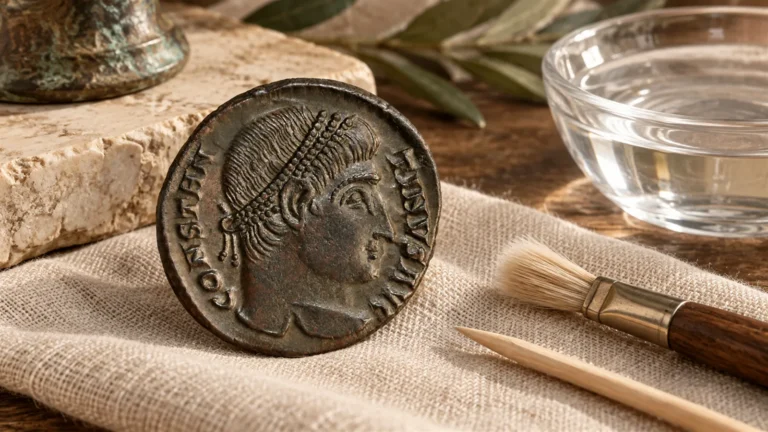
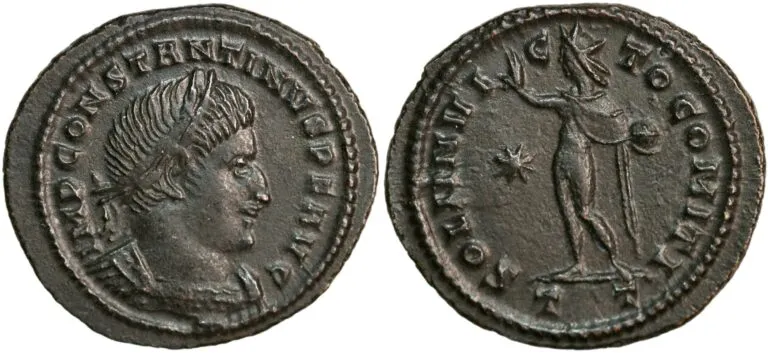
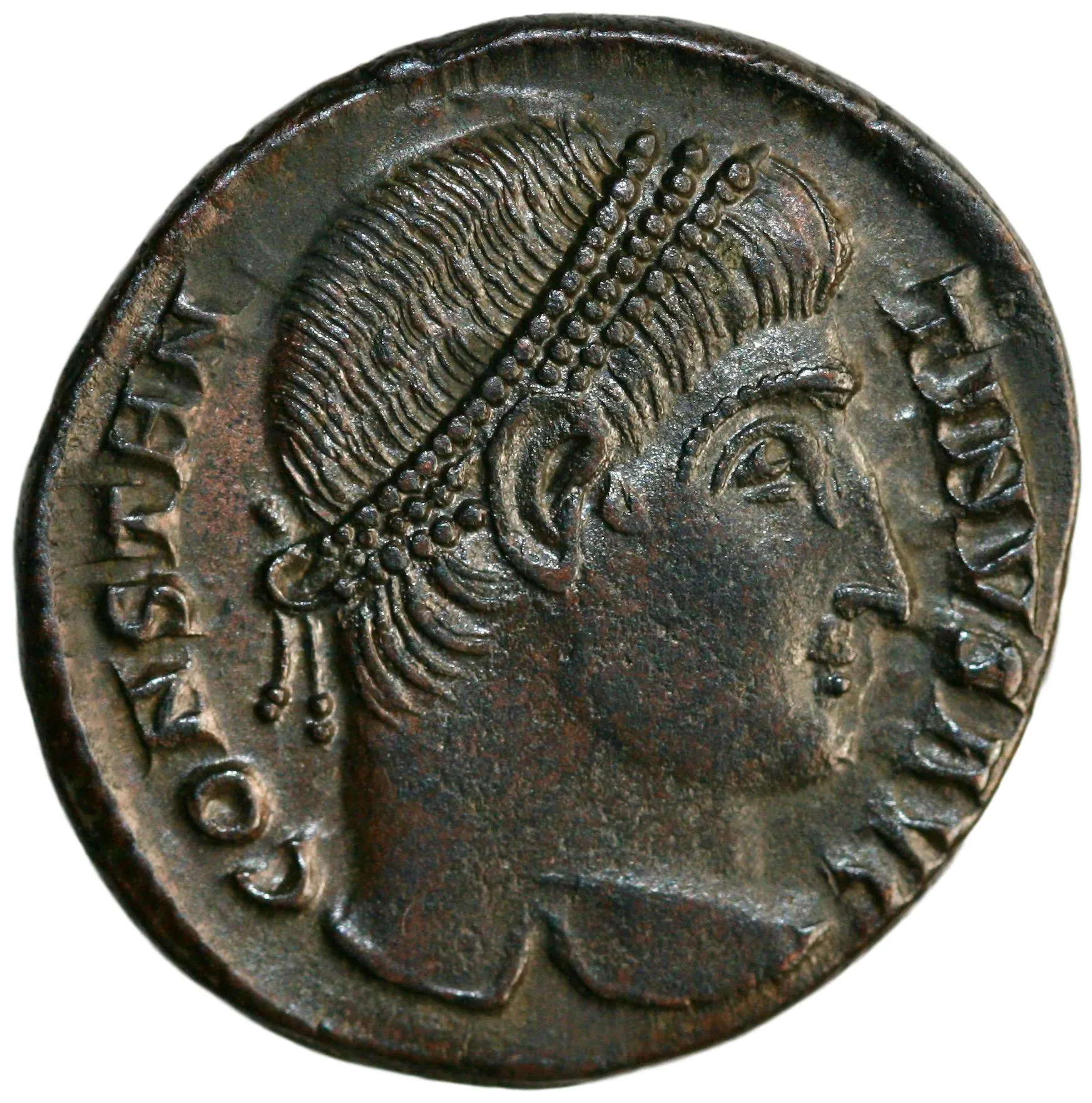
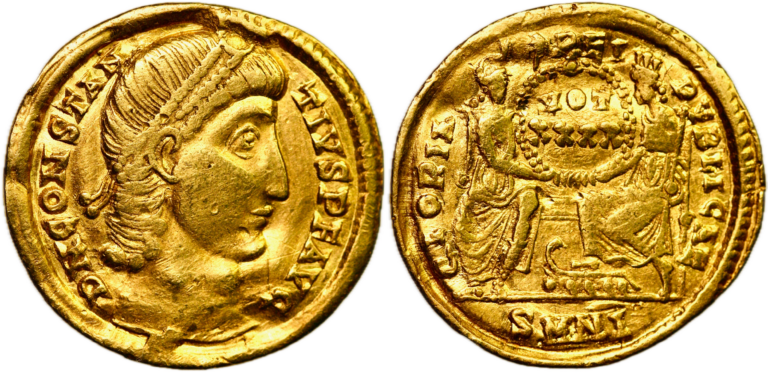
Constantine the Great (306–337) became sole ruler in 324 and dedicated his new capital, Constantinople, in 330. His most lasting monetary legacy is the solidus, a gold coin struck at 72 to the Roman pound, introduced around 310. Its standard was kept for centuries and it became the gold coin of the Byzantine world. Bronze was a different story: the small bronze coin known as the nummus, or follis, was repeatedly reduced in size. A follis from 313–314 and a nummus struck in Nicomedia in 328–329, both in excellent condition, illustrate Constantine’s coinage.
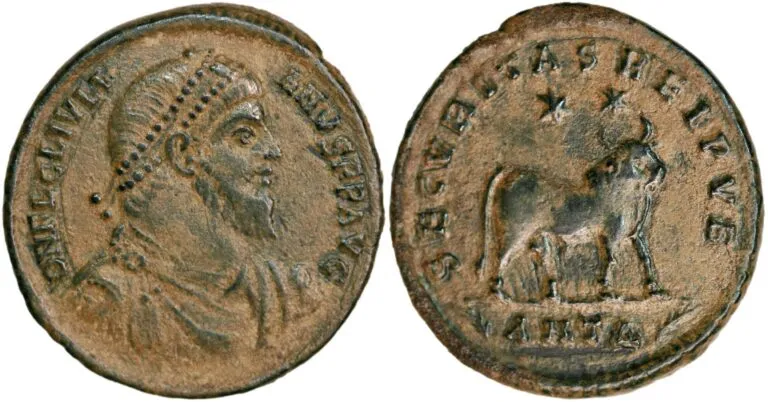
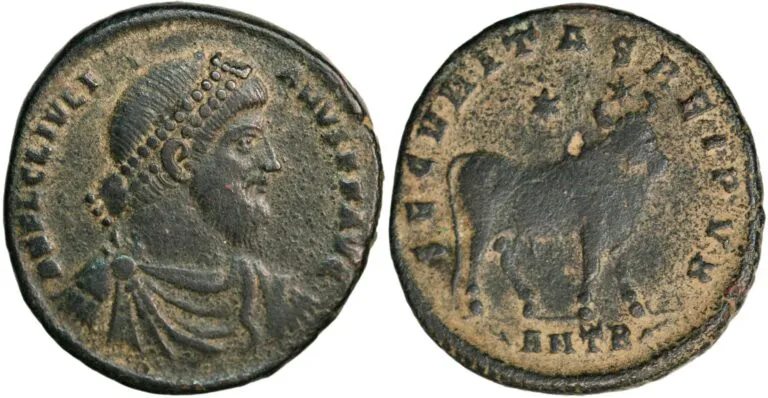
Julian (sole emperor 361–363), known as “the Apostate”, tried to revive the traditional cults after the Christian rule of Constantine’s sons. His large bronze, the double maiorina, shows a bull with two stars above and the legend SECVRITAS REIPVB, “the security of the state”. The meaning is disputed: the bull has been read as the Egyptian Apis bull, as a sacrificial animal and as an astrological sign. These large, heavy bronzes from Antioch are among the most characteristic coins of the 4th century.
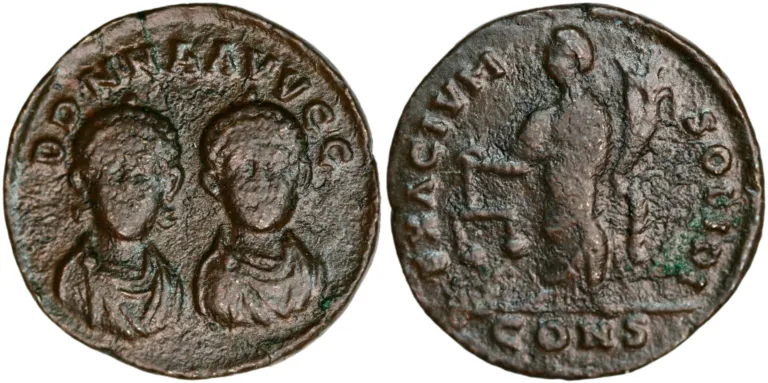
To counter clipped and underweight gold coins, the state issued official bronze weights inscribed EXAGIVM SOLIDI, “the weighing of a solidus”, against which solidi could be checked. The example in this category, from Constantinople, shows the facing busts of two emperors and Moneta holding scales. It is not a coin but a part of the same monetary system.
After 395 the empire was permanently divided between East and West. The Western Empire ended in 476 when its last emperor, Romulus Augustulus, was deposed, while the East lived on, see Byzantine coins. On Late Roman bronzes, collectors pay close attention to the mint mark in the exergue below the reverse design, which tells where the coin was struck – Antioch, Nicomedia, Constantinople and many others. A clear mint mark, a full legend and a stable patina add to the value. Earlier coins are found under 221 – 313 AD.
It is an official Late Roman bronze weight used to check that gold solidi had full weight. Clipping gold from coins was a known problem, and such weights let officials and traders reject underweight coins. The legend EXAGIVM SOLIDI means “the weighing of a solidus”.
Below the reverse design, in the exergue, Late Roman coins usually carry an abbreviation of the mint, often with a letter for the workshop. It tells where the coin was struck, and some mints are scarcer than others.
Scholars do not agree. The bull has been interpreted as the Egyptian Apis bull, as a sacrificial animal linked to Julian's revival of the traditional cults, and as an astrological sign. The question remains open.
Yes. Every item is researched and described as accurately as possible, and Denarius guarantees that everything sold is genuine and as described.
Every item gets its own number when it is catalogued. The number is shown on the product page, so you always know exactly which example it is.
Yes. We ship worldwide. Shipping method and price are shown at checkout before you pay.
Read more
As, sestertius, denarius, antoninianus, nummus, maiorina and solidus: the names of Roman coins, what they were worth and which emperors introduced them.
From Anastasius' big follis of 498 to the fall of Constantinople in 1453: how to read Byzantine coins, what the M and…
Cleaning ancient coins usually does more harm than good. Here is when to leave a Roman coin alone, and how to clean…