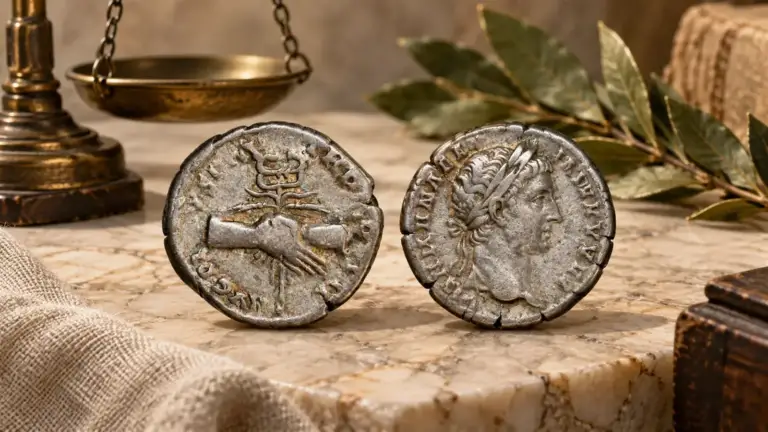
What is a denarius worth?
The denarius was Rome's main silver coin for more than four centuries. Here is what it was worth in ancient Rome, and…
Roman Republican coins: cast aes grave, early bronze asses with the two-faced Janus, and silver denarii signed by the moneyers of the 2nd and 1st centuries BC. Each coin is examined, photographed and described with its own protocol number, and guaranteed genuine.
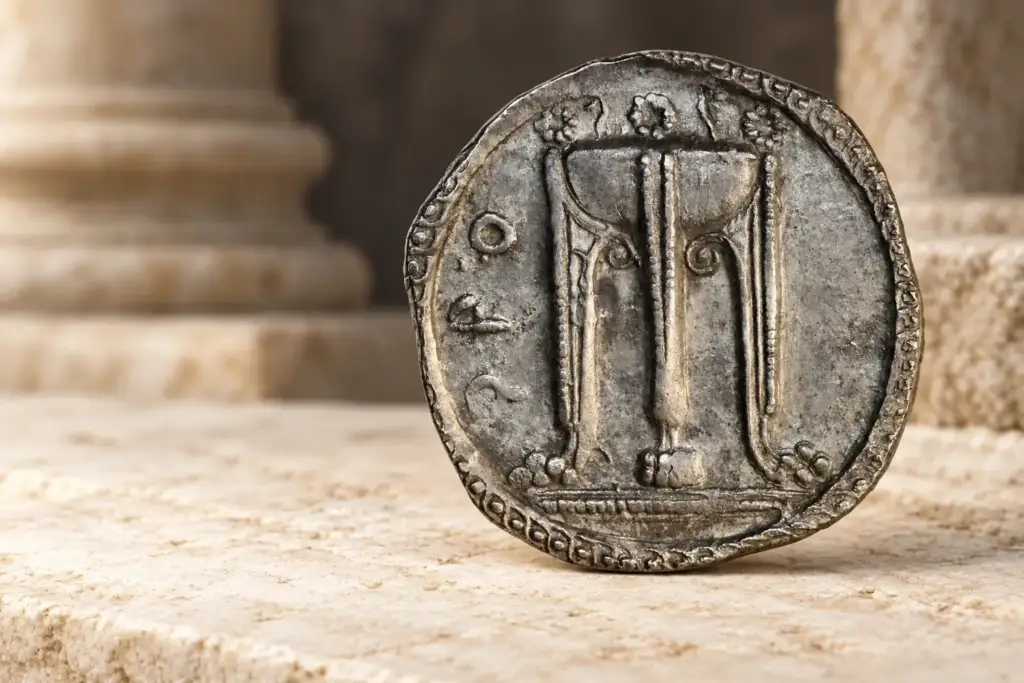
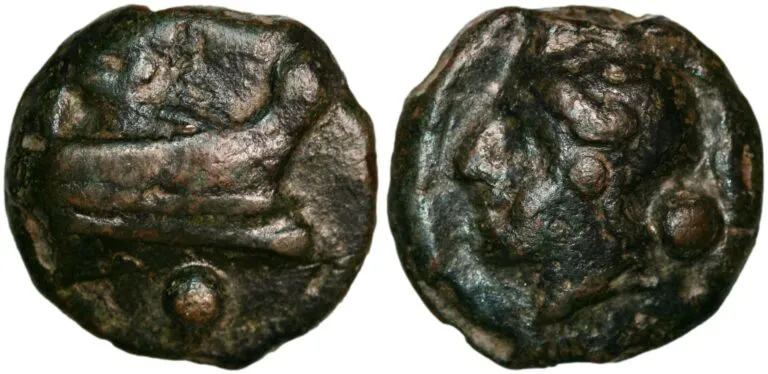
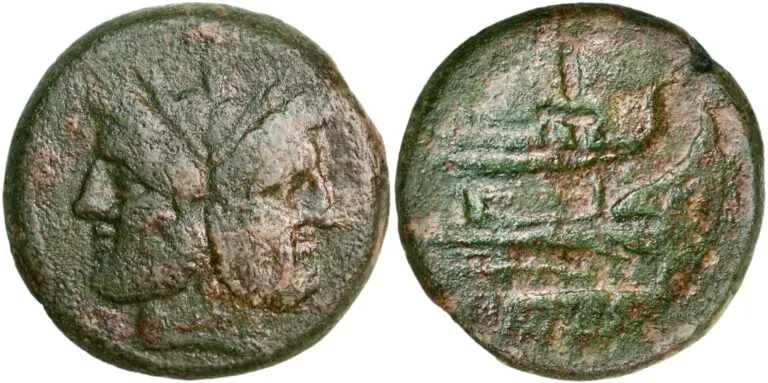
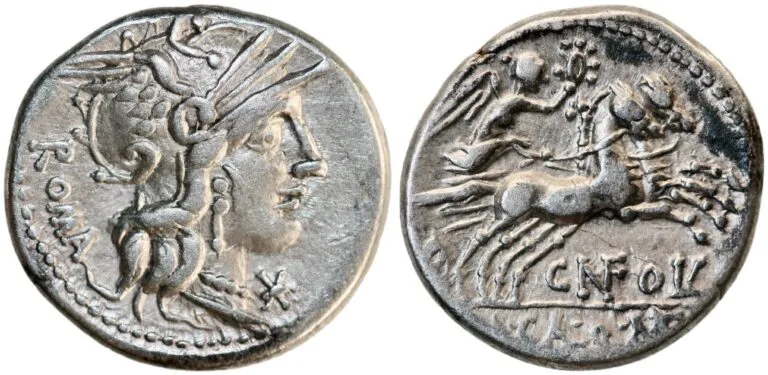
Rome came late to coinage compared with the Greek cities. Its earliest bronze money, aes grave (“heavy bronze”), was cast in moulds in the 3rd century BC. On the original libral standard the as was based on the Roman pound, with smaller pieces as fractions: the uncia, marked with a single pellet, was one twelfth of an as. Around 211 BC, during the Second Punic War, Rome reorganised its coinage and introduced the silver denarius, originally valued at ten asses and marked X. Struck bronze asses with the two-faced god Janus on the obverse and a ship’s prow on the reverse became the standard bronze type.
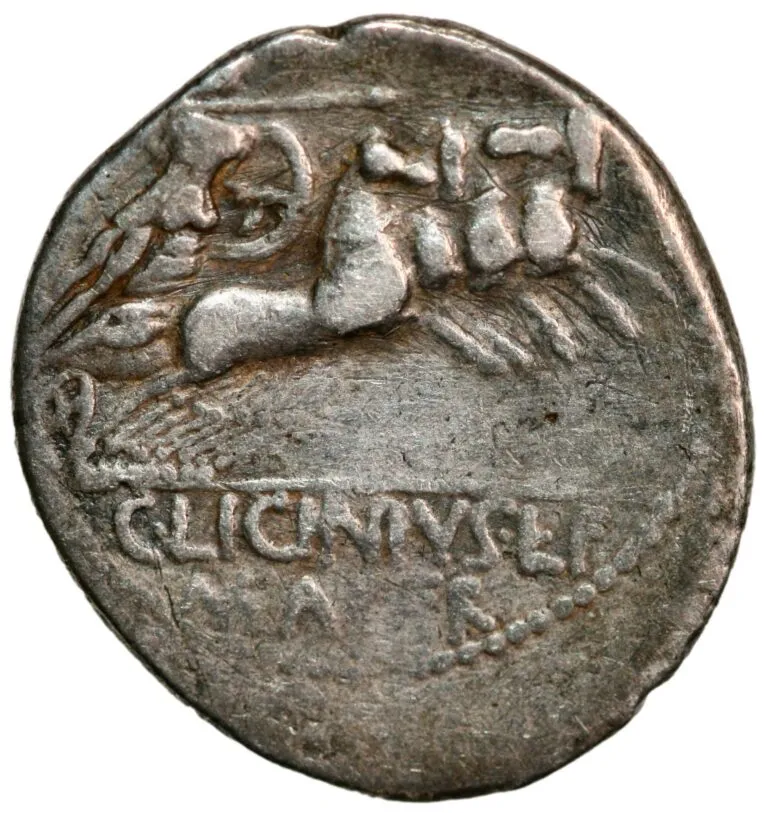
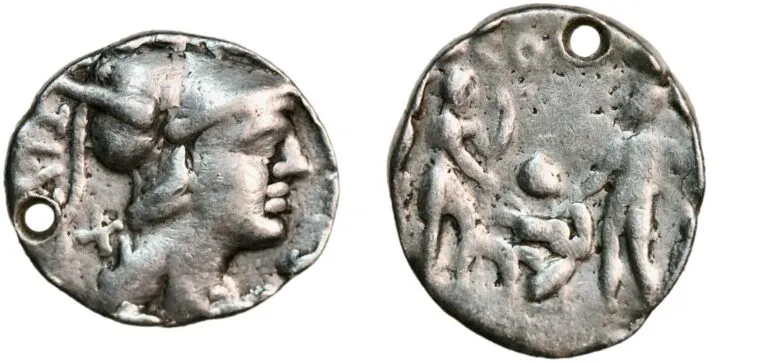
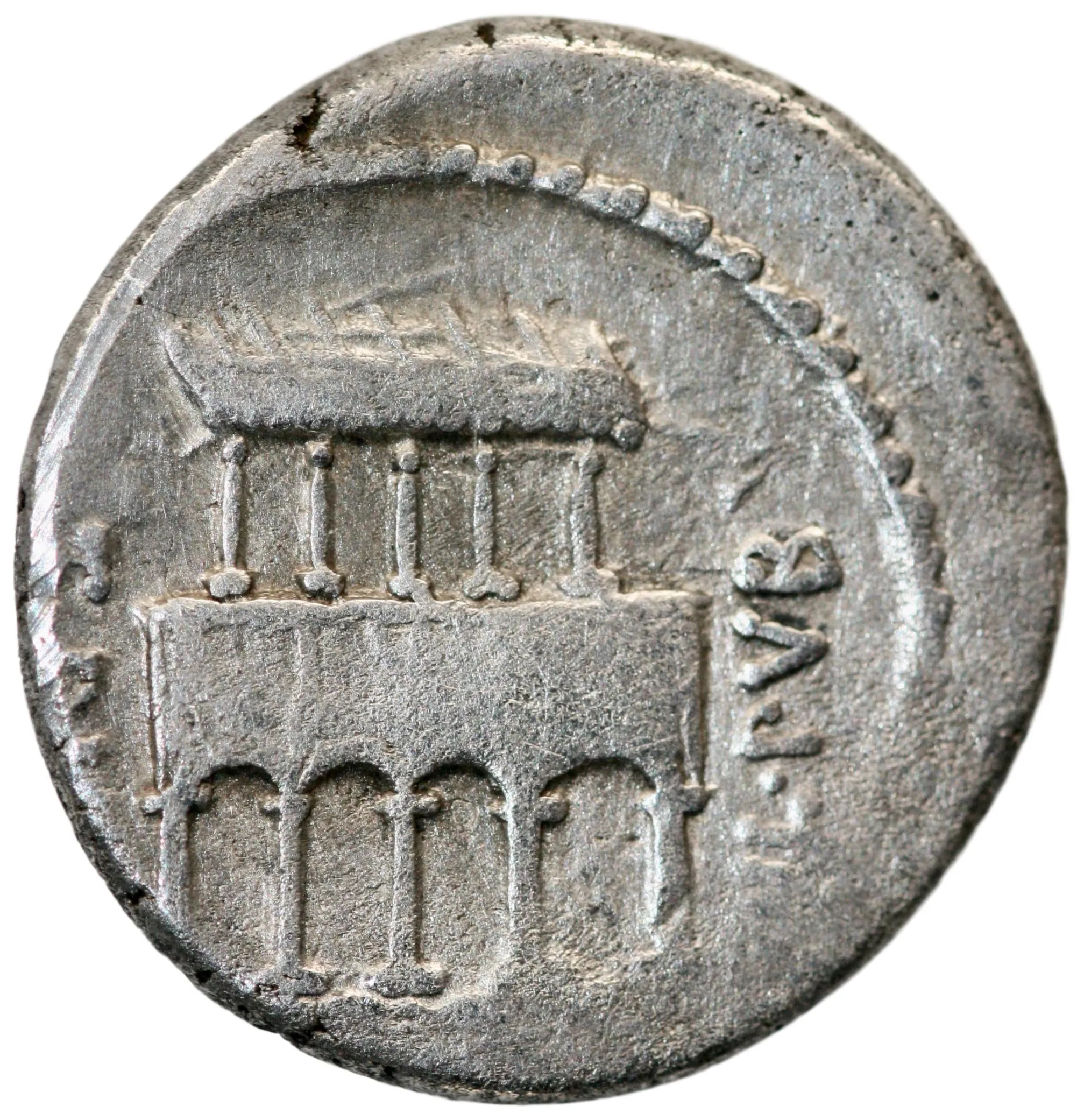
The coins were struck under junior magistrates who held office for one year, the tresviri monetales, and from the 2nd century BC they increasingly signed the coins with their names. Early denarii repeat the helmeted head of Roma, but the moneyers gradually began choosing motifs that celebrated Rome’s legends and their own families. The denarius of Ti. Veturius from 137 BC, with a scene of an oath being sworn over a pig, is an early example of this; later coins show anything from Apollo and Minerva in a four-horse chariot to the Villa Publica on the Campus Martius.
In the last decades of the Republic, generals and civil-war leaders took control of the coinage and put their own names, and eventually their portraits, on it. The Republic is conventionally said to end in 27 BC, when Octavian received the name Augustus; his coins continue under 27 BC – 220 AD.
Republican coins are identified by the moneyer’s name and by their number in Michael Crawford’s Roman Republican Coinage (1974), which dates most issues to a specific year. Collectors value a legible moneyer’s name, a well-centred design and good silver. Some denarii have marks or holes from ancient or later use, and such features are always stated in the description. With bronze, an intact flan and an even patina count for a great deal. More coins from Rome are found among our Roman coins.
Aes grave, “heavy bronze”, was Rome's early cast bronze money from the 3rd century BC. The pieces were cast in moulds rather than struck, and the denominations were marked with pellets or numerals. They are among the earliest Roman coins a collector can own.
The coins were struck under moneyers who served for only one year, and each could choose his own motifs. Many used them to celebrate their family's history or Rome's legends, which makes the series a rich source for Roman history and mythology.
It refers to Michael Crawford's catalogue Roman Republican Coinage (1974), the standard work on the coins of the Republic. The number identifies the type and gives its dating, so a coin can be compared directly with the literature.
Yes. Every item is researched and described as accurately as possible, and Denarius guarantees that everything sold is genuine and as described.
Every item gets its own number when it is catalogued. The number is shown on the product page, so you always know exactly which example it is.
Yes. We ship worldwide. Shipping method and price are shown at checkout before you pay.
Read more
The denarius was Rome's main silver coin for more than four centuries. Here is what it was worth in ancient Rome, and…
As, sestertius, denarius, antoninianus, nummus, maiorina and solidus: the names of Roman coins, what they were worth and which emperors introduced them.
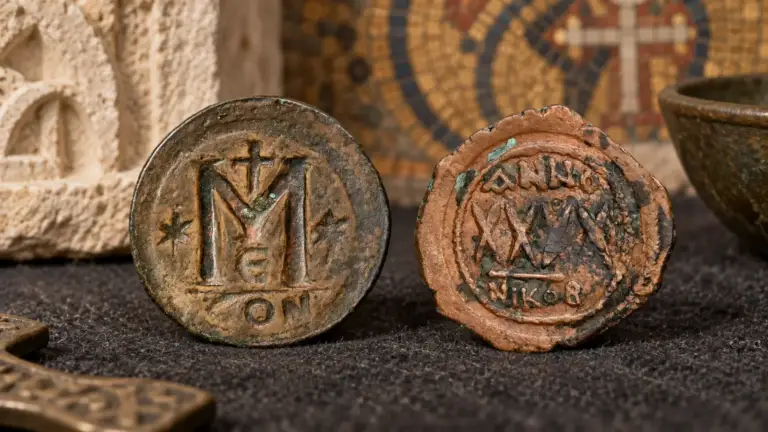
From Anastasius' big follis of 498 to the fall of Constantinople in 1453: how to read Byzantine coins, what the M and…