Rare Norwegian coins: Norway’s most valuable dates and types
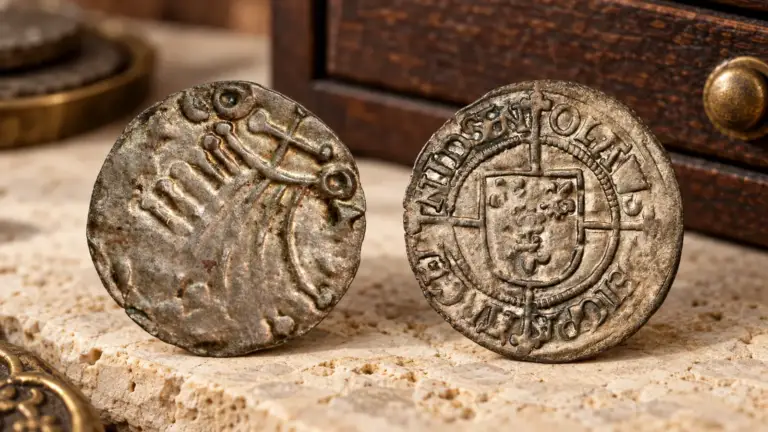
Which Norwegian coins are the rarest, and why? From Olav Kyrre's pennies and the archbishop's skillings to the Schydtz coins of 1689…
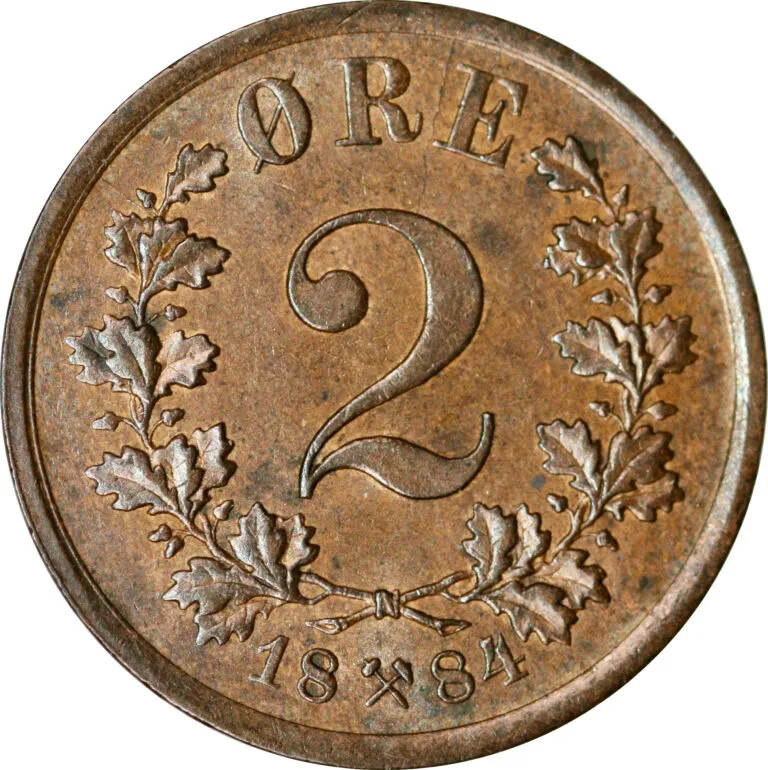
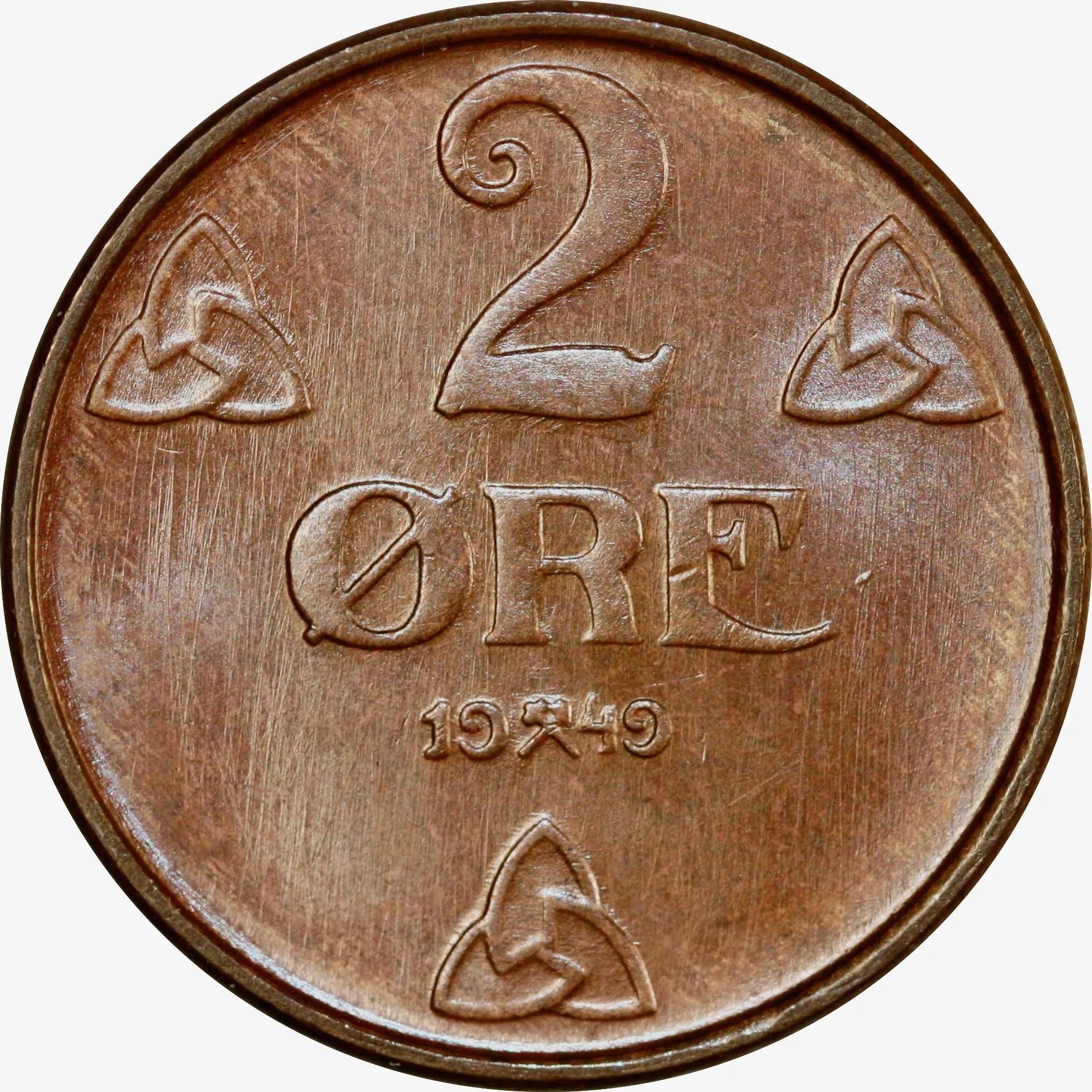
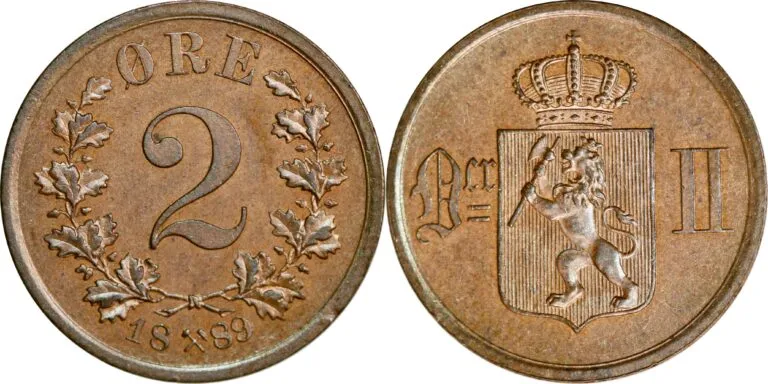
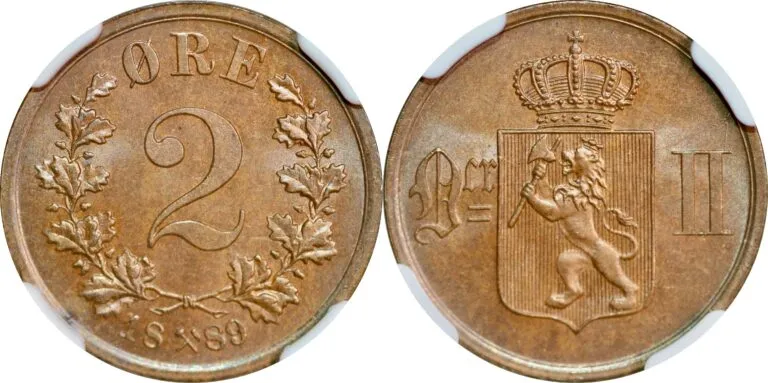
Norwegian 2 øre coins in bronze: Oscar II coins from 1884 and 1889, including one graded MS 65 BN by NGC, and a Haakon VII coin from 1949 in choice mint state. Each coin is photographed and guaranteed genuine.
The 2 øre was introduced in 1876, together with the 1 øre, as part of the bronze coinage of the new krone. The coin weighs 4 grams and measures 21 mm. Oscar II’s 2 øre shows the crowned Norwegian lion with an axe on a crowned shield, and the value on the reverse. It was struck until 1902. Under Haakon VII the coin soon received the king’s crowned monogram.
When copper became scarce during the First World War, the 2 øre was struck in iron in 1917–1920. The same happened under the German occupation, when the 2 øre was struck in iron in 1943–1945, without the royal crown and monogram. After the war bronze returned. Olav V’s 2 øre with a capercaillie was struck in 1958–1972, and Norges Bank lists it as no longer valid from 1 January 1975.
Bronze changes colour over time, from the original copper red to brown. Grading services such as NGC note this with RD (red), RB (red-brown) or BN (brown) after the grade, and coins with original red colour are the scarcest. A few coins have a proof-like strike with mirrored fields, which collectors look for. Cleaning destroys the natural surface and lowers the value, so untouched coins are preferred. For the iron wartime coins, absence of rust is what counts; examples are found under 5 øre.
For Oscar II’s 2 øre, the year matters, since some years were struck in much smaller numbers than others. Coins in mint state from the 1880s are hard to find, as most were used in daily trade.
MS 65 is a grade on the American Sheldon scale used by NGC and PCGS, where MS means mint state and 70 is the highest grade. BN means that the bronze has toned brown. The coin is sealed in a plastic holder with the grade on the label.
The last 2 øre coins were struck in 1972, during the reign of Olav V. According to Norges Bank they have not been legal tender since 1 January 1975.
Yes. Every item is researched and described as accurately as possible, and Denarius guarantees that everything sold is genuine and as described.
Every item gets its own number when it is catalogued. The number is shown on the product page, so you always know exactly which example it is.
Yes. We ship worldwide. Shipping method and price are shown at checkout before you pay.
Read more
Which Norwegian coins are the rarest, and why? From Olav Kyrre's pennies and the archbishop's skillings to the Schydtz coins of 1689…
Most old Norwegian coins are worth little, but condition, silver, gold and rare dates can command high prices. Here is the price…
A thousand years of Norwegian coins in one guide: the main periods, kings and mints, how grading works in Norway, and how…