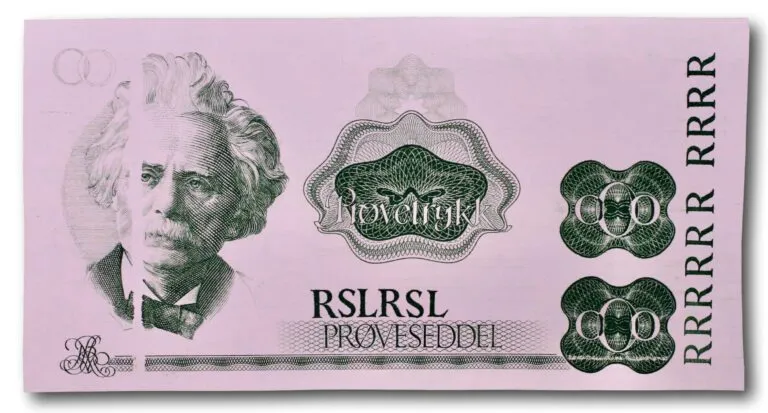
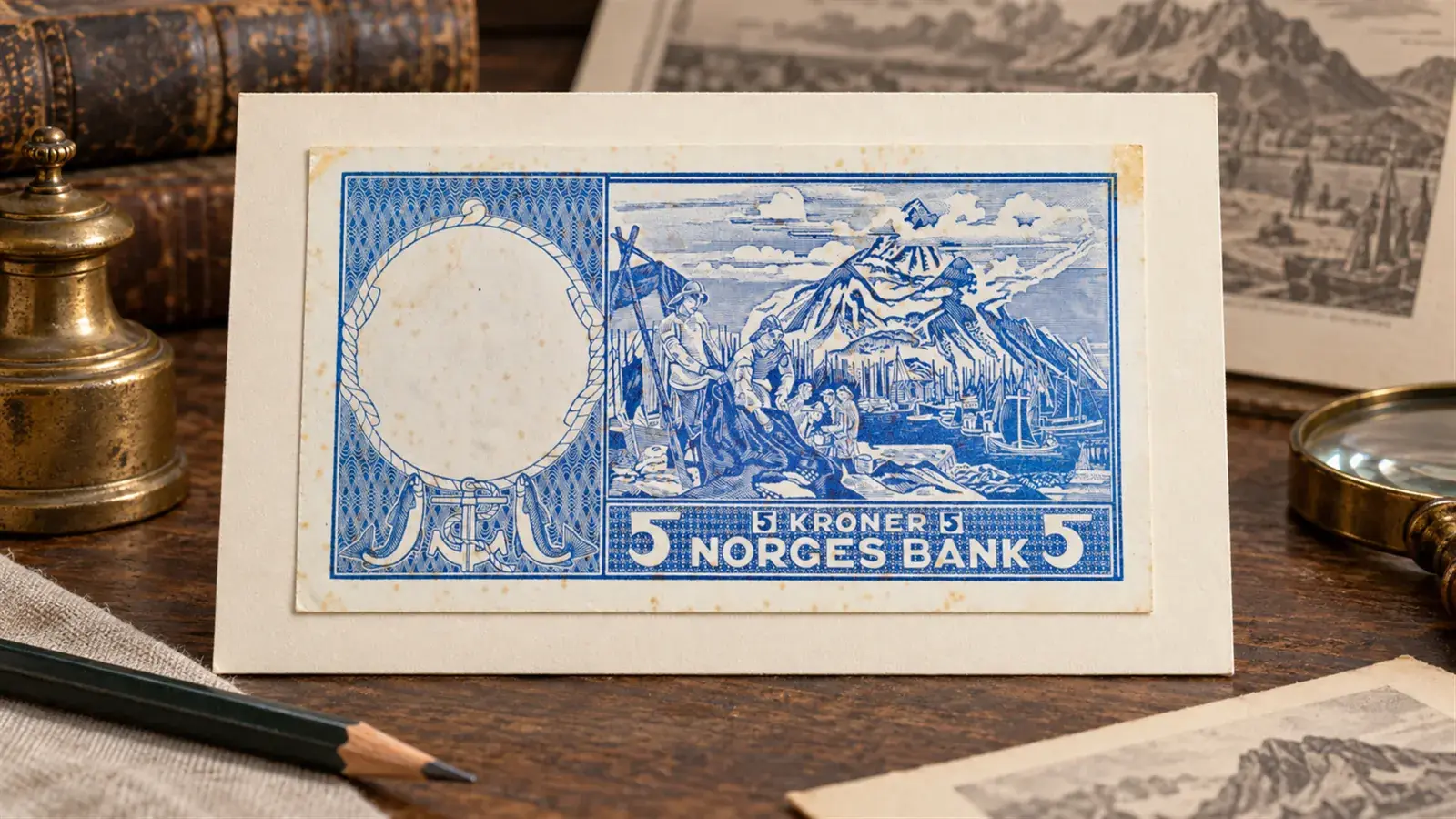
This proof banknote is a rare survivor from the making of Norway’s 5 kroner note in the fourth series, the note with Fridtjof Nansen on the front. On its blank side someone has written sidste in pencil, the old spelling of the Norwegian word for “final”. When Denarius presented the note in December 2021, that single word was what made it so special.
Contents
How the fourth banknote series was planned
Planning of the fourth series began as early as 1930, with a public competition. Six drafts by various artists and architects were awarded prizes and bought by the central bank. After some deliberation the bank used none of them. Instead it engaged the architect Arnstein Arneberg as the artist for the new notes. Arneberg was supported by a jury and by Einar Forfang, manager of the state-owned banknote printing works in Norway.
The Second World War delayed the project, and the series was in circulation from 1948 to 1976. According to Norges Bank, the 5 kroner note itself was issued from 1955 to 1963.
Fridtjof Nansen on the 5 kroner note
All six denominations, 1000, 500, 100, 50, 10 and 5 kroner, followed the same design programme. The front showed a significant Norwegian from history, while the back showed motifs from Norwegian industries and cultural life.
The 5 kroner note carried a portrait of the polymath Fridtjof Nansen (1861–1930), who received the Nobel Peace Prize in 1922. Most people probably know him better for his polar expeditions, from the crossing of Greenland on skis in 1888 to the Fram expedition of 1893–1896 (Store norske leksikon). The back reused a painting by Axel Revold of the fishing industry in Northern Norway. Several men are at work with their nets, and behind them the fjord is filled with fishing boats.
Why the word “final” makes this proof banknote special
The pencilled word is important because it gives good reason to believe that this was the final draft before production of the banknote began. That makes this proof banknote a highly important piece of Norwegian banknote history. It is extremely rare, and with this pencil inscription it may well be unique. Few surviving pieces document the step from proof banknote to finished note as clearly.
Small traces of tape can be seen in the upper corners. They were probably used when the final draft was put on display.
More Norwegian banknotes at Denarius
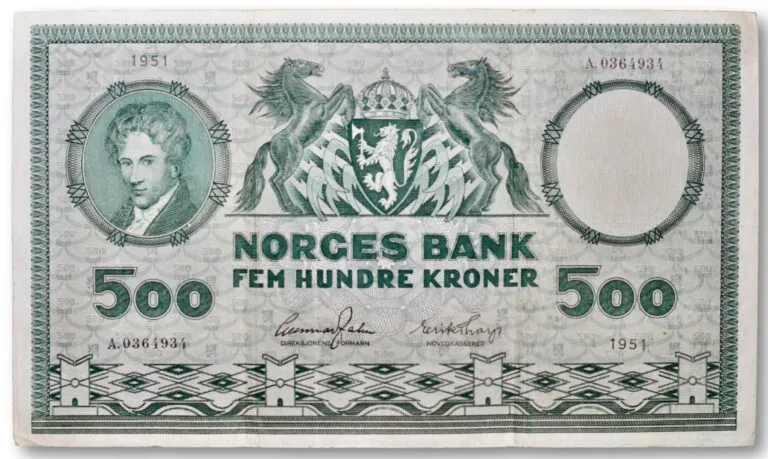
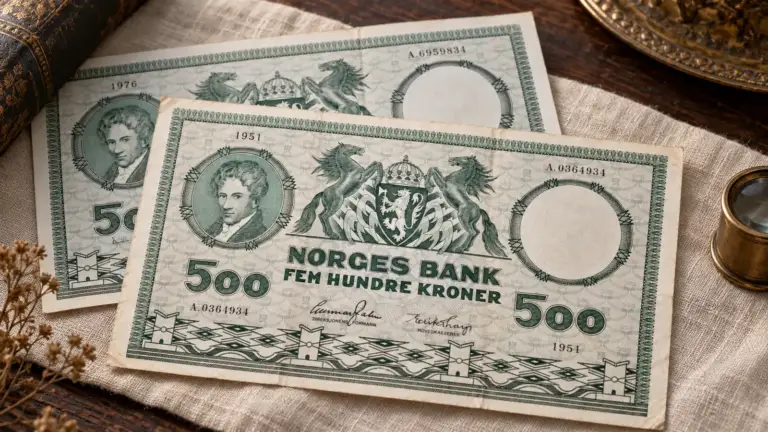
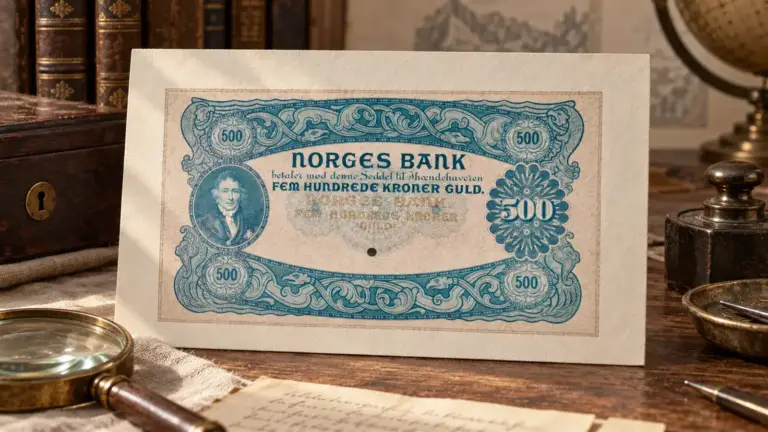
Proofs and specimens show stages that ordinary circulating notes never reveal. From the same series you will find the Norway, 500 kroner 1951, and among later proofs the Norway, single-sided proof print (ca. 1980).
Browse all Norwegian banknotes or the full banknotes category. Every object at Denarius is examined, photographed and described, given its own protocol number, and guaranteed genuine.