Rare Norwegian coins: Norway’s most valuable dates and types
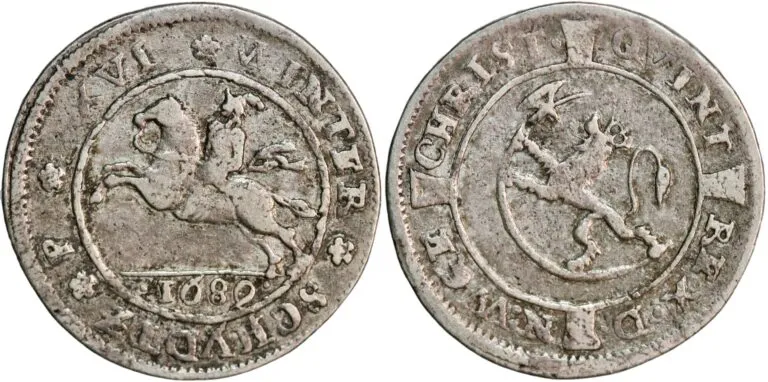
Which Norwegian coins are the rarest, and why? From Olav Kyrre's pennies and the archbishop's skillings to the Schydtz coins of 1689…
Old Norwegian coins from the Middle Ages to 1814: pennies, bracteates, hvids, skilling, mark and speciedaler of the kings of Norway and Denmark-Norway.
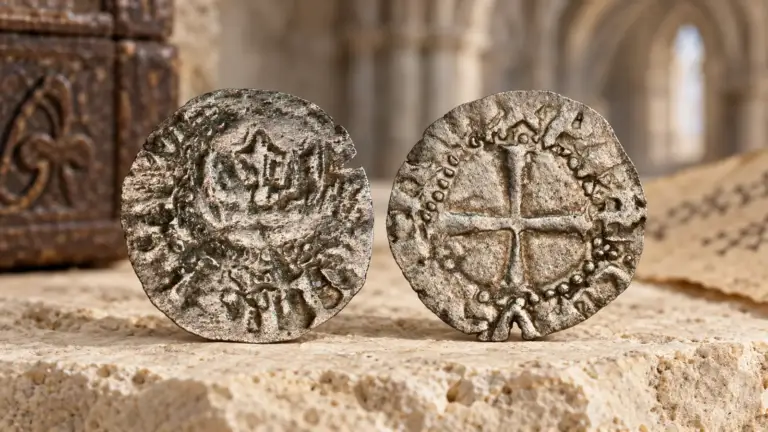
This category covers old Norwegian coins from the first silver pennies to the end of the union with Denmark in 1814. Many collectors start out looking for Viking coins, and Norwegian coinage does begin in the late Viking Age: the first Norwegian coin is a silver penny struck for Olav Tryggvason between 995 and 1000. The oldest coins here belong to the generations that followed, such as a penny of Olav Kyrre (1066–1093).
Use the menu to choose a king or period. Every coin is examined, photographed and described with catalogue references where available.
Harald Hardrada (1046–1066) built a national coinage, but he also cut the silver content of the penny to about a third. From the 12th century came bracteates: thin coins struck on one side only, so the design shows through in reverse on the back. The civil-war king Sverre Sigurdsson (1177–1202) is the best-known issuer.
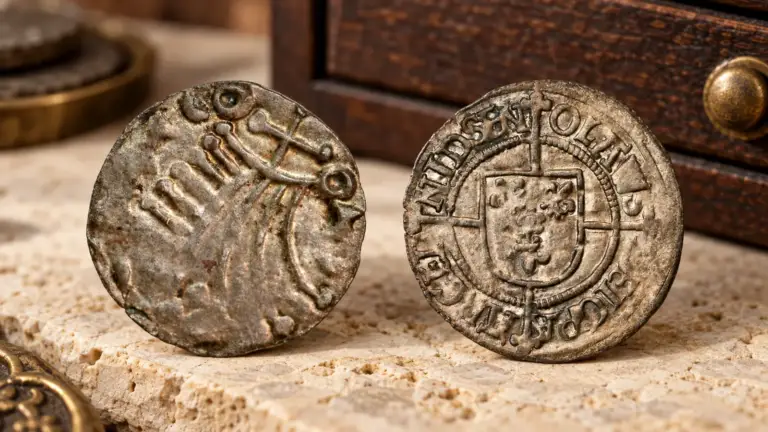
Later medieval coins include pennies of Eirik Magnusson and Håkon VI, hvids of King Hans and Archbishop Gaute Ivarsson, and the first skillings, struck in Bergen and by the archbishops in Nidaros until the Reformation in 1537. They are gathered under Gaute Ivarsson m. fl.
From 1537 Norway shared a king and a currency with Denmark. After silver was found at Kongsberg in 1623, Christian IV opened a mint in Christiania in 1628, and in 1686 the Royal Mint was established at Kongsberg, close to the mines. The Christiania mint closed in 1695, and from then on Kongsberg struck Norway’s coins. From 1625 the system was 16 skilling to the mark and six marks, or 96 skilling, to the rigsdaler.
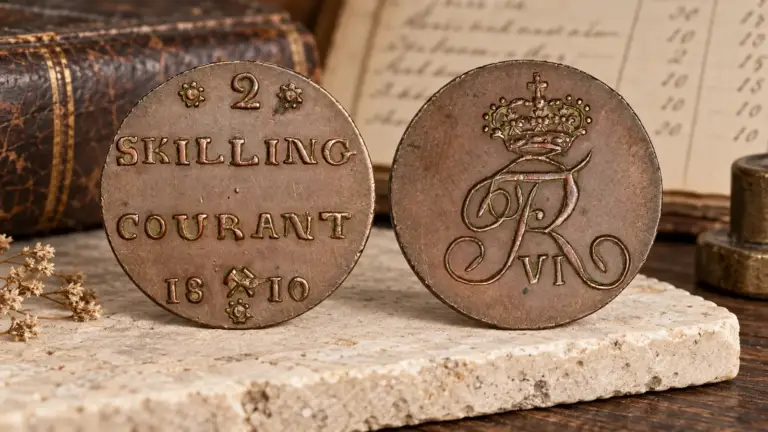
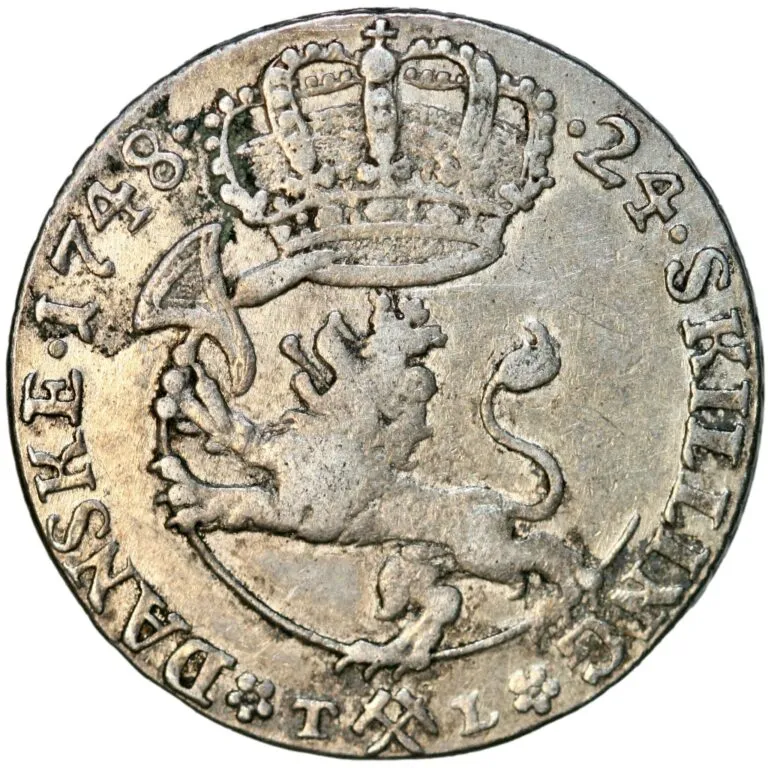
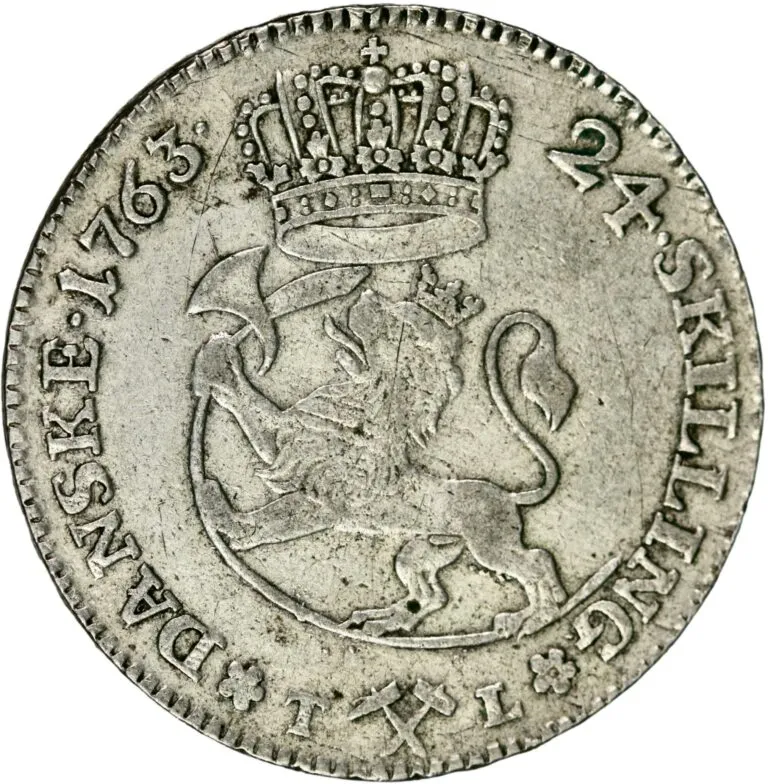
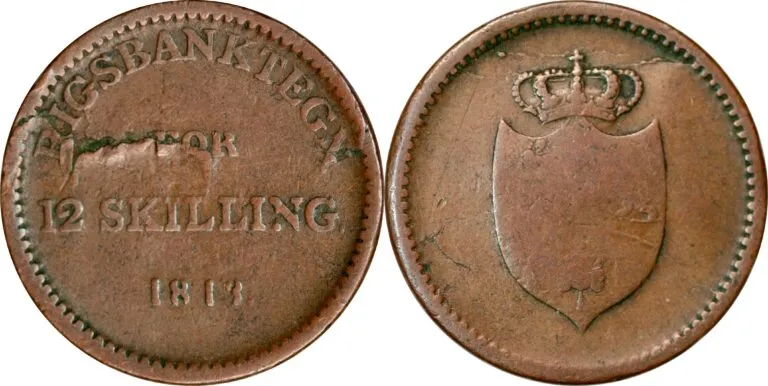
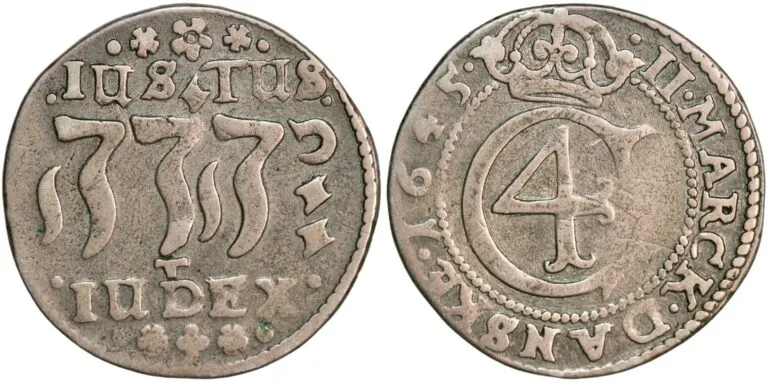
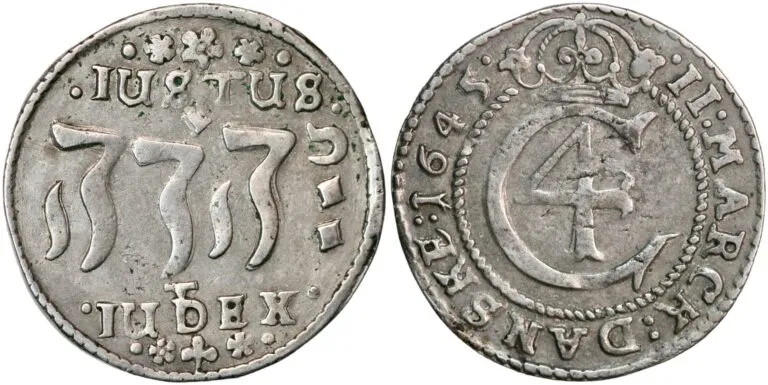
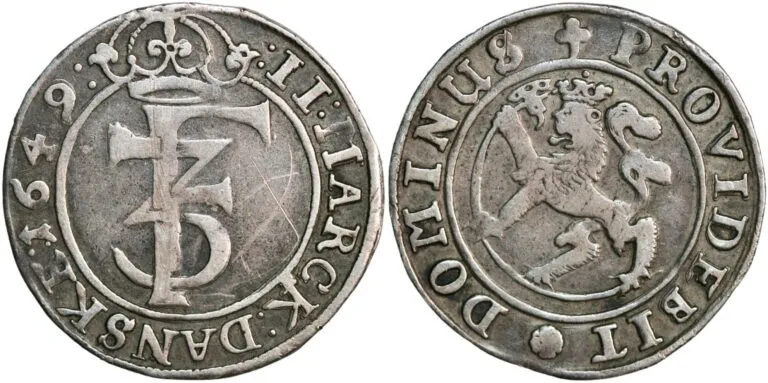
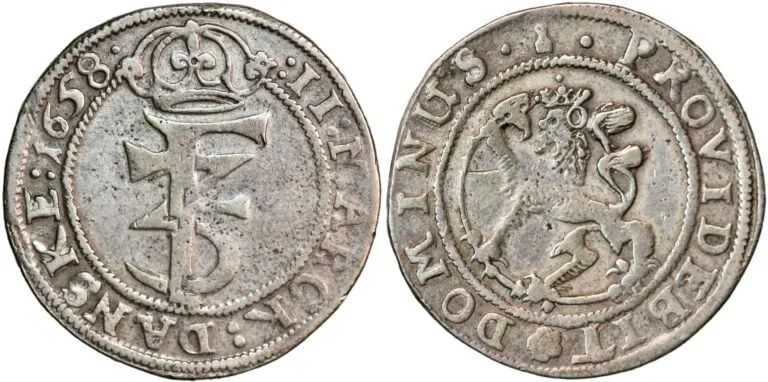
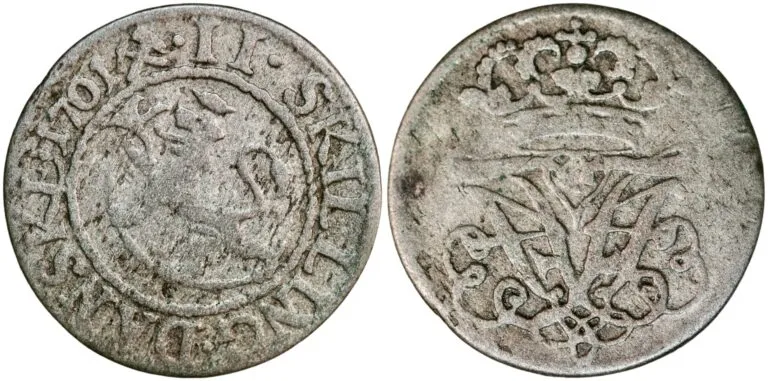
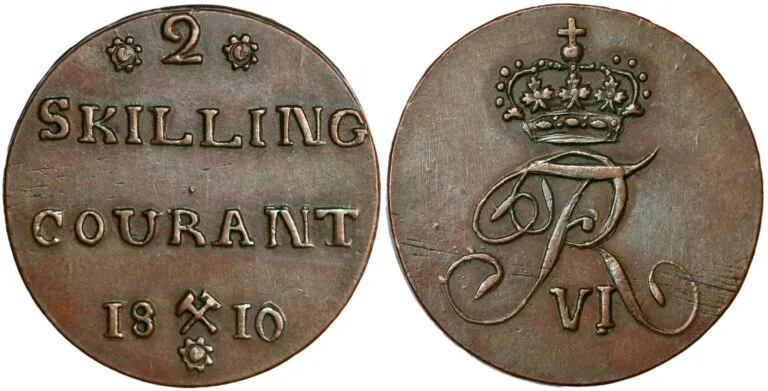
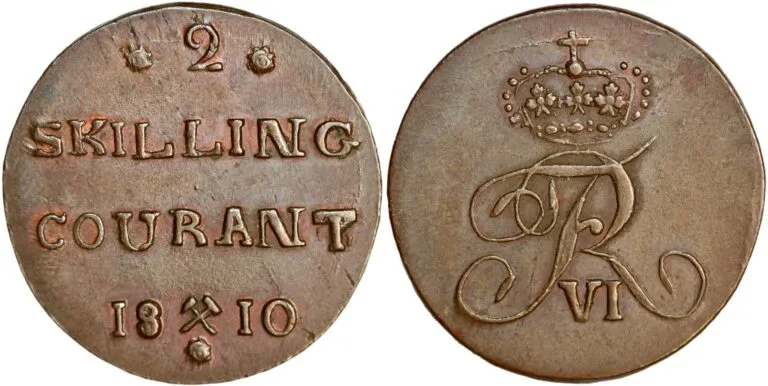
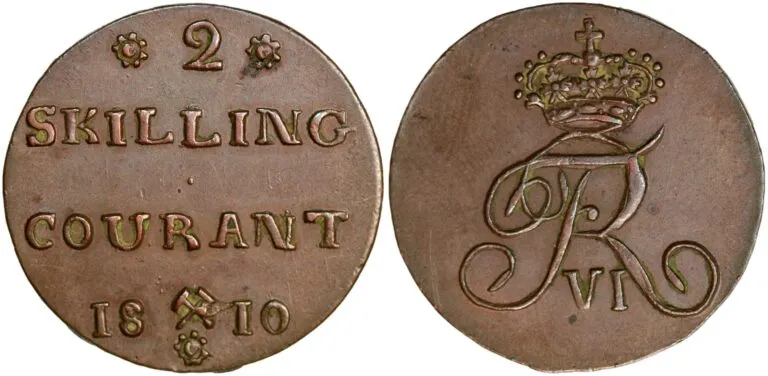
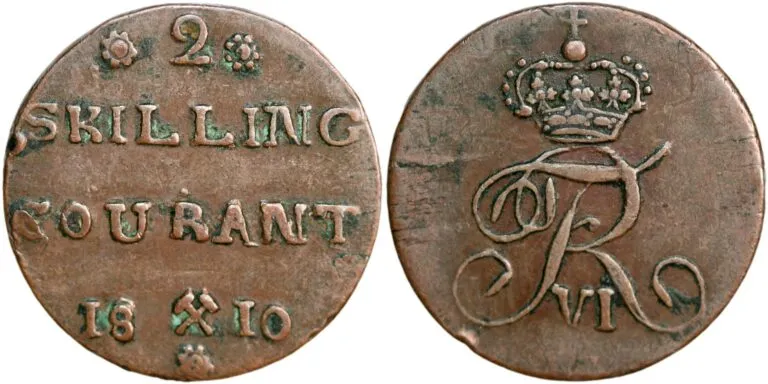
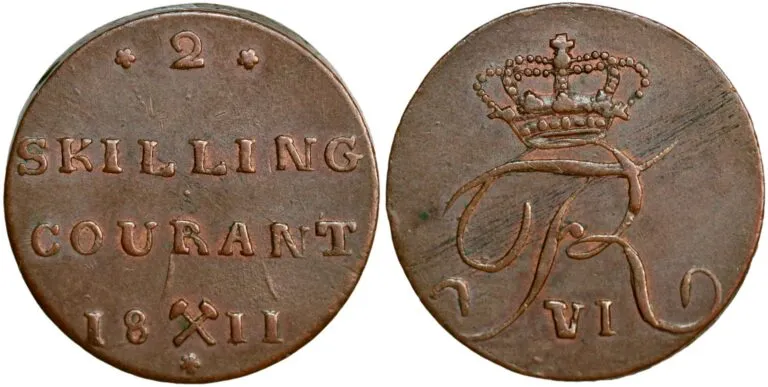
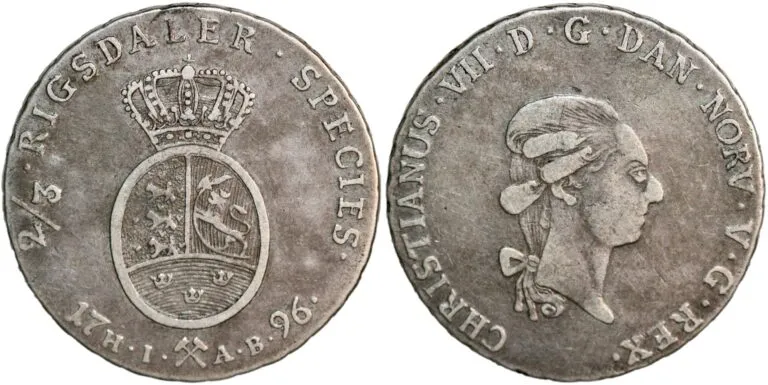
The coins follow the kings one by one: the 1 and 2 mark of Christian IV, the large 4 mark pieces of Christian V and Frederik IV, the 24 skilling of the mid-18th century, a 2/3 speciedaler of 1796, and the 2 skilling of Frederik VI. The period ends with the riksbanktegn of 1813, copper coins in the short-lived rigsbankdaler currency that followed the state bankruptcy.
For background, read Viking coins: from hacksilver to Olav Kyrre, bracteates explained and skilling and speciedaler explained. Coins struck after 1814 are in Norway 1814–1874.
The first Norwegian coin is a silver penny struck for King Olav Tryggvason between 995 and 1000, in almost pure silver. It is very rare. Pennies became more common under Harald Hardrada, but with far less silver.
A bracteate is a coin struck on one side only, on a flan so thin that the design shows through in reverse on the back. Bracteates were struck in Norway from the 12th century, among them the coins of King Sverre.
Under the system from 1625, 16 skilling made one mark and six marks made one rigsdaler, so a rigsdaler was 96 skilling. In 1816 Norway's new speciedaler was set at 120 skilling.
Yes. Every item is researched and described as accurately as possible, and Denarius guarantees that everything sold is genuine and as described.
Every item gets its own number when it is catalogued. The number is shown on the product page, so you always know exactly which example it is.
Yes. We ship worldwide. Shipping method and price are shown at checkout before you pay.
Read more
Which Norwegian coins are the rarest, and why? From Olav Kyrre's pennies and the archbishop's skillings to the Schydtz coins of 1689…
From Eirik Magnusson's lion pennies to Olav Engelbrektsson's skillings: Norwegian medieval coins from 1280 to 1537 explained, including the gap after 1387…
The 2 skilling 1810 is one of the old Norwegian coins people find most often. Here is the story of the Kongsberg…