Before you buy gold coins, decide whether you are paying for the gold or for the coin. A bullion coin is priced almost entirely on its gold content, while a collectible gold coin also carries numismatic value: its history, rarity and condition. The gold price sets a floor under both, but for historic gold coins it is usually the collector value that decides the price.
This guide is written from a collector’s point of view. It is not financial advice, and we make no predictions about the price of gold.
In short
- Collectible gold coins have numismatic value on top of their gold. Bullion coins are priced on gold content.
- Weight and fineness tell you how much pure gold a coin contains, and so roughly how low its price can go.
- Popular gold coins are often counterfeited. Buy from a seller who guarantees authenticity.
- Condition, rarity and demand decide how much a coin is worth above its gold value.
- Handle gold coins by the edge, never clean them, and store them in PVC-free holders.
Contents
Bullion or collectible gold coins: what is the difference?
Bullion coins are struck in large numbers as a convenient, standardised way to own gold. Well-known examples are the South African Krugerrand and the Canadian Maple Leaf, and The Royal Mint still strikes the British sovereign as a bullion coin. Their price follows the gold price, plus a premium for minting and dealing.
Collectible gold coins are a different thing. A Venetian zecchino from the 1600s, a Celtic stater or an English guinea was once money, but today it is a historical object. Only so many survive, and each one has its own condition. The price depends on how many people want that type and how many good examples exist.
The line is not always sharp. A common sovereign in worn condition can trade close to its gold value, while a rare date in top condition costs far more. Norway struck its own gold coins too: after the move to a gold-based krone in 1875, 10 and 20 kroner coins were minted in gold, and according to the Norwegian encyclopaedia Store norske leksikon the 10 kroner of 1874 and 1875 are the most sought after because of their low mintages.
What makes historic gold coins valuable?
Fineness and weight
Fineness is given in thousandths or carats. 1000/1000 is pure gold, and 22 carat equals 916.7/1000. A British sovereign weighs 7.98 g in 22 carat gold, so it contains about 7.32 g of pure gold. Many medieval gold coins were purer still: the Florentine florin and the Venetian ducat were around 98 to 99 percent gold and weighed about 3.5 g.
Weight multiplied by fineness gives the gold content. A heavy coin of low fineness can hold less gold than a lighter coin of almost pure gold.
The gold price sets a floor
Multiply the grams of pure gold by today’s gold price per gram and you have the melt value. A collectible coin rarely sells below this, because it would then be worth more as metal. When the gold price moves, the floor moves with it, but the collector premium above the floor does not necessarily follow.
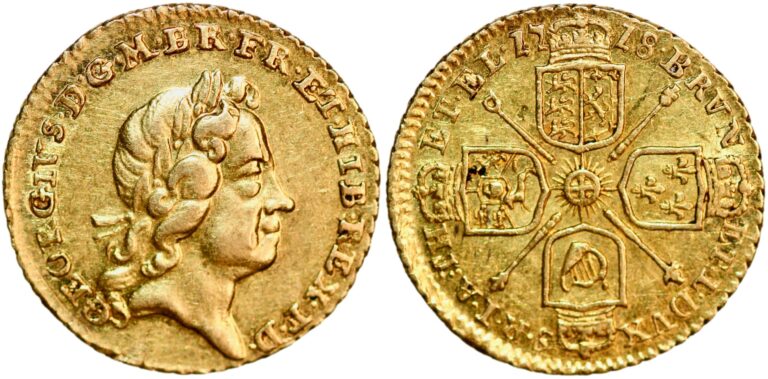
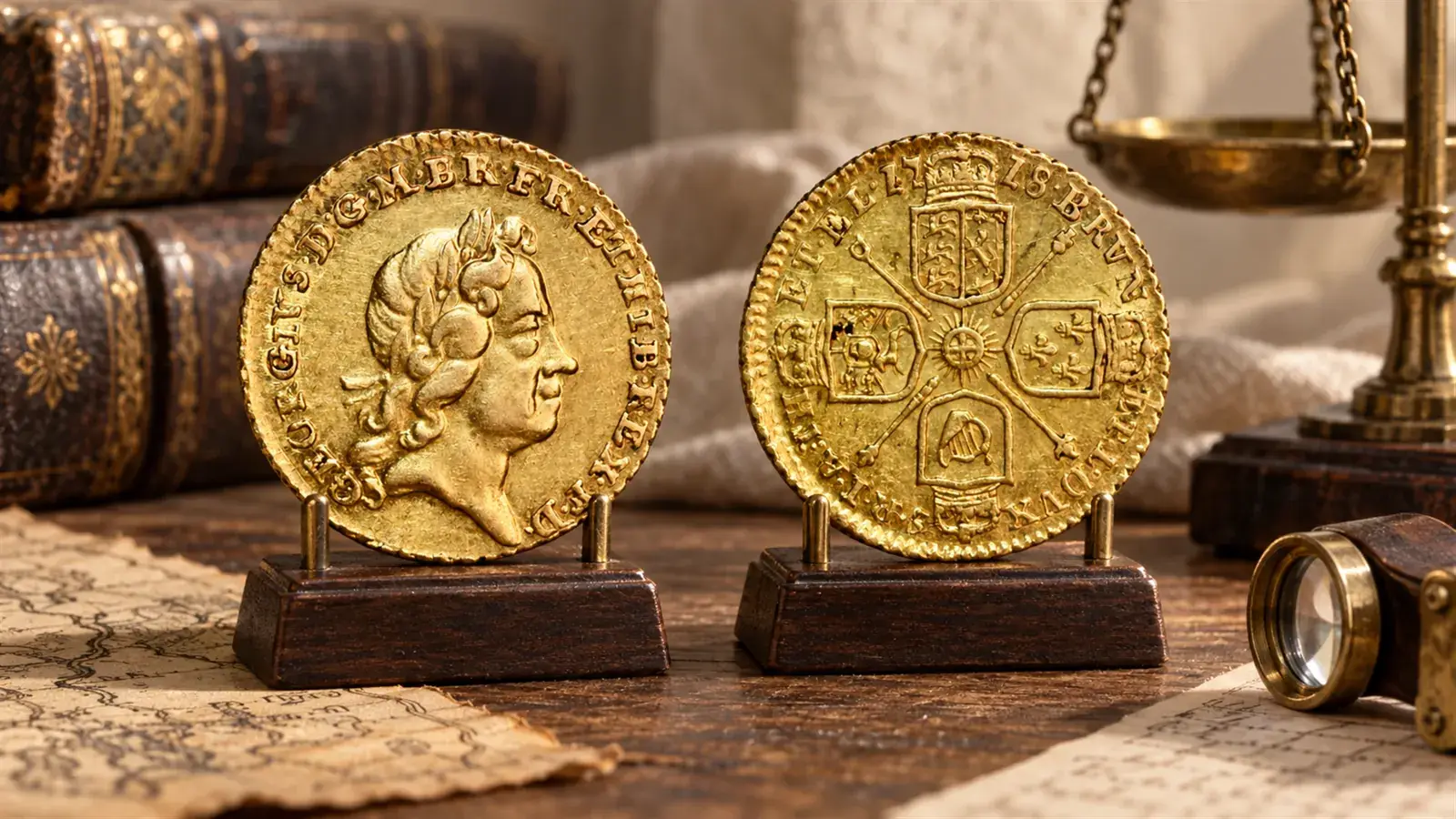
An example: at the time of writing, Denarius offers a British quarter guinea of 1718 for NOK 11,950 (protocol no. 5802). It weighs 2.07 g, and since guineas were struck in 22 carat gold, it holds just under 1.9 g of pure gold. Work out the melt value at today’s price and you can see how much of the price is collector value.
Rarity, demand and history
Above the floor, the collector market decides. How many were struck, how many survive, who issued the coin and how popular the period is all matter. Coins linked to famous rulers, great trading cities or major events usually have a wider market than anonymous types.
How do you avoid fake gold coins?
Gold coins have been forged for as long as they have existed, and popular types such as sovereigns and ancient gold are still copied today. Some fakes are crude, others are made to fool experienced collectors.
Things you can check yourself:
- Weight: Use a precise scale. A clear deviation from the published weight is a warning sign.
- Diameter: A copy in a lighter metal has to be larger to reach the right weight.
- Style and detail: Compare with secure examples in catalogues. Cast copies often have soft details, tiny pores or a seam along the edge.
- Date and mint mark: Combinations that were never struck give many forgeries away.
No single test is conclusive, and well-made forgeries can pass both weight and density checks. For more expensive coins, the seller and the description are your best protection. At Denarius every object is examined, photographed and described with its own protocol number, and we guarantee that everything we sell is genuine and as described.
What condition should you look for?
Condition has a large effect on price. Most English-language listings use terms such as Uncirculated, Extremely Fine (EF), Very Fine (VF) and Fine. In Scandinavia you will also see a numeric scale where 0 means uncirculated, 01 roughly corresponds to EF, 1+ to VF and 1 to Fine.
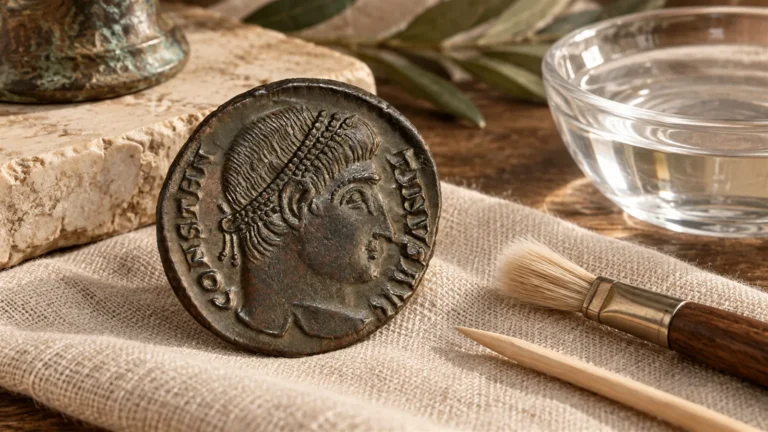
Gold is soft, so scratches and edge knocks are common. Coins that have been mounted in jewellery may show traces of solder or a loop, which lowers the value. Cleaned coins often have an unnatural shine and fine hairlines and are worth less than untouched examples. Read the description carefully and look at photos of both sides.
Ancient and medieval gold is judged a little differently. Some uneven striking or a small flan crack is normal, and what matters most is usually a good portrait or design, legible legends and no damage.
How should you store gold coins?
Gold does not rust and normally does not tarnish, so there is no reason to clean it. For collectible coins this matters even more: even a soft cloth can leave scratches that reduce the value.
- Hold coins by the edge, with clean, dry hands or gloves.
- Use capsules or holders without PVC. Soft PVC plastic can release substances over time that damage the surface.
- Store your coins somewhere dry and secure, and keep descriptions and receipts.
Documentation is part of the value. A coin with known provenance, meaning a recorded history of earlier owners or auctions, is safer to buy and easier to sell on.
Is there VAT on gold coins?
That depends on the country you buy in and the country you import to. In Norway, the VAT Act exempts coins and banknotes sold as collectors’ items, and the Norwegian Tax Administration’s VAT handbook specifies that the coins must have been legal tender. Commemorative pieces that never were legal tender fall outside the exemption, while coins that are legal tender today fall under the exemption for financial services. The handbook does not deal specifically with bullion coins, so if you are unsure about a specific purchase, ask the Norwegian Tax Administration (Skatteetaten). Outside Norway, check your own country’s rules on VAT and import duties.
Where do you start when you buy gold coins as a collector?
Many collectors begin with a region or period that interests them: medieval Europe, the British Empire or the Islamic world, for example. Small gold coins such as quarter guineas, ducats and dinars offer a direct link to history. Some examples at Denarius at the time of writing:
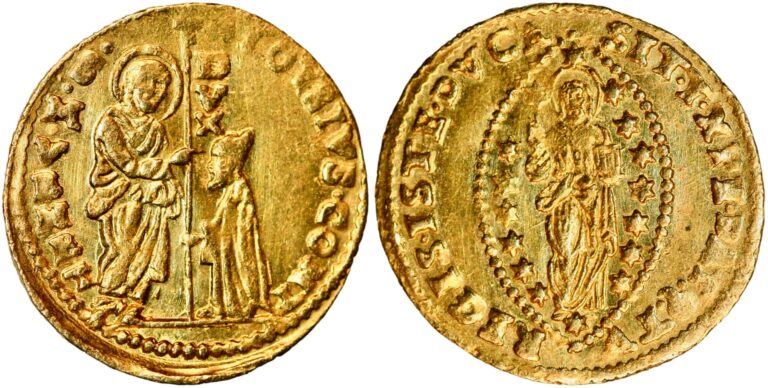
- Italy, zecchino of 1659–1674, struck in Venice under Doge Domenico Contarini, 3.48 g, Extremely Fine: NOK 9,750 (protocol no. 5746).
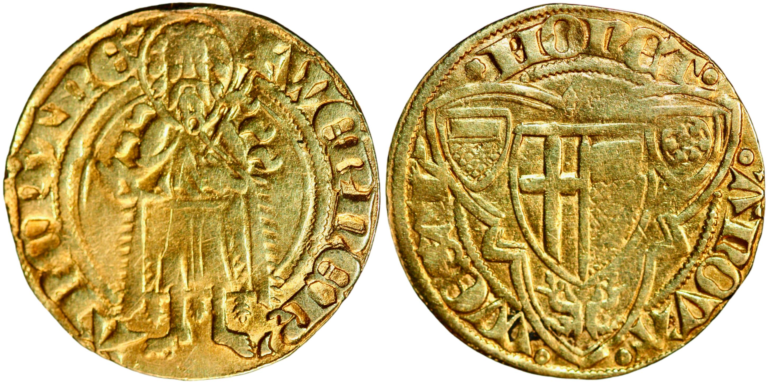
- Germany, goldgulden of 1410–1414, struck for the Archbishop of Trier, 3.43 g, Very Fine: NOK 11,000 (protocol no. 5956).
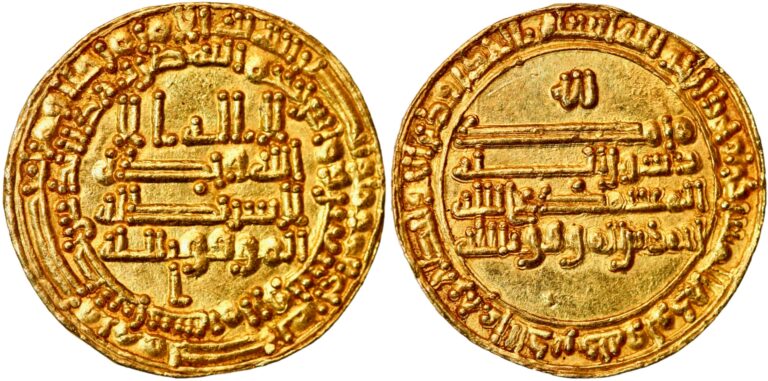
- Dinar of Caliph al-Mu’tamid (891/2 AD), struck in San‘a under the Abbasid Caliphate, 2.91 g, Extremely Fine: NOK 11,000 (protocol no. 5749).
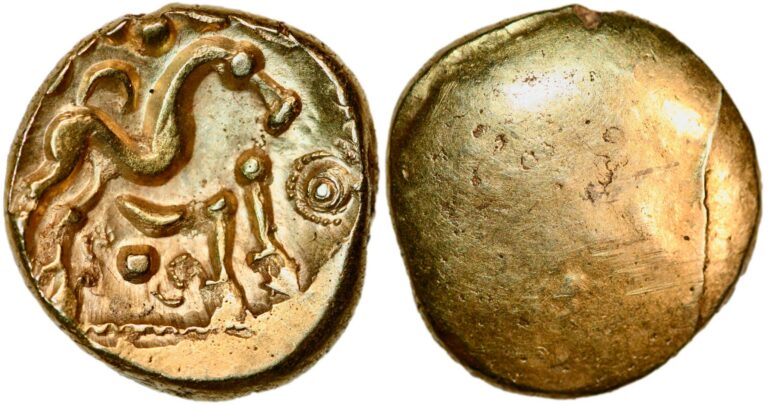
- Stater of the Ambiani in Gallia Belgica (ca. 100–50 BC), a Celtic gold coin of 5.76 g, Extremely Fine: NOK 14,000 (protocol no. 6254).
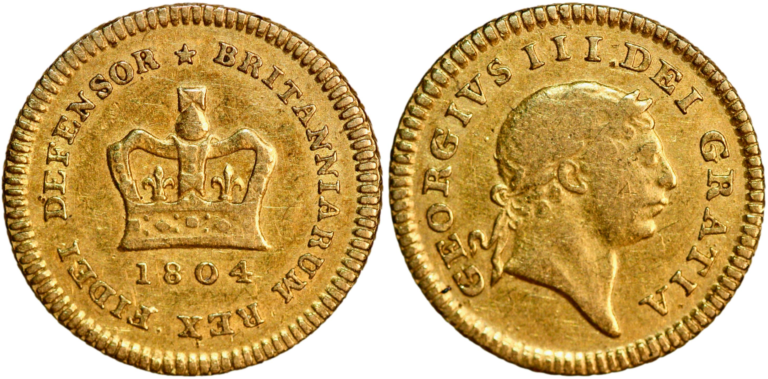
- Great Britain, third guinea of 1804, struck under George III, 2.87 g, Very Fine: NOK 7,500 (protocol no. 5967).
Prices may change, and most objects exist in a single example. If you have questions about a coin, write to kundeservice@denarius.no. We ship worldwide.
Frequently asked questions
What is the difference between a bullion coin and a collectible gold coin?
A bullion coin is struck in large numbers and priced on its gold content. A collectible gold coin also has numismatic value that comes from age, rarity, history and condition. For historic gold coins, collector value usually accounts for most of the price.
How do I work out the gold value of a coin?
Multiply the weight by the fineness to find the grams of pure gold, then multiply by today’s gold price per gram. A sovereign of 7.98 g in 22 carat gold (916.7/1000), for example, contains about 7.32 g of pure gold. The melt value is a floor, not necessarily the price.
How can I tell if a gold coin is genuine?
Check weight and diameter against published figures, and compare style, date and mint mark with secure examples in catalogues. No single test is conclusive, so for more expensive coins it is safest to buy from a seller who guarantees authenticity and describes each coin in detail.
Are gold coins a good investment?
We cannot answer that, and this article is not financial advice. Both gold prices and collector prices can go up and down. We suggest buying gold coins because you enjoy them as historical objects, not because you expect a return.
Should I clean old gold coins?
No. Gold does not rust and normally does not tarnish, and cleaning leaves hairlines and an unnatural shine that lower collector value. Keep the coin dry in a PVC-free capsule or holder and handle it by the edge.
Where can I buy historic gold coins with a guarantee?
Buy from a dealer who describes each coin in detail and guarantees authenticity in writing. At Denarius every coin is examined, photographed and given its own protocol number, and we guarantee that everything we sell is genuine and as described.
Browse all gold coins currently in stock, or go straight to gold coins from the Middle East. Every object is examined, photographed and described with its own protocol number.