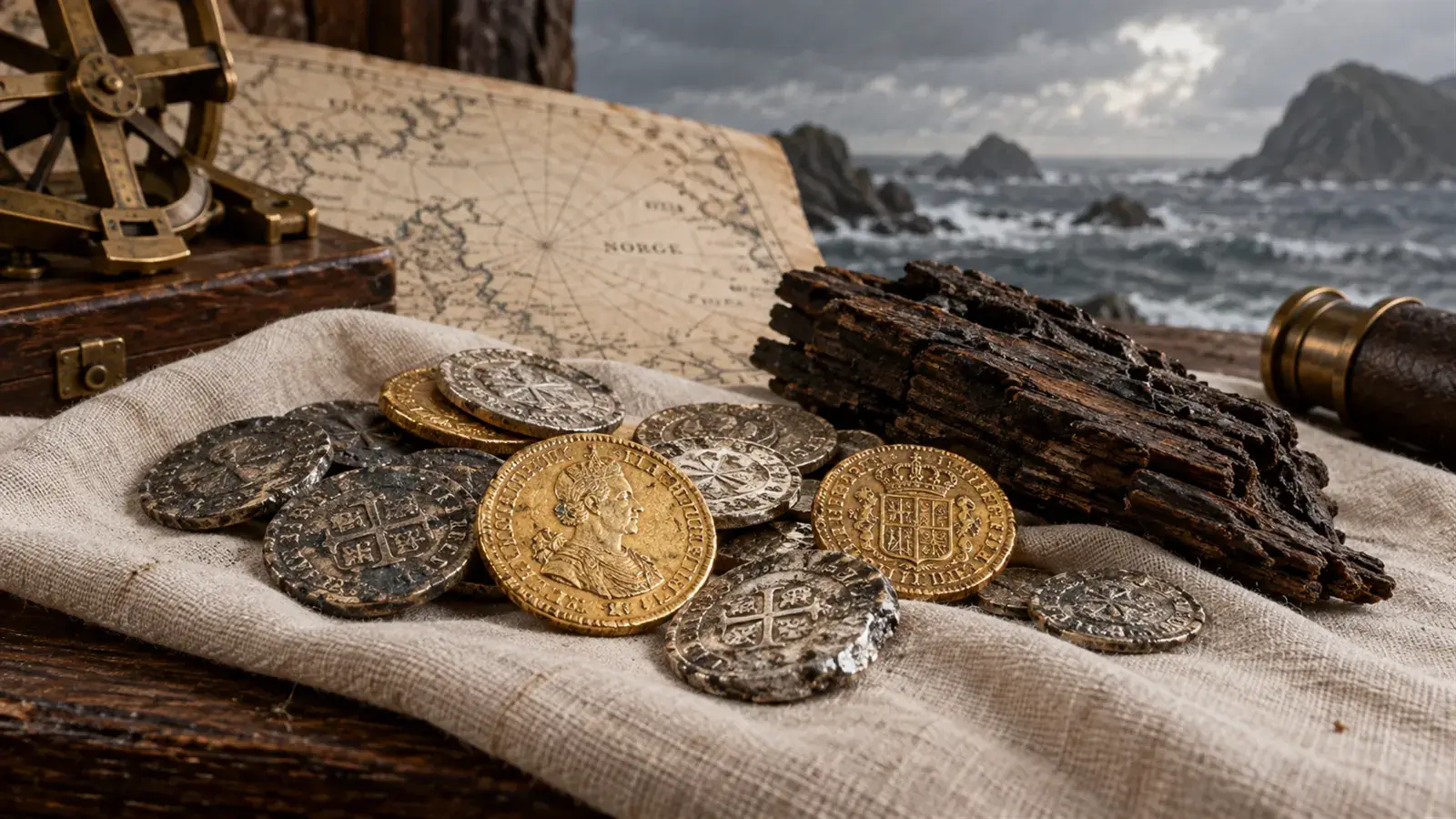
The Runde treasure is one of the most remarkable coin finds ever made in Norway: gold and silver coins from the Dutch East Indiaman Akerendam, which sank off the island of Runde near Ålesund in 1725. In 2017, Denarius devoted its first online auction to a fine collection of coins from this nearly 300-year-old treasure – coins with a fascinating history and an impeccable provenance.
Contents
The Akerendam and her last voyage
The Akerendam belonged to the Dutch East India Company (VOC) and was built in 1724. In January 1725 she left Texel in the Netherlands bound for Batavia, today’s Jakarta, carrying 19 chests of money for the company’s trade in Asia. A storm in the North Sea drove her off course. Instead of reaching the East Indies, she ended up on the seabed off Runde in Sunnmøre, on the night of 7–8 March 1725.
Five of the 19 money chests were salvaged shortly after the wreck. The finding of the treasure was not pure luck either: the maritime declaration from 1726 described where the ship had gone down the year before. Even so, it took nearly 250 years before anyone could identify the site with certainty.
Finding the Runde treasure in 1972
In July 1972, the sport divers Bengt-Olof Gustafsson, Stefan Persson and Eystein Krohn-Dale found the treasure on the seabed off Runde. Over three weeks, under police protection, they brought up almost half a tonne of coins, and a new survey by the Bergen Maritime Museum the following year recovered roughly 135 kg more.
The figures vary between sources. The treasure has been described as 1,200 gold ducats and 16,500 silver coins, while later counts put the total at close to 57,000 coins, of which some 6,600 were gold. In all, about 400 coin types were identified, 15 of them previously unknown. The find is often described as Norway’s largest coin find, and in 1972 its value was estimated at 30–40 million kroner.
How the treasure was divided
The finders received roughly two-thirds of the Runde treasure (sources give 67.6 % or 67.7 %), the Norwegian state 25.4 % and the Dutch state 7 %. The Norwegian share was divided between the Coin Cabinet at the Museum of Cultural History in Oslo and the Bergen Maritime Museum. The Bergen coins were later transferred to the Runde Environmental Centre, close to where the Akerendam went down.
A large part of the finders’ share went to auction in Zurich, Switzerland. In 1979, the Norwegian coin dealer Jan Olav Aamlid bought about 6,000 of the gold and silver coins there – the price is usually given as 882,000 Swiss francs – bringing them back to Norway and the Norwegian collector market. At the time, this was regarded as a very large transaction on the international numismatic market. You can read more about the ship and the salvage on the University of Oslo’s Coin Cabinet pages.
Gold ducats and Dutch trade coins
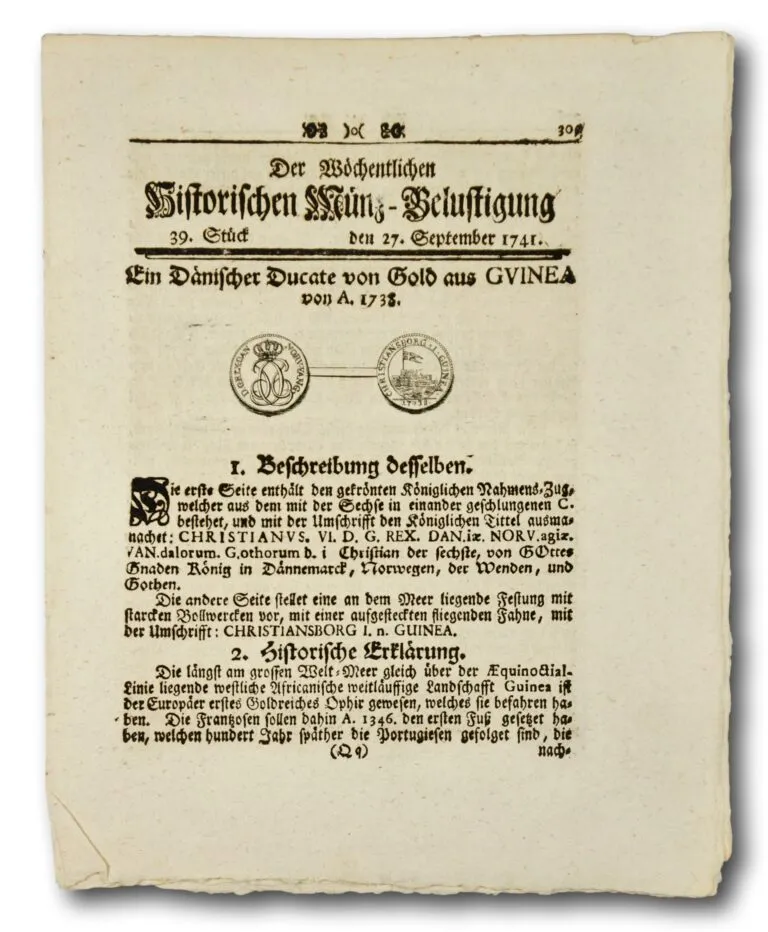
The gold ducats from the Akerendam were freshly struck trade coins, made for the Dutch East India Company’s business in Asia. Ducats were the international gold currency of the age, and Denmark-Norway struck them too – read about one example in the Article on a Danish Guinea Ducat (1741).
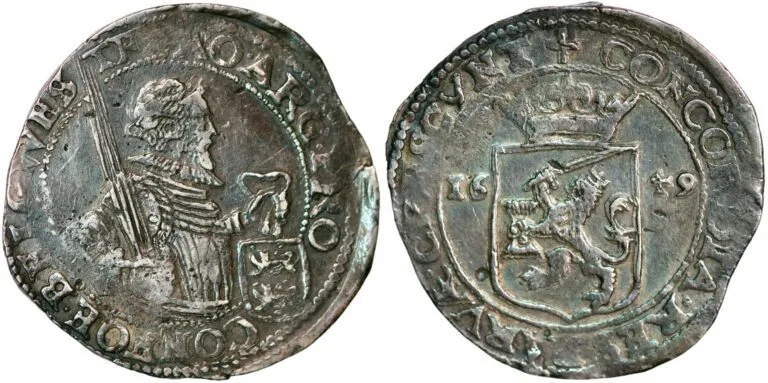
If you would like a piece of the same monetary world, browse our gold coins and our coins from the Netherlands and Benelux. Dutch silver from the 1600s, such as this Netherlands, 1/2 rijksdaalder 1649, shows the kind of coinage that made the Dutch Republic a trading power. Every object at Denarius is examined, photographed, described and given its own protocol number.