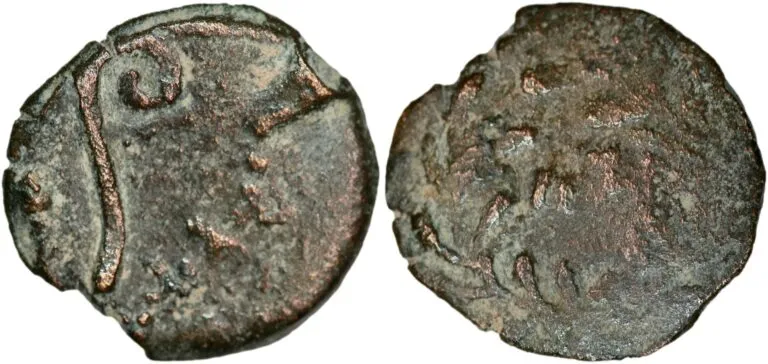
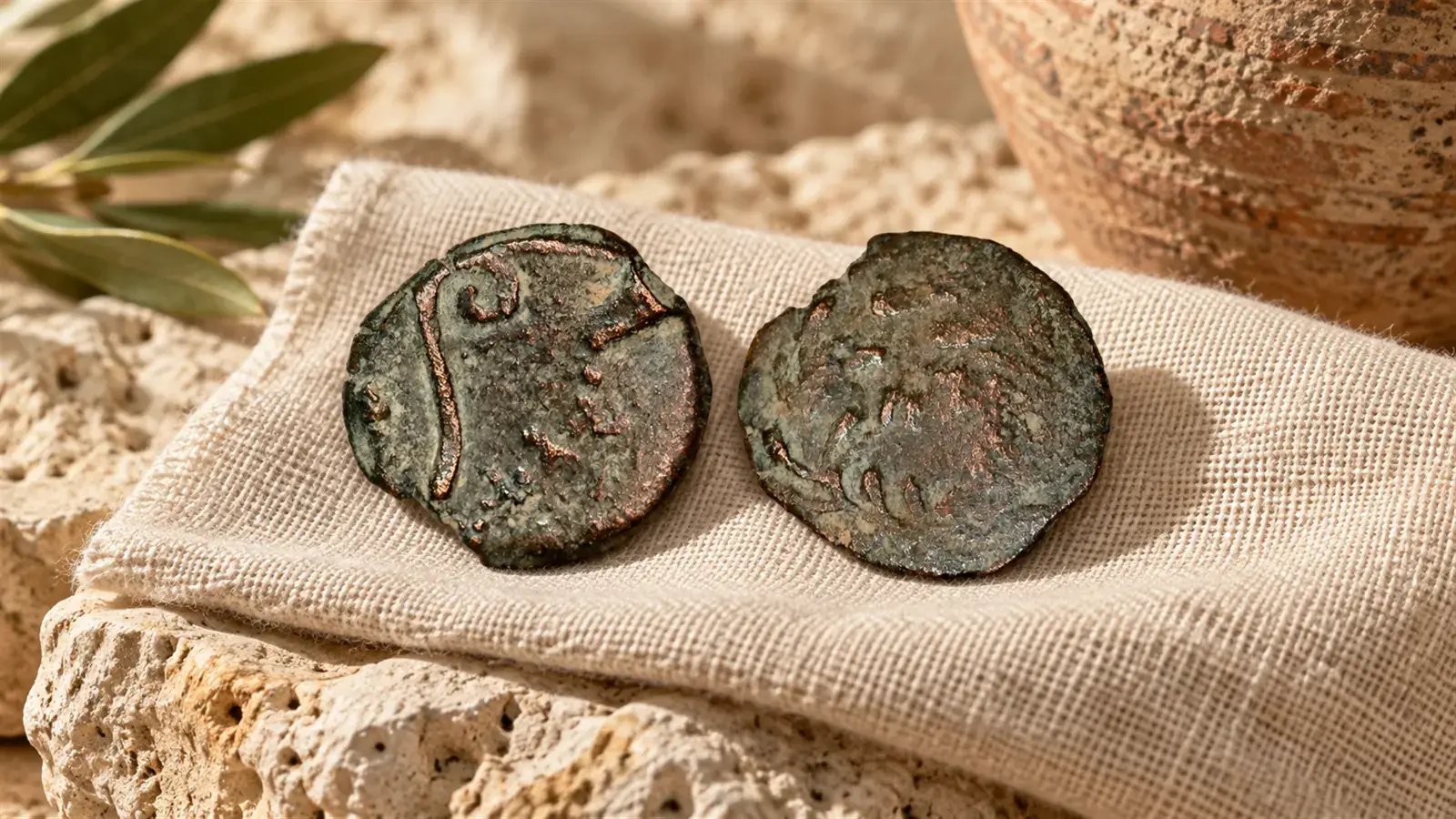
The widow’s mite is the small bronze coin, or rather the two coins, that a poor widow gave to the Temple treasury in Jerusalem in Mark 12:41–44 and Luke 21:1–4. The Greek text calls them lepta, the smallest money in circulation in Judaea. Today the term “widow’s mite coin” is used above all for the little anchor-and-star bronzes of the Hasmonean king Alexander Jannaeus (103–76 BC), which were still in everyday use in the time of Jesus.
In short:
- The story is told in Mark 12:41–44 and Luke 21:1–4. Mark adds that two lepta made one quadrans, the smallest Roman coin.
- A lepton was the lowest denomination in Judaea, usually understood as half a prutah.
- The Bible does not say which coin the widow gave. By tradition, the anchor-and-star bronzes of Alexander Jannaeus are the classic widow’s mite.
- They are tiny: roughly 12–16 mm for a prutah, and many of the smaller pieces weigh well under one gram.
- Most worn examples are inexpensive. Clear, well-centred coins cost noticeably more.
Contents
What does the Bible say about the widow’s mite?
In Mark’s Gospel, Jesus sits opposite the treasury in the Temple and watches people put in their money. Many rich people give large sums. Then a poor widow comes and puts in two lepta. Jesus calls his disciples over and tells them that she has given more than everyone else, because they gave out of their surplus, while she gave everything she had to live on.
Luke tells the same scene more briefly, also with two lepta. Only Mark explains the value for his readers: two lepta make a kodrantes, the Greek form of the Roman quadrans.
The English word “mite” comes from the older Bible translations. A mite was a small copper coin of the Low Countries in later centuries, so the word was simply the translators’ name for the smallest change they knew.
What was a lepton, and how does it relate to the prutah?
Lepton means “small” or “thin” in Greek. In Judaea the basic small bronze coin was the prutah (plural prutot), and the lepton is generally understood as half a prutah: about the same diameter, but thinner and lighter.
Mark’s comparison lets us put a figure on it. In the Roman system a quadrans was a quarter of an as, and an as was a sixteenth of a denarius. Two lepta to the quadrans means 128 lepta to a denarius. In the parable of the workers in the vineyard (Matthew 20:2), a denarius is a day’s wage. The widow’s two coins were, in other words, a tiny fraction of one day’s pay, yet they were all she had.
Which coins are considered widow’s mite coins?
The Gospels name the denomination, not the ruler who struck it. Several kinds of small bronze circulated in Jerusalem in the first century AD, and the widow could have given any of them.
David Hendin, author of the standard Guide to Biblical Coins and adjunct curator at the American Numismatic Society, has pointed out that the traditional identification rests more on custom than on evidence. It probably goes back to pilgrims in the mid-1800s who found these coins in the markets of Jerusalem and took them home. In his view, any prutah or half-prutah of the Hasmoneans, of Herod I and his son Archelaus, or of the Roman prefects up to the death of Jesus could qualify.
The grading service NGC follows a similar line and uses the “Widow’s Mite” label for small Hasmonean bronzes struck between 135 and 37 BC, from John Hyrcanus I to Mattathias Antigonus.
Alexander Jannaeus and the anchor-and-star coins
Alexander Jannaeus ruled Judaea as king and high priest from about 103 to 76 BC. His bronze coins are the most abundant Jewish coins found at sites from the Hasmonean period, which is one reason they became the classic widow’s mite.
The typical type shows an anchor with the Greek legend “of King Alexander” on one side, and on the other a star with eight rays, often inside a diadem, with a Paleo-Hebrew legend for “Yehonatan the King” between the rays. Another group carries a date, year 25 of his reign (around 79 BC), and an Aramaic legend naming King Alexander.
A study of coins excavated at Khirbet el-Maqatir by Yoav Farhi and Kevin Larsen (2021) shows how much these coins vary. The main issue weighs about 1.3 g on average. Later, cruder groups are much smaller, down to a few tenths of a gram, with the name and date removed and sometimes only a part of the star visible. The authors argue that these small pieces were struck after Jannaeus died, around the middle of the first century BC, and circulated as half-prutot until about AD 70. If they are right, these are exactly the kind of coins that were in people’s purses in the Temple in Jesus’ time.
Other candidates, including Pontius Pilate
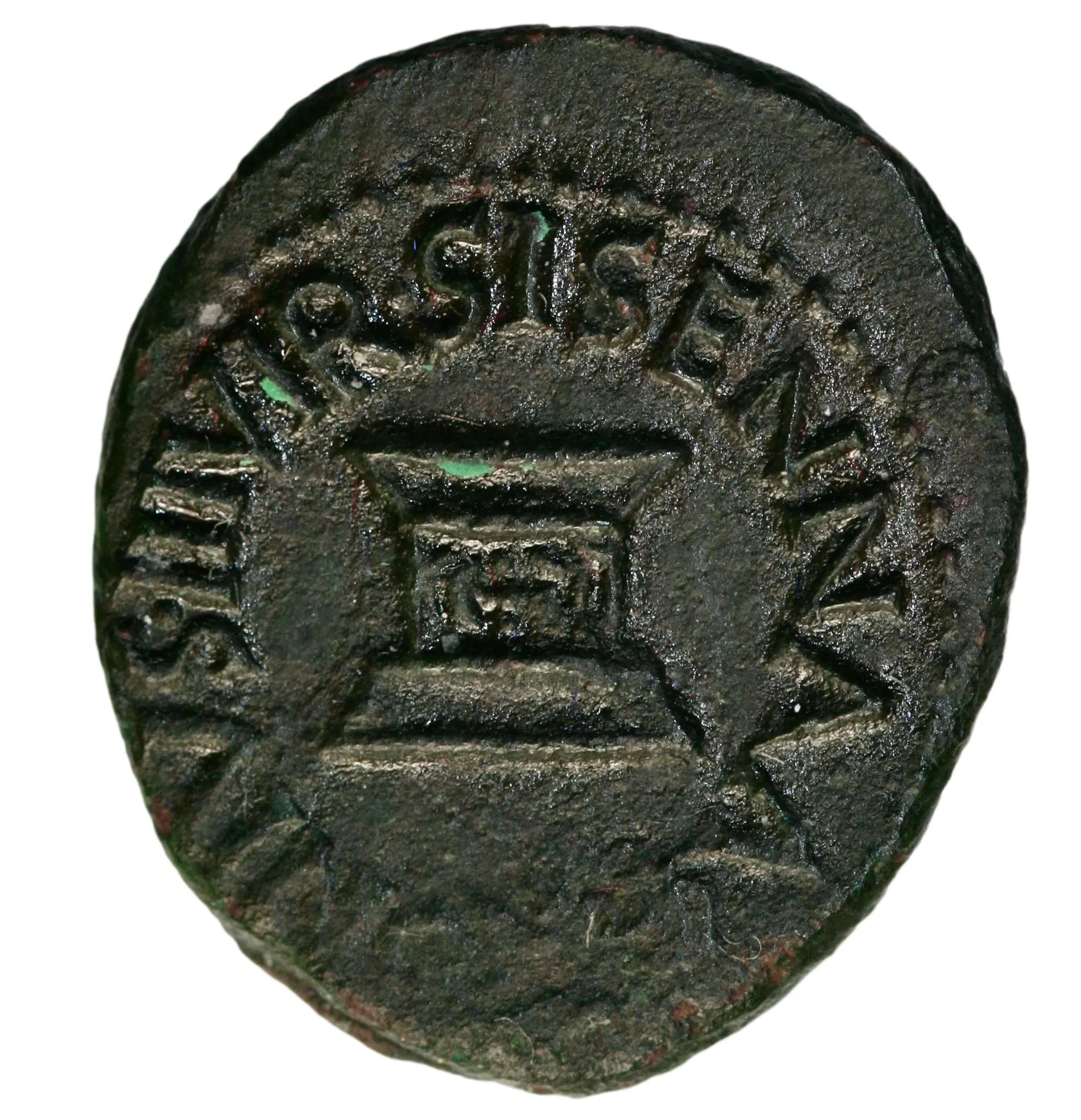
Coins of the Roman prefects of Judaea are also possible candidates, among them those of Coponius, Valerius Gratus and Pontius Pilate. Pilate’s coins are particularly popular because he is the governor who, in the Gospels, sentences Jesus. At Denarius, a prutah of Pontius Pilate from AD 31 (1.83 g, Very Fine) costs NOK 1,950 at the time of writing (protocol no. 6042).
How big is a widow’s mite coin, and what does it look like?
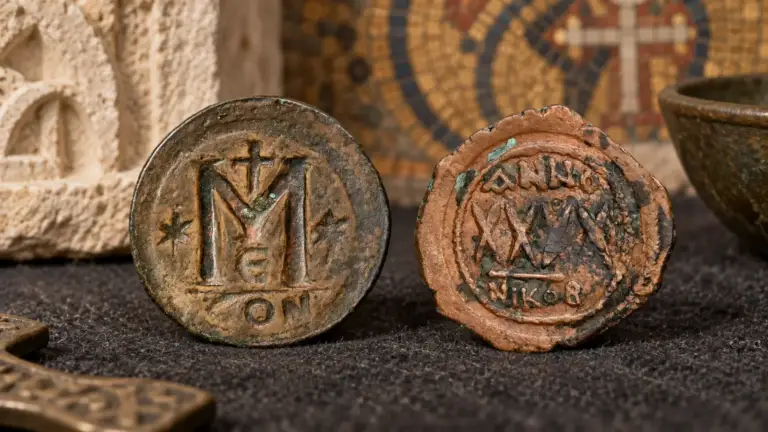
Smaller than most people expect. A full prutah of Alexander Jannaeus is roughly 12–16 mm across, about the size of a fingernail, and weighs a little over a gram. The smaller pieces can weigh from about 0.3 to 0.9 g, and the very smallest are only 5–6 mm.
The coins were made quickly and in large numbers. Expect flans that are irregular in shape, designs that are off-centre, and legends that are partly or completely missing. Often the anchor is clear and only part of the star is visible, or the other way round. That is normal for the type and not in itself a fault.
How do collectors judge a widow’s mite coin?
Because the coins are so common, collectors pay for clarity. These are the points that matter most:
- Legibility of both sides. A clearly visible anchor and a star with most of its rays is worth far more than a dark disc with faint traces.
- Letters and date. Any readable letters of the Greek or Hebrew legend, or the date on the dated type, make a coin more interesting and easier to attribute.
- Centring and flan. A reasonably round flan with the design in the middle is the exception, and is priced accordingly.
- Surface. A stable, even patina is preferred. Harsh cleaning and active corrosion lower the value.
- Attribution. Serious descriptions refer to Hendin’s catalogue numbers or to Meshorer’s A Treasury of Jewish Coins.
- Authenticity. Buy from a seller who guarantees that the coin is genuine. At Denarius every object is examined, photographed and described, and given its own protocol number.
How much is a widow’s mite coin worth?
For an ancient coin with such a famous story, the widow’s mite is affordable. The price depends almost entirely on condition and legibility. Indicative levels as of October 2026:
| Coin | Condition | Indicative price |
|---|---|---|
| Alexander Jannaeus, anchor/star, typical worn example | Fine or lower (1 / 1-) | up to around USD 50 |
| Alexander Jannaeus, anchor/star, clear and well preserved | Very Fine or better (1+ / 01) | up to around USD 350 |
| Pontius Pilate, prutah AD 31 (Denarius, no. 6042) | Very Fine (1+) | NOK 1,950 |
The first two lines are based on published price guidance from CoinWeek. Certified coins in a grading holder usually cost a little more than uncertified ones in the same condition.
Which other coins connect to the Gospel story?
The widow’s mite is a good starting point for a small collection around the New Testament world. A few examples currently in stock at Denarius:
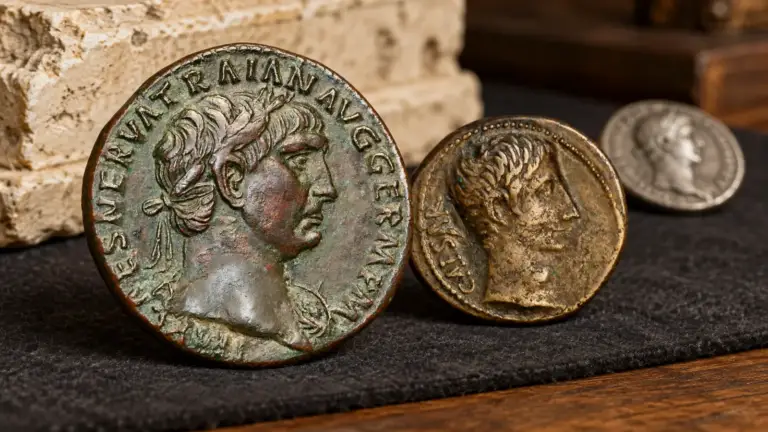
- The coin Mark uses to explain the value: a quadrans of Emperor Augustus from 5 BC, struck in Rome, NOK 1,500 (protocol no. 3862).
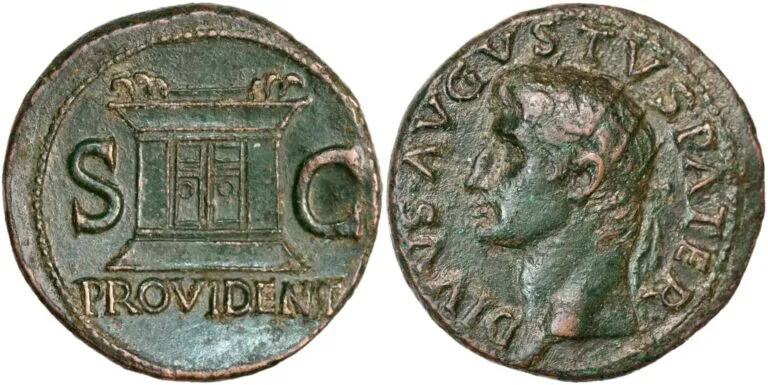
- Tiberius was emperor when Jesus taught (Luke 3:1 dates John the Baptist’s ministry to the fifteenth year of Tiberius): an as of Tiberius, ca. AD 22–30, ex Jacques Schulman, NOK 9,000 (protocol no. 5883).
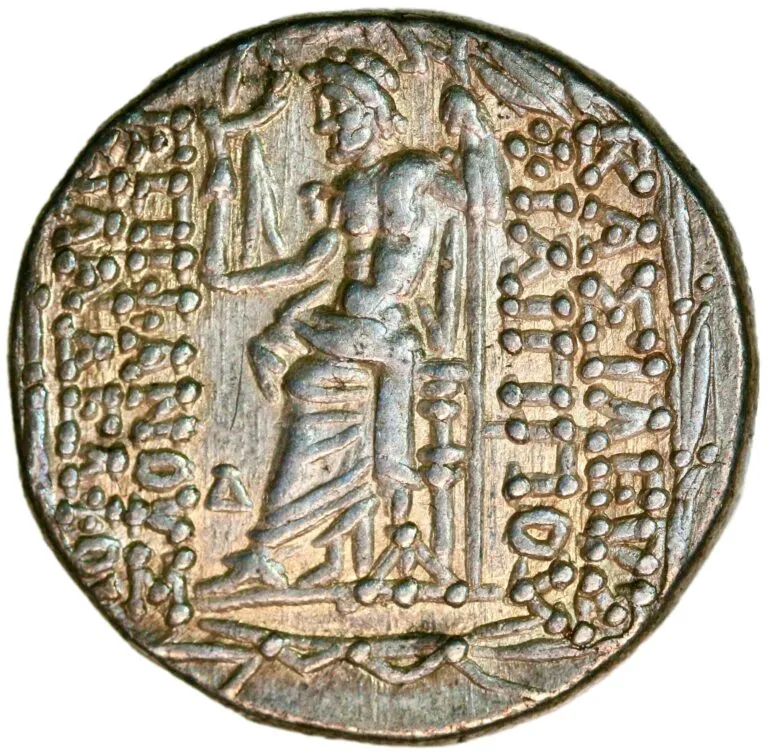
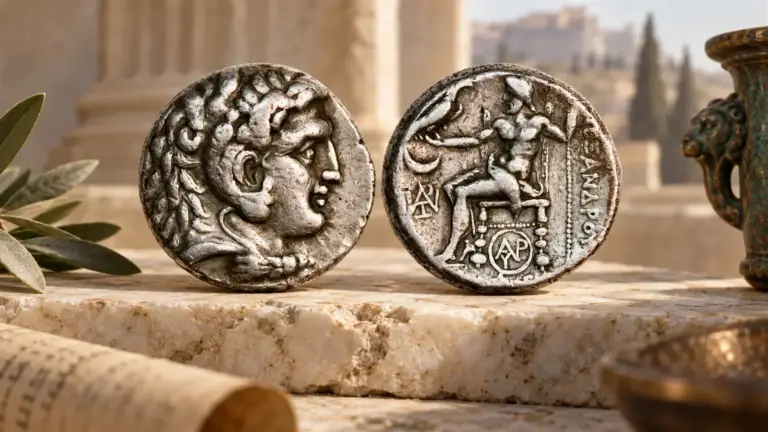
- From Jannaeus’ powerful neighbour: a Seleucid silver tetradrachm of Philip I Philadelphos, 95/4–76/5 BC, NOK 4,250 (protocol no. 4519).
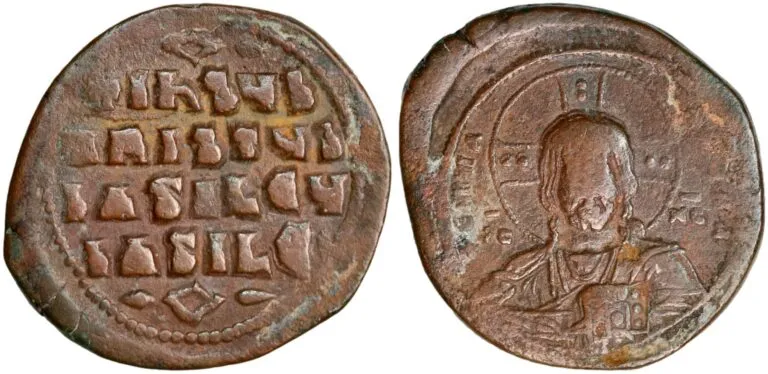
- Centuries later, Byzantine emperors replaced their own portrait with the bust of Christ on the anonymous folles: an anonymous follis from 976–1028, NOK 1,150 (protocol no. 6051).
Prices are those at the time of writing and may change. For more late Roman and Byzantine bronzes, see Byzantine coins and Roman coins 27 BC – 220 AD.
Frequently asked questions
What is the widow’s mite coin?
The widow’s mite is the small coin a poor widow gave to the Temple in Jerusalem in Mark 12:41–44 and Luke 21:1–4. The Greek text calls it a lepton, the smallest denomination in Judaea. Collectors today mainly use the name for the anchor-and-star bronzes of Alexander Jannaeus (103–76 BC).
Where in the Bible is the widow’s mite?
The story appears in Mark 12:41–44 and Luke 21:1–4. In both, the widow puts two lepta into the Temple treasury, and Jesus says she has given more than all the others. Mark adds that two lepta make one quadrans.
Is the widow’s mite a lepton or a prutah?
The Gospels use the word lepton, which is usually understood as half a prutah. In practice the coins sold as widow’s mites include both full prutot and smaller, lighter pieces, because the Bible does not specify which coin was meant.
How much is a widow’s mite coin worth?
Most worn examples sell for up to around USD 50, while clear, well-preserved coins can reach around USD 350, according to published price guidance. Legibility of the anchor, the star and the legends matters most.
How big is a widow’s mite?
A full prutah of Alexander Jannaeus is roughly 12–16 mm across and weighs a little over a gram. The smaller pieces often weigh well under a gram, and the smallest are only 5–6 mm across.
How do I know a widow’s mite is genuine?
Buy from a dealer who guarantees authenticity and describes the coin with weight and a catalogue reference such as Hendin. Comparing the coin with published examples in auction archives and reference books is also a good habit.
Would you like to own a coin from the world of the Gospels? See our biblical coins, where every object has been examined, described and given its own protocol number, and is guaranteed genuine.