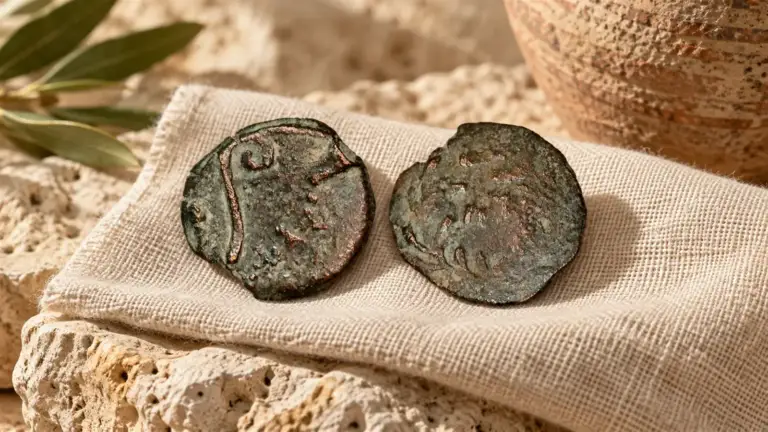
The names of Roman coins changed with the metal and the century: the as, sestertius, denarius and aureus came first, followed by the antoninianus, nummus, maiorina and solidus. Under Augustus the system was simple: 1 gold aureus = 25 silver denarii = 100 brass sestertii = 400 copper asses.
This guide walks through the names of Roman coins from the first bronze pieces to the gold solidus that outlived the Western Empire, with examples of each from the Denarius stock.
In short:
- The oldest Roman denomination is the bronze as. The silver denarius arrived around 211 BC, worth 10 asses and later 16.
- The Augustan system lasted more than two centuries: 1 aureus = 25 denarii = 100 sestertii = 400 asses.
- Caracalla introduced the antoninianus in AD 215. It was nominally worth two denarii, but its silver later fell to about 2 percent.
- Constantine the Great made the gold solidus the standard coin. Struck at 72 to the Roman pound, it lasted for some seven centuries.
- Several names of Roman coins used in catalogues, such as antoninianus and follis, are modern. We do not always know what the Romans called them.
Contents
What were the names of Roman coins? An overview
The table lists the main names of Roman coins with their metal and value. Many denominations kept their name while their content changed, so the values apply to the period shown.
| Name | Metal | Period | Value |
|---|---|---|---|
| As | Bronze, later copper | Republic to 3rd century AD | Basic unit: 1/16 denarius after c. 141 BC |
| Quadrans and semis | Bronze/copper | Republic and early Empire | 1/4 and 1/2 as |
| Dupondius | Brass (orichalcum) | From Augustus | 2 asses |
| Sestertius | Silver, brass from c. 23 BC | c. 211 BC to Aurelian (270–275) | 1/4 denarius (2½ asses, later 4) |
| Quinarius | Silver | Republic and Empire | 1/2 denarius |
| Denarius | Silver | c. 211 BC to 3rd century AD | 10 asses, later 16 |
| Aureus | Gold | Late Republic to Constantine | 25 denarii |
| Antoninianus | Silver, later billon | From AD 215 | Nominally 2 denarii |
| Nummus (follis) | Bronze with a little silver | From Diocletian’s reform in the 290s | Changed often |
| Maiorina | Bronze with a little silver | From AD 348 | Uncertain |
| Solidus | Gold | Constantine to 1092 | 24 siliquae |
The Republic: as, sestertius and the first denarius
The first Roman coins were heavy bronze pieces, and the basic unit was the as. For a long time the value of every other coin was reckoned in asses, and most later names of Roman coins were defined in relation to it. An as could be divided into 12 unciae, and smaller pieces such as the semis (half) and quadrans (quarter) followed the same scheme. Rome adopted proper coinage around 300 BC and expanded it during the Second Punic War.
Around 211 BC came the denarius, a silver coin of about 4.5 grams worth 10 asses. Its name means “containing ten”. At the same time came the sestertius, a small silver coin worth 2½ asses, from semis tertius, “half the third”. Later the denarius was retariffed at 16 asses, and the sestertius remained a quarter of it.
Read more about Rome’s main silver coin in What is a denarius worth?
The Augustan system: names of Roman coins and their values
Around 23 BC Augustus reformed the coinage. The sestertius became a large brass coin, typically 25–28 grams and 32–34 mm across. The dupondius was also struck in brass, which the Romans called orichalcum, while the as and quadrans were made of copper.
The arithmetic was easy: 1 aureus = 25 denarii = 100 sestertii = 200 dupondii = 400 asses = 1,600 quadrantes. A legionary under Augustus earned 225 denarii a year. Prices were usually quoted in sestertii, which is why the sestertius is among the most familiar names of Roman coins in Latin texts.
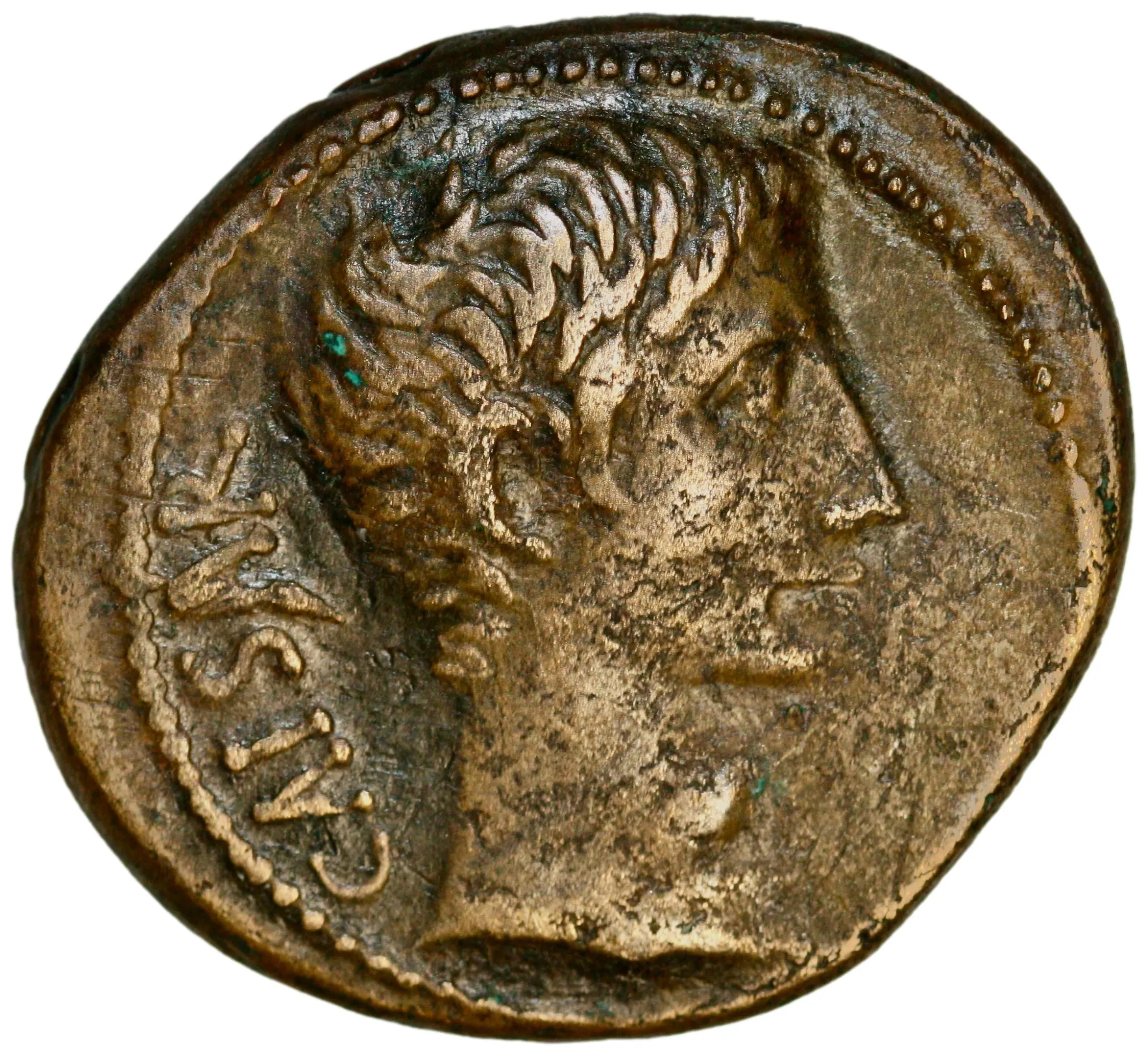
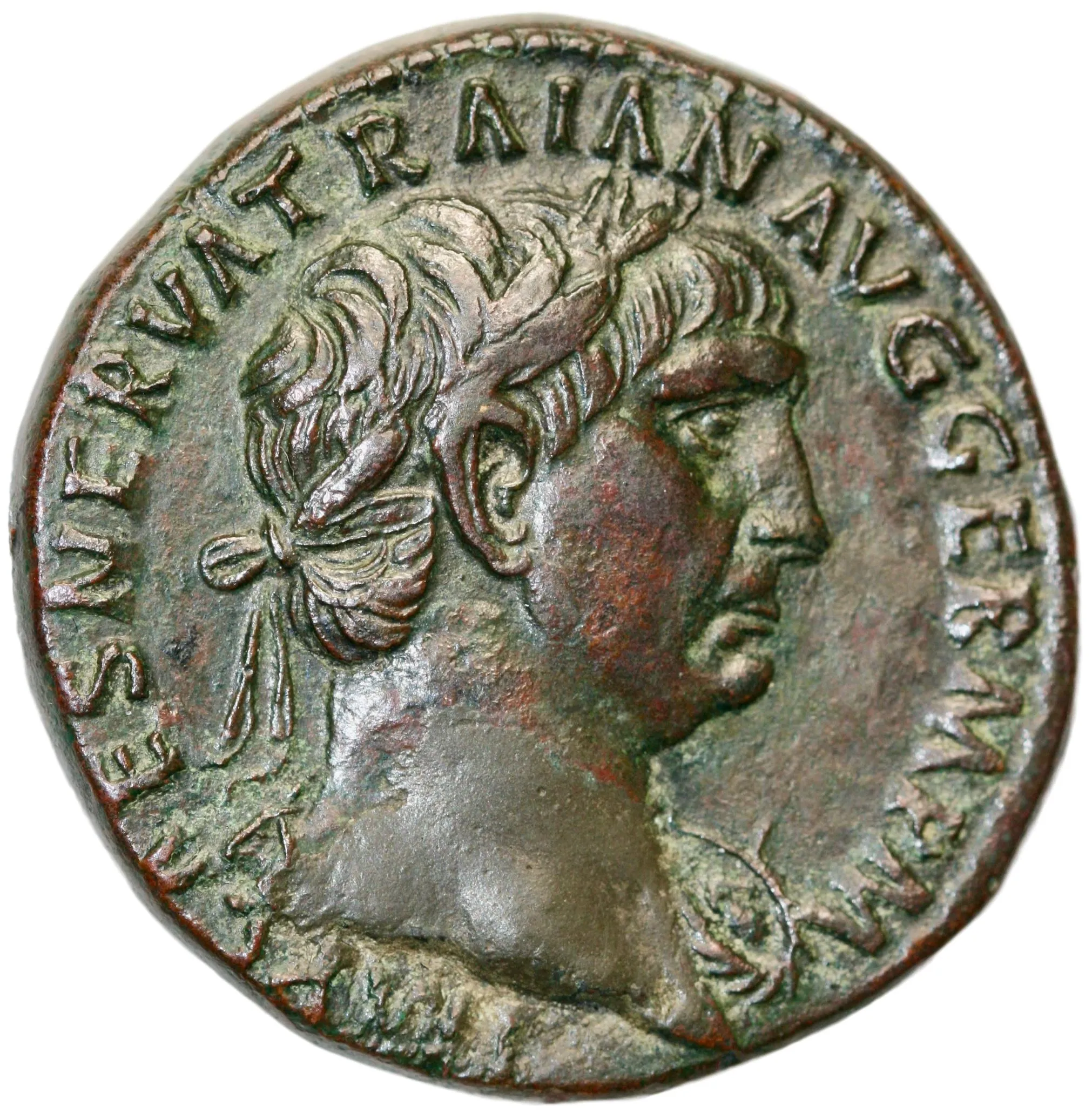
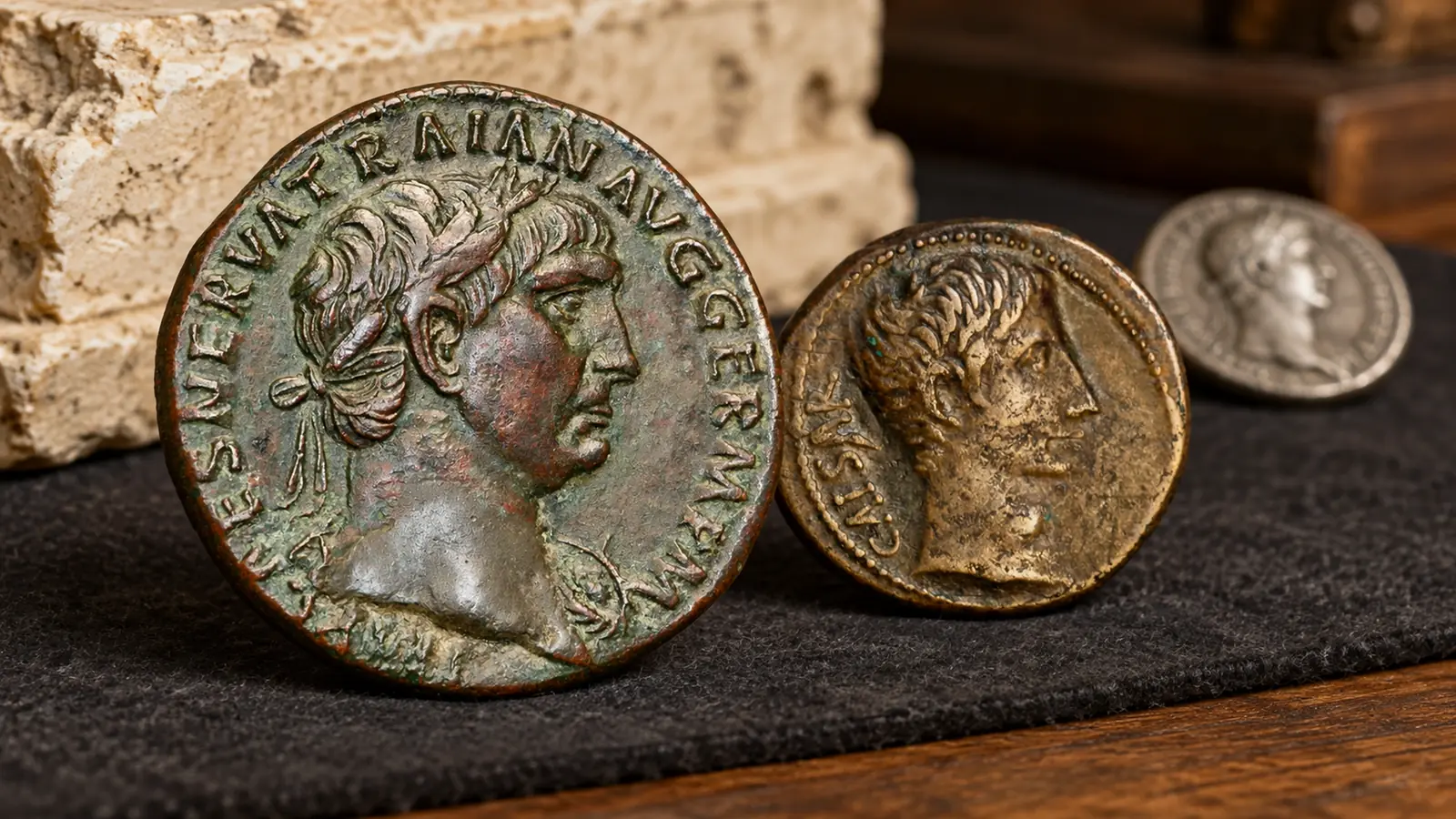
At the time of writing, a sestertius of Emperor Trajan (AD 100) costs NOK 9,000 at Denarius (protocol no. 3766). For the basic unit of the same era, a “CAISAR” as of Emperor Augustus (27 BC) costs NOK 4,500 (protocol no. 4069).
The antoninianus and the third-century crisis
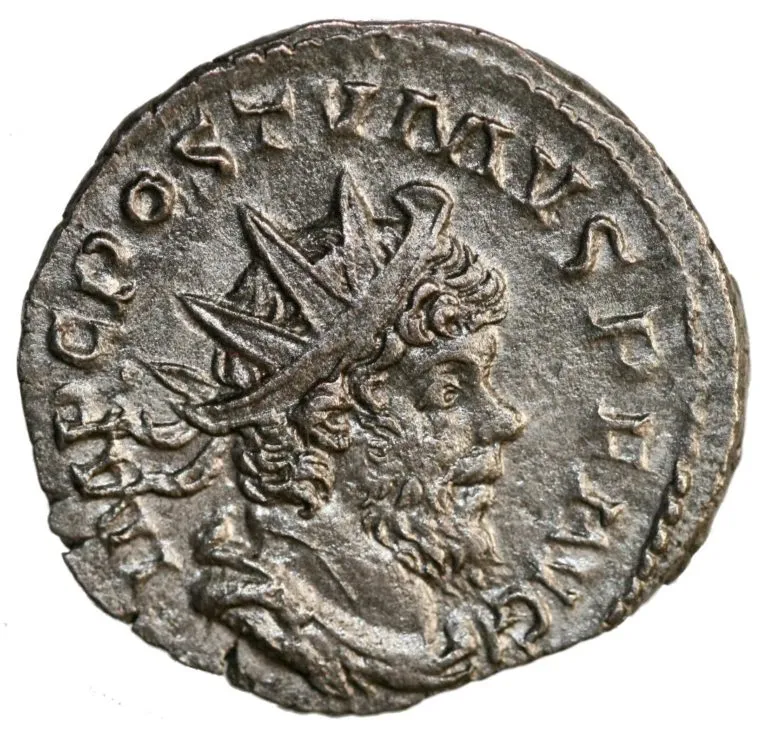
Early in AD 215 Caracalla introduced a new silver coin. Today it is called the antoninianus, after the emperor’s official name, Marcus Aurelius Antoninus, but its Roman name is unknown. This is typical: several names of Roman coins are modern labels. The emperor wears a radiate crown, which marked double value, and the coin was nominally worth two denarii, though it never held more than about 1.6 times a denarius’s silver.
During the crises of the mid-third century the silver was reduced, and by the end of the century only about 2 percent remained. The antoninianus pushed out the denarius, and some of the last sestertii were struck under Aurelian (270–275). Among the most interesting antoniniani are those of the Gallic Empire (260–274), where Postumus broke away and ruled as emperor in the west. At the time of writing, an antoninianus of Emperor Postumus (AD 265–268) costs NOK 800 at Denarius (protocol no. 2800).
Diocletian and Constantine: nummus and solidus
Diocletian reorganised the coinage in the 290s. He introduced a gold coin struck at 60 to the Roman pound, a silver coin now called the argenteus, and a large bronze coin with a little silver. Catalogues often call the bronze a follis, but the Romans probably called it a nummus. Two names of Roman coins for one piece is a common source of confusion. In 301 his Edict on Maximum Prices tried, with little success, to stop inflation.
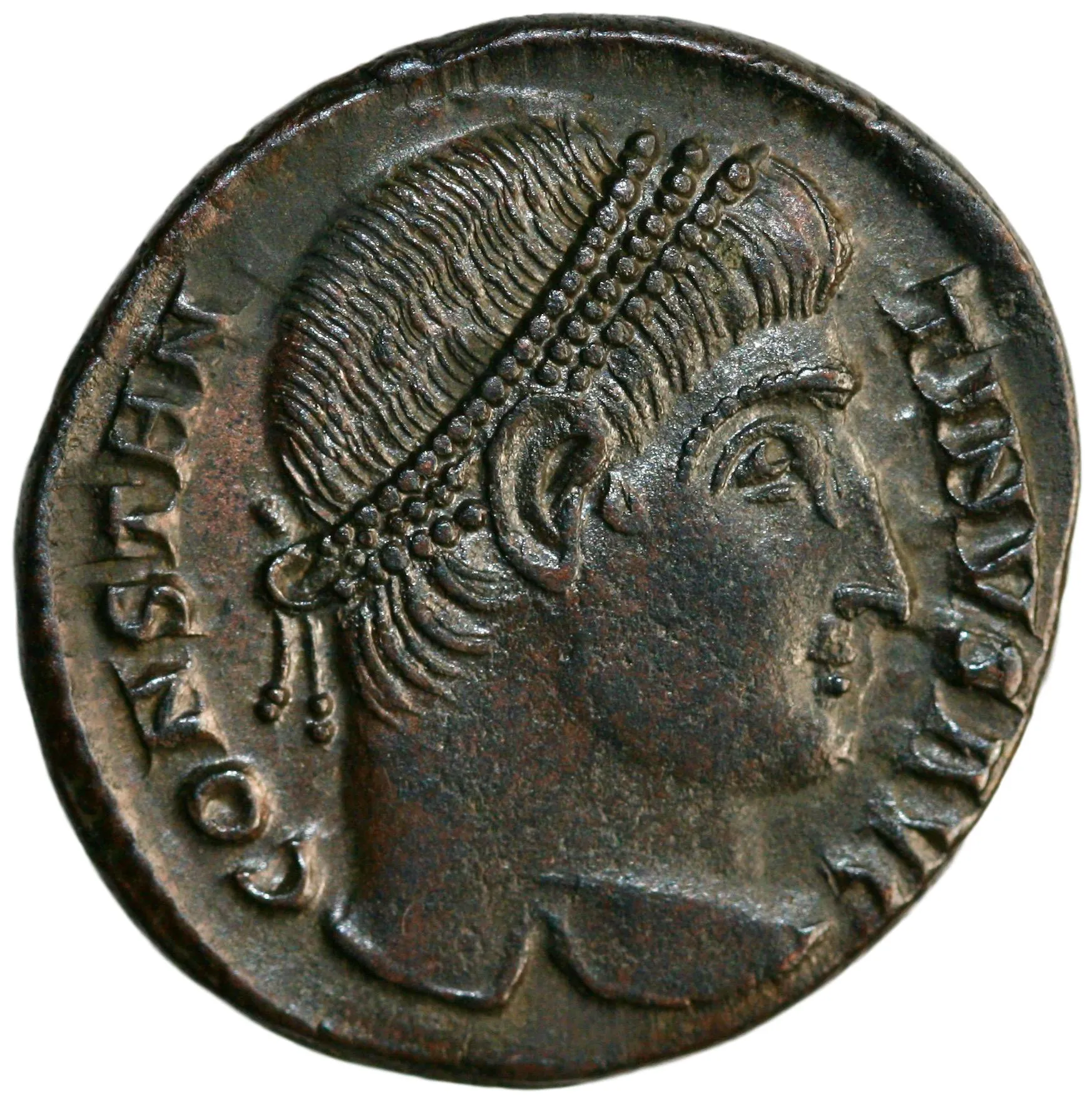
Under Constantine the nummus kept shrinking. At the time of writing, a nummus of Emperor Constantine I (AD 328–329) costs NOK 850 at Denarius (protocol no. 3716), struck just before Constantinople was dedicated as the new capital in 330.
Constantine’s lasting reform was the gold solidus (“solid”), which he put into mass circulation early in the fourth century. Struck at 72 to the Roman pound, about 4.5 grams, it kept its weight for some seven hundred years until Alexios I Komnenos replaced it in 1092. In late antiquity 1 solidus = 12 miliarenses = 24 siliquae.
The maiorina and other late Roman bronzes
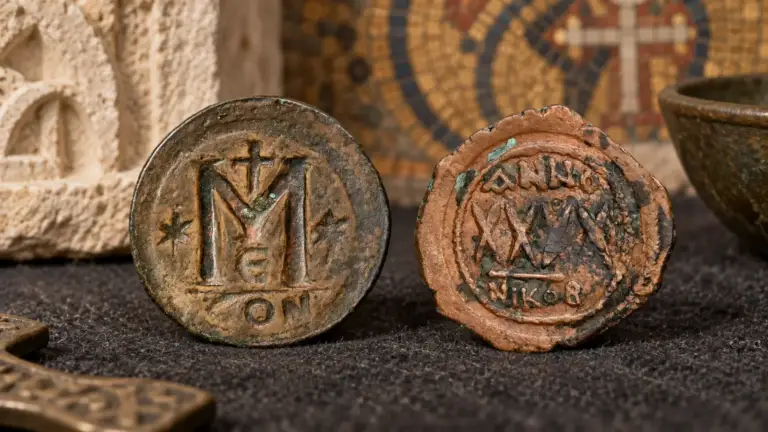
In 348 a new, larger bronze coin appeared, often with the legend FEL TEMP REPARATIO, “happy times restored”. It is known today as the maiorina, “the larger one”. A law of 356 mentions both maiorina and centenionalis, but it is unclear whether these were two denominations or two names for the same coin. Because the names of Roman coins from this period are so uncertain, many catalogues use neutral size labels instead: AE1, AE2, AE3 and AE4.
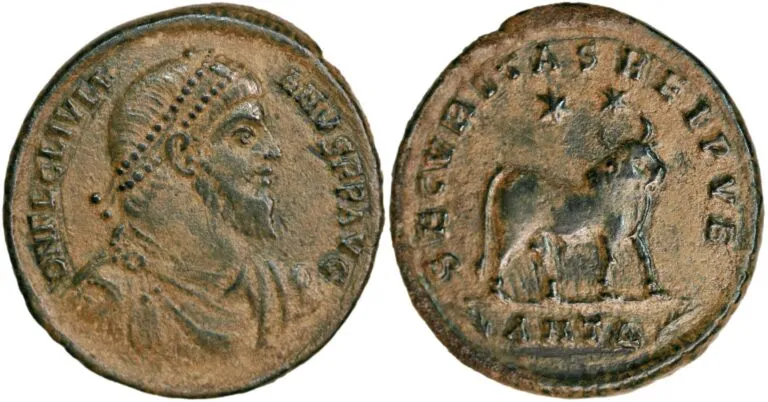
The largest bronze of the period was struck under Julian II (361–363), with a bull on the reverse and the legend SECVRITAS REIPVB. Catalogues often call it a double maiorina. At the time of writing, a double maiorina of Emperor Julian II (c. AD 361–363) costs NOK 2,900 at Denarius (protocol no. 6257).
Exagium solidi: the weight that checked the gold
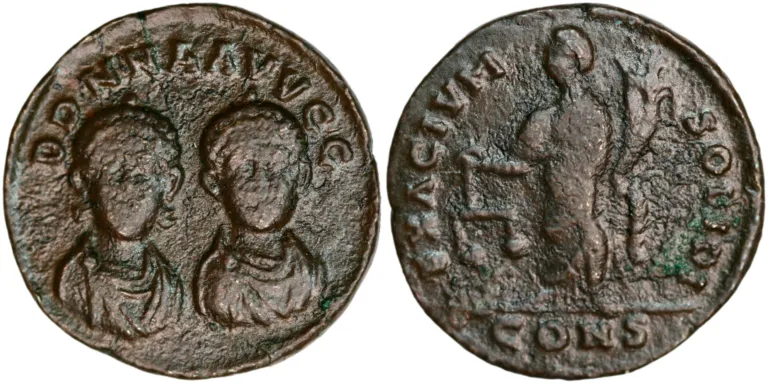
Gold coins were often clipped or filed. In 363 Emperor Julian therefore appointed official weighers of solidi in the cities. Bronze weights known as exagium solidi, “the weighing of the solidus”, were made to match a full-weight solidus of about 4.5 grams, so anyone could check that a gold coin was complete. At the time of writing, an exagium solidi (AD 408–423) costs NOK 11,000 at Denarius (protocol no. 5960).
Why catalogue names of Roman coins differ from Roman ones
Ancient sources rarely describe the coins in everyday use, so collectors rely on a mix of Roman names known from texts (as, denarius, aureus, solidus, siliqua) and modern names coined by numismatists (antoninianus, follis, double maiorina). When you compare listings, check weight, diameter and date as well as the name. Knowing the names of Roman coins helps, but the coin itself tells you more.
Which Roman coin should you start with?
Once you know the names of Roman coins, late Roman bronzes are a natural starting point because they were struck in huge numbers. Denarii and antoniniani show how the silver disappeared, while a large sestertius gives plenty of room for portrait and design.
Never clean a Roman coin with acid or metal polish; read our guide on how to clean Roman coins instead. At Denarius every object is examined, photographed and described with its own protocol number, and Denarius guarantees that everything it sells is genuine and as described.
Frequently asked questions
What are the names of Roman coins?
The main names of Roman coins are the as, sestertius, denarius and aureus of the Republic and early Empire, the antoninianus of the third century, and the nummus, maiorina and solidus of the fourth century. Smaller denominations include the quadrans, semis, dupondius and quinarius, and late Roman silver includes the siliqua.
How much was a Roman coin worth?
Under Augustus, 1 gold aureus was worth 25 silver denarii, 100 brass sestertii or 400 copper asses. A legionary earned 225 denarii a year. Values shifted a great deal later, as emperors reduced the silver in their coins.
What was the most valuable Roman coin?
The gold coins: the aureus in the early Empire and the solidus from Constantine’s time. An aureus was worth 25 denarii. The solidus was struck at 72 to the Roman pound of gold, about 4.5 grams each.
Is a follis the same as a nummus?
Usually, yes. They are two names of Roman coins for the same large bronze coin Diocletian introduced in the 290s. The Romans probably called it a nummus, while follis is a later term that many catalogues still use.
Why do some Roman emperors wear a radiate crown on coins?
The radiate crown marked denominations of double value, such as the dupondius (2 asses) and the antoninianus, nominally worth two denarii. In the imperial period it distinguishes a dupondius from an as, which can otherwise look alike.
Now that you know the names of Roman coins, why not hold one? Browse all Roman coins at Denarius, or go straight to coins from AD 221–313 and late Roman coins from AD 314–476. Denarius is based in Oslo and ships worldwide.