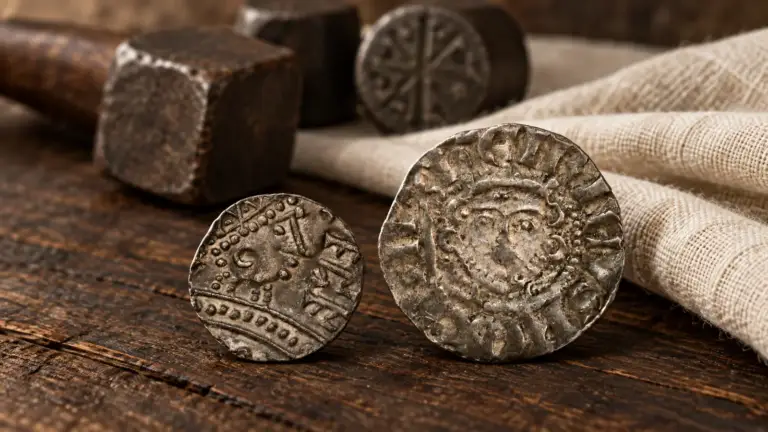
Medieval coins: hammered pennies, groats and gold
From the silver penny to the groat and the great gold coins: a collector's guide to medieval coins, how they were made…
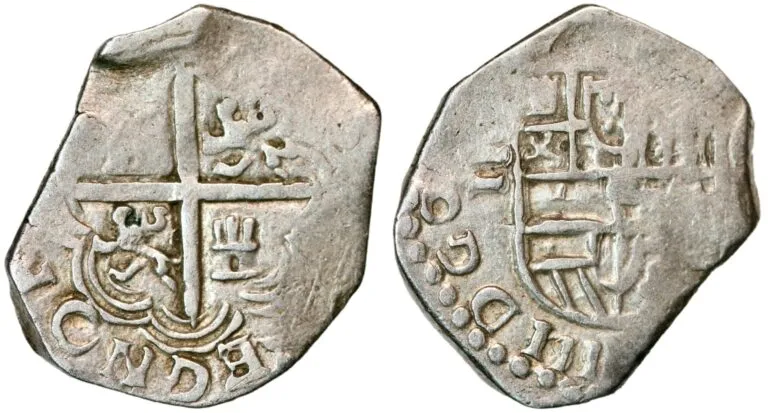
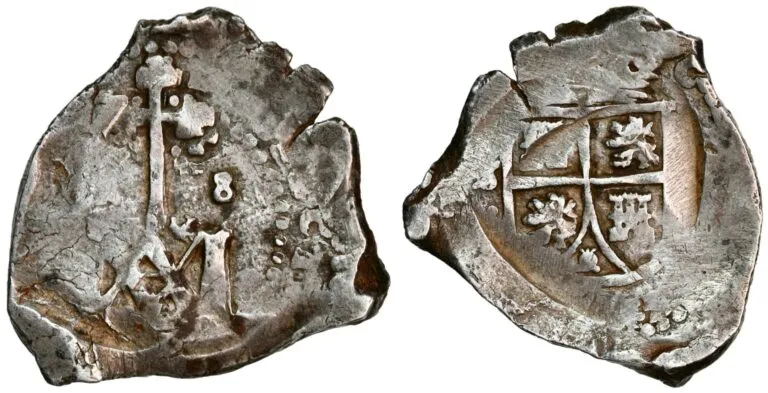
Spanish silver from the Habsburg era: a 2 reales of Philip III and an 8 reales from the late 17th century, the famous piece of eight. Both coins are examined, described and guaranteed genuine by Denarius.
In the 16th and 17th centuries Spain controlled vast silver mines in the Americas, and Spanish silver coins became some of the most widely used money in the world. The basic unit was the real, and the largest common silver coin was the 8 reales, known in English as the piece of eight. It circulated in Europe, the Americas and Asia, and later served as the model for the dollar.
Spanish silver of this period was often struck quickly and on irregular flans, so a full date, a clear coat of arms and a readable mint mark are valued. Spanish silver was struck at several mints in Spain and the Americas, and each mint used its own mark together with the initial of the assayer responsible for the silver content, so these small letters are studied closely. Weight is also a useful check, since the 8 reales was struck to a standard weight of roughly 27 grams but many surviving coins have lost metal through wear or clipping. For other European coins, see Europe.
Piece of eight is the English name for the Spanish 8 reales, a large silver coin. It was used in trade around the world from the 16th century and influenced the later dollar.
Many were struck quickly and in large numbers, sometimes on uneven flans. Wear and clipping in circulation also reduced the weight and changed the shape of many coins.
Yes. Every item is researched and described as accurately as possible, and Denarius guarantees that everything sold is genuine and as described.
Every item gets its own number when it is catalogued. The number is shown on the product page, so you always know exactly which example it is.
Yes. We ship worldwide. Shipping method and price are shown at checkout before you pay.
Read more
From the silver penny to the groat and the great gold coins: a collector's guide to medieval coins, how they were made…
A bracteate is a paper-thin silver coin struck on one side only, and for much of the Middle Ages it was Norway's…
In early 2022, Denarius published two remarkable German bracteates in the space of two weeks: a huge coin from the archbishopric of…