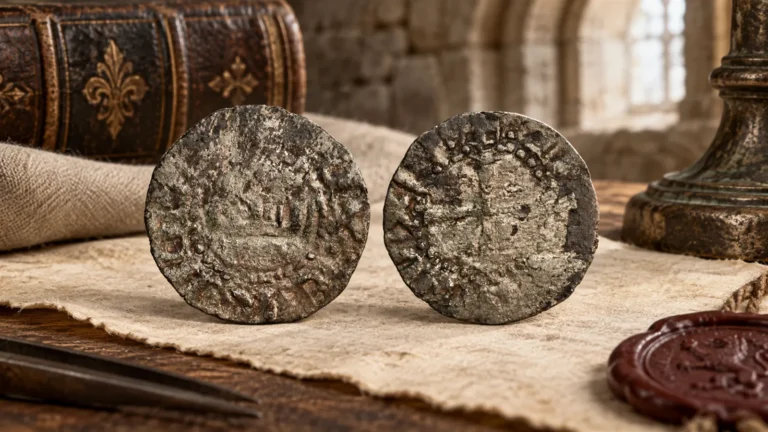
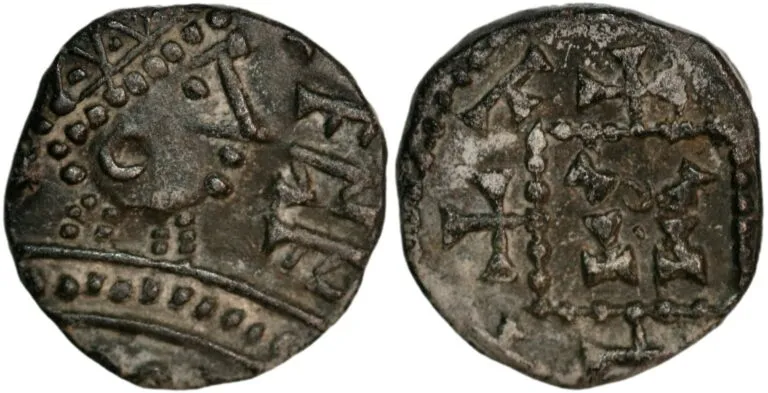
Medieval coins: hammered pennies, groats and gold
From the silver penny to the groat and the great gold coins: a collector's guide to medieval coins, how they were made…
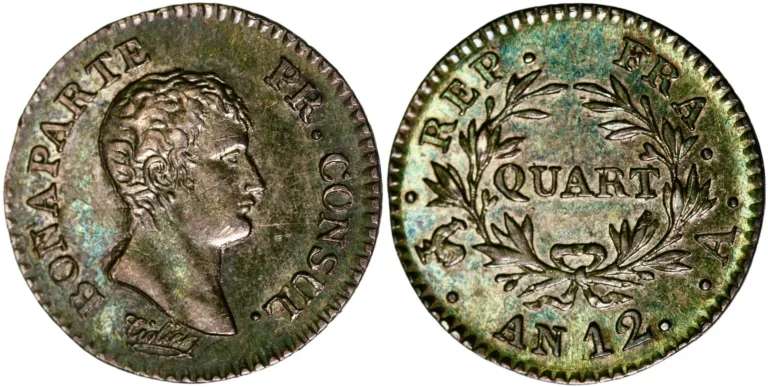
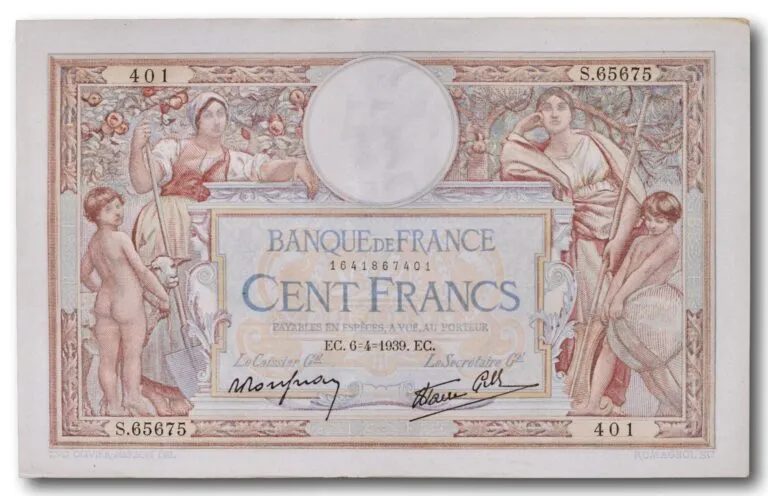
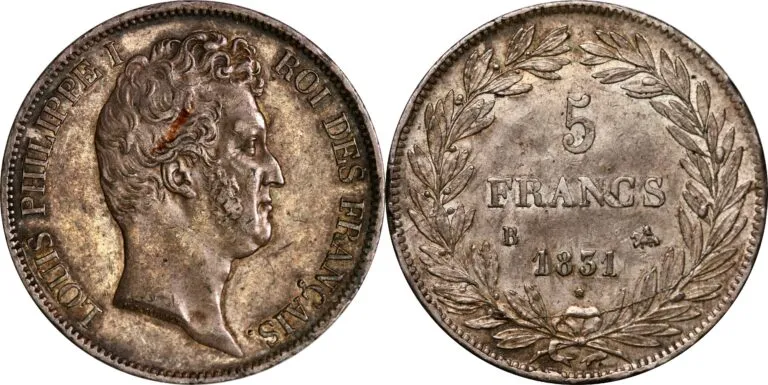
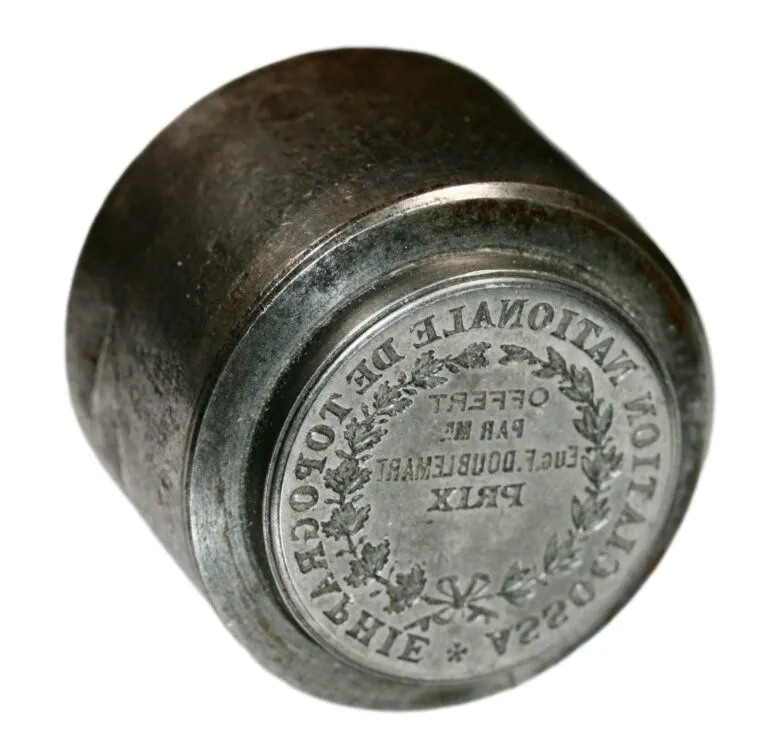
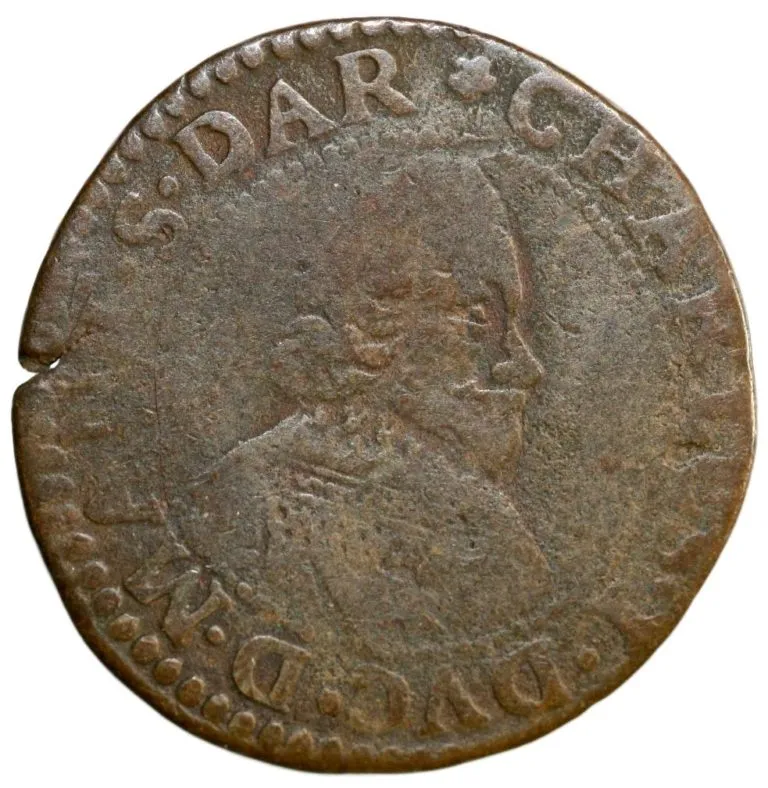
French coins from Louis XIII to Louis-Philippe: a double lorrain of 1636, a Napoleonic 1/4 franc in mint state, a 5 francs of 1831, a 1939 banknote and a medal die. All examined and guaranteed genuine by Denarius.
France changed its monetary system fundamentally around 1800. Under the old monarchy, accounts were kept in livres, sols and deniers, and coins such as the copper double were in everyday use. After the Revolution the decimal franc was introduced, and under Napoleon Bonaparte the silver franc was given the standard that lasted through the 19th century. This small category spans both systems.
Coins from the years after the Revolution are dated according to the Republican calendar, so AN 12 corresponds to 1803–1804. A letter on French coins shows the mint, for example A for Paris and B for Rouen. Collectors use these letters, together with references such as Gadoury and KM, to identify the exact variety.
For French silver, original surfaces and natural toning are valued, and a coin in mint state is far scarcer than a worn one. Copper coins such as the double lorrain were everyday money and are almost always worn, so they are judged on how well the date, portrait and legend can be read. Banknotes are judged on folds, stains and pinholes. The medal die is a different kind of object: it shows how medals were made, and its condition is judged by the sharpness of the engraving. For more European coins, see Europe.
AN 12 means year 12 of the French Republican calendar, which began in September 1792. Year 12 corresponds to 1803–1804.
A die is the engraved steel tool used to strike a coin or medal. Dies were normally kept or destroyed by the mint, so it is uncommon to find them on the market.
Yes. Every item is researched and described as accurately as possible, and Denarius guarantees that everything sold is genuine and as described.
Every item gets its own number when it is catalogued. The number is shown on the product page, so you always know exactly which example it is.
Yes. We ship worldwide. Shipping method and price are shown at checkout before you pay.
Read more
From the silver penny to the groat and the great gold coins: a collector's guide to medieval coins, how they were made…
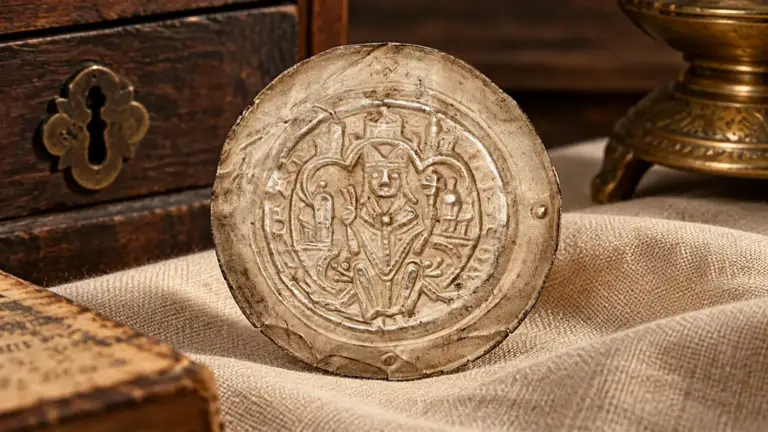
A bracteate is a paper-thin silver coin struck on one side only, and for much of the Middle Ages it was Norway's…
In early 2022, Denarius published two remarkable German bracteates in the space of two weeks: a huge coin from the archbishopric of…